Accessibility Tools

Skip to main content

Author: mascara

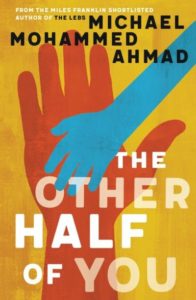
Michelle Hamadache reviews The Other Half of You by Michael Mohammed Ahmad

The Other Half of You

Michael Mohammed Ahmad

ISBN 9780733639036

Hachette

Reviewed by MICHELLE HAMADACHE


The Other Half of You isn’t written just for all the readers out there who get what it’s like to be the child of migrant parents. It’s not just written for those who know already what it’s like to deal with growing up in a home where the culture on your doorstep is interpreted as threatening by the adults in the house. It’s not just written for those who know what it’s like to grow up where the only home you have known, Australia, consistently rejects you by asking you to be something other than yourself in order to belong. Arab people in particular, Muslim people more broadly speaking—for they are not interchangeable terms—are overwhelmingly regarded with suspicion and hostility here, and that changes what it is possible to say now.

Continue reading

Nathanael O’Reilly

Nathanael O’Reilly is an Irish-Australian residing in Texas. His books include (Un)belonging (Recent Work Press, 2020); BLUE (above/ground press, 2020); Preparations for Departure (UWAP, 2017), named a Book of the Year in Australian Book Review; Cult (Ginninderra Press, 2016); Distance (Ginninderra Press, 2015); Suburban Exile (Picaro Press, 2011); and Symptoms of Homesickness (Picaro Press, 2010). More than 200 of his poems have appeared in journals and anthologies published in thirteen countries, including Antipodes, Anthropocene, Backstory, Cordite, fourW, FourXFour, Headstuff, Marathon, Mascara, Postcolonial Text, Skylight 47, Snorkel, Strukturiss, Transnational Literature, Westerly and The Newcastle Poetry Prize Anthology 2017.



From Ballarat to Brisbane

After Joe Brainard

I remember falling out of a pine tree
at number 2 Waller Avenue in Ballarat

I remember my eyes puffing up
after playing in waist-high grass
on the vacant block down the street
and the pretty nurse sticking
a needle in my bum at the hospital

I remember riding a black horse
sixteen hands high while wearing red
gumboots and red corduroy jeans

I remember burning my tongue
with tomato soup at recess
in the shelter shed
at Redan Primary School

I remember the neighbour’s German Shepherd
nipping at my arse when I scaled the fence
after retrieving a tennis ball from their backyard

I remember riding my red bike
into a puddle beside Lake Wendouree
sinking in mud up to my handlebars

I remember carving my initials
into a branch high up inside
the eucalyptus tree with a pocketknife

I remember breaking my mate’s thumb
while taking a mark playing footy
on the oval at lunchtime in grade one

I remember moving from Ballarat to Brisbane
when I was six – leaving behind my mates
and everything I’d ever known

I remember standing in the dirt driveway
of 50 Larbonya Crescent, Capalaba
on New Year’s Day thinking It’s 1980!

I remember my mate Ian finding a wallet
stuffed with eight fifty-dollar notes
at the shopping centre and buying
a dozen cinnamon doughnuts

I remember playing barefoot
lunchtime rugby and red rover
ripping uniforms and skinning knees

I remember the headmaster
summoning me to his office
giving me six of the best
for playing outside in the rain

Paul Dawson

Paul Dawson

Paul Dawson’s first book of poems, Imagining Winter (IP, 2006), won the national IP Picks Best Poetry award in 2006, and his work has been anthologised in Contemporary Asian Australian Poets (Puncher & Wattmann, 2013) and Harbour City Poems: Sydney in Verse 1888-2008 (Puncher & Wattmann, 2009). His poetry and fiction appear in journals such as Meanjin, Southerly, Westerly, Island, Overland, Cordite Poetry Review, Peril Magazine, Australian Poetry Journal and The Sydney Morning Herald. Paul is currently an Associate Professor in the School of the Arts and Media at the University of New South Wales.


Thanks for the poems, Covid-19

Here’s me, face-masked in a supermarket
swamped by white people, who are
angry all over again about the yellow peril
now an invisible airborne enemy speaking in tongues

=================================

Continue reading for only $5 per month

Subscribe for full access to Mascara Literary Review or login

Continue reading

Gemma Parker

Gemma Parker is a poet and a teacher at the University of Adelaide. Her poems and essays have been published in Transnational Literature, Award Winning Australian Writing, Writ Poetry Review and the Tokyo Poetry Journal. She was the 2016 winner of the Shoalhaven Literary Award for Poetry. She holds a PhD from the University of Adelaide as part of the JM Coetzee Centre for Creative Practice. She is one of the project managers of the Raining Poetry in Adelaide festival for 2021. She lives in Adelaide with her husband Guillaume and their two children. Her memoir is The Mother is Restless.


Studies in Moonlight

The sparkle on hickory or white-oak leaves seemingly wet with
moonlight strikes one to the heart. One suddenly misses the capital,
longing for a friend who could share the moment.

– Yoshida Kenkō (c.1283-1350)

I don’t even know
what a hickory leaf
looks like. I yearn

to write poems about moonlight,
the wet darkness, solitude.
Far from the light-noise of cities,

to write in a place of true night,
in the medicinal north.
To compose more

than opportunistic poems
about the marginalia of life.
Doesn’t one also miss

the rush of loneliness,
and long for distance
from every capital?

Samia Goudie

Samia Goudie is a Queer Bundjalung woman currently living on Ngunnawal country. She has published widely both as an academic working in health and the arts, and as a film and digital story maker. Samia is a member of Canberra based UsMob writers and FNAWN, First Nations Australian writers network. She has received an AFC mentor award for a short award winning film US Deadly mob and has had four documentaries screened and toured at festivals. Her various digital story projects are available on line and archived with the state library Old and FNQ’S Indigenous knowledge centres. Samia received a Fulbright fellowship in 2006 based around research in creative practices using digital story telling as a method to archive oral stories using new media and as a curative healing practice in First Nations communities dealing with intergenerational trauma. She has had multi media/word/installations and exhibitions of visual art and poetry at various locations including the Wollongong gallery, M16 gallery Canberra, ‘Territories’ at Laboratory of Arts and Media (LAM/LETA) University of Paris. Her multimedia/artwork has been is held in private collections nationally and internationally.
Samia has been publishing poetry and short stories more frequently over the last several years and has works published in the Southerly, IWP Iowa press, Wakefield press, Norton and Norton, 3CCmedia journal, Aiatsis Press, Too Deadly: Our Voice, Our way Our business (Us Mob Writers anthology), Giant Steps (2019) and What We Carry (2020), Recent Work Press and Routledge press. More recently she was highly commended for her submission to the Varuna First Nations Fellowship which gives access and support to Varuna’s residential writing space in the Blue Mountains. She has also won support and runner up with the Boundless Indigenous Writers Mentorships, supported by the NSW Writers centre and Text publishers, which matched her with Melissa Lucashenko as a mentor for her current work in progress, which is a novel.


Box

Won’t fit in The box

Hard edge
Cold steel
Sharp


Refuse, Resist

Don’t fit, won’t fit, can’t fit

Tried

Believe me I tried

Even the box rejected me

There must be something wrong

I contorted, twisted

My shape, my voice

My hair, my hands,


You even tried to alter my soul

I was never enough

Can’t fit

sit still

Move back
sit down
shut up

Refuse, Resist


Even when you medicate me,

debate about me,

label me,

Nah,

Aint nothing wrong

with my voice, my hands, MY shape

My gender, my colour

   who I am

I am large and round
have limbs bound with the roots of trees
I can touch the sky
Inhabit stars

Why would I give any of that up?

To fit in your box

It

There is fear haunting us in shadows

 Now walking amongst us in full sunlight

Unavoidable

My friend, tells me,

In her community nearly all the Elders lie dead.


There is fear haunting us in shadows

All those Stories gone
All the language lost

Who will teach the young?

Was it like this
When the tall ships sailed in?

Fear grips my broken heart


And now like the last cruel blow
her 11-year-old niece

                                               HAS
                                               It


There is fear haunting us in shadows

She attends funerals everyday

They drive hours to stand in long lines

hoping today they can get a Vaccine

Instead of body bags

She asks for prayers

Please pray for us

She always ends her posts,

                                               Miigwech


It’s raining here

I’m so far across the southern sky

Across the wide ocean

a dark afternoon

clouds brooding

Banksia’s dancing

                            oblivious


These days

On a good day

I spend time outside under open sky


Seeking solace where none seems possible


 There is fear haunting us in shadows

I choose to turn towards the sun

                                               Miigwech

NOTES

Miigwech means loosely, thank you, in Anishinaabemowin also known as Ojibwa. However, it has also a tone that conveys respect and request, recognition and integrity. Gratitude.

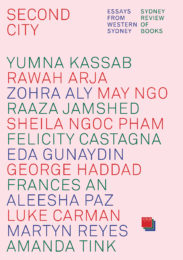
Cher Tan reviews Second City Ed. Catriona Menzies-Pike & Luke Carman

Second City: Essays From Western Sydney

Edited by Luke Carman & Catriona Menzies-Pike

Sydney Review of Books

ISBN 978-0-6480621-3-4

Reviewed by CHER TAN


In ‘Second City’, the titular essay by Eda Gunaydin in Second City, an anthology of essays collected and published by the Sydney Review of Books, Gunaydin begins: ‘I spent the summer between 2013 and 2014 as many 20-year-olds do: working at a restaurant.’ It’s a sentence that includes as much as it excludes, echoing the popular internet phrase ‘if you know, you know’. The essay goes on to explore the ramifications of gentrification in Parramatta, alongside a certain gentrification of the self through education and upward mobility.

Continue reading

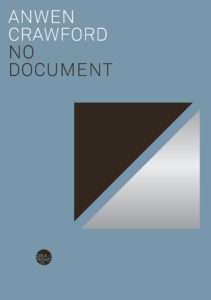
Neha Kale reviews No Document by Anwen Crawford

No Document

by Anwen Crawford

ISBN 9781925818611

Giramondo

Reviewed by NEHA KALE

Anwen Crawford’s No Documentt, a memorial to the casualties of late capitalism, occupies the space between elegy and witness, language and art. 

In February 1991, a strange billboard materialised on New York’s Van Dam Street, perplexing commuters who happened to be travelling under the overpass. It featured a black-and-white photo of an empty bed curiously devoid of signage, rumpled sheets revealing gradations of light and shadow like mountains covered in snow. Two pillows are arranged, side by side. But the bodies that lay there announced themselves through impressions and indents. Existence and absence, different sides of a concave mirror. Each part, the form itself.

The billboard is part of Untitled (1991), an installation by the Cuban-American artist and activist Felix Gonzalez-Torres. The same year, the artist’s lover, Ross Laycock, died of AIDS complications. The bed in the picture is less cipher than artefact. It’s where the couple slept when they were both alive. 

“I knew that you would die young/ I didn’t know it at all,” writes Anwen Crawford in her book-length essay, No Document. A page before this: “I change tense, and travel back across your death’s border.” What to write when those we love leave us? Can the tricks of grammar reverse the passage of time? 

The elegy is a fixture of art and literature. Gonzalez-Torres’ work, of course, but also Patti Smith’s Just Kids, the poet’s 2010 lament for the New York she once shared with her late friend and co-conspirator, the photographer Robert Mapplethorpe. Above Crawford’s desk, the reader learns, there’s a postcard of Mapplethorpe’s Two Men Dancing, a gelatin silver print in which two figures hold each other made in 1974.

In her first year at the Sydney College of the Arts, Crawford meets the fellow artist, Ned Sevil. “Your brown panelled nylon zip-up jacket; the rat’s tail of red hair that ran below your shoulders,” she writes. They climb silos on Glebe Island. They “photograph using now obsolete materials” and sleep in railway underpasses after “spray-painting stencils of helicopters.” Their friendship burns bright, forged in the fire of art and activism. “So suddenly, vividly; your gentleness, the way you were always proud of me,” she writes. 

At 30, Sevil, who suffered cystic fibrosis, dies of cancer. Crawford returns from New York, where she is working towards an MFA in poetry, six weeks later. “Sometimes, just for seconds the extent of my grief for you reveals itself and my breath dissolves,” she writes in an incandescent passage, “because it has no edges at all […]” 

In Sydney, edges blur. Suburban pavements give way to old waterways. Sandstone cliffs end with a sheer drop into the ocean. For Crawford, grief is fractal. It radiates beyond her own body, into the spaces she moves through.

 She thinks of her friend when “the train lifts from a tunnel and the built world manifests again” and when she sees “a line of three sulphur-crested cockatoos wheeling a line into the sky.” 

When someone dies young, elegy can easily descend into hagiography. But in No Document, the gift of loss is a kind of X-ray vision. It can see beyond the strictures of place, time and history – and understands how these are bound together. 

Crawford watches the planes hitting the twin towers. The pair cut the word ‘terrorist’ out of the newspaper, “spray-painting the letters into signifying order onto lengths of paper” to cover “over a billboard that edges a four-lane highway.” Two pages on, she tells us that the “last Siberian crane reported seen in Afghanistan was shot dead in 2002.” 

Years after they climb onto silos in Glebe Island, Crawford discovers that it was once the site of the city’s first abattoir. Decades before, in 1818, “the first of the white surveyors ventured onto countries past the mountains – Wiradjuri country, Gamilaraay country.” Cattle, she tells us, comes from the Latin for capitale – ‘property, stock.’

Western imperialism changes form, sowing the seeds for modern conquest. Colonialism and capitalism, inextricable forces, knit living creatures into a constellation of death and displacement. 

“Three billion animals have burnt in this place bordered as Australia since I began this, and the fact that all the sound of it is dampened by the painting being paint – well, it haunts me,” she writes. 

No Document pushes up against borders – geographical, historical, imaginary. In a way, to have no document is to engage in the act of trespass, to enter places unauthorised. But who can trust authorities that are the legacy of violent systems? Records, we know, are famously unreliable. East African soldiers, we learn, who died in the First World War for the German Empire, were disappeared from history. 

During the Tampa Crisis, John Howard famously accused asylum seekers of throwing their children into the water. The Australian government’s acronym for boats occupied by asylum seekers – suspected illegal entry vessels – is SIEV. For Crawford, this is “too close to sieve for coincidence.” In the sea, humans leak.  

Throughout the book, Crawford writes letters to Alya Satta, a two-year-old girl who was among the 353 who drowned when the Indonesian fishing boat, SIEV-X, overturned on the way to Australia. “I call myself into this space with you,” Crawford starts. Then, “I redeem nothing: not in words, not any way.” 

Words have their limits. Late capitalism strives to turn writing into content, story into commodity. No Document is interested in what art can do, where language can’t venture. In art school, Crawford studies photography and upon re-reading No Document, sentences reveal their meanings like negatives in a darkroom. 

On my weekly walk, past Glebe Island, the landscape shows its bones. Places acquire a shimmer. I remember that in the 19th century, to take a photo was to render what was missing. That a camera was once considered powerful enough to capture ghosts. 

No Document is a study in blank space. Sentences stand by themselves. Each section is marked by a rectangle. “You scratch the negatives,” Crawford observes of her friend, “sometimes for what the damage signifies: that the document is not neutral but emerges.” 

When her friend Sevil dies, he leaves Crawford a book of images, made from mesh and contact sheets, “the whole thing smaller than a matchbox.” Someone tells her that “objects are just objects.” Friendships exist outside institutions, without ritual. She knows theirs has been “deemed insubstantial.” The book asks you, the reader, to weigh what matters, what to mourn according to an inner calculus. 

There is no elegy without witness, even if “no document can make you manifest.” 

Crawford and Sevil admired artists who died young. “Such an impulse isn’t rare at age nineteen, but for you at least, an early death was neither an abstraction or romance,” she reflects, in retrospect. 

Gonzalez-Torres, who died at 38 of AIDS was among their favourites. Before he left, the artist strung lightbulbs in galleries, allowing them to flicker and fade, as fleeting as a lifespan. He arranged a pair of clocks that ticked together in the knowledge that one battery would fail before the other. That in time these objects – like bodies that exist together – would fall out of sync. 

In 1989, he made sculptures out of block-like stacks of paper. To complete them, viewers were invited to pick up a sheet, to take it home. No Document, too, is an artwork – one that asks us to notice what’s absent. And love, through the act of paying attention, the things that might never return. 


References

https://www.sfmoma.org/artist/Felix_Gonzalez-Torres/

https://www.bbc.com/news/world-asia-23486991

https://www.bbc.com/future/article/20150629-the-intriguing-history-of-ghost-photography


NEHA KALE is a writer, critic and the former editor of VAULT magazine. Her work has appeared in The Saturday Paper, The Sydney Morning Herald, SBS, ArtReview, Art Guide and many other places.

Dani Netherclift reviews Know Your Country by Kerri Shying

Know Your Country

by Kerri Shying

ISBN: 9781925780765

Puncher and Wattman

Reviewed by DANNI NETHERCLIFT

Mark Berryman’s original artwork on the cover of Kerri Shying’s Know Your Country is a study in aqueous blues and greens, reminiscent of underwater scenes, long neglected sites of lostness and loss, the kind of world inhabited by forgotten shipwrecks. This shadowy opacity seems a fitting introduction to the poems contained within, a nod to the idea of landscapes you think you know but which, diving beneath the surface find you are unfamiliar with after all. This impression limns the sense that a closer reading of your surroundings is required, so sit back and pay attention if you want to in some sense    know your (?) country.

The collection as a whole presents a densely knit weft of landscape, character, voice, detail and sub-text where the poems fully inhabit all of the senses, so as to immerse the reader not only in visual poetic images, but also the smells, sounds and tactility of each scene and place. In this way, I was reminded of the literary localities created by T.S. Eliot in The Wasteland, with its layers of varying interiors, exteriors, sounds, (his)stories and laments.

The almost complete absence of punctuation throughout works to enact a joining of narratives. The fragmented words pieced together eloquently mosaic a whole, a window onto the possibilities immanent in the substances of life in this particular country: earth and seawater, the sticky silver of snail trails and suspicious powders, of human traces, dirt, blood, shit and fragility, of circumstance in every overlooked flavour and hue. This is an inspired vision of country on a micro scale. In these poems, the gaps between the words and phrasing are apertures into spaces of entry, gesturing towards what you think you know and what perhaps you don’t know anything at all about.

The first poem, ‘talented regardless’ ominously foreshadows the dark potential inherent in this locus of page and space, with on the one hand ‘laughter and applause’ while on the other, there is    

     the sound   of burrs being taken
off of knives   and the thump of hessian onto truck beds
(9)

This possible proximity to or for violence is woven through the body of the text of these fifty-five poems, unsettling notions of certainty or firm ground upon which to stand.

 The country of Shying’s vision holds itself open, for instance, to the hypocrisy of those who would stake claims to knowing   better. Poems like ‘in my skin’ talk back and up to the noise of ubiquitous ‘saloon bars’ with resolute retort,

oh   how colossal
the right
that courses through the veins   of every total prick
that questions who we are
(12)        

because the call to ‘know your country’ also enacts a rallying cry to stare racism in the face without looking away,

to tear up the post in post-colonialism, and the notion of assimilation and its insult, as being

the kind of turd who smacks you in the mouth
then says
get up   you’re bleeding on the carpet
(12)   

Correspondingly, the use of Aboriginal language and translation in some of the poems, like ‘galmalngidyalu nhal gaghaanggilinya’ (this song delights me) encapsulates generous notions of inclusion that have most often not been reciprocated. The juxtaposition of these magnanimities of spirit jar tellingly against the past and present policymaking of race but Shying’s work illuminates the power of poetics to transcend, and describes their innate qualities of protection. The claim that

  words are lands and faces    special
tucked inside
(14)

is followed by an appreciation of the true nature of land beneath the surface, where

a million tonnes of ballast sang out a song from beneath me
a million tonne extracted from the soil of everywhere
(14)

which describes also the connection between this ballast – an important motif in both literal and figurative senses – of earth and rock and its corresponding connections to relationships with family, with grandmothers –

I hold tight to all her  stories  given
to me moving  mouth to
ear  mouth to ear  mouth
to ear
(15)

and as in ‘Cootamundra institute of education’, elucidations of both distance and closeness, past and present, and bonds that remain, come what may –

   I wonder if in that other city
my sister’s hair is safe

from magpie swoops
(24)

These ties of memory and reverence for family and belonging bear relation to Natalie Harkins   work in Dirty Words, with its white space, gaps, and recognition/space-holding of untold stories, lost time, separated families, elided pasts.

In the titular poem, ‘know your country’, the opening line, that 

deep roots   fend off heat
(42)

reads as a realisation of the strength and resilience contained within the nexus of family/cultural ties and history. To know your country for the speaker is to write into a hope for future  days

I am planting for the green tomorrow
(42)

that is pragmatically rooted in both what has already been borne, survived and surpassed, and what shared knowledge remains to be drawn upon.

The shapes and hues and hefts of sky, water and soil, of morning, and the stifling forbearance of the hottest summer nights together form a vivid panorama in which the inhabitants reveal themselves in all their shabby, precious smallness; the minutiae of land/urban scapes but also the domestic intimacy of life-scapes. 

An exhortation to smallness is repeated throughout, the text, in the forms of creatures, snails/cicadas, but also in gestures towards modes of existing in the world, where you must 

grow small  grow
small   in thrall

and 

don’t go large   be small
(64-65)

if you wish to live peaceably, and to appreciate the community in which you live for what it is. It is only in being small that one can truly get to know your country, that one might penetrate what has been overlooked within the cracks and crevices and white spaces behind the doors and closed curtains of interior lives. Smallness grants entry to all kinds of environments, from the water to the ballast grounds, to the wet house or the dealer’s kitchen, their bathroom, to the ghastly knife collection of an erstwhile world traveller, though one must also remember, tongue-in-cheek, that 

snails play to the cheap seats
they need the cash
(38)

The poetics of these revealed scenes and vignettes expose unsettling connections between the innocent pleasure of hot chips and  imminent peril in ‘crime lords’, or  visits from clients buying drugs juxtaposed against the domestic niceties of packets of biscuits and flavoured coffee sachets, in ‘crime lords #2’, or relations between seemingly benign ocean shallows and the trauma that it might deliver along with its usual offerings, the nightmare jetsam 

   a mesh of small holes and slits
emerging as a black lacy wrack extending

from the lower back
(47)

of a dead child who washes up, is held in the arms of the speaker, in ‘blue bubble’. Always, there is the sense that if one should scratch the surface veneer of this country, that there is 

   that tiny bit of drama

the half-centimetre
of knife-steel exposed
(57)

but if the poems seem to evoke moods that are often sinister, with their intimations of menace seeding a tension that never quite lifts, they are at other times quelled with tenderness, a sweet give of solace to the edges of days, and even perhaps of history, a consolation gathered in accumulated images of sea/water. In ‘the inbox’

the water laps the sky
(37)

while in ‘hey you’, the speaker of the poem ‘backstrokes’

the lifting sea
(35)

The presence of a newborn baby in ‘unlock’ illuminates another kind of ballast, granting the immensely moving certainty above all that 

I was a mother   nobody
could remove that
(61)

These images of calm steadfastness culminate in the panacea of the final poem, ‘rise’, where

the blue sky is a crutch
(70)

in all its blankness, its possibility, and hopefulness.


DANI NETHERCLIFT lives and works on Taungurung country, surrounded by mountains. She is the winner of the 2020 AAWP / Slow Canoe Creative nonfiction prize and has upcoming work in Rabbit 33, Stilts, and Meniscus.

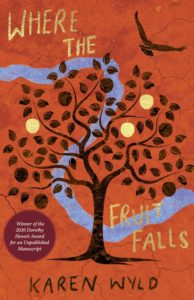
Anne Brewster reviews Where the Fruit Falls by Karen Wyld

Where the Fruit Falls

by Karen Wyld

UWAP

ISBN: 978-1-76080-157-1

Reviewed by ANNE BREWSTER


Karen Wyld’s Where the Fruit Falls is an important new novel in the field of Australian Aboriginal literature and a tribute to the work of UWAP under the stewardship of its out-going director Terri-Ann White who, as Wyld says in her Acknowledgements, ‘helped grow UWAP into a treasured Australian publisher’.

It tells a powerful story of an Aboriginal family, focusing largely on the young woman, Brigid, and her twin daughters Victoria (Tori) and Maggie, and their journey to find family, reunite with Country and discover the inland sea where the ‘giant aquatic creatures’ and ‘wondrous beasts’ (287) of Aboriginal cosmology reside. On this journey they struggle against the brutal impacts of racism in rural and metropolitan settings. There are references to the effects of the Protection Era and other events such as the Maralinga bomb tests.

The title refers to the central image of the two very different trees in Brigid’s life, the apple tree of her non-Aboriginal grandmother’s garden (which could be a reference to British colonial immigration) and the Bloodwood tree (and its fruit, the bush apple) under which she was born, shown to her by her Indigenous nana.

There is a striking image of the two trees intertwined at a critical nexus in the narrative. Brigid had grown up with the trees, fruits and plants of her non-Aboriginal grandmother’s garden, and although she has an immense affection for her grandmother who had largely raised her, she has to painfully unlearn her grandmother’s indoctrination that she (Brigid) is a potato: ‘her skin might be brown like the earth, but inside she was [white] just like everyone else’ (12). Despite the damage her grandmother had wreaked in her life, Brigid continues to love her, and to respect the role that trees had in the lives of immigrants’ such as her grandmother.

She tells her Jewish friend, Bethel, whose partner, Omer, had carried a small olive sapling all the way from his homeland to Australia, that ‘my granny also brought treasured saplings from her country … she’d planted them with purpose, to set down stronger roots in a country strange to her. Those trees from her home country helped her to create a new home, for a new family’ (98). In the affectionate portrayal of Brigid’s grandmother and the image of the intertwined bloodwood and apple trees, Wyld seems to be figuring Brigid’s complex and nuanced bi-culturality, or at least the continuing (and sometimes contestatory) interplay of her dual heritages.

The novel demonstrates that racism against Indigenous people remains a constant in colonial and post-colonial (ie the federated) Australia, with even more recent immigrants, as Bethel complains, treating First Nations people ‘with disdain’ (77). However, as Bethel and Brigid’s friendship indicates, First Nations people’s connectivities are multidirectional, and her friendship with Bethel and her partner Omer is vital and life sustaining. Omer observes that war, horror and inhumanity come in many forms and impact many peoples, producing loss and trauma. He suggests that, like many people across the globe, Indigenous people are ‘still engaged in a combat of sorts’ (77). We realize that, in his vocation as an opal miner, Omer has both material and imaginative access to the inland sea for which Brigid searches, with its ancient archive of huge ‘wondrous’ creatures and the ‘carnage’ (288) they index.

In its portrayal of Brigid’s twin daughters, one of whom is dark (Tori) and the other light-skinned (Maggie), Wyld’s novel strenuously uncouples Aboriginality from biology and skin colour. In a powerful narrative, which recalls Tony Birch’s intensely moving recent novel, The White Girl, we see the painful impact of the difference in the way white-skinned Aboriginal people have been treated by white settler-Australians. The many biting ironies of the scopic regime are played out painfully and, occasionally, with wry humour, in Maggie and Tori’s lives.

Brigid and Tori, in particular, struggle with a sense of not belonging, of being outsiders. They are on a journey seeking their family and Country, reminiscent of Sally Morgan’s iconic text My Place. It is indeed fitting that Morgan provides the cover blurb, in which she notes that ‘this evocative family saga celebrates the strength and resilience of First Nation women’. In spite of the lethal impact of violence in their lives, Brigid and her daughters are, in Tori’s words,  ‘strong, independent and fearless’ (233). They defend themselves and each other from the corrosive effect of racist ‘hate’ and the brutal necropolitical drive of colonization, with strength and determination. They sometimes struggle to strengthen their Aboriginality, supported by their connections with birds and trees, with shadowy creatures in the world around them, and with stories from their ancestors.

Wyld also demonstrates the significance of global anti-racist activism from the 1960s onwards, referencing various movements such as the American civil rights movement and black power, borrowing an iconic image to salute ‘the fire in the belly of black peoples fighting for rights’ (287). She shows how the discourse and iconography of global activism gave many Indigenous people in rural and metropolitan Australia the tools to analyse history and to re-shape their understanding of themselves as a collective. Numerous Aboriginal novelists have mapped in fiction the intersection of politicized Aboriginal activism and personal transformation; Tori’s incipient emergence from suffering and struggle reminds us in some respects of Sue Wilson’s consciousness-raising journey in Melissa Lucashenko’s paradigm-shifting novel, Steam Pigs.

Wyld’s homage to global activism is complemented with local references, in for example, what seems to be a nod to South Australian ex-premier, Don Dunstan, who makes an appearance at a political rally that Tori and Maggie attend, as ‘a white man in tiny pink shorts, a white figure-hugging T-shirt and long white socks’ (296). The extra-diegetic references in the novel and Wyld’s interest in the impact of political activism on her protagonists indicate the proximity of some Aboriginal fiction to political activism. In her Author’s Note for example, Wyld suggests that ‘the call for action … often lies hidden in fiction’ (341); she adds that she sees this novel as working to ‘reimagine a more just and truthful present and future’ (341).

The novel’s narrative climax, which unmasks the shocking effects of toxic white masculinity, raises deeply disturbing questions about the graphic representation of racialised and gendered violence and race crimes. It resonates with the broad scholarly field of research on trauma and witnessing, bringing a unique Aboriginal iconography to this field, in the imagery of the three black birds which are Brigid’s witness. (One might also recall the crows in Alexis Wright’s Plains of Promise.) In Where the Fruit Falls the toxic white masculinity is offset with the presence of several benevolent, wise, compassionate and resourceful Aboriginal men who adjudicate in the rendition of justice according to Aboriginal protocols (recalling the Aboriginal male elders’ adjudication in Roo’s conflict with his girlfriend’s brother, in Melissa Lucashenko’s second novel Hard Yards).

In a recent article in the Journal of Australian Studies, Indigenous studies scholar, Clint Bracknell, notes the ever-increasing non-Indigenous interest in and demand for Indigenous cultural texts and analyses the impact of this demand on Indigenous researchers and communities. He talks about the lack of space and time for communities to “claim, consolidate and enhance our heritage and knowledge amongst ourselves” (Clint Bracknell JAS, 44.2 :213).

The racialised graphic commodification of Aboriginal women’s bodies which Where the Fruit Falls puts under the spotlight (while simultaneously deftly removing it from that spotlight through the wise actions of the Aboriginal men) raises questions about the non-Aboriginal reader’s presence in conversations about Indigenous literature. As a non-Indigenous reader and reviewer of Indigenous literature I am aware of the implications of Bracknell’s comment for my own work in this review. I aspire to join an ethical conversation about Indigenous literature with Indigenous and non-Indigenous writers, scholars and commentators in a way that is mindful of the conditions of commodification of Aboriginal bodies and texts and seeks to acknowledge and not encroach upon the Aboriginal space that Bracknell identifies.


ANNE BREWSTER is Honorary Associate Professor at the University of New South Wales. Her books include Giving This Country a Memory: Contemporary Aboriginal Voices of Australia, (2015), Literary Formations: Postcoloniality, Nationalism, Globalism (1996) and Reading Aboriginal Women’s Autobiography (1995, 2015). She is series editor for Australian Studies: Interdisciplinary Perspectives.

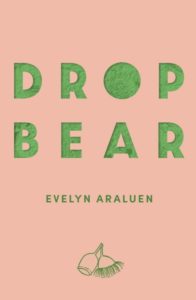
Timmah Ball reviews Dropbear by Evelyn Araluen

Dropbear

by Evelyn Araluen

ISBN 978070226318

Reviewed by TIMMAH BALL


Dropbear: writing as an act of defiance 

when my body is mine i will tell them
with belly&bones
do not touch this prefix
or let you hands burn black
with your unsettlement
there are no metaphors here
-decolonial poetics (avant gubba)

Multiple modes and literary disciplines weave through Evelyn Araleun’s first collection Dropbear, shifting between poetry, prose, micro-fiction and essay seamlessly. The taut threads are a reflection of her interdisciplinary work where writing and social justice intersect. There are no metaphors instead resistance is displayed through her piercingly accurate understanding of the flawed settler nation we inhabit. As she describes in the collections notes ‘our resistance, therefore must also be literary’ an acknowledgment that the social, environmental and political change being sought must also engage with the literary culture we inherited such as May Gibbs problematic Australian classic Snugglepot and Cuddlepie. A much loved children’s book series where the bush is represented through terra nullius. As a scholar, poet, teacher, activist, editor, essayist and fiction writer Araleun resists and defies imposed colonialism, which is most fiercely embodied through Dropbear. The collection speaks back to defunct systems and shows that Aboriginal Sovereignty is crystalline. As she writes: 

when I own my tongue I will sing
with throat&finger
gobackwhereyoucamemfrom
for I will be
where I am for

Each stanza in Decolonial poetics (avant gubba) speaks back to white Australia’s dictatorial approach to fixing ‘the Blak problem’ (aka closing the gap) be it through the Avant-garde or government policy which views Aboriginal people through a deficit lens.  The biting tone unsettles the settler writer and wider Australian consciousness whose literary interests in decolonization and institutional preoccupations with reconciliation are hollow. As Araleun writes at the end of the poem:

and when you are dead,
you can have poems

The incredulous construction of Australia is further revealed in other poems (PYRO, Acknowledgement of Cuntery and Index Australis), which illuminate the chronic power imbalances, where the perpetrator seeks recognition for resolving the damage they covertly maintain. She writes: 

A GIRL IN AMERICA POSTS LINKS TO PURCHARSE HER UPCOMMING CLI-FI NOVEL UNDER HEADLINES FOR THE PYROCOMULUS// SCOTT MORRISON SITS SANGUINE IN A WREATH OF FRANGAPAINI

  • PYRO

in the age of entitlement
in the Decolonial Dundee
and well may we say, we will decide
who and how
well may we be not lectured and well
may we do it slow
Index Australis 

I would like to wear your flag
On shirt and tote and Facebook filter
Acknowledgement of Cuntery

These poems capture both mainstream and literary preoccupations with Blak rights, climate change and social inequity whereby non-Indigenous writers, policy makers and activists reveal ‘truths’ which are already known, extracting uncomfortable histories and admissions of guilt unaware that this doesn’t undo ongoing complicity. Or as Araluen cheekily laments it is easy to change your social media profile mirroring the latest cause or wear a t-shirt with the flag of oppressed peoples. In a strange social milieu progress is accessorized and often reads more like passing trends as Aussi icons are decolonized and every white girl is writing a book about the anthropocene to grieve. In this era outrage and discomfort is omnipresent and people acknowledge country but radical change still feels distant. Dropbear asks that we don’t let this distract us but instead remain cognitive of its trickery. 

Araluen’s writing emerges from an extraordinary body of work by Blak women and non-binary writers, which re-asserts Sovereignty by dispelling settler myths. Given the literary canon preceding this and the structural whiteness that persists this is important. As Araluen concedes in her Sydney Review of Books essay Snuggle Pot and Cuddlepie in the Ghost Gum a precursor to this collection:

The entanglement of complexes which have, since invasion, structured settler responses to, and representations of Aboriginal land and its custodians, ruptures at its most readable in Australian poetics…… If Aboriginal presence is considered in such work, it is a representation predominantly concerned with symbols of atavistic inconvenience to the colonial project, charged with psychic significance in the symbolic evocation of a ghostly spectre haunting land lost to Aboriginal people, but which ultimately clears space for the discovery and cultivation of that land by the appropriate settler.

Like Alison Whittaker’s Blakwork, Ellen Van Neerven’s Throat, Jeanine Leane’s Walk Back Over, Natalie Harkin’s Archival Poetics, Kirli Saunder’s Kindred, Charmaine Papertalk Green’s Nganajungu Yagu and more recent publications such as Ambelin Kwaymullina’s Living on Stolen Land and Elfie Shiosakis’s Homecoming Araluen fortifies a Blak literary position which defies First Nations erasure and ridicule epidemic in settler Australian poetics. Stylistically she achieves this with subtle lyricism, humor, intertextual reframing of settler texts and a beguiling sense of sadness and hope for a decolonial future. There is great power in displaying work that defies clear categorization or stereotyping as protest poetry. Something that has often characterized Blak writers pejoratively within the wider literary industry suggesting that we have no more to say or are incapable of expressing our survival with nuance and depth. By contrast her work remains transformative and radical but without the troupes a white reader may expect. In the introduction to Shapes of Native Nonfiction the Cowlitz writer Elissa Washuta asserts that ‘Native writers don’t shy away from experimenting with form in order to explore the painful and the violent. However, they refuse a voyeuristic obsession with tragedy as the ultimate contribution of Native literatures to the broader field.’

Dropbear realises this with astonishing precision and power. Pain is evident but it ruminates with a critical awareness, which refuses to excite a non-Indigenous reader. Araluen is aware of these voyeuristic tendencies, which both fetishize and manipulate Aboriginal voices and decolonial agendas but also maintains a sense of urgency and demand to address this nations’ flaws. She writes:

I’ve read the work done to demonstrate how this literature triangulates our elimination against the archipelago where you move to your innocence. But no-one’s ever asked you how we are both colonized by and inheritors of these words. J asks- what is a world, and what does it mean to end it? I want to know what it means to lose the world you’re still standing in.
-To the Poets

These questions linger throughout Dropbear reaffirming that there is no clear answer to the horrors we have inherited but instead a need to confront the messy and the painful with honesty and criticality if we are to find resolve. Araluen is starting conversations that are needed while engaging with the fervent Blak activism driving change. In this way she writes for us and refuses the settler gaze in literature while reminding the white reader to recognize their responsibility. In Colonial Horror, Blak Mediocrity and Mumblecore: A conversation between Alison Whittaker and Nayuka Gorrie Whittaker explains how:

‘There’s not much that unifies blak women and non-binary mob writing except for the drive behind it. I am always surprised by the innovation and genius in blak literature, and it happens as much in the writing of blak literature as it does in the reading of blak literature by mob. It’s networked. It’s plural. It can, when we make it, work like kinship.’

Dropbear enters into this kinship where our words carry power and strengthen communities both in the writing and the reading. Araluen’s critical mind moves between writing, activism and community organising, which elevates her textual output beyond a literary vacuum. Dropbear will be read and praised by the white literary canon but her words hold space within wider public discourses led by Blak thinkers and activists. It’s networked and offers resilience to the Blak readership she writes for.  

Citations

1.Evelyn Araluen, Snugglepot and Cuddlepie in the Ghost Gum, Sydney Review of Books, 2019 https://sydneyreviewofbooks.com/essay/snugglepot-and-cuddlepie-in-the-ghost-gum-evelyn-araluen/
2. Ellisa Washuta ad Theresa Warburton, Shapes of Native Nonfiction: Collected essays by cotemporary writers, University of Washington Press, 2019


TIMMAH BALL is a nonfiction writer, researcher and creative practitioner of Ballardong Noongar heritage. She is the editor for First Nations writing at The Westerly Magazine.

Josie/Jocelyn Deane

Josie/Jocelyn Deane is a writer/student at the University of Melbourne. Their work has appeared in Cordite, Australian Poetry Journal and Overland, among others. In 2021 they were one of the recipients of the Queensland Poetry Festival Ekphrasis award. They live on unceded Wurundjeri land.
 
 
News of Animals/Nature is healing

The waters of Venice are clear,
almost. There aren’t any sudden swans
or dolphins out of the blue,
the elephants do not get drunk
in tea-fields cleared of the social
distancing efforts of the redoubtable
Yunan workers. It not even
the same photo of the same
elephants, curled up like content
ammonites. Meanwhile
deer in Nara prefecture, Tokyo, without
their vinegar/grain crackers
from tourists, inquire after safe
food in the metro, empty
malls, galleries of “Western” art, disinterested as
that one doe in a cathedral, or that one
dog meme, sitting in a flaming cockpit bottom text I Have
No Idea What I’m Doing, going
viral, haphazardly. Nature
is recolonising Venice, says the owner
of the Venice Hilton. “The water
is so blue and pure”, she says. “Nature
has no name, only what is given”. You’re still
in quarantine, buses are still trickling
over your window, you look at your arm, primate
hairs poking through sunburn. 


Gay Jesus as You

I like gay Jesus almost as much
as I like you. I like the water
congealing in his side, clear trans-
-substantiation, from a cop’s spear
as much as I like you. The touch
enflames, the matter
-of-fact saying now things will be
different: your body will not be
that of your forebears. I like
the orange pips with gay Jesus’
face inside, conch shells
on the shores of Galilee whispering Christ
is come to the thirsting ear as much as
I like you. I like the hole he made
of his rib-cage, a beautiful before-after
mastectomy photo, of his hands like
a glory-hole almost as much as I
like you. I like the time passing and time
to come, time hiding like the devil
in a stratum of chalk/sandstone,
the outline of an Ichthyosaur or
bird-dinosaur, saying Christ this is
a long time to yourself… as much
as I like you. I like the generations
of spiders you hate— the parallel
church of our gay, eight legged lord
they form— that saw gay human Jesus
saying nothing in their language
going back to cocooning their food
as much as I like you. I like the sense
of a gay beginning and ending, the word
split, tentatively as much as I
like you. 

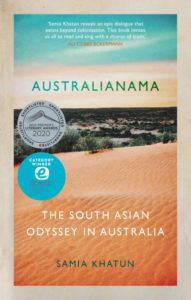
Matthew da Silva reviews Australianama: The South Asian Odyssey in Australia by Samia Khatun

Australianama: the South Asian Odyssey in Australia

by Samia Khatun

UQP

Reviewed by MATTHEW da SILVA


Samia Khatun takes a tack pioneered by Peter Drew, an Australian who made posters labelled with the word “Aussie” and featuring a migrant cameleer. He wrote about the development of his art practice in ‘Poster Boy: A Memoir of Art and Politics,’ (2019). It’s a slightly confused account of a life spent looking for battles to fight. Khatun fights her own battle but uses different language and aims stronger barbs at a long-absent colonial power.

As though every question in life might be answered satisfactorily by apportioning blame. Ruth Prawer Jhabvala, a Jewish author whom Indians cherish as one of their own, uses instead of incisive academic prose the language of sentiment filtered through a screen of humour.

Perhaps their twin aims are not running in parallel, but instead intersect – such as here, now. Khatun provides a much-needed lens through which to view South Asians in Australia in the colonial period. I was enchanted by the propriety of giving voice to such subaltern figures as a Pakistani merchant or an Indian peddler. The “lascars” – South Asian seamen used in the period following the abolition of slavery to crew steamships – also figure prominently in Khatun’s narrative, offering different ways to see White Australia and the developing form of nationalism Khatun acknowledges multiculturalism to be.

Given all these qualifications, how accessible is her book? Who might buy and read it? Is it a book for the general trade market or is it, rather, a work that must lie within the ambit of academic circles? I think that, as in the case of its focus, it is an intersectional work that can fit into multiple settings, much like a designer handbag or a 4-wheel-drive automobile. It will feel just as “right” if you carry such an accessory with jeans or with a Chanel suit. Similarly, with a modern 4-wheel-drive SUV, it looks fine in a CBD carpark or out on the open road climbing up a steep incline among trees with peeling bark that are filled with the sounds of cicadas.

Khatun’s register is elevated and her concern is, as is common with academic writing, to speak truth to power. She won’t concede anything her principles refuse to allow, so, for example, she refers to the Flinder’s Ranges in South Australia as having a name that is “current”. Not conceding allows her to embark upon a radical course of change, and she writes sympathetically of the dispossession of Aboriginal people in the process of writing about South Asians in Australia.

While the language is taut and the plan lofty – bringing the reader into contact with discourse systems that dominate elite circles – Khatun also tells a solid tale, and engages in a bit of novel coinage, as when she uses the word “tracks” to talk about storylines used by Indigenous and non-Indigenous people. As such Khatun is writing a new “track” for her own people, locating them within the grip of a trading web stretching from Perth to Medina, and from Mombasa to Dhaka. She early on signals her intention to offer readers an alternative psychogeographical realm within which to tell her stories, and delivers on her promise, dredging up a range of colourful characters, each of whom, like Mohammed Bux, is able to tell stories that help to create new ways of living.

In Bux’s case the telling of stories not only made him a rich man, but saved his life. When on a hajj in the Arabian Peninsula, and robbed of everything including his clothes, it was his ability to describe what had happened to him that led to the provision of not only new clothes, but a place to sleep, and food. Telling stories continues to be an important way for Indigenous people in Australia to achieve their cultural and political goals, and this process is of course contested in the public sphere. Khatun is scathing in regard to former prime minister Tony Abbott and his 2014 “terra nullius” claim, part of a public performance during which, in typically blunt style, the politician tried to settle old scores – the “black armband” culture wars of a decade earlier.

Unsuccessfully, as it turns out. Khatun’s work forms a stepping stone for people who enjoy Drew’s art but my initial reservation – what appears at the outset of this article – should actually be taken as an index of my esteem as I thought that to dwell on such minor matters was unequal to the gorgeousness of what else is conveyed in this marvellous, and profoundly entertaining, work of nonfiction.

I was a tad disappointed that 19th century debates about knowledge that have been abandoned by all but the rumbling amateur and the most reactionary scholar animate Khatun’s narrative, which is otherwise – and, once you get over this opening hurdle – engrossing and rich in design and in execution. I’m really not sure that it’s all that useful to start quoting James Mill and Thomas Macaulay as though they were reliable witnesses to the fact of colonialism. Perhaps they are – in India?

They certainly cannot be in the West. It seems, in any case, unnecessary to drag out these particular skeletons, as though by displaying the bones you can resolve questions about why they’re not suitable to be used in a life drawing class. Nobody nowadays reads Mill or Macaulay anyway. Khatun has to ensure that people read her work. I prefer her investigations into the literatures of the subcontinent, for it is here that the incipient beauty of her text for the first time becomes apparent.

But Australianama not only charts waters rarely ventured into, and communicates effectively with what should be – if there’s any justice in the world (and of this many despair) – a wide audience, it also explores new avenues of enquiry that others might be tempted to pursue. Some of the tracks that Khatun follows reveal surprising truths about, for example, Aboriginal culture and the history of dispossession they’ve faced over much of the past 230-odd years.

Finding herself in the South Australian desert, Khatun takes a lesson in reading tracks left by passing animals, including a lizard that is taken by a snake. She writes:

This episode of high drama that Reg [Dodd] decrypted in the sand lies outside the bounds of what are recognised as significant events in most English-language history books today. In conventional histories of this Arabunna sandhill, the lizard and the eagle would not feature as central actors. And yet, it was this asymmetrical encounter between two creatures that gave me an invaluable insight into some of the principles of Arabunna storytelling. Beginning with the predatory gaze of the eagle, the central motif of these sand dune dramas was one of pursuit and escape, actions that left a trail in the sand. Like so many other narratives imprinted on the sandhill, the tracks of the lizard ended with dismemberment, consumption and disappearance from the face of Arabunna geography. Eating! Here, being eaten, the apprehension of being eaten, and the pursuit of other creatures in order to eat were ever-present prospects shaping how creatures moved across the land. (p.138 – 139)

Dodd had heard a story of South Asian cameleers from his grandmother, Barralda. In the story, two Aboriginal women were waiting for a train but it was late, and would not come. While they were waiting two cameleers arrived, with their beasts, and spoke to them, asking to see their breasts. The women showed the men their breasts. The men then asked to see their thighs. They showed the men their thighs. But in the telling the story evolved in a surprising way as the two women consider eventually – according to each teller of the tale – that the men want to eat them and thus want to see their flesh.

This is the central fact in the retelling as the story was passed down from mother to son, from aunt to niece. A cautionary tale told for the benefit of children, this particular track – Khatun discerned – was anchored in the same dynamic as that which resulted in the leaving of animal tracks upon the landscape. An ephemeral moment in world history, but a telling one.


MATTHEW da SILVA was born in Brighton, Victoria, and grew up in Sydney. He has Bachelor of Arts and Master of Media Practice degrees from the University of Sydney and lived for just under a decade in Tokyo. He has two adult children and lives in Sydney.

Divya Venkataraman reviews Motherhood by Sheila Heti

Motherhood

by Sheila Heti

ISBN: 9780099592846

Penguin

Reviewed by DIVYA VENKATARAMAN

When I arrive at a decision about motherhood – to be, or not to be? – I almost certainly won’t get there by employing the kind of esoteric abstraction Sheila Heti’s unnamed narrator does. That being said, Heti’s discursive, conversational monologue of a novel is clarifying, poignant and devastating at times in its ability to condense the societal pressures that women – that is, women of Heti’s whiteness and relatively high socio-economic status – face in our age. 

We meet Heti’s narrator just before she turns 37. She’s been bitten by the “bug” of wondering whether she will procreate. “The question of a child is a bug in the brain—it’s a bug that crawls across everything, every memory, and every sense of my own future.” 

Heti’s narrator decides to embark on an intellectual quest, determined to interrogate the reasons for which she does and does not want to have a child. To illuminate her journey, in a common trope, the narrator looks to Eastern wisdom: here, the role of guiding light is given to the Chinese tradition of I-Ching, a method of tossing three coins and gleaning ‘yes’ and ‘no’ answers for the combination of faces they show. The answers her coins give her lead her to her next question. There’s a dialogue between coin and question which gives away a great deal in its sparseness.

Heti’s narrator describes the feeling of being left out in the cold of childlessness in a touching, deeply felt way. “I had always thought my friends and I were moving into the same land together, a childless land where we would just do a million things together forever. I thought our minds and souls were all cast the same way, not that they were waiting for the right moment to jump ship, which is how it feels as they abandon me here. I should not think of it as an abandoning, but it would be wrong to say it’s not a loss, or that I’m not startled at being so alone. How had I taken all of us as the same?” The flowing present tense of the novel allows us to weave in and out of New York City life, in and out of her apartment, in and remain mired in, her arguments with her partner Miles. She writes honestly and deeply poignantly about the pain of not knowing how to feel in the face of societal pressure. “I fear that without children, it doesn’t look like you have made a choice, or that you’re doing anything but just continuing on – drifting.” 

The circuitous conversations the protagonist has with herself evoke the circular nature of her mood swings and hormonal fluctuations. While being so concerned with motherhood, an event so rooted in the physical, Heti’s narrator often feels disconnected from her own body. Her period cycles are unpredictable, her moods more so. “On the one hand, the joy of children,” Heti writes. “On the other hand, the misery of them. On the one hand, the freedom of not having children. On the other hand, the loss of never having had them—but what is there to lose?” At the novel’s close, she finds comfort and a hazy kind of bliss in a prescription for anti-depressants. 

The novel reads, in its confessionalism and oscillations of a mind not-quite-made-up, as more of a memoir or extended essay than anything fictional. The unnamed narrator at the centre of the book and the dilemma, frames her decision on motherhood as a choice to be made by the individual and the individual alone. In Heti’s narrator’s world – a white, upperclass heterosexual world – there is firstly a choice about whether or not to become a mother, and such a choice is framed as being one about sacrificing creative ambition and art for the creation of life. Motherhood, for Heti is conceptual, lofty, and understood in the context of a woman occupying several spheres of privilege making claims about motherhood. Should she create life or create art? The novel is driven more by the internal cogitation than any actual events – except for her conversations (which are very Rachel Cusk-esque in the way they are distilled only through the protagonist’s worldview), and the (somewhat repetitive) fights between her and Miles.

While Heti’s protagonist moves through a series of thrice-removed, theorised concepts about the sacrifices and privileges that motherhood will afford her, the decision that so many women around the world take is a result of myriad, competing desires – not exclusive to, but including cultural guilt, familial pressure, and financial stability. But this is not to say that, through her ambivalent, see-sawing conversations with herself about motherhood, she doesn’t delve into misconceptions about motherhood with humour, insight and painful acuity. While it’s perhaps unfair to ask Heti to write from the perspective of anyone else, the novel does not factor into its philosophising any broader sense of what motherhood is as understood in different parts of the world – or even different parts of her own city. 

However, she is comprehensive about and critical of the overemphasis of women’s abilities as child-rearers and the conditioning of women as ‘natural’ in the role, and the challenge they pose to a society organised by nuclear families. “There is something threatening about a woman who is not occupied with children,” says Heti. “What sort of trouble will she make?”

While these quotes, plucked out of context, may spark a feeling of recognition – of being able to relate – it is the process of her repetitive, rhetorical question-asking through flipping coins which grounds them in place. 

While the novel is not as universal as it imagines itself to be, Motherhood is a crucial, deeply personal sketch of the conversations women have with themselves. In it, Heti sums up the anxiety of the constant wavering between freedom and being joyfully tethered – to create art, or to create life? No questions are answered, no conclusions drawn – but she finds a way to give shape to the anxiety and constant, underlying thrum of the indecision she feels as she decides what she will make next. 

DIVYA VENKATARAMAN is an Indian-Australian lawyer and writer based in Sydney. Her writing has been published in Meanjin, Kill Your Darlings, Time Out, the Sydney Morning Herald, Sweatshop Women and more. She was a finalist for the Newcastle Short Story Award and the Premier’s Multicultural Media Award.

Thesis, antithesis and synthesis: on Pramoedya Ananta Toer by Annee Lawrence

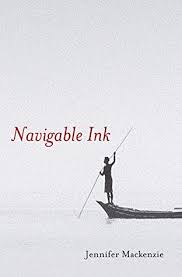
Navigable Ink

by Jennifer McKenzie

ISBN:P 978-1-925760-52-1

Transit Lounge

Reviewed by ANNEE LAWRENCE


Jennifer Mackenzie’s collection of poems Navigable Ink takes inspiration from, reveres and amplifies the life events, writings, reflections and concerns with history of the Indonesian author and activist, Pramoedya Ananta Toer (1925-2006). The idea of writing the poems emerged after Mackenzie was asked to translate Pramoedya’s Arus Balik (Cross-Currents) in 1993.

Pramoedya Ananta Toer was born in the small Javanese town of Blora in what was then the Netherlands East Indies. His most famous work, the Buru Quartet novels – This Earth of Mankind, Child of All Nations, Footsteps and House of Glass – covers, in his own words, Indonesia’s time of Nationalist Awakening during the first two decades of the twentieth century.

Based on the life of the pioneer journalist Tirto Adi Suryo 1, the novels follow a young man, Minke’s, developing political awareness and consciousness of the colonial apartheid system. As his story unfolds, the reader is drawn into an emerging vision of a new country – Indonesia, and of a new national language and cultural identity – Indonesian. 2

When Suharto’s New Order government came to power after a military coup in 1965, it did so by overthrowing the government of the nation’s first President, Sukarno (in power since 1945) 3. The coup unleashed widespread violence and the extrajudicial bloody deaths of more than half a million people who were labelled communist or communist sympathiser. Feminists, trade union leaders, teachers, artists, writers, doctors, farmers, university lecturers, and all kinds of progressive community leaders lost their lives. Of those who survived, many were shipped without trial or sentence to the island of Buru where they were forced to do hard labour.

Pramoedya was imprisoned three times during his life: in 1947-1949 by the Dutch, for nine months in the 1950s by the Sukarno government, and in 1965-1979 by Suharto’s New Order regime. At the time of his arrest and imprisonment in Jakarta on 13 October 1965, his house was ransacked and his library and eight of his manuscripts were burned.

Mackenzie’s poem, ‘Manuscripts in My Library Destroyed by the Mob’ lists Pramoedya’s works and writing that were stolen or burned in 1965 – works about and by Kartini and other women writers before Kartini, a collection of Sukarno’s short stories, a preliminary Study of the History of the Indonesian Language – the list is telling. They represent the voices that must be silenced, histories that must be erased or reinterpreted including that of the birth of the country’s national language. When Pramoedya sought to recover ‘two volumes of Pre-Indonesian Literature’ he was told by the director of the Balai Pustaka (the Government Publishing and Printing House) that they were ‘burned at the request of his superiors’.

After four years in prison, Pramoedya was taken 1500 kilometres east by ship to the island of Buru on 16 August 1969, where he remained as a political prisoner until 12 November 1979. Buru was a barren, infertile swamp and life for the political prisoners was characterised by daily beatings, hard labour, hunger and filthy conditions. In the poem ‘Writing Materials’, Mackenzie captures the insane mechanics of the arbitrary and senseless repression on Buru that denied the author pen and paper.

there was no pen, no paper
then there was
after many years
pen and paper
I wrote
in delirium
I remember none of
it

At the poem’s conclusion Mackenzie does not look away from the trauma that has done its work: ‘nightmares lap the house/which wall is crumbling?’
The eventual provision of writing materials allowed Pramoedya to finally begin to write the four novels of the Buru quartet that had been kept alive in his memory by narrating them to his fellow political prisoners.

On returning home to East Jakarta on 21 December 1979, Pramoedya was placed under house arrest and made to report weekly to the local police station. For almost two decades, he and his family endured constant and systemic discrimination and surveillance. As each of his books was published during the 1980s and 1990s, they were banned – allegedly for spreading Marxism-Leninism and Communism.

During Suharto’s thirty-three-year New Order regime, the gap between rich and poor widened, and corruption, cronyism and fraud became widespread. When the economic crisis took hold in the latter part of 1997, the country’s students faced down the authorities and took to the streets, and the seemingly entrenched President was finally forced to stand down on 21 May 1998.

In Navigable Ink’s opening poem, ‘Before Nightfall’, there is at first moonlight and tranquillity, but attention soon shifts to the sea – gara gara – turbulence, trouble, stormy weather, and ‘frenzied moonlit waves’ that threaten those on board. On the shore there is the howling of forest dogs. From the darkness, having disappeared from view of family and society for more than fourteen years, the political exile returns white-headed to his family, finds his daughters once more at his side, ‘forest and grassland will always greet/each other’, while they giggle and tease ‘You look like Hanuman’, the white monkey general of the Ramayana.

Images of the sea, the coast, boats, boat journeys, and foreign armadas appearing to bomb the islands’ ports with cannon ball – ‘they want to plant their flags on this very shore!’ – are threaded throughout different poems. They mark devastating invasion and journeys into exile. Life goes on and there is a unity of design, the link to precolonial and colonial events, the death or enforced exile of those who use words to agitate and need to be shut up, and the relentless environmental destruction caused by cutting down forests to make way for cash crops (most recently palm oil plantations).

In ‘Daendels as Wayang Puppet Watching Over Us’ Mackenzie draws on Pramoedya’s film essay, Jalan Raya Pos (the Great Post Road) 4, with translations of Pramoedya’s text captured on the right side of the poem, alongside the scenes filmed on the road of workers ‘sodden, flooded, collecting sand/this rushing river’, ‘stoking the furnace of the sugar mill’, trying to repair ‘a mudslide’, and of ‘a wayang performance/the puppets of Daendels, the Regent of Sumedang/a cracking gamelan/battle it out’.

The one-thousand-kilometre Great Post Road extends across northern Java, from Anyer on the West coast to the port of Panurukan in the East. It is the ghosted legacy of the Dutch Governor-General Daendels who in just one year in 1809 conscripted Javanese labourers to build it. Many died in the process.

In the film essay, the road remains the lifeblood of transport and communication for cars, carts, public buses, and trucks, but its history echoes the Suharto era’s own use of the unpaid labour of the political prisoners to build roads and bridges on Buru, and the inequality, poverty and poor working conditions of those at work along the road.

One of the scenes of ordinary daily life and survival captured is the attempt of a driver to repair his broken down truck in pouring rain. Mackenzie captures this in ‘Writer’s Block’.

WRITER’S BLOCK
rain soaking
a break down
diesel fumes rising like clouds
a rinse in the river of spare parts
the bus will rattle into life
eventually
WRITER’S BLOCK

The poem draws on other scenes from the film essay including one in which Pramoedya admits that when he is affected by writer’s block, the study of his homeland and its history are a key tool for organising his thoughts.

The film also bears witness to Pramoedya’s daily routine. The passing of time. The push-ups, the burning of rubbish, the ‘click click click’ of the typewriter. The joy of grandchildren. Trauma kept at bay.

Mackenzie’s poems reflect the contemporary as well as the past. Young people leave their rural towns and villages to seek better lives on the coast where they find themselves living on the margins of broken dreams – as drivers, tea pickers, sand miners, or carting bamboo as in ‘The Buffaloes’:

the buffaloes, in a choreography of the tethered,
lift their feet lightly
above the wagon
drooping bamboo branches
sway, leaves catching the light

at the swirling’s centre the driver’s steady gaze

In the three-part poem ‘Memories of the Revolution’, ‘Bandung Conference 1955’ recalls the coming together of emerging nations called on by Sukarno (as NEFOS – new emerging forces) to refuse allegiance to one or other side of the Cold War. In the second part, ‘Borobodur 1959’ depicts a visit to Indonesia by Che Guevara. In part three, ‘Jakarta 1995’, the Cold War has ended, the prisoners from Buru have returned to their families where they are demeaned and discriminated against as ex political prisoners (TAPOL). This ongoing persecution (denial of jobs and education) under the New Order government extends to their children and other close family members.

In ‘Jakarta 1995’ the snapshot of scenes from daily life at home skews to the right across the page, fulfilling a pattern of days in the present, ‘watering the plants’, ‘gazing over to the/neighbourhood kids/springing about/flying kites’, but still reckoning with the past, still ‘thinking of Sukarno’, and arriving at a single word, ‘sunyata’ – in truth.

For Pramoedya, remembering is agency, truth telling, and revolutionary act. And personal survival, relationship and day-to-day living are necessarily intertwined with the political.

The poems in Mackenzie’s collection are a brilliantly realised weaving of Pramoedya’s preoccupation with the images and episodes of history which flow like ghosts into the present. If the nation could be ‘unified politically and administratively by Soekarno without spilling blood – an exceptional occurrence in humanity’s history’,5 – then how are we to understand the widespread horrific violence against their own that exploded in the wake of the US military-backed coup in 1965?

Pramoedya interrogates history and demands that the present be understood, and if it can be understood, he asks, then what is the role of the literary writer? In his essay, ‘My Apologies, in the Name of Experience’ he writes that ‘as a person and a writer who shares in bearing the burden of change’, he regards the era of Sukarno (until 1965) and the Trisakti doctrine as ‘nothing but a sort of thesis. The New Order, an antithesis. Therefore, for me, it is something that in fact cannot be written about yet, a process that cannot yet be written as literature, that does not yet constitute a national process in its totality, because it is in fact still heading for its synthesis.’6

In the last poem in the collection ‘Dawn’, the train heads east from Gambir station, crossing through the countryside,

red mounds of earth high as small hills
on either side of the narrow track farewell
what I sense of
myself

And, at the end, a self that wears the marks and traces of brutal capture and incarceration, but who also goes on amid the details of daily living.

a chattering of bicycles and tea stalls
among the mud and puddles left after rain

my skin,
hoed, black beaten, weathered, flaking away
my life

Mackenzie’s Navigable Ink honours the inspiring, rich literary legacy of Indonesia’s most notable writer and pays tribute to his refusal to be silenced, subjugated or compromised. It is a wonderful collection that repays multiple readings.

Notes

1. Max Lane translated the Buru Quartet and as he writes in his Introduction to Footsteps (1990): ‘Tirto Adi Suryo was publisher and editor of the first native-owned daily paper, instigator of the first “legal aid service”, co-founder of the first modern political organization, co-publisher of the first magazine for women, and a pioneer of indigenous literature in the language of the nation yet to be born. All this and more is brought to life for the reader in an amazing adventure of intellectual discovery and emotion.’
(p. 10)
2. Max Lane, Introduction, in Footsteps by Pramoedya Ananta Toer, Penguin, 1990, p. 10.
3. In 1942 the Netherlands East Indies surrendered to the Japanese and, after the war ended, the
Indonesian nationalist leaders, Sukarno and Hatta, declared Indonesia’s independence on 17 August 1945. Sukarno was the nation’s first president and Hatta its vice-president. After four years of struggle, the Netherlands recognised Indonesian independence in 1949.
4. Jalan Raya Pos 1996, with Pramoedya Ananta Toer. Directed by Bernie IJdis.
5. Chris GoGwilt, 1996. ‘Pramoedya's Fiction and History: An Interview With Indonesian Novelist Pramoedya Ananta Toer, January 16, 1995, Jakarta, Indonesia’, The Yale Journal of Criticism 9.1: 147-164. http://muse.jhu.edu.ezproxy.uws.edu.au/journals/yale_journal_of_criticism/v009/9.1toer01.html
6. See Pramoedya Ananta Toer, 1991. ‘My Apologies in the Name of Experience’. Translation and
Afterword by Alex G Bardsley, 1996. https://sites.google.com/site/pramoedyasite/home/works-in-
translation/my-apologies-in-the-name-of-experience In the essay, Pramoedya relates that ‘the period of Guided Democracy in the last years of the 50s and first half of the 60s, [was] the period of the Trisakti doctrine – political sovereignty, economic self-reliance, cultural integrity – a doctrine that, while universal among nationalist states everywhere, was, however, a bogey for the countries stuffed with capital, and hungry for new fields of enterprise around the world. History teaches much about the power of capital. … The governments of so many states it turns into mere instruments of its will; and when they are no longer wanted, they are overthrown.'

ANNEE LAWRENCE’S debut novel, The Colour of Things Unseen (Aurora Metro, UK, 2020), engages with the rich cultural life that exists between Indonesians and Australians. She was the inaugural recipient of the Asialink Arts Tulis Australia-Indonesia Writing Exchange in 2018 (at Komunitas Salihara in Jakarta) and has published in New Writing, Griffith Review, Hecate, Cultural Studies Review and the online University of Edinburgh Dangerous Women Project.