Accessibility Tools

Skip to main content

Author: mascara

Birch by Dasha Maiorova
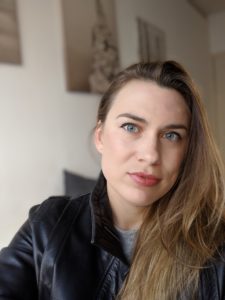
Dasha Maiorova is a Belarus-born writer who lives and works on Dharawal Country in Sydney’s southwest. In 2020 she was runner-up for the Deborah Cass Prize, and won the Heroines Women’s Writing Prize for fiction. Her writing has been published in The Big Issue, Voiceworks and Baby Teeth. She writes about books, reading and more at www.dashamaiorova.com


Birch

The train will derail.
The Pobedy departed Leningrad’s Moskovsky Station on a summer morning still yawning awake, on the fifteenth of June nineteen-ninety – but it would not arrive in Moscow. It was destined to collide with another train heading in the opposite direction, the inverse journey of its own.
The sun lingered behind swathes of cloud and a girl with her face pressed to the window did not finish her game of counting them. Ahead, at the gradual turn of the tracks, she saw the engine of the Pobedy as it travelled through the pine trees, and the cracked paintwork of the driver’s compartment.
Teaspoons rattling on the tea lady’s cart mimicked the onward chugging of the passenger train and the chatter of school children aboard, returning to country fields in the village pockets on the way to Moscow.
They would never come home.
The girl heard a bird-like shriek. A whistle. Then the brakes, screaming in agony. The Pobedy shuddered. School bags and satchels spilled from ceiling nets. Brakes seizing, the Pobedy continued its slide forward, seeming not to slow at all.
Through the pines, the girl watched as sparks shot from under the other train. The white eye lit up in warning; blinking at its twin once, twice, in disbelief. She whimpered. At the midpoint between the Pobedy and the oncoming train a figure stood unmoving: a man on the tracks, unfazed by the machines’ roaring approach. He glowed white under the glare of the locomotive headlight. His head bowed in mournful reproach. This small girl already knew what it meant to mourn.
Too late, the brakes gained purchase. An explosion bellowed through the carriages, an impact not only of force but sound. The train crumpled inwards. Vapour scorched through the full length of the thirteen passenger cars, obliterating glass from windows.
The carriages settled on their sides, twisted as wooden toys discarded by a child. The dead were silent and the dying held their breaths. Those children still able to scream, screamed. A bar pierced the girl’s thin chest. A new smile was torn beside a mouth that never had cause to smile before.

*

Spilled, charred limbs crowded Alyona’s thoughts as she waited in a holding area of Saint Petersburg’s Pulkovo Airport. The corridor bore the resigned shabbiness of an interrogation cell. Discarded customs declarations and incoming passenger cards formed a patchwork on the linoleum. Fluorescent bulbs spat yellow light over the pockmarked ceiling tiles.
Following the flight, it seemed time would remain suspended. Alyona spied a glance at the Soviet clock mounted on the wall across the hallway. An object of functional lines, a face without character.
Hunching on the bench with her suitcase wedged between her knees, Alyona began again to gnaw at her cuticles. Her spare hand strayed to her collar button, then to her hair. She brushed it behind one ear and then back in front again. To appear at-ease and inconspicuous she tried to maintain a slow, steady breath. It was a wasted effort. No matter what she did, Alyona could not hide her face.
A light flashed above the door opposite, indicating that she could finally enter the office. Inside, an immigration clerk peered over the frame of her glasses at Alyona. The officer had eyebrows thin as spiders’ legs and they rose in appraisal of the young woman. Alyona’s photo lay atop the open file on her desk.
She had supplied the passport-sized image months ago. In it, an indignant Alyona stared from under a fringe since grown out. Her hair loose around her cheeks, to cover her marked face. They warned Alyona in the consulate that any mistake in her application, even a photograph too much in shadow, would likely terminate her chances of entering Russia. She still refused to pull back her hair.
That image, that file, had since passed between many examining hands. The paleness of her skin surprised her. The blue-grey gash beside her mouth did not. She appeared older in the photo than she expected.
The clerk indicated the empty chair before the desk and began clacking at her keyboard. She hesitated, her gaze hovering over her monitor. Her glasses glowed with the reflection of the screen, obscuring her expression. She did not look at Alyona but rather through her. In return, Alyona averted her eyes, studying the brutal Cyrillic letters labelling a badge on the desk. She could not decipher and name and title scored there.

*

The speechless moment dragged on. Alyona’s heartbeat echoed through her body. She wondered if even the clerk could hear it: the drumming of her fear. She refocused her attention on a calendar pinned to the back wall of the clerk’s office. A mountain range. Snow-capped forest glowing against a red sky. Today’s date unmarked, of no significance to the woman who hung it there.
A printer on the desk groaned to life, making Alyona jump. Several pages of dense text spewed from its mouth. The clerk gathered them together and stamped them each with a flourishing emblem. From her position, Alyona distinguished an inverted crown and a pair of hooked anchors. The crest of Saint Petersburg.
“Sign here.” The immigration officer tapped a long fingernail against a blank line at the end of the document. Alyona’s breath quickened. The cryptic letters on the page blurred. She scrawled her signature and pushed the papers back toward the clerk, who stapled them without ceremony.
“Very good. The matter of entry is resolved. It is done.” The officer’s tone intended as a brush-off. She spoke English with a laboured, throaty accent. “A statement of validity will be issued to your designated place of residence. You are required to register with the nearest legal authority within three days, with your host acting as witness. Penalties apply if you do not do so.”
A fresh stack of papers appeared before Alyona. On the second line: her name, typed in that square, formidable language.
“My grandmother is unwell. She cannot leave her apartment,” Alyona stuttered in a tongue grown unfamiliar.
“Oh, you speak Russian.” A raised eyebrow. A fingernail trailed the text of Alyona’s documentation. “I see here, she is on a widow’s pension. Have her sign for you, then. I’ll give you a declaration form.”
Relief and uncertainty in equal measure collapsed like lead through Alyona’s chest. “I am surprised. I was expecting–”
“What did you expect?” The clerk narrowed her eyes. Alyona held that gaze for a second. Beneath the desk, she pressed her nails into her palms.
“Your application took into concern… special circumstances. In truth, I don’t understand it. Your case is the first of this category I’ve come across – and from Australia, of all places. You should be glad for the expedited process. Next year, upon reaching the age of twenty-five, you’d be stamped a ‘stateless person’, with no recourse to enter the country with such ease.”
No. It had not been easy.
The clerk’s authority reminded her of Lena, her guardian. The woman who had so nearly prevented Alyona from coming to Russia. From coming home. Another year, and Alyona could not have returned.
“Thank you,” she said instead.
“The arrivals hall is that way. You should be able to get a taxi to the city without any difficulty at this time of day. Unless someone is meeting you?”
Alyona shook her head, but the clerk had already dismissed her with a vague gesture in the direction of the door. “Welcome to Saint Petersburg.”
#
Alyona knew she overpaid for the journey. The cab was meterless. She gave the driver an address on a slip of paper, and he quoted a price. That was all he said.
The car wove through a city bearing no resemblance to the Saint Petersburg Alyona had imagined. She was unprepared for a route landmarked by soot-coloured bridges, factories enclosed in barbed-wire fences, and multi-storey complexes glittering with smashed windows. She alternated her attention between watching the dismal passing suburbs and the driver’s hands on the steering wheel. Faded tattoos marked the backs of his fingers. His eyes met hers in the rear-view mirror. Bloodshot and unperturbed by the marks on her face, as though scars by a woman’s mouth were a frequent sight in his world.
He left her at a road heaped with rotted leaves. Concrete slab khrushchyovka apartment blocks towered above her. Each more dismal than its neighbour. If the driver had not flicked a hand in the direction of a particular block, Alyona would never have guessed which of those sixties’ government-constructed buildings was her grandmother’s. The blocks cast bulky shadows over the road, mirroring the rows of yet more disposable Soviet-era khrushchyovkii. Each flat had its own small balcony. Some were cheery with ornate gardens of vines and potted flowers so lush they spilled into neighbours’ territories. Others were stacked with debris.
Alyona could not remember when she last felt so small. Even her lungs tightened, a sensation of her body wanting to close in on itself. She had arrived in Saint Petersburg. She was on the cusp of discovery, of unearthing all that remained of her history, yet she felt no sense of homecoming.
She tried to guess which window in the dirty grey expanse she would soon be looking out of. Her body acted before she made the decision to key the flat number into the intercom – 11. The device crackled to life. An entry buzzer sounded.
As Alyona pushed through the security door, she glimpsed a clutch of wilted sunflowers tethered to hooks on the side of the building. Though weak and bent by early autumnal chill, they were bright flares compared to the darkness within.
A bare bulb spit light in erratic bursts from the ceiling. The rustle of Alyona’s coat and the tread of her boots too loud against the blistered walls. Ahead, a timber block propped open the doors to a graffiti-emblazoned lift. A hand-lettered sign hung from the wood, declaring a hazardous proposition in exclamation marks. Alyona peered through the jagged spiral of stairs stretching six or seven landings above. She estimated flat eleven would be on the fourth floor.
Nowhere else to go except up.
Movement above. Light shimmered on a metal door, opened just for her. As Alyona climbed the final steps of the landing, she saw the figure silhouetted there.
“Irina Alexandrovna?” she asked.
The figure – a woman – shuffled forward. She was very small, and very old. She wore a long cotton dress beneath a pilled cardigan and slippers covered in stains.
“Alyonochka!” The old woman’s voice wavered in the stairway.
Alyona stood awkwardly at the last step. She turned her face down as she dropped the suitcase by her feet. The old woman addressed her again by the diminutive Alyonochka!, her voice made small by weeping. She seemed unable to contain herself.
The old woman placed her hands on either side of Alyona’s arms. She drew Alyona against her bird-like chest in a stilted embrace. Their height difference made it easier for Alyona to turn her face away. She hoped the old woman could not detect the mad beating of her heart. In Alyona’s ears, the thudding smothered all other sound.
“Finally, you’ve come back. You’re home!” Irina Alexandrovna sobbed. Her familiar, bittersweet smell struck Alyona as savagely as a blow. Coarse grey hair tied in a bun with an aroma… salt, sugar, cooked apples.
Sunshine baking dust in a carpeted room. Toys in a wicker basket. Alyona’s child-self reached for a worn doll. The memory was devastation. Alyona clutched back. She gripped the fabric of her grandmother’s cardigan as though to cling tighter to the memory-scent overwhelming her.
*
Wooden ornaments lined the windowsills of Irina Alexandrovna’s flat. Hand-hewn spoons, rearing bears, wolves arch-backed and howling. Browned tapestries hung on the walls, speckled with flakes of paper crackled from the ceiling. Irina Alexandrovna watched Alyona expectantly, as though wishing for some recognition on her granddaughter’s behalf.
A threadbare sofa designated the sitting room, its centre dominated by an unceremonious pile of books, stacked like chopped wood. Each title stripped of its spine.
Alyona finally spoke, though without directly addressing her grandmother: “You’re a reader…”
Irina Alexandrovna stared at the torn covers. Her expression carried surprise. “I gathered them when I was able to go up and down the stairs. Everyone throws books away nowadays. They throw everything away. No one knows what’s needed until the time comes, but everything can be useful in the end.”
She smiled a distant, unhappy smile. Alyona saw the glimmer of gold-capped molars at the back of her mouth.
“My girl, you must not be used to these things. Here, take off your boots. You must wear these when you’re inside.”
The old woman practically fell to the floor beside Alyona to help pull off her shoes. She presented Alyona with a pair of indoor slippers. They were paper light, with thin rubber soles designed for nothing more than to keep the immediate chill of the bare floor from her feet.
“These are your tapochki. I kept them especially for you. Look – they fit perfectly. I knew you would come.” Her voice turned hoarse. She sank back onto her knees, in a crouch virtually animal. “It hurts to know you will only see me like this.”
A chord snapped in Alyona. She kept it tight within her, that anger at Lena. She could have come earlier, would have – if only she’d known. But Lena kept everything from her, even the existence of this poor, frail woman.
“I came because I’m going to help you. You won’t be alone here anymore.”
Alyona thought she should place her hand on the shivering angle of Irina Alexandrovna’s shoulder. The moment she did so, a terrible jagged rasp came from her lungs. Irina Alexandrovna staggered to her feet. Her next steps took her to the adjoining kitchenette.
Alyona followed her. Words of panic slipped from her lips. “Please – babushka – what’s wrong? Let me – let me help.”
Irina Alexandrovna’s eyes were half-moon crescents of pain. She doubled over, degraded, feeble. Almost the feeblest creature Alyona had ever seen.
Almost.
In the helpless eyes of the old woman, Alyona saw the eyes of another. She had seen such pain before in her false mother Lena. Lena, staring heavy-lidded at blood spilling from her body, unalarmed but aching. Alyona hadn’t helped her. The sight of pain made her afraid.
Irina Alexandrovna was fumbling with a glass jar containing a small quantity of pills. Alyona took it from her jolting hands.
“How many?”
Her grandmother held up two fingers and Alyona dispensed a pair of circular tablets into her palm. The old woman’s hand quivered so violently she nearly threw the pills clear. Her motions reminiscent of a baby bird, she managed to swallow them. The image made Alyona uneasy. She inspected the pill bottle with its faded label. The text, even to one able to read Russian, was an indecipherable scramble of typewritten characters. She replaced it on a shelf beside a collection of similarly indistinguishable medications.
Irina Alexandrovna slumped onto a stool by the kitchen window. “Is this really what you want? To see an old woman live out her last days? I never wanted to become like this. There is no one left. Except you, my dear Alyonochka. You are the last I have in the world.”
To her own amazement, Alyona reached out again to the old woman. Touch – initiated of her own volition – a rare and unimaginable thing in her former life. She clasped her grandmother’s hand, the fingers gnarled as knots in an ancient tree branch.
In English Alyona told her: “It’s my duty to look after you. You asked Lena for me. All these years, I did not come, because she never told me. I’m here now.”
There was no way Irina Alexandrovna could have understood, but she smiled again, faintly, knowingly. “You have a lovely voice, my kind girl. But I like it better in Russian.”
#
Alyona sat in the bedroom she would now call her own. She studied its sparse furnishings: the bare wooden desk, the chipboard drawer in cherry veneer, the upholstered chair curdling foam at its seams. She listened to Irina Alexandrovna pottering in the kitchen down the hallway. The clink of plates and cutlery pierced the walls.
Grateful for a moment of reprieve, no longer watched or waited on, she mapped out the apartment in her mind. None of it appeared through familiarity.
A steel door shut away both the stairway and the outside world. A storage alcove for coats and shoes made up the entryway immediately within the flat. Following the entry, the sitting room with its sunken sofa and mutilated books. The doors to two bedrooms, Irina Alexandrovna’s and Alyona’s, framed either side of the lounge. Then there was the kitchen, almost too small for both grandmother and granddaughter to stand within together, and a bathroom dominated by a freestanding tub veined with rust.
No room spoke to Alyona’s memory. She had been there before, according to Lena’s retelling, for a short time in her childhood after her injury. The thought of it made her place a fingertip to the fibrous tissue at her collarbone, as though the scar might make her remember.
The fingers of her other hand pinched the zipper tongue of her unopened suitcase.
Lena warned Alyona she would only find pain and loss in Russia. Alyona refused to trust her: the woman who kept the truth out of reach. In Sydney, as Alyona peeled away layers of fabrication, milling through forged birth certificates and paperwork bonded in red tape, the name of an elderly woman remained. Irina Alexandrovna Stepanova remained. Some of those documents identifying her grandmother’s address remained buried in her luggage, but Alyona could not reveal them. Fragments of a foreign life cluttered the rest – clothes, planning documents, the practical miscellanea of a former Alyona who did not belong here.

‘Alone Together’ by Sahib Nazari

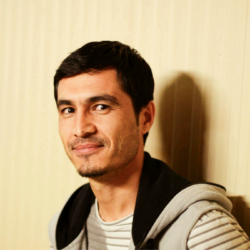
Sahib Nazari is a writer of Hazara descent from Afghanistan. He studied creative writing and literature at Griffith University. Other than his mother language Hazaragi, and adopted language English, Sahib is also literate in Dari/Fiarsi and Urdu. He lived in Pakistan for a few years before moving to Australia in 2005. Sahib voices his words in the form of short-fiction and poetry. He was the runner-up for the Deborah Cass Prize for Writing in 2020. His other stories have been published in Meridian – The APWT Drunken Boat Anthology of New Writing, Bengaluru Review, TEXT Journal, and Talent Implied – New Writing from Griffith University in 2016, 2017, and 2019.
 

Alone Together

Tall Darren was twice my height and as hilarious. A true-blue Aussie and the most down to earth person I knew since beginning work on the slaughter-floor. He was so tall that calling him just Darren was enough, but the nickname told him apart from five other Darrens employed in the abattoir. When I first met him, I thought his first name was ‘Tall.’
‘Oi, fucking smoko, mate,’ Tall Darren yelled into my earplugs.. Everyone wore earplugs or earmuff radio headsets like the ones nested around Tall Darren’s neck. Alarmed and oblivious, I ran for the nearest exit, but in the packed washroom I realised he meant something different.
I entered the mess room.
‘Oi, smoko means break not fucking fire,’ Darren announced, and the other butchers joined him in laughter. That’s how Tall Darren and I became friends. He helped me learn Aussie slang like fair dinkum, what it means to chuck a sickie and say fuck for no reason at all.
‘Keep your fuckin’ knives sharp and your fuckin’ eyes open. That’s half of your fucking job done mate.’ His face glowed red, bending over and grinding his blade against a whetstone.
‘But why would I say fuck for no reason at all?’
He straightened his back and took a deep breath. ‘O for fuck sake mate.’
*
Sleeping mask still on, Mr. Bean drops the ringing alarm clock in a glass of water. Mom laughs which she scarcely did since coming to Australia. With no literacy in English or any other languages, she struggled inside and outside the house. But laughter does not transcend literacy. If it were not a universal language, Rowan Atkinson would need Hazaragi, my mother language, to make Mom laugh. I watch her enjoy the moment, wondering how many Mr. Beans are in the world bringing laughter without talking. I’d seen many who made people cry. Moments later Mr-funny-Bean changes clothes while steering a car with his feet. Mom laughs again and I’m ready to go to work with her smile in my mind.
*
When I met Kathy three months ago, she was brunette, blond and back again. Today, a pink fringe flirted with her shoulder length brunette hair like Nelly Furtado in Promiscuous. Half the Dubbo girls wanted to be Nelly, copying her dresses and dance moves. like her. We bought beers and walked up to smoke on the balcony of the Amaroo Hotel – the only spot I liked in the place. Kathy dressed promiscuous as always, but she never played me, never pushed an impression. To hide her heartbeats, she downed half her beer in one go. I could barely drink beer, so as always, I topped her schooner. Her glass was always half empty. When it came to drinking, Kathy could skull a barrel of beer in a night. But alcohol didn’t’ explain her loud, silly and aggressive attitude. She was a mess ever since some kids strangled her staffy when she was fourteen. The girl responsible spent a year in a Sydney hospital with multiple fractures to both legs. It took physicians and physios around twelve months to repair the damage. Kathy had repeatedly smashed her with a cricket bat.
‘Hey Matty,’ Kathy called out as Chamillionaire’s Ridin’ Dirty was ripping up the roof. But the music was too damn loud, and the guy didn’t hear anything as he disappeared in the crowd.
‘Who’s Matty?’
‘Matt’s an old mate, I took his virginity in high school.’ She took a puff and blew the smoke to blur up the scene.
‘I thought you didn’t make it to high school,’ I said, eyes fixed, as if talking to my cigarette.
‘Nor did he.’
‘I didn’t either.’
‘You fucking smart ass. Are you still a virgin?’ Dark brown skin wrinkled her forehead.
Tryin’ ta catch me riding dirty bounced off my brain. I blushed. ‘Despite the fact that most Afghan men think with their dicks, yes. I am.’
*
My first ever job was a real bloody killer. Routine, afternoon shifts, starting midday. Finishing before mid-night meant I missed more sunrises and sunsets in my five years in Dubbo than the eighteen years preceding. I could only cuddle sunlight over the weekends. It was all the same inside the slaughterhouse: meat, blood and shit. Eight-hour shifts with thousands of blood-dripping carcasses hanging upside down, running on a chain one after the other. Seeing animals getting slaughtered was less traumatic a transition compared to seeing people getting butchered in the streets because, as an Afghan, I’d seen enough humans spilling human blood that those blood-dripping, headless carcasses couldn’t disrupt my nightmares.
*
I bought The Alchemist with my first ever pay from the abattoir job. With no skills and next to nothing schooling qualifications, joining the slaughterhouse was the only choice in an outback town like Dubbo. We weren’t fair dinkum Aussies. Not entitled to government benefits so, like Dad and my two older siblings, I worked to support the family. But deep down I knew it wasn’t for me. This was not the dream.
*
Tall Darren, skinning knife in right hand, steel in left, pointed in the direction of a round and bouncy bloke who looked like Peter Griffin from Family Guy. ‘Here comes short Darren.’
Walking in holding a can of sugar water in one hand, knife kit in the other, Short Darren greeted us with a ‘fuck off.’ His uniform soaked in sweat. His breaths outpacing his body by the time he settled around the table.
‘His nickname is Human Balloon.’ Tall Darren stroked his knife on the smooth steel.
‘Oi fuck you, Lizard of Oz,’ Short Darren scowled. His rotund face turned pink behind rounded spectacles. ‘My nickname is fat boner. You want some?’
Tall Darren ignored him. ‘And that’s Victoria’s Secret,’ he said, pointing with his knife towards a handsome bloke with a Ned Kelly kind of bush beard who waved his hand from across the table. ‘He’s obsessed with girls named Victoria.’
‘Or beer,’ Short Darren shouted.
‘That’s one piss of a fucking beer mate.’ Tall Darren adjusted his hair net, preparing for the day.
The bush bearded bloke smiled and silently raised his middle finger.
Short Darren asked where Blunt Fuck was. Tall Darren said he was off for the day.
‘You mean off or chuck a sickie off?’ I tested myself.
‘Finally, someone from Afghanistan who’s not a sheep shagger,’ Darren cracked.
‘Is that his nickname?’ Short Darren fired, pointing at me with his sausage fingers.
Darren said, ‘Na, he’s our fucking Baba. Ay Baba?’ He was laughing his lungs out. Only the two of us knew the joke. Short Darren sipped his sugar water, while Victoria’s Secret bushranger ran his blade along one forearm to check if it was sharp enough to shear a sheep.
*
Tall Darren called me Baba because one day on the floor when the lairage was waiting refill. He asked if I knew any songs I could sing. I started baa baa black sheep except I rhymed, baa baa white sheep have you any wool. No sir, no sir, fuck off you fool. Darren instantly gathered other butchers around to listen. He pointed out that it’s actually baa baa black sheep, not white sheep. But I kept to my version because, I told Darren, we are the black sheep in this case. He started calling me Baba. I explained, in Afghan language and some others between south Asia and the Balkan region, baba means father. He chuckled like a child about to say something cheeky. ‘You mean father, or daddy?’
*
In a park’s playground, three kids hold a skinny brown girl by the arms. A skinny freckle-faced teenage girl and a fat boy in crew-cut hair are pulling a strap wrapped around an aging staffy’s neck. Bleeding, huffing, dry tongued, lying on its side, the dog tries to bark but there’s no hiss, or sound. Saliva form bubbles. Helpless, the staffy’s eyes pop in and out with each breath. Its legs start trembling, ears vibrate, then the tail stops wiggling. The heart stops pumping air. It finds peace. Breathless but peaceful. Tears run rivers from the brown girl’s eyes; and perhaps revenge too. Then a blackout.
*
I bet Mom would have been a bright storyteller, had she been educated. Would she have become a teacher, a writer or an alchemist, I often wondered. Once I asked how she felt about illiteracy. She replied, ‘You cannot lose something you never had. I’d feel sorry if I were the only woman in Afghanistan but it’s the whole country.’
*
Kathy’s uncle often poked his head into her room pretending to see if she was alright, offering her the first joint to smoke when she was just thirteen. Cigarettes followed; she helped herself, taking one out of the pack when her uncle was stoned. Soon enough beer became the beverage of choice. One led to two, two led to trouble, and before she knew, she was smoking like a vacuum and drinking beer like a baby drinks a bottle.
At first, it was her hair. Then all the places not covered by her shirt: arms, neck and shoulders. Then whatever was left out of shorts in the hot and sweaty Dubbo summer: feet, calves, thighs. When it all started, Kathy knew what her uncle was doing but she didn’t bother and cared too little to confront him because she depended on the dope. But she noticed his hands travelled a few inches further every new day. One still-air hot day his fingers unhooked the bra from under her light blue shirt. He spilled half a can of beer down her front until her small bosoms surfaced like the sail of a submarine from a blue sea, nipples erect like radio antennae. She started cursing and punching him, smashing his head with a wooden chair, making him bleed and freaking the fuck out of him. But they always settled things down before her grandma returned home from work in the afternoons.
By that evening Kathy had come up with a plan, to play, to negotiate a term; she’d keep quiet if her uncle drove her around until the day she found Freckles.
*
We had another Afghan family, that also called Dubbo home, over for dinner. Mom cooked lamb curry, prepared pulao, sorted out salad with the help of my sisters. But the guests seemed reluctant to touch the food for fear that the meat might not have come from a halal shop. This furthered Mom’s frustrations; she took painkillers for her backache, for the stiffness of hour-long food preparations. Afghans can stomach anything but change. They are concerned if the meat is halal but receiving Centrelink benefits while working cash-in-hand is fine. Because God has no problem how money is made as long as meat is blessed.
*
‘I gave him head.’ Kathy and I were spending another drunken Sunday near the bank of Macquarie River. We often drove up to that spot out of town to get stoned so the coppers and creeps in town didn’t bother us. I was stoned. She was drunk, and stoned.
‘What?’ I said, barely able to stand straight under the sun.
‘My uncle, I gave him head to get him to drive me around to find Freckles.’
‘What’s head?’
‘You are a fucking caveman, aren’t ya? I sucked off his cock.’
I felt more ancient than a caveman for not knowing giving head. Fossilized.
We drove back to town late in the afternoon. Kathy was still spilling beer on her singlet.
‘Wanna go out tonight?’
‘Yeah, I’m dying to get pissed and see you pick a fight with the girlfriends of all the guys you wanna fuck.’
‘We’ll do something different tonight, I promise.’
‘I doubt that.’
She lit a cigarette. ‘You want to fuck me. Isn’t that what you want?’
I pulled the car up behind Amaroo Hotel. ‘Kaths, I just want to know where we stand and where we’re going. I mean when will we stop this get-stoned-get-drunk-as-fuck-catch-up game?’
She squashes the container spilling beer all over. ‘Just fucking drive, will ya?’ she snapped.
‘No. You’re drunk and you’ve no idea what the fuck you’re talking about. Let’s go home and talk about it some other day. I need time to think things over.’
A police car slowed down to check on us as it drove by. Kathy dropped her beer-can under her feet. She picked up her bag, and out she jumped, walking towards Amaroo. The coppers didn’t stop, nor did Kathy. I pressed on the gas thinking that sometimes it’s better to remain a caveman on purpose.
*
Mom’s backache, the symptoms of slaving away as an Afghan housewife all her life, was worsening every day. As if raising seven children wasn’t hard enough, now she was slaving away all over again in Australia. Afghan men don’t change. They only like the idea of change.
*
Cables rustled about the rusty poles of swings; seats were missing. Birds sang, trees hissed in the hot windy afternoon. In a distance, a girl with freckles and a fat boy with a crew-cut kept hammering something against the solid surface of a basketball court. They took turns smashing it on the ground. Then the fat boy stood up, swung his arm skywards, and it came down, hitting the concrete with a thud. They’d cracked the shell: It was a tortoise.
A moment later, a skinny brown girl is standing over their heads holding a cricket bat firmly in her both hands. She swings the bat without a warning hitting the freckled girl mildly in the forehead as she ducked right in time colliding with the fat boy in turn. The boy makes a run for it but the girl can’t. Slightly concussed, she covers her head and screams. The brown girl made another swing aimed at her legs. She keeps coming harder and faster, with all her vigor and vengeance until cries of the freckled girl overcome the singing birds. Trees hiss. Rusty cables wring about as the brown girl walked away in silence, and tears.
*
The butchers were sweating and swearing outside the mess-room. Inside, a grave silence creeped all over when I walked in. Blunt Fuck was dead. He’d lost it in a head-on collision with a truck on a November morning. He’d been doing double-shift to save up for the Christmas break. Tall Darren said he owed the bastard a meat pie. His tears wouldn’t stop. That was the only time I’d ever seen him cry.
*
Autumns were the most surreal spell in Dubbo, when trees said goodbye to leaves, one by one, coloring the streets in red, brown and yellow. Mom walked up and down Macquarie Street, taking photos of the fallen leaves, the naked trees, as she strolled in the cooling breeze. The clown without a mask, Mr. Bean, still cracked her up like cartoons crack up kids. She found peace in her solitude as the communication gap remained hugely unfulfilled. Only Rowan Atkinson filled that void. But she smiled more often since joining TAFE to learn the English language, attending three days a week. She made new friends too because, like laughter, food doesn’t need a language to bring people closer. Food fathoms solidarity just as laughter apprehends love. Like the autumnal trees, Mom too understood that she must let go the timeworn leaves to welcome the new ones.
*
In my loneliness, I found peace. In my peace, though, there was no loneliness; only a dream. Whenever knives were at work, I told myself that one day, the butchery will be behind me. Whenever silence ruled, I dreamed that one day my dream will realise me because fate didn’t bring me to Australia just to butcher, drink beer, eat kebabs and die. And that sooner or later I’ll hang up my slaughter-gloves, swap whetstone with
*
One weekend, under the spell of a red and orange outback sunset, I texted Kathy.
‘Virgin no more.’ I pressed send.
‘Let’s catch up,’ her text popped up.
Instead of a textual argument on the old Nokia headset, playing with buttons, I thought it’d be better to fight face to face. Half an hour later, as she got into my car, I tried to kiss her on the cheek.
‘No!’ She eye-balled me and backed away. ‘You slept with a chick.’ She was loud. ‘You’re a fucking cheat.’
‘What the fuck Kathy. Take it easy. We’re not together. We haven’t even kissed despite knowing each other for months.’
‘Fuck you.’ She threw a punch at me.
I caught her fist with both hands. ‘Are you fucking serious? Because from where I see things, it doesn’t look like we’d ever sleep together even if we were the last two people on earth.’
‘If I don’t sleep with you, doesn’t mean I don’t care for you.’ She plucked a cigarette from the pack.
‘If you don’t sleep with me but care for me then you should be happy that I got laid.’
She put out the flame on the lighter. ‘Who’s she? Do I know her?’
‘You’re not making much sense Kathy. You don’t want me, but you also don’t want to see me with another chick. I’m pretty sure there won’t be any virgins waiting for me in the afterlife if I drop dead today. So we must draw a line somewhere. I know that what happened to you, and to your dog, was wrong but you gotta give yourself another chance. You must move on.’
‘It’s not that easy.’ She blew smoke on my face.
I rolled down the window. ‘Maybe. But you can’t just take a friend hostage.’
‘What do you mean?’
‘I mean I’m moving on.’
‘Fuck you.’ She took her purse, cigarette pack, and jumped out of my car. ‘Go fuck yourself.’ She slammed the door shut.
From then on, we travelled back in time to become the strangers we still are today.
*

‘I am full of love’ by Anith Mukherjee

Anith Mukherjee is an artist based in Sydney. He has a brief publication history.
He is currently  studying film at AFTRS. Anith is the 2020 Deborah Cass Prize Winner.


I am full of love

Looking for a place to live. Looking for a job. You begin to doubt your judgment, you begin to doubt everything. You become imprecise. And that’s when you’re beginning to go under. You’ve been beaten, and it’s been deliberate. The whole society has decided to make you nothing.

– James Baldwin

You wanted to fight for a cause
Then go out and love someone

-Gang Of Youths

On the tram to film school I feel sick from my morning medication. The tram stops and I walk off, Nick Cave songs playing through my headphones. Inside a public toilet I vomit, cough and spit. Kneeling on the cracked tiles I wipe my face with toilet paper. Nick Cave sings in my head, ‘if you’re in Hell what can I say, you probably deserve it anyway.’ Everything is prophecy, signs and symbols. There is no mirror above the sink where I wash my face and I wonder whether my eyes are red. On campus I buy a coffee and sit down. Ryan tells me the morning’s lecture is on Italian Neorealism. Sitting in the lecture theatre, watching clips from La Notte, I fall asleep. Ryan wakes me when the lecture is finished and we walk outside. Indira and Jackie are smoking on the lawn. Jackie offers me a cigarette and I shake my head. I’m quitting, I say. Indira asks me what we should make as a documentary for this semester. Let’s do something on brown diaspora, she suggests. I shrug and say I don’t want to make something about being brown just because I’m brown. It’s all they expect of us, I continue, why can’t I make a film about love or trout fishing? Indira laughs. They eat that shit up, she says, besides what do you know about love or trout fishing. 

In class Ava shows me her latest short story. I’m thinking of leaving my boyfriend, she says. Good, I reply, then you can date me. Ava rolls her eyes. You wish, she says. The tutor discusses the male gaze in cinema and an argument between Felix and Melissa ensues. Ava shows me another piece of writing. What do you think, she asks. It’s too sad, I reply. Ava scowls and says, fuck I don’t want to only make people sad. My doctor put me on Lexapro, she says idly, I think it’s making me confused. She looks at me and asks what meds I take. Atypical antipsychotics, I say. Sounds intense, she replies. After class Ava and I sit outside on the grass. She lies on her back and closes her eyes. The sun shimmers across her face and causes little specks of glitter under her eyes to sparkle. I lie next to her and look up at the sky. What do you see when you look at the clouds, I ask. Ava opens her eyes. Ice cream, she says. 

In the evening I walk to the train station. The sunset sky is pink and blue and orange. The daily procession of fruit bats streak across the horizon. On the train ride home I idly consider whether I have wasted my life. Somewhere along the way it seems that I failed deeply, made some fatal error at a critical juncture. The result being my current life. What do I do now, I ask myself as the train arrives at my stop. At a local falafel joint I buy two slices of pizza and sit waiting for the bus, eating. Grease covers my fingers and above me nocturnal birds screech themselves awake. At home I lie in bed and scroll through pornography on my phone. Bored I decide to microwave my fingernails, to slice off my ear, to drown a kitten. Something has to happen, I think, before I ossify. At midnight I walk the local park track down to the river. The water is still and calm and black. Lying on the soil with my jumper folded beneath my head I fall asleep. In my dream I am a lizard king, I am a rat spider, I am a junkie priest. In the early morning I walk home to visions of a Holy War – chariots and lighting and swords on fire. At home I quickly swallow my meds and brew a coffee. In the yard outside I close my eyes under the sun. Gary walks out and lights a cigarette. He gestures to me and I shake my head. I’m quitting, I say. 

*

Patti sits up in my bed and runs a hand through her neon green hair. I take lots of medication, I say. I have a lot of needs, she replies, I’m too horny for this shit. Do you love me, I ask. Don’t ask me that, she says, not now. I stare at my soft brown cock, all limp and lifeless. What kind of man am I, I think. Fuck it, I was never any kind of man at all. I could stop taking my meds, I suggest. Patti shakes her head. I don’t want you to do that, she says, don’t put me in that position. We sit in bed for a while, silent and tense. Patti exhales deeply. I’m going to take a bath, she says finally. The phrase ‘emotionally avoidant’ passes through my head. I search to remember where the phrase comes from. Something I must have read. I read too much, I think, all those useless books. 

When I was younger all I wanted was sex. Then everything became about art. Now all I think about is money. I hope Patti doesn’t use up all the hot water, I think to myself. I hope she doesn’t notice that half the light sockets are empty. Some time later Patti walks back into the room, wrapped in a towel. She sits on the edge of the bed and smiles. Baths are so consciousness cleansing, she says. What do you want to do today, Patti asks. I shrug. How about checking out the Gauguin exhibition in the city, she suggests. Wasn’t he some kind of racist, I ask. Patti shrugs. Probably, she says, they all were back then. 

We sit in the gallery cafe, each sipping black coffee. When did we stop having conversations, Patti says, when we first met we would have these long sprawling conversations. She watches the strangers in the cafe for a moment, then looks me in the eye. Her eyes are speckled and blue and for a brief moment I am filled with regret. We were getting to know each other, I reply, our brains were fuelled by novelty. Patti furrows her brow. I don’t accept that, she says. Talk to me about something, she says, what’s been on your mind? I shrug and look around. I’m worried I’ll never have any money, I say, I’m worried I’ll never learn how to survive. Patti smiles and twirls a strand of green hair around her index finger. You, me and the rest of us, she says half sarcastically. La génération condamnée, Patti says, Hemingway would be proud.

The gallery is mostly empty and Patti stops to study a self portrait of Gauguin. I look into his hollow oil eyes – deranged and syphilitic and anaesthetised. He went all the way, I think. We stand next to each other, staring at D’où Venons Nous / Que Sommes Nous / Où Allons Nous. He was beautiful, Patti sighs. He was sick, I reply. He went all the way, I think again, to paint like this you have to relinquish your claim to reality. I feel fear and repulsion and admiration. What is it to be a person with no place, no future, no desire? How do I exit this game, I think, when do I get to wake up. 

Inside Patti’s apartment spins a vinyl of Bitches Brew. Patti pours two glasses of red wine and sits next to me on the couch. It’s true, I think, our relationship used to be hyper intellectualised. She’s disappointed in me and I am bored of her. Inertia keeps us connected. This pattern repeats itself endlessly. Somewhere along the way I confused lust for love. Somewhere along the way I forgot to become a person. Patti stands up and begins to dance as Miles Runs The Voodoo Down plays from her vintage Hi-Fi. She sways side to side in the middle of the room, her moonlight skin scattered with rainbow tattoos. It occurs to me that I have no love for her. Love is the missing link between myself and life, I think, a link I have no idea how to repair. 

Patti’s naked body presses against mine. I hold her in bed and she is warm underneath the soft cotton blanket. Gently she kisses me on the cheek. You don’t know how to love someone, she whispers into my ear, you don’t know what it means to love. In the morning I put on my clothes and leave the apartment while Patti sleeps. Outside the air is clean and cold. The streets are not yet busy and I walk around until I find a cafe. I try to buy a coffee but my card is rejected. To hell with everything, I think. My phone buzzes with a call from Patti but I don’t pick up. Instead I catch a bus back to my place.

*

My whole life is a fucking mess, Ava says without affect, I have zero idea how to function in the world. She plays with her hair and sighs. Why can’t you just do nothing with your life, she says, I don’t want to have to do things. Ava and I sit in the school’s foyer, skipping screenwriting class. Marry me, I reply, we’ll move to Paris and write dysfunctional novels. Ava rolls her eyes. You have no money to fly to Paris, she argues back, besides the French are annoying. 

After class Ava and I walk to the bar. We both order the house red wine and sit outside, watching the construction of a circus in the field nearby. By evening we are tipsy and when Ava looks at me I feel compelled to hold her and kiss her. Her lips are soft and her spit tastes like cheap wine and cheap tobacco. She places a small hand on my arm and for a moment I feel overwhelmingly lonely. I pull away and Ava smiles slightly before closing her eyes and rubbing her nose. I’m still with Jack, she says, you know that. Jack sucks, I reply, you only stay together because you’re both too afraid to break up with the other. It’s the same between me and Patti, I continue, this way we both have an excuse. 

In my room I lie in bed while Ava undresses. She lies next to me and reaches between my legs. With Ava there is no issue and we fuck until our bodies are tired and sore and sweaty. Afterwards Ava wraps her arms around mine and rests her head on my chest. Now we’re both free, she says. 

In the morning Ava is gone and I wake up alone. On the pillow next to mine is a handwritten note: ‘Forget last night. I am happy with Jack.’ Above me I notice a dark, damp spot growing on the ceiling. I crumple the note and throw it across the room in the vague direction of my waste basket. It’s 8:30 AM and class starts in an hour. Fuck it, I think, I’d rather do anything else today. But what, I ask myself, what is worth doing? An entire world, a whole life, given to me for nothing -and I have zero interest in any of it. It all adds up to nothing. Samantha ran away to help the environment and faced the evil of fossil fuel capital until she collapsed exhausted, Jesse smoked weed for a hundred years and melted back into the Earth, Rachel lost interest in music and slit her wrists live on 4Chan, Jackson became a lawyer and jumped off his penthouse balcony, Mandy wrote poetry that no one read and cried silently into to the neutral eyes of her twelve rescue cats, Priya joined a hippie cult in the mountains and renounced money for sex, Ashwin stuck a silver needle in his veins and thought he was Coltrane, my father ripped out his own catheter dying from a brain tumour in hospice and blood spurted out his great brown cock enough to drown even his own screams. And here I lie, feeling nothing. 

In the bathroom I unwrap an Astra Platinum razor blade. Gently and without malice I run it across the palm of my hand. The lack of pain surprises me. Thin streaks of blood flow down my arm as I hold it up to the light. Good, I think, I still bleed and I am still free. Suddenly I am overwhelmed with the power of my own freedom. Anything can happen now, there are no limits, no boundaries. I exist in a timeless, spaceless vacuum. Today is only another day. 

*

All I want to do is eat shit food and watch pornography and sleep, I tell Sun, why is there no space in culture for my aimlessness? Sun scratches his scraggly black beard. He says nothing, opens his rainbow cloth backpack and reaches inside. He takes out a small brown paper bag and hands it to me. Tonight, he says, if you are ready to leave Hell. At night I pour the contents of the paper bag onto my desk. A handful of dried psilocybin mushrooms fall out. Intense waves of anxiety and anticipation pass through me. Fuck it, I tell myself as I scoop up the dried mushrooms and swallow them in one motion. 

I lie naked on the grass in my small backyard and everything feels inevitable. I ruined my life, I think, I wasted it with banal malaise. So begin now, a soft voice replies. I’m a bad person, I think. No, the voice replies, you’re flawed like everyone. I use women, I think, I treat women like shit. So change, the voice replies. No one has ever loved me, I think. Then love first, the voice replies. I am so afraid, I think. That is OK, the voice replies. My naked body glimmers under moonlight and I feel sickly, broken, exhausted, alienated, bored, self-loathing, hateful, lustful, impotent, enraged, transient. My naked body glimmers under moonlight and I feel mirthful, funny, entertained, calm, hungry, warm, healing, motivated, interesting, peaceful, connected, eternal. In this moment I am very young. Violet petals stream through the parted clouds and morph into butterflies – fluttering and free and graceful. With little kisses they relinquish me of the poison in my blood. My lilac skin soft and blossoming. Seized by instinct I run to the bathroom and vomit in the toilet. Blue and purple bile leaks from my gut – little maggots writhing in the liquid. Help me, I cry, please forgive me. I was never supposed to come here, I was never supposed to fall this far. All I ever wanted was a real love, an undying love that would absolve me of this pain and guilt and waste and failure and regret. Great sunflowers bloom from my fingers, my eyes, my chest. Everything is golden and shimmering. Pink tears ooze down my glowing face and when I look into the mirror I am alive. 

The morning sun rises as I sit outside, holding a blanket and a jug of fresh orange juice. My neighbour walks outside and unlocks her car. Good morning, she says with a smile, you’re up early. Three years I’ve lived here, I think, and I’ve never noticed my own neighbour, never knew she existed, never even said hello. Good morning, I reply. 


Tamara Lazaroff reviews Peace Crimes by Kieran Finnane

Peace Crimes: Pine Gap, National Security and Dissent
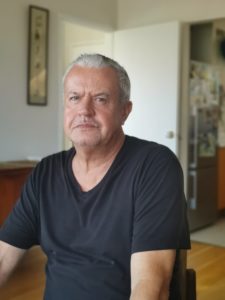
by Kieran Finnane

UQP

ISBN 978 0 7022 6044 5

Reviewed by TAMARA LAZAROFF


I have to admit I jumped at the chance to review Peace Crimes, partly because I know two of the six so-called ‘criminals’ – the Peace Pilgrims – who are Finnane’s subjects. Andy Paine and I have moved in some of the same circles for close to a decade, including the Brisbane zine community. I have become acquainted with Franz Dowling more recently through my occasional volunteering at the Friday night Food Not Bombs street kitchen in West End, which Franz co-coordinates. Way, way back in late 2016, I also knew that Andy – I hadn’t yet met Franz – had an upcoming trial in Darwin. It had something to do with a direct action, a non-violent trespass into the Joint Defence Facility Pine Gap (just 19 kilometres outside of Alice Springs), and he was – all six Pilgrims were – facing up to seven years in gaol. But my understanding about what exactly the group did, why they did it, and how their action fit in with the larger picture of war; war crimes, Australia’s involvement, resistance and civil disobedience, was vague. Of the enormity of their considered, courageous act of protest, I had no idea.

Helpfully, Finnane begins her book on the night the Pilgrims begin their journey by foot to the facility. She draws links, and not incidentally, I don’t think. (If anything, the entire narrative’s undercurrent is concerned with our undeniable connectedness.) In any case, in her recounting of that 28 September, 2016 late evening, she is looking up at the starry sky on her bush block on the southern side of Alice while the Peace Pilgrims – Jim and Franz Dowling, father and son, Margaret Pestorius (whom the police cast as an ‘elderly woman’, though she self-describes as a ‘direct action goddess’), Timothy Webb and Andy Paine are only just setting out on their 15 kilometre walk through the darkness, spinifex and scrub, and rocky, unknown terrain, sometimes uphill. It is the very same night that a missile from a US drone strikes the village of Shadal Bazar in Afghanistan, killing 15 people and wounding 19, most of them civilians – though the group do not know this yet. When they reach Pine Gap, Franz and Margaret, who have carried along their musical instruments, a guitar and viola respectively, begin to play a lament for the dead, for the victims of war. Andy livestreams the event on a borrowed mobile phone. They all pray, especially for those who have died by drone strike because of Pine Gap. As Finnane clearly details, this military facility supplies targeting data ‘used for drone killings in war zones in Afghanistan and Iraq and in countries with which Australia is not at war, such as Pakistan, Somalia, Yemen’ (12), making Australia potentially responsible for war crimes and the terrorism that is returned in response, not to mention incomprehensible human suffering. The number of strikes are rising, too. In Afghanistan alone, there are currently about a hundred a month – that’s about three a day. It is this the Pilgrims wanted to draw attention to – even at risk of their own incarceration – and they did. As a result of their on-site arrest, there was the subsequent trial at the NT Supreme Court and the international media interest that followed. Peace Crimes ultimately contributes to and advances this project of awareness-building.

Finnane is a journalist by trade. She is, in fact, one of the founders of the Alice Spring News, which has been publishing since 1994; and she personally reported on, and was present for, the entire two weeks of the Peace Pilgrims’ court case. Her first book, too – Trouble: On Trial in Central Australia (2016) – is focussed on the courtroom, violence (domestic, this time) and is also centred in Alice, where she has been living since 1987. With such long and close links to the town, Peace Crimes definitely has an insider’s perspective – and a lot of heart – alongside being incredibly well-researched, as would be expected. Particularly fascinating – engrossing even – are the sections on the history of the anti-war movement in Australia and overseas, which serve to foreground the Pilgrims’ actions. For example, during the Australian anti-conscription movement of the early 1910s, 34,000 citizens were prosecuted and 7,000 were imprisoned for their anti-conscription activities, including the future Prime Minister John Curtin! These details and more on the purposes, successes and challenges of civil disobedience, recent and past, are intertwined with the history of Pine Gap and those who oppose it (including another former Prime Minister, Malcolm Fraser). It is all compelling. Equally compelling is the court case itself – Nobel Peace Prize winner Richard Tanter, among many other public figures, come to give expert evidence for the defence – and the legal machinations on display are also, on occasion, a little farcical. All of this makes for mind-boggling, mind-expanding reading. Really, however, it is the protagonists themselves who shine the most brightly in the story that Finnane tells. She writes:

I was drawn to write about the Peace Pilgrims because of the large view they take of their social responsibilities. They may join campaigns, but really, their field of action is the whole of their life, as far as their capacities and nonviolence can take them. They are connected to movements, and even specific groups within them, but within the bounds of their strong spiritual and moral frameworks they seem remarkably free – unconstrained by waiting for consensus, or theoretical coherence, or numeric strength … (247-48).

For me too, as a reader, it is the parts of the book in which Finnane illustrates the ways the Pilgrims ‘embody justice’ (190) in their everyday lives – not only their more pronounced political actions – that are some of the most engaging, and heartening. Franz Dowling, for instance, co-facilitates a house of hospitality in Greenslopes, which is also his own home, providing free shelter and food for people in need in the Catholic Worker tradition to which he belongs. Jim Dowling, Franz’s father, a long-time peace activist also motivated by his Christian faith, lives in voluntary poverty on a farm in Dayboro with his wife Anne Rampa where they have brought up their seven children. They have a biogas toilet that fuels the stove, and other ingenious green power facilities, including a veggie oil-powered vehicle. Similarly, Timothy Webb, who was raised in hand-built house in New Zealand, lives a life that seeks to harm others as little as possible; his parents, like Franz’s, instilled in him the understanding that ‘the luxury and convenience of Western lifestyles were paid for by the ‘short, unbelievably miserable lives’ of other people halfway around the world’ (24). Andy, too, practises radical renunciation; he lives on less than $5,000 a year (without Centrelink), though his days are filled with endeavour – the production of his weekly community radio program The Paradigm Shift, for one. At the time of the writing of the book, too, he was ‘sailing towards Manus Island with a group intent on protesting Australia’s asylum seeker policies’ (243) in order to, once again, stand up for others. On the other hand, Margaret Pestorius, a social worker and therapist, ‘questions, gently, her friends’ dedication to voluntary poverty’ (25) – though she, too, shares her house Peace by Peace with others, including a friend she was at the time nursing through cancer. At home in Cairns, she has long been involved in organising healing rituals, such as the Frontier War memorial on Anzac Day eve for indigenous and non-indigenous people alike. And finally, Paul Christie – the sixth Pilgrim who walked alone a few days later on 3 October, 2016 and had his own separate trial – moved to a rural cooperative upon the hearing’s resolution as a response to and action against climate change.

Like the Peace Pilgrims themselves, Peace Crimes is an inspiring and radical work – though it shouldn’t be. Hopefully in these post-COVID times we will together begin to recreate our society for the better, and for all, in a spirit similar to the Peace Pilgrims’. For a further taster of Peace Crimes, you can watch this short video of author Kieran Finnane speaking about her motivation for writing the book against the backdrop of Arrernte land and the Pine Gap base, the huge information-collecting radomes in the distance.

*

Here is the link for the bolded section above:

*

TAMARA LAZAROFF is a Macedonian-Australian writer of fiction and creative nonfiction. She lives in Brisbane on Yuggera and Turrbal country. Her collection In My Father’s Village & Other Freedom Stories (Pollitecon Publications) was shortlisted for the 2020 Woollahra Literary Digital Literary Award; and her novella Husk, Root, Bone was recently published by Big Fiction Magazine (USA).

Peter Gilkes

Peter Gilkes is a writer, artist and previously an operations and business manager based in Kuala Lumpur. He recently returned to Australia after working in SE Asia for nine years. He has had articles published with the Sydney Morning Herald and is now compiling a book of images and memories of travel from the last 30 years.


The Man with Shaking Hands

June 1980.  Baluchistan. Pakistan.

My bus to the Iranian border slowed down and the driver steered off the highway and parked beneath the canopies of some welcome trees.

It was 11am, a roadside shop cum restaurant for drink and food and ablutions in the Kharan desert of Baluchistan. The scenery was arid. Flat sand plains in 35+ Celsius heat. The hills on the distant horizon were blocks of gold, ethereal in the hazy light, almost imagined.

The coach I travelled on was a landscape itself, a brilliant glistening beetle. Pakistani buses are crazy, colourful creations so distinct from the drab brick cities. The metal frame was adorned with lights and painted colour. There were blooming flowers and strutting peacocks bannered across the front cabin. Between and around the windows were swirling tendrils in rose and green. Lower down the bus fuselage were patterns of gold circles bordered by bright silver squares.  Even the tyres were rimmed in fluorescent blues and orange. For the show of night, strings of coloured globes criss- crossed the roof and sides. Inside the cabin, above and around the driver’s windscreen were strips of multi-coloured mirror embroidery and little threads of swaying beads and sepia pictures of the Kaaba.  The vehicle was an amulet on wheels, a talisman. 

We stepped down from the bus to be met by the silence of the desert. The passengers soon filled the quiet as they entered the restaurant with their chatter in Urdu and Farsi and the seating fuss of the scrapping of wooden benches and chairs across cement, the kitchen clatter of pots and dishes, the wails of tired infants and the sudden scratchy sound of background radio music, now that customers were here.

This was an old route for travel. Thousands of travellers had come before, even Alexander the Great had travelled through Baluchistan. Alexander had entered India via the Khyber Pass but after many campaigns he led his tired armies on an epic journey back towards their Macedonian home via southern Baluchistan around 324 BCE – hear the smack of leather against flesh, the whinnying of horses, the grunting of camels, the shout of foreign tongues.

There were a few armed soldiers on the hill above the roadside halt, guarding the desolate desert highway. There had been a special carriage on my immediate train travel before the bus, an open roofless carriage set in the middle of the train with high armoured sides with firing slits and soldiers on watch for attack. 

Though its population is small, Baluchistan is the largest province of Pakistan. Relations with the government in the capital Islamabad have always been bad. The Baluch are a proud tribal people with many grievances against the Pakistan government. Sudden violent flare ups of resentment have always been likely in this region. 

I entered the roadside world, thinking of some tea or drink and wondering what food I could eat and let’s be careful not to get sick. As I looked around, and as I was looked at in turn, I saw a man who looked different from the rest, sitting just outside the main dining space.

He was perhaps 30 years old, gaunt and tall. I couldn’t place his culture, perhaps Mediterranean, seemingly not a Pakistani and probably not Iranian. 

He wore a black business suit that was creased and stained.  His skin was taunt across his cheekbones and his lined forehead glinted sweat yet he had a handsome well-rounded face except for some acne scars across the cheeks. He had a long narrow nose and milky green brown eyes that glowed and he was clean shaven with a thin black moustache carefully shaped to the edges of his dry pale lips.  His black hair was a thick lustrous clump that he kept tussling and fidgeting with. He could have been a musician, a classical violinist I thought, or some thin gangster type but there was a dignity to him that spoke of responsibility and something earnest. 

His white shirt needed a good wash but it was still a business shirt and his laced black shoes still had some patches of shine. I spotted him first because he stood out amongst the other people who were wearing local clothes in pale tones of brown and green and crème. Shalwar Kameez – long loose cotton shirts down to the knees and baggy trousers of the same colour – coupled with shawls and sandals. There were some other travellers in jeans and t shirts but most of the forty or so men and women and children at the roadside halt wore the practical, traditional dress.

His suit caught my eye, as he sat on a bench on the other side of the tea shop, keeping away from the bustle of my fellow bus passengers, resting in the half shadow beneath a tarpaulin stretched from the corrugated iron tea shop roof. 

I took the wooden bench seat near him and watched him light his cigarette.

His two hands tried to move toward each other to light the cigarette. The matchbox in his right-hand palm gripped tight by his long thin forefinger and his thumb. The match held in his left hand like a needle or a wand. 

His pale lips held the cigarette in place, pucking, as it slipped and slid in the waiting, a thin black line of moustache twitching up and down.

The hand holding the matchbox tried so hard to hold the cardboard box still, and his eyes watched the process so intently, but the box and the match would not meet. 

The match and the box were held in hands that shook so much that after two minutes of trying to strike the match against the flint side of the box there was no success. He could not control his wildly shaking hands.

He seemed as surprised and perplexed as I was. His hands would simply not do his bidding, they shook desperately like the panicking wings of some trapped bird, refusing his will. He turned his eyes up at me and I leaned down taking the box and the match from his fingers and with one strike I lit the match and cupped the flame and he leant down and sucked in the fire and inhaled the magic smoke of the crackling tobacco. 

 I asked, “Why are you like this?”.

He stared at me, regarding me for a long time, a piercing regard, and then he began to explain in carefully pronounced English.

“We were in a car accident in Paris, near the Champs Elysees. One month ago. A big truck was out of control. It came across the traffic and hit our car. I was driving. My baby daughter was in the backseat, she was crushed and killed. My wife was decapitated. I was hardly injured”. He spoke so softly. He was so completely and utterly exhausted. He could have been talking to the whole planet. 

I bought him a cooled bottle of Coca Cola, fished up from a dank well by a young boy, a clanging bucket of clinking bottles dripping wet brown water, and after the flipped rusty bottle top, the stain of rusty grime around the rim. I wiped the rim and he drank.

The cool sweet fizz and the blue tobacco smoke were a breakfast for travellers. 

He sat beside a large battered silver metal trunk and he told me all he owned was inside, but each country’s customs inspectors took a little of what they fancied and it had become lighter and easier to lift, but it weighed heavier on his mind – I later thought to myself that perhaps soon all he would have left after the thieving would be an empty trunk and people would think he only carried it to put things in, not comprehending his loss.

He had a Portuguese passport. He’d worked in the Paris embassy. He had travelled across Europe and had come through Greece and Turkey and Iran to Pakistan. He was now heading to India. “I am going to Goa. I was born in Goa.I want to open a restaurant”. I lit another cigarette for him and smoked one too. He seemed a bit calmer and we talked some more.

But I was travelling in the other direction. My bus going west to the Iranian border blasted its air horn and I said goodbye and left him and went across the highway with the other passengers and we climbed back aboard and I took my place on the roof. I waved back to him and he waved and we were both gone – but he stayed restless in my memory – that awful image of his shaking hands. 


Sheila Ngoc Pham reviews The House of Youssef by Yumna Kassab

The House of Youssef

by Yumna Kassab

Giramondo

ISBN: 9781925818192

Reviewed by SHEILA NGOC PHAM


“The two chairs: tea, coffee, fruit. They discuss the house, banking, they keep away from the future. The birds play in their bath. She thinks of karma and pain and suffering. There is a world beyond this yard and she knows little of it. Her son used to say to her, There is a whole world beyond this one if only you would reach for it.”—from ‘The Two Voices’ in The House of Youssef 

Continue reading

Brenda Saunders

Brenda is a writer and artist of Wiradjuri and British heritage. She has written three poetry collections and her next, ‘Inland Sea’ will be published in 2021. Her poems and reviews appear in edited anthologies and journals, including Australian Poetry Journal, Overland, Quadrant, Southerly, Westerly, Plumwood Mountain and Best Australian Prose Poems 2020 (MUP).


A Walk in the Park

Outside my window the street has lost all certainty. At first light there is an uneasy haze, patterns drifts in and out of focus. On most days I am left with this waking dream, a shadowy sense of the world closing in. Fear the dream is becoming a reality, a life of dissolving shadows, disappearing pathways. I wait for sunlight to bring definition, solidity to a row of pines. Under winter trees, I disturb patterns of bare limbs thrown across grass, circle the pond where shade swallows a mass of reeds. My mirror image trembles, shaken by wind over water. With the sun overhead, a shadow closes in, a hunchback weighty at my shoulder. Larger than life my companion looms ahead. I quicken my stride, strengthen my hold on ground tilting sideways, but it catches up in seconds as I change direction. Look back at the giant striding at my heels.


Distancing     

Isolation is now the default position for us all. To avoid the close down, we all have to find our own escape. Forget the measure of a city waiting to keep us in place. I am used to silence. For someone who likes to venture into solitary terrain, dreaming is my way out. Some say distancing is dangerous, but I have not disappeared. Inside this room, the air is full of ideas. Best thoughts build into songs, stories of Country. I sense the sound and smell of dry forests after rain, crackling under leaf litter. I have not disappeared. I am still moving, writing sacred places into memory. Words take off, hang on air like dust motes, scatter ahead as random thoughts on red earth country. Landscape grows sparse, arms and legs turn into branches smelling of mulga wood. I feel a slow cooling as my feet take root in water stored for the changing times. Some say I have already faded too far. May never find a way back.


Šime Knežević

Šime Knežević was born in 1985 and lives in Sydney. His debut poetry chapbook, The Hostage, was published by Subbed In. His poetry has appeared in Ambit (UK), Australian Poetry Journal, Cordite Poetry Review, Going Down Swinging, Magma (UK), SAND (Germany), Signal House Edition, The Stockholm Review of Literature, and elsewhere.
Šime was a recipient of the Subbed In Chapbook Prize, an Australia Council grant, and shortlisted for the Philip Parsons Playwright Award. He studied playwriting at the NIDA Playwrights Studio, completed a Master of Arts in creative writing at the University of Technology Sydney, and in 2019 attended the Seamus Heaney Centre for Poetry Summer School in Belfast. Giramondo have published his collection, In Your Dreams.


Blue Sky

I hear a helicopter. I hear the motor, the rotating hum, of a helicopter, a helicopter motoring across the sky. I am alone on a white rug and I hear a helicopter. I am alone on a white rug in the quiet room. The helicopter is outside, motoring across the sky. I am alone on a white rug, orienting myself toward a blue sky I say, inside orienting myself toward a blue sky, a blue sky I say. Outside a helicopter motors yet I hear it from inside the quiet room. I am alone on a white rug in the quiet room orienting myself toward the phrase blue sky. I try to orient myself toward the phrase blue sky. I say blue sky. I say blue sky to try to orient myself toward the phrase as I say it. I am orienting myself toward the phrase blue sky with the high-hope it being said out-loud will somehow provoke something soothing inside me. In the quite room on the white rug I hear a helicopter in the distance, flying away. I hear how feint the helicopter’s motor has grown. No, I hear how feint the helicopter’s motor has diminished. No, wait. I orient myself toward the phrase blue sky with the high hope it will provoke a soothing reaction, even provoke a memory of a sky the colour blue. I am alone. I am alone on a white rug in the quiet room. The door is closed. I face the white-wall of the quiet room. On the white rug. The helicopter has since flown. I no longer hear the helicopter. I say ‘helicopter’. I say ‘helicopter’. No, I no longer hear the helicopter. Of a sky the colour blue, I say the phrase ‘blue-sky’, I orient myself toward the phrase. I want to connect to this phrase. I am alone on a white rug in the quiet room. Say blue sky. I say blue sky on the white rug in the quiet room. The phrase calms me, it must. Say blue sky. I say it twice. I say it to make it a hymn. Blue sky. Blue sky. On the white rug, I am alone in the quiet room. The door is closed and I face the white-wall. There must be breathing. Why am I not breathing? I breathe. I breathe and orient myself toward the blue sky I say on a white rug to the white-wall. I make it a hymn. Lean toward the phrase. Say it. To my surprise, it’s impossible to visualise a blue skyin my mind. Even though I say those words clearly, as clear as a whole blue sky, I can’t seem to visualise a blue sky. Is there something wrong with me? What exactly did a blue sky look like on its own? In my mind, I could see clouds of different shapes. Suddenly a moon. Some unidentifiable flying birds. I hear piano music, as if played from a Casio keyboard. None of these drew me closer to visualise a blue sky in my mind. There it is. A background element. Is there something wrong with me? It seemed, to my mind, to visualise a blue sky without clouds or moon or birds or piano music, proved impossible. Yes, inaccessible. Just like the whole blue sky itself, it eluded me, I feel unclear. I can’t seem to visualise one thing without another thing. I can’t seem to visualise a blue sky without piano music. One thing must be paired to another thing. Birds must fly in the foreground and the blue sky must be somewhere in the background. On the white rug I face the white-wall, I inhale and exhale. To re-orient myself to the present moment. Yes, to re-orient myself. This is why I’m here. Why am I here in the quiet room? To orient myself, to re-orient myself. I am alone in the quiet room. Why am I here alone in the quiet room? I inhale and exhale, unable to visualise a simple blue sky, orienting, re-orienting myself on the white rug in the quiet room. I got myself to the quiet room to breathe, to understand breathing. To visualise a blue sky and I struggled to do so. I got myself, to gather myself. And its sudden burst into splinters, I gathered myself and I got myself to the quiet room. This is why I’m here. 


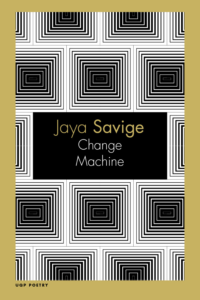
J.C. Masters reviews Change Machine by Jaya Savige

J.C. Masters reviews Change Machine by Jaya Savige

Change Machine

by Jaya Savige

UQP Press

ISBN 9780702262869

Reviewed by J. C. MASTERS

This is what happens when you binge
on beauty: eventually the orgy kills
you[.]
(‘The Roses of Heliogabalus’, 19)

If you’ve ever sat in on a literature class, at some point you may have heard someone mention Charles Baudelaire’s description of modernity from The Painter of Modern Life (Le peintre de la vie moderne,1863). His essays are often quoted when describing the transition that Europeans in the 19th century underwent, from functioning as a primarily agrarian society to one that depended on industry and embraced new technology built on principles of speed and transition.

=================================

Continue reading for only $5 per month

Subscribe for full access to Mascara Literary Review or login

Continue reading

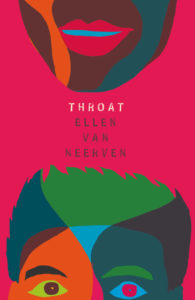
Daniel Sleiman reviews Throat by Ellen Van Neerven

Throat

By Ellen Van Neerven

UQP

Reviewed by DANIEL SLEIMAN


In reading poetry, we look for those rare moments where a creative sequence of words thoroughly subjects our thinking, our feeling and our knowledge to a momentary realisation of reinterpreted or interrupted truth. There are many of those moments one finds while reading Ellen Van Neerven’s poetry collection Throat (2020). Take these three lines appearing in different poems. 

Take me to the back of your throat, I’ll stay
(p123)

Language is empty without ceremony
(p128)

Climate is our only bank
(p33)

Neerven can say so much with so little. In fact, that’s poetry’s appeal and the/ir craft in writing reflects the tightness and complexity of its form. They display a matured economy of expression but are as comfortable writing longer narrative-driven verse.

One of my favourite pieces in Throat is only ten words long and finds its place in the section called ‘Whiteness is always approaching’. It is a title, which based on the section’s themes, could have easily worked as ‘Whiteness is always encroaching’.  

I was a perfect GF                                                                                    but sometimes I was black.
(p42-43)

These words are presented on two full pages, the otherwise emptiness or silence gives them so much more meaning. One is tempted to even continue the writing with their own insecure reflected prepositions in the empty space. There is so much more to be said, and those thoughts are instinctively taking place in the reader’s cognitive play. 

The conscious stylistic choices are also replete throughout the collection. The use of the Aboriginal flag along with text in ‘Logonliveon’ serves as a punctuating reminder, self-identification and reconstructed meaning to fit the changing moment of technology and living. A treaty is drafted and presented to the reader questioning the/ir relationship with the production of the book but also of white Australia—a status quo, often neglectful of Aboriginal voices on the question of sovereignty. Australia of course remains the only Commonwealth country without a treaty with its Indigenous population. 

‘Treaty’ presents the reader with so many questions to unpack. And Neerven does that poignantly. Hard truths demand hard questions. Neerven takes up the role not only of a poet but as an educator. The book comes with a reading list for ‘Whiteness is always approaching’. It includes writers like Ghassan Hage, Toni Morrison and Vivek Shraya. The white reader is undoubtedly urged to spend some time in this section. 

Expertand ‘White Excellenceare two poems that really hit the nail when it comes to white presumptions, white language and the critique of Black Excellence centred around the white gaze. 

Think I got
a non-Indigenous girlfriend
who thinks she’s an expert
don’t know how she got her expertise
(45)

There have been too many white ‘experts’ on what matters to Black people. This was especially noted during the #BLM movement where Australian TV panels got a lot of flak for not inviting any Black speakers on issues that directly affected them.

‘White Excellence’ comes in many forms but my favourites are the ones who cook for me. Listen, make space. Buy black books, buy black music. Never assume to know what we think or what we want.

(56)

T.S Eliot once wrote that poetry is ‘the common pursuit of true judgment’. There is a measured concern in Neerven’s writing, whether it’s the devaluing of Indigenous languages, connection to land and water or gendering. It is a judgment both in critique and insight, but one that opens conversation rather than shutting it down. Whilst subtlety has always been the measure of art, there is nothing wrong with calling a spade a spade, and Neerven even titles one of their poems ‘Call a spade a spade’ where they take issue with the mealy mouthed semantics in our everyday political discourse. Don’t say ‘no worries’ say ‘I worry’.

In ‘Four Truths and a Treaty’ they write: 

We gotta talk about sexism, homophobia, and transphobia in the community. No point pretendin it don’t exist.
(58)

Blunt. 

As a queer Black writer, Neerven explores the sometimes-knotty intersection of sex and race politics. It is a lived experience, and it comes through in their words both genuinely, and in exploratory ways giving no defining answers but retaining our attention nonetheless vividly and honestly. In the section titled ‘I can’t wait to meet my future genders’ their poem ‘Body Flow’ imparts a resounding expectation or even resignation in describing their body. 

I guess it would be fitting to describe my body here.
Spidery
Flowy
nothing to hide
hips in the wrong place
unambitious arms
(67)

Neerven’s writing however is anything but unambitious, with Throat being her third published work following on from Heat and Light and Comfort Food. It is a work that tackles familiar themes, but one that is done with a uniquely sustained style and an undeniably fresh voice; a voice that one can return to on the page and in recitation and find added nuance and meaning and a reason to care. One cannot help but to find a certain affinity with the poems, and the writer, as one reads and rereads Throat.  It feels like a crush. 

In ‘Crushed Ellen writes: 

All my crushes
have been books
(98)

What a wonderful way to think about our relationship with books. With a red, sinuously coloured cover featuring lips, eyes, and with an evocative title in Throat many readers will feel attuned to Neerven’s latest work.

Notes

  1. T.S Eliot, ‘The function of criticism’ first appeared in the journal he founded, The Criterion, Vol 2, No 5, Oct.1923


DANIEL SLEIMAN is a Canberra based freelance writer. You can find his articles and works in Eureka Street, Crikey, The Quo, Meanjin, Peril, SBS and Overland.

Gabriela Bourke reviews The Wandering by Intan Paramaditha

The Wandering

by Intan Paramaditha

ISBN

Harvill Secker

Reviewed by GABRIELA BOURKE


Reading Intan Paramaditha’s The Wandering during a global pandemic and in a time where all but essential travel within state borders is forbidden is a strange experience. In the author’s acknowledgement included at the end of this book, Paramaditha writes that the novel was ‘…conceived in New York, published in Jakarta and written over the course of nine years as I moved across continents…’. The imposed stasis in which I read this book though forced a contemplation of some of the most pressing themes of the novel: how do power, position and privilege determine where you’re allowed to go, and perhaps even more importantly, where you’re allowed to stay? Paramaditha’s ‘choose-your-own-adventure’, second-person narrative invites you to jet-set, from Jakarta to New York to Berlin and beyond, the impetus of the story depending on the choices you make and those choices formed by your own desires, ambitions and longings. The Wandering considers what freedom means, in a world where a yearning for elsewhere underpins so many of our encounters, and where travel is borne of boredom for some, but terrible desperation for others.

Jonathan Safran Foer’s line ‘Sometimes I can hear my bones straining under the weight of all the lives I’m not living’ occurred to me more than once while reading this novel. A create-your-own adventure story imparts a responsibility: of choosing right, making choices that will carry you to a satisfactory ending. In fact, the decision fatigue I was already feeling as a result of moving house in corona-times was exacerbated by the requirement of choosing a path through the narrative, and by my desire to ‘choose right’. My first foray brought me to an end all too quickly – an ending that did not bring me the satisfaction for which I yearned. Retracing my fictive footsteps and finding a new way resulted in a relationship with an old, white man who seemed to have an obsession with young, Asian women. How did I get here? I wondered, despairing, moving backwards again, hoping there was a better way, and then again, backwards and forwards, realising as I did so that usually a novel, like life, won’t give second chances. In life, death signifies the end of one’s story on earth, whereas The Wandering gifts its reader that fantasy of acting on hindsight. Unhappy with reaching an untimely demise, I return to the point where I can salvage my life. Unfulfilled by a relationship, I travel back, choose someone else, carry on once more.

So who has the freedom to make mistakes? This is the fundamental idea on which The Wandering is built. Who has, as Tiffany Tsao puts it on the back of the book, the freedom to wander the earth? Not Fernando, with whom the narrator flees the US upon Trump’s election in 2016. Not Meena, the narrator’s friend and neighbour whose freedoms are curtailed by geographic and financial borders. What about the narrator herself, who has agreed to a lifetime of wandering, denied forever the opportunity to return home? Paramaditha’s commentary on the nature of globalisation and neo-liberal consumer-capitalism is both thoughtful and provocative. The realisation that the ‘you’ of the story and the ‘you’ who is me reading the text are chasms apart in terms of the restrictions placed on our passports is discomforting. The Faustian pact on which the story is premised forces a consideration of other real-life pacts made by people bargaining for their freedom as borders are erected and both the freedom to move and the freedom to stay is forbidden to all but a privileged few.

The Wandering poses questions, rather than providing answers. The encounters between people and places may bring home the sad realities of life for many, but somehow Paramaditha retains a sense of playfulness and spontaneity that makes this novel fantastically readable. For a novel premised on a Faustian pact and peppered with allusions to Greek mythology and Indian philosophy, sections like the blow imbue liveliness into references that otherwise might be slightly stuffy.

‘How will I be able to reach you when you’re travelling?’ asks Demon Lover. He looks despondent.
You stare at him, stupefied.
‘For God’s sake! Stop snivelling. Since when does a devil need a visa?’(6)

The Qur’an quoting, Cerberean-chihuahua toting Hecate is another good example of this novel’s light-hearted reimaginings of well-known myths and symbols, which provide a necessary counterpoint to the grimmer elements of the story.

In leafing through the book in readiness to write this review, some names and places leapt out at me that I did not encounter on my first reading. This is surprising, as I was diligent in my attempts to locate and travel along all of the offered narratives. I’m interested by these stories I’ve not read, and interested to consider why I’ve not reached them. Are some strains of the narrative too far out of my comfort zone that I subconsciously avoided them? Is not reaching these stories indicative of some truth about my own identity, about the limitations of myself and where I’m willing to go, what opportunities I’m willing to run with?

Paramaditha’s novel allows for a uniquely individual experience, and one which might be borne from the reader’s cultural, financial, generational or other background. An individual’s experience of this book is likely to be as diverse as one’s experience of the world – an admirable feat, and one in which it’s worth immersing oneself. The Wandering may have had some teething issues, but it’s strong enough, creative enough, joyful enough and certainly ambitious enough that I’m already looking forward to Paramaditha’s next book.


GABRIELA BOURKE is a sessional academic and doctoral candidate at the University of Sydney. Her work explores the representation of nonhuman animals in contemporary literature. Her work appears in Southerly and Mascara Literary Review.

Petra White

Petra White lives in London. At the time of publication her most recent book is Reading for a Quiet Morning (Gloria SMH 2017). She is shortlisted in the 2025 Prime Minister’s Literary Award for That Galloping Horse.


The Visit

Because I was permitted to
I waded through water.
Eyelashes still as the tiniest fronds.
The pond pure sleep,
a demon thrust down into the dark,
the nestling of elm roots.
Then the slow drip of colour
in the mind, a friend
for the seconds the light held.
I walked out into new darkness,
where I was permitted to go,
the moon waiting for me
like a piece of enchantment
I was taught to resist.
The moon, with its grey blotches,
splintery daylight,
white as as my father’s face.
The Typist

The typist home at teatime, clears her breakfast, lights
Her stove, and lays out food in tins.

T.S. Eliot, The Waste Land

1
Unseasonable as a warm winter, pale on an utterly rainbow afternoon.
Not begging to be heard, not begging at all.
Here, everywhere, outside the window, on the streets and in the parks
danced men with twig like women in their ravenous arms, a dance
like that of creation, half terror, half the terror of love.
I fumbled into my small
red revolting car that smelt of rain and clattered with dirty coffee cups.
In traffic waited like a stumped parrot on a rod.
Then windows wide, the brashest air gushing in.

Fleeing melancholy,
I drove and drove and never ran out of fuel.
And the road did not run out, the world turning in the sun’s glimpse.

Unbearably fresh the yellow flower fields
blazing in the heat
like crowded slabs of hell

the yellow flowers
blazing like tomorrow,
when I land and weep

the yellow flowers blazing like my skin
behind a hot windscreen,
pounding me into the here, the trickle of sweat.

When body becomes body,
nothing more
only the flowers seem to sing.

2
See the muscular roos they leap above the nose-tickling weeds,
their flanks curved like machinery, paws bristling about the thin line
that is neither heaven nor hell but the tickly brush of the instant, barely tolerable.
Oh humans. Grainily composed of future and past,
who are, Rilke said, forever saying goodbye.
Suppose I got my teeth down into the instant, and lived there,
who would I know? The ‘open’, he called it.
How a spaniel enters a room and is instantly part of it,
how he knows just enough to get by,
fixing on a human like an apple grafted to a pear.
How a woman puts her head in her hands after a difficult conversation, how another says,
I am a tree planted halfway up a hill, I cannot spread my canopy to the top.
How the human hope sparkles everywhere.

3
Where is the chorus that wails around the car,
who sings the notes that make suffering true?
Melancholy silvers the tongue with ice,
freezes the self.
More light, more light.
Soul sits on a high shelf and eats breakfast,
the moon is a broken cabbage below her.
The god that created hell
and the hell that created god.
The strange joy of desiring nothing.
Wide sweep of road
and the waving spinifex know no minutes.
Only blank sunshine, desert.
The car carries nothingness,
empty seatbelts glinting in the light.

4
I stopped at a roadside diner and ordered chips, the only food, with ten different sauce bottles,
prepared in the bubbling silence and grubby neon light of the lonely diner
where nine people lived in the midst of vast planetary scrub and wind-bent trees,
feeding giant road-trains that arrived and left with a million lights dancing
each driven by one poor-postured man all day and night in solitude.
Colossal swathes of road like time, stretching before and after.

I sing the whole human package with its clutch of knowings,
the heart with its grappling of love, statistically half open a quarter of the time.
The body that travels like Ophelia into the estuary with hands outstretched
and nothing in them but reeds and echoes
of when the dust of the present washes off the fingertips entirely.
A journey unfolds of itself as the road unfolds beneath the tyres.

And then I turned toward death, my durian-scented hitch-hiker.
Life, he said, that reddish glow, it yet haunts your cheeks.
He spoke and as he spoke I could not choose but hear.
I stand like an animal with life and death intermingled in me, not unlike you
who have never felt more alive.
What if I offered to take you off your own hands now?
What would you say?
He said, like one who could not politely be refused.
The smell of chips ghosted the car.
The black road had gripped my soul.
I prayed for a stay of dawn.
And I clutched his thready arm.
Can we be friends instead? Will you visit me again?
Before long, he said, before long.
And vanished, leaving me with the long haul of life.
Always asking, what next, what now?
The formal voice that sings the formal notes.


Dave Clark Reviews Case Notes by David Stavanger

Case Notes

By David Stavanger

UWA Publishing

ISBN 978-1-76080-119-9


Reviewed by DAVE CLARK

I recently attended a training course that looked into depression. As I sat, sipping on an Earl Grey tea, the presenter went on an acronym spree, throwing them around like a farmer with an excess of seeds. I was beginning to feel lost with the terminology when a lady across the room called out.
‘None of this will help the people I work with.’
We all paused in wonder. The presenter, flustered by what they felt was an unnecessary interruption, ploughed ahead with the phrasing that he knew, continuing to lock many of us out of the discussion. The lady threw her hands up in the air and called out again.
‘This isn’t how people describe their experience of mental illness.’
Sweat pooling on his brow, the presenter was now the one who seemed lost.
‘Well, um, you’ll have to find ways of explaining it to them,’ before reverting back to jargon that put the barriers back up.

Working in the field of mental health as a counsellor, I have seen for many years how the language used around mental health can block people out of their own experience. It constrains them, shames them. People can be reduced to a number, a label, a stereotype, a problem, an illness. Their find themselves on the other side of the door, locked out of their own story.

David Stavanger’s latest collection of poetry, Case Notes (UWA Publishing, 2020), picks up a crowbar at the outset and pries open the door for more than a peek inside. As the poems unfold, there are times where his works cut open a hole in the wall and leads the reader through, bypassing dehumanising phraseology and into an intimate, raw and illuminating insight of lived experience with mental illness.

The book of thirty-seven poems steps immediately into the impact of bi-polar depression, suicide, medication and electroconvulsive therapy, revealing them with wording that puts skin and bones back onto mental health. About medication, he writes,
‘They taste like a mixture of chalk and talk shows’
(p23)
About the complexity of depression, we see that ‘he wants guarantees that can’t be given’ (p12) and that ‘Certainty is the strangest thing’ (p23).

No hard-and-fast words that package it up neatly. Instead, Stavanger steps beyond bland phrasing and poignantly describes an intricate world of ambiguity. His poem, ‘Electric Journal’, which was shortlisted for the 2016 Newcastle Poetry Prize, sees the writer trying to keep hold of his mind. Stavanger is able to breathe words into corners of mental illness that are usually, at best, misunderstood, and often, disregarded.

Halfway through the book is a poem called ‘P is for Power,’ listing roles starting with ‘P’ who hold influence. Patient is not one of them, and Stavanger uses his writing to claim some of his power back, and in doing so, giving some to the reader. This is a compelling skill and one that I was moved by throughout the collection.

The works not only deal with mental illness. They pivot into balding, bingo, fading relationships with fathers and being a father to his son. And yes, dogs. Dogs are mentioned over fifty times in Case Notes, including a discussion between the writer and his dog in ‘Dog Minding.’ Who’s the writer and who’s the dog is up in the air and adds to the enjoyment of the piece.

I found a trilogy of poems about his relationship with his Dad especially touching. The lines

‘…but sometimes
there’s no way
to resurrect the living’
(p69)

will surely strike home for anyone who has found it difficult to relate with a parent and the regret over what has been, and what continues to be, when looking at those figures that raised us. There is a tenderness expressed in these writings, lamenting that it is possible to have a pulse and yet still not be fully alive.

Another topic to explore in his works is the one around toxic masculinity. ‘How to be an Alpha Male’ highlights the destructive façade of the social script fed to many of us men over the years. It is an area that needs to continue to be discussed and pulled apart, and I would be interested to hear more of it from Stavanger’s satirical perspective.

Not only is there clever pivoting of topics throughout the collection, Stavanger uses an array of forms – free verse, lyric, cut-and-creatively-paste from discussion forums, poetic memoir, prose – to keep the reader’s interest up. And throughout is a playful, wonderfully absurd use of language. At no point did I find the humour degrading his experience of mental illness. Rather, the black humour and flat-out whimsy provided a clever counterbalance to the weight of what he addressed and left me laughing at regular intervals.

In the poem ‘Mental Health Week,’ he writes:
‘If you tell them such things
they will tie you to the nearest chemist.’
(p61)

There’s this outstanding line in ‘Male Patterns:’
‘In the savannah of middle-class suburbs
you seldom see a bald man lose a street fight
with a wheelie bin’
(p81)

And also this cracker – ‘I got into $ for the art’ (p76).
These turns of phrase occur at a pleasing rate and caught me off guard every time. I dare anyone to read his glossary of terms at the back of the book and not burst into a blazing smile.

Each line in this book is well-crafted, bumping you further along a path you didn’t know you were walking down, but glad you did traverse. In a recent interview with Jackie Smith (Smith 2020), David spoke about how he wrote some poems as an unreliable narrator. To my reading, this cleverly reflected the variability we find in our own minds, regardless of the state of our mental health, sometimes stumbling along to who-knows-where. Case Notes does this with deliberate vulnerability and incisive wit.

I agree with Ali Whitelock’s (Rochford Street Review 2020) assessment of the book, that it gets inside you and reminds you of your humanity. In a world where stigma and acronyms and labels predominantly fill up the experience around mental illness, this work pushes that aside to reveal a beating heart and a mind fighting hard to get itself back. It brings clarity and gives an approachable language to complexity. That is a welcomed feat. And while he says in interviews that he does not write for awards or his peers, it is no surprise that four of the poems in this collection have been shortlisted for prizes over the years. Unsought-for but worthy recognition for one of Australia’s finest contemporary poets.

The final three poems in the collection release some of the pressure built up from a tightly coiled selection, showing us an author finding hope, recovering in the waters of the ocean and a sauna. He remarks at the start of the final poem, ‘New Age,’
‘We dream, we heal, we are reborn’
(p112)

To capture in poetic form the struggle of mental illness and the steps towards healing is an achievement. To capture it in a way that leaves the reader wanting more of it is a sign of a collection worth reading, recommending and reflecting upon. And whether it was Stavanger’s intention or not, this work provides one more key to the doors that usually lock people out of their own experience when it comes to mental health. Thanks to the poems in Case Notes, the barriers of stigma and acronym-filled-labels are one step closer to being undone.

Notes
Rochford Street Review, 2020, Reaching inside you: Ali Whitelock reviews ‘Case Notes’ by David Stavanger, https://rochfordstreetreview.com/2020/09/03/ali-whitelock-reviews-case-notes-by-david-stavanger/. Accessed 2/10/20
Smith, Jackie 2020, Exploring ‘Case Notes’: an Interview with David Stavanger, https://jackiesmithwrites.wordpress.com/2020/05/16/exploring-case-notes-an-interview-with-david-stavanger/. Accessed 2/10/20
Stavanger, David 2020, Case Notes, UWA Publishing, Australia.

DAVE CLARK in an emerging writer-poet who does his living and breathing in Alice Springs. He works as a counsellor and enjoys reading, photography and giving voice to silenced stories. His works have appeared in Verdant, Adelaide, Glow and read on 8CCC and ABC Radio.
Twitter: @DaveClarkWriter

Megan Cheong reviews Kokomo by Victoria Hannan

Megan Cheong reviews Kokomo by Victoria Hannan

Kokomo

by Victoria Hannan

Hachette

ISBN 9780733643323

Reviewed by MEGAN CHEONG
 

In lockdown, distance regained some of its former authority. For six of the last twelve months, many Melburnians have lived, worked and didn’t work within a five kilometre radius of their home. My parents live 22 kilometres away, and though there isn’t a great tradition of hugging in my family, I spent much of lockdown longing to see my two-year-old wrap his arms around his grandfather’s neck.

=================================

Continue reading for only $5 per month

Subscribe for full access to Mascara Literary Review or login

Continue reading

Yumna Kassab

Yumna Kassab is a writer from Western Sydney. She studied medical science and neuroscience at university. Her first book of short stories, The House of Youssef, has been listed for prizes including the Victorian Premier’s Literary Award, Queensland Literary Award and The Stella Prize. Her writing can be found online at Kill Your Darlings, Sydney Review of Books, Peril Magazine, Meanjin, The Sydney Morning Herald and now Mascara Literary Review.
 

Woman // Her Words

Alexis, 37, 1994
You can bring the horse to water but you can’t make it drink. You try to help people: you give them things, you teach them, and what do you get for your efforts? Nothing, absolutely nothing.

Continue reading

Nicole Smede

Nicole Smede is a musician, poet and educator of Worimi and European heritage, exploring a reclamation and reconnection to ancestry through language, poetry and song. Her work has been broadcast on national and international radio, published in anthologies and journals and features on ferries, in visual art and sound art works. Nicole is grateful to live, learn and create on Dharawal country. https://nicolesmede.com
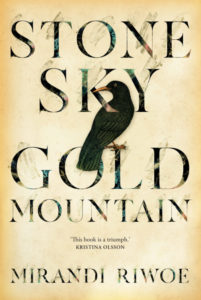
Baraya

I hear voices of ancestors
crossing this country
spirit awake

with an anxious energy
I tread carefully
amongst old Lore

Yii
batjigan barray
gulawyn
bikan*

old grandmother trees
usher me
to ancient summits
where songs ebb
and flow with the wind

passing through
open palms
they travel
the songlines of my body

stirring the spirit within.

*this (is)
dingo country
koala
platypus
in Gatthang

Cicadas

The landscape vibrates loud
bending branches
beaming brightly from boulders
an intense hum of wings

where fearless thrill seekers
deep sea divers
dropping downward
abandon
rocky shelves overhead

trembling under our feet
stoney shoals set
slippery steps
balancing
immersed in cool silence

we tread tranquil waters
arcadian
arching apex
achilles
toward the embankment

we tread water
and the soundtrack rings loud
in our ears.

Rosemary’s Rocks

Yellow blossoms –
like bright shards of light
disrupt this green and grey landscape

they’re early this year.

Damp moss softens
underfoot moulded steps
trail behind
and I ascend this rocky slope

does it, like the trees
recall my last visit?

Resting here
senses sharpen

birds in syncopated song
cut through crisp air
and mist
suspended
between ridges
clings
like the cold to the tip
of my nose

all is alive
in freshness

in an awakening spring.


Katelin Farnsworth reviews Stone Sky, Gold Mountain by Mirandi Riwoe

Stone Sky Gold Mountain

by Mirandi Riwoe

UQP

Reviewed by KATELIN FARNSWORTH


‘Meriem hopes that her wounds too will mend, that her jagged edges and disfigured depths will fade. Disappear. That one day she is restored enough to abide a loved one’s touch upon her skin’

I like stories that are raw, unflinching in their portrayals. Stories that pull you apart in some way, stretch you out, move you slowly, deeply, viscerally.

Dirt, sweat, rust, red, blisters, gullies, scrubland, blood. Cicadas and birdsong. These are some of the arresting images Stone Sky Gold Mountain conjures up. Bristling with poetry, almost every line in the book cuts in, places you somewhere else. Unsettling and thought-provoking, Stone Sky Gold Mountain is an accomplished piece of literary writing from a controlled and highly talented author. Indeed, Riwoe has many awards under her belt already, with a Stella Prize shortlisting for her novella The Fish Girl (Seizure, 2017) and a recent The University of Queensland Fiction Book Award for Stone Sky Gold Mountain.

We begin with Ying, and her brother, Lai Yue. Arriving in North Queensland, to a Chinese settlement, the two siblings hope to earn enough money to travel back home and buy back their enslaved siblings. It is 1877, the Gold Rush era. The camp they live in prickles with violence, teeming with gut-wrenching horrors and racism. Heavy but yet not difficult to read, Riowe is careful with her displays of racism; the writing is never didactic or moralising; instead the prose feels free and honest, acknowledging a harsh and sick reality without trying to glorify or shock for shock’s sake. In male dominated goldfields, Ying disguises herself as a boy, terrified that the truth will be uncovered.

Atmospheric, bringing to light an aspect of history in colonial Australia that’s often forgotten or simply disregarded, the story, particularly at the start, progresses slowly and took me time to digest and understand. But I am better for it. This isn’t a book that should be read quickly, although the writing is lush, full, and deep with nuanced observations. I think this is a that book yearns to be sat with, to linger within you, right inside your body, to be felt. Riwoe is one of those special writers; creating worlds and putting words together that truly feel transformative as you read, allowing you to uncover new layers of understanding all the time.

Strongly character driven and sparser on plot, the narrative shifts between three perspectives (Ying’s, Lai Yue’s, and Meriem’s). Lai Yue finds work as a carrier on an overland expedition; in Maytown, Meriem is a white girl, disliked and excluded by the town, working as a maid for local sex worker, Sophie. Ying befriends Meriem, finding a joyful space away from her brother, who is desperately unhappy and self-destructive. While an unlikely friendship, Ying and Meriem strike up a close bond. The relationship between Ying and Meriem was a pleasure to read, touching in its sentimentality without being cloying or over the top. While their verbal communication is light, they communicate in other ways; gifting food and sharing what little they can with one another. It was these scenes I loved these most, the gentleness the two of them shared was striking:

‘Merri smiles, revealing pink gums…Ying smiles back at her, her face softening into the tree. The air is muggy with the threat of rain and smoke…they listen to the comfortable dollop of a fish breaching the water’s surface, and along the river’s shingle banks, the branches of the paperbarks reach for each other and entwine’ (chapter 25, location 2160)

Ying also finds comfort working for Jimmy, a local shop owner. Each character in the novel is rendered convincingly:

‘Jimmy has the grace of a crane, his soft face is long and his hair thins a little on top. Behind his spectacles his eyes are kind. He doesn’t allow spitting, smoking or swearing in the shop, and always insists on a washed face, clean hands’ (chapter 10, location 1064)

The tone and mood of the novel is deployed seemingly effortlessly. The language is unpretentious but always vivid, original, captivating. All three characters wrestle with their own demons in varying ways. When a serious crime takes place in the town of Maytown, suspicion falls on Ying. The book shows us the best and worst of people, culminating in an exciting and well-paced finish.

Stone Sky Gold Mountain
is consistently powerful, filled with tension. It’s well-paced and readable, despite its heavy themes of pain and loss. Feelings of connection and displacement are dealt with unflinchingly, and we are drawn intimately into the characters, into their emotions and challenging circumstances.

Significant questions are explored throughout – questions of identity and self, belonging, gender, resettlement, and migration. A destabilising story, the novel breaks down many of the dominant narratives we know about the nation called Australia, giving space to marginalised voices and examining ‘us and them’ notions. The narrative suggests history has not been accurately understood or documented, and as you read, questions rise to the surface: How far has this nation really come in its own prejudices? Do we know the full story? Can ever know the full story? In subtle terms, it poses the question: Do we, white Australia, even want to know the full story? Do we care?

‘Perhaps he doesn’t have loved ones across the ocean far from here, waiting for him. Perhaps they are lost. She has heard of her countrymen who have fled violence and homelessness to come to this place. But to not return! She’s never considered the idea’ (chapter 10, location 1029).

Without sanctimony, the book asks the reader to examine their prejudices, to consider the stories they’ve been told, and the stories that are still continually shared and perpetuated.

History, or we what know of history, does not always tell the truth, is not always accurate. In Australia, stories go unheard all the time, unacknowledged, pushed to the sidelines, forgotten about. With a refusal to listen, Australia is land of hidden layers, unheard narratives, and narrow view points. It’s these hidden layers the book is occupied with, giving voice to the unvoiced, making space for the those who’ve rarely been given such room.

As Mindy Gill writes in Sydney Review of Books ‘there is the way things have been told, and the way things were’. In other words, in this colonised land, single perspectives become the only perspective. Stone Sky Gold Mountain deftly challenges these skewed angles, asking us to reconsider what we think is true, and why we think it’s true. In doing so, the novel unpacks and disrupts our notion of this country and its brutal past (and ongoing present). This is brave writing, and Riwoe allows breathing space for the reader to sit between words, to consider what has been left absent, and imagine from there.

Riwoe steers the narrative ahead confidently; the writing is finely structured, with intricate detail and lyrical descriptions. An acute book of extreme strength, from its depictions of the land, to its layered characters, readers are invited to break open stale ideas and pre-conceived notions. With depth and insight, Riwoe digs into structural racism in a novel that I suspect will reveal more with each subsequent read. Rendered in enthralling and exquisite detail, Stone Sky Gold Mountain gives us a way in to realties we may never before have encountered in our reading. It deserves all of its awards.
 
Notes
Gill, Mandy, https://sydneyreviewofbooks.com/review/riwoe-stone-sky-gold-mountain/

KATELIN FARNSWORTH is a writer from the Dandenong Ranges. She has been published in Overland, Tincture Journal, The Victorian Writer and Award Winning Australian Writing 2015 and 2017. Her manuscript ‘Found Again’ was shortlisted for the 2020 Penguin Literary Prize.