Author: mascara
Jorge Palma: translation by Peter Boyle
.jpg)
Jorge Palma, poet and storyteller, was born in 1961 in Montevideo, Uruguay, where he still lives. For many years he has worked for newspapers and radio stations, and has also run creative writing workshops, both poetry and prose. His poetry collections are Entre el viento y la sombra (1989), El olvido (1990), La via láctea (2006), Diarios del cielo (2006) and Lugar de las utopias (2007).
.jpg)
Peter Boyle (b. 1951) lives in Sydney. His first collection of poetry Coming home from the world (1994) received the National Book Council Award and the New South Wales Premier’s Award. Other collections include The Blue Cloud of Crying (1997), What the painter saw in our faces (2001) and Museum of Space (2004). His most recent book Apocrypha (2009) is an extensive collection of poems and other texts by a range of imaginary authors.
Un Rio Ancho Con Sabor A Otoño
Del rojo al verde
se muere el amarillo
G.Apollinaire
Tú que tienes la precisión
prendida en la solapa:
¿a cuánto estamos hoy?
El olor de la tierra húmeda
trae en los bolsillos
noticias del mundo:
del rojo al verde
se muere el amarillo;
de mi casa al mercado
se mueren los niños
en el desierto.
Los noticieros hablan
de la guerra
y el cielo avanza.
Los noticieros hablan
de tormentas de arena
en el desierto
y los pájaros emigran
en mi cielo de otoño.
Mientras enciendo un cigarrillo
mientras la ropa
se seca al sol
se mueren los niños
en el desierto.
Del rojo al verde
se muere el amarillo.
Y las casas son abandonadas
por sus dueños,
y las viudas dejan flores
en la mitad de las camas
y se marchan,
se cubren la piel
con sus trapos de viuda
con sus pañuelos de luto
con sus ropas de humo
y caminan
por el borde del cielo
y caminan por las orillas
del mundo.
En mi patio con macetas
caen flores del cielo
y caen también
pájaros atravesados
por el sonido de la guerra,
y se despiertan las madres
bajo otro cielo
y en los mercados
las frutas, los pescados,
los pregones, no tienen
sonidos de luto,
ni hay viudas huyendo
a las fronteras
ni hay temblores de tierra
ni nadie sacude vidrio molido
de las mantas
ni los curas barren los escombros
de las catedrales y las iglesias
ni en mi cielo de otoño
contemplo esta mañana
la inmensa peregrinación
de ataúdes y pañuelos
que en algún lugar del mundo
se desatan; el polvo, la arena,
el desierto abrasador,
donde dicen estuvo el Paraíso
el Paraíso anhelado
a punto de perderse,
donde un niño sueña todavía
que tiene brazos
una familia, y sus piernas
inquietas de doce años
corren por las inmensas
arenas y salta, busca
nubes, desafía las leyes
de la física, soñando
por las tierras de Ur
a la sombra monumental
de las ruinas de Babilonia.
Del rojo al verde
se muere el amarillo.
Entre tu pecho
y el mío
se muere el amarillo.
entre tus alas y mi sueño
se muere el amarillo.
Entre tus piernas
y las mías
se muere el otoño,
a cuatro metros del cielo
por venir
a cuatro gotas de lluvia
o de rocío
a tres días de un disparo
demoledor y ciego
a dos minutos de la gloria
o el fracaso
a un segundo que aguarda
goteando el alba
tu boca de luz
tu llama
para contrarrestar acaso
ese grito que vuela incesante
entre dos ríos que llevan
la muerte
ese aullido que cruza el cielo
las tormentas el calor
un grito que cruza
el desierto, tu pecho
tu morada
y golpea como un puño
de acero
las ventanas de mi cuarto,
aquí, en mi pequeño cielo
de otoño,
demasiado lejos
de los hombres recién rasurados
que no volverán a sus casas,
de las mujeres
que conversan en la puerta
de un mercado
sin saber que esa noche
dormirán con la muerte;
de los que cantaron
en las duchas
por última vez, hermosas
canciones de veinte siglos,
y no supieron nunca
de nosotros y este río
ni del nombre del río
que nos nombra y atraviesa
con su mansa identidad.
Aquí en el Sur,
donde envejecemos
mirando los ponientes.
Wide river with autumn fragrance
From red to green
yellow dies.
G. Apollinaire
You with the latest essential
glittering on your lapel,
do you even know what day it is?
In my pockets
the smell of damp earth
brings news from the world:
between red and green
yellow dies;
between my house and the shops
children die
in the desert.
The news speaks of war
and the sky moves forward.
The news talks of sandstorms
in the desert
and birds migrate
in my autumn sky.
While I light a cigarette
while the clothes
dry in the sun
children die
in the desert.
From red to green
yellow dies.
And the houses are abandoned
by their owners,
and widows leave flowers
on the middle of their beds
and walk away,
their skin covered
in widows’ rags
in handkerchiefs of mourning
clothes of smoke
and they walk
along the sky’s edge
and they walk by the shores
of the world.
On my patio with its pots
flowers fall from the sky
and birds fall
transfixed by the sounds of war,
and mothers wake up
under a changed sky
and in the marketplaces
fruit, fish,
the cries of people buying and selling,
don’t bear the weight of any
sound of grief,
there are no widows
fleeing to the frontiers
and no earthquakes
and no one removes ground-up glass
from their shirt-sleeves
and priests don’t sweep rubble
out of churches and cathedrals
and in my autumn sky
this morning I don’t contemplate
the enormous journeys
of coffins and handkerchiefs
that in some place in the world
will fall apart; dust, sand,
burning desert,
where they say Paradise was,
the longed-for about-to-vanish Paradise
where a child still dreams
he has arms
a family and legs,
the restless legs of a twelve-year-old child
who runs across immense sands,
leaps, looks for clouds,
defies the laws of physics, dreaming
in the lands of Ur
in the tremendous shadow
of a ruined Babylon.
From red to green
yellow dies.
Between your breast and mine
yellow dies.
Between your wings and my sleep
yellow dies.
Between your legs
and mine
autumn dies,
in four metres of sky
where four drops of rain
or dew
are falling,
three days from a blind
blast of gunfire,
in two minutes of glory
or disaster,
in one second of watching
dawn fall drop by drop
your mouth of light
your cry
to counterbalance perhaps
the scream soaring without pause
between two rivers
that carry death,
this howling that comes to us
across skies
storms dry heat,
a scream that crosses
the desert, your heart
your dwelling place
and like a steel fist
pounds against
the windows of my room,
here, in my small
autumn sky,
too far
from the freshly shaven men
who will never return home,
from women
chatting in a shop door
not knowing that tonight
they will sleep with death,
from those who have sung in the shower
for the last time, beautiful songs
gathered from twenty centuries,
those who never knew of us
and this river
or the name of the river
that names and crosses us
with its gentle identity.
Here in the South
where we grow old
watching the sunsets.
Michelle Cahill Reviews The Gothic, Postcolonialism and Otherness Ghosts From Elsewhere by Tabish Khair
Continue reading for only $5 per month
Subscribe for full access to Mascara Literary Review or login
Mehnaz Turner
Continue reading for only $5 per month
Subscribe for full access to Mascara Literary Review or login
Chris Brown
Continue reading for only $5 per month
Subscribe for full access to Mascara Literary Review or login
Jan Dean
Continue reading for only $5 per month
Subscribe for full access to Mascara Literary Review or login
Patrick Rosal
Continue reading for only $5 per month
Subscribe for full access to Mascara Literary Review or login
Frances Kiernan
Continue reading for only $5 per month
Subscribe for full access to Mascara Literary Review or login
Tenzin Tsundue In Conversation With Michelle Cahill
.jpg)
Tenzin Tsundue is a poet, writer and a noted Tibetan freedom activist. He won the ‘Outlook-Picador Award for Non-Fiction’ in 2001. He has published three books to date, which have been translated into several languages. Tsundue’s writings have also appeared in various publications around the world including The International PEN, The Indian PEN, Indian Literature, The Little Magazine, Outlook, The Times of India, The Indian Express, Hindustan Times, Better Photography, The Economic Times, Tehelka, The Daily Star (Bangladesh), Today (Singapore), Tibetan Review and Gandhi Marg. His work has also been anthologised in Both Sides of the Sky: Post-Independence Indian poetry in English, and Language For A New Century (Norton)
I interviewed Tenzin Tsundue at Rangzen “Freedom” Ashram, Dharamsala in October 2008, some months after he’d been arrested for a march to Tibet. Unfortunately it’s taken a while to present this, but I think Tenzin’s experiences and perspectives are extremely relevant to the political struggles that Tibetans on both sides of the Himalayas continue to face.
In the wake of the recent earthquake in Yushu, Tibet, which has been reported as having occurred in China, as many as 10,000 Tibetans may have perished; the 1300 year old Thrangu monastery has been severely damaged, and many monks have lost their lives. The area has suffered intense political repression since protests broke out across the PRC from 2008 onwards. Being in Dharamsala, witnessing the conditions of Tibetans living in exile and meeting Tenzin was an experience that deeply moved me.
MICHELLE CAHILL
MC: What came first for you, the impetus for political activism or the impulse to write?
TT: Writing was part of the education that I received from school, but even before that, from refugee camps, the first education, the first awareness that came to me is that our country is under Chinese occupation and that we have to some day go back to our country. This shock and lament of having lost one’s country and therefore one’s dignity of life was a huge disturbance for me from childhood. Writing came much later.
My concern has always been from childhood that we have to regain the dignity of life from being oppressed, from being a victim, from being a crying refugee to regaining the Independence of Tibet. I don’t want to be a refugee, here, with, or without money, and say that my country is under somebody else’s control. The sense of dignity is very important and if it is not there because I am not in my own country or my own home, the sense of dignity comes from the fact that I’m in the struggle. I’m in the process of regaining that Independence and the struggle is my identity.
MC: I’m interested to hear about your education and how that has shaped your journey?
TT: I realised that only my education would assist me to get involved in the struggle and to do anything useful for the struggle. I didn’t have a proper language, and that was my biggest concern. From school we learnt Tibetan and English and even Hindi, right up to the 8th standard. Most of the subjects were taught in English so we had exposure to the English language. But English is always considered the foreign language, the Other language. There was never the culture of spoken English; it was never the culture so therefore it was always the language that you spoke only in your English class. Even in English classes we hesitated and made fun of each other, but we never really got to speak English properly so the feel of the English language both written and spoken wasn’t there, which I think was huge loss and something I had to work very hard on.
In most Asian countries now, there are two or three languages being taught. Sometimes you don’t know what your real language is, the language that you feel comfortable with. Just to acquire a proper language was in itself a huge struggle for me. When I went to Madras I was the only Tibetan student in my whole class of 108 students studying English literature and I didn’t have this language. I didn’t have the fluency, the natural feel of the language. So I worked very hard, writing and re-writing.
It was only when I was studying my MA in English literature at Bombay University, that I started to write creatively, finding myself in a very supportive atmosphere. We used to have a small poetry circle of friends sharing writings with each other. That was a huge encouragement for me. Outside of class I used to attend readings by senior poets: Nissim Ezekiel, Adil Jassawalla, Dom Moraes, Dilip Chitre. These Saturday poetry circles were my training ground. My writing seriously started in 1997, when I was 23.
MC: Many of your poems and essays express a manifested hybridity. You speak of being as much an Indian as a Tibetan. How important is hybridity for diasporic identities in our globalised world?
TT: Well I think this multiple identity is the identity now in this hugely mobile world. And I think patriotism is something that is kind of outdated, internationally. For me my country is in a freedom struggle, but at the same time I’m not in Tibet, confronting the Chinese. I’m in India. I’m born here and I think I’m more effective being here. And being here, realistically, I have to deal with the Indian situation. So having been born and brought up here all my orientation is Indian. I feel I am Indian. At the same time, I feel that I have a huge responsibility for the Tibetan struggle, and I’m most willing to do anything required there. So therefore I do have multiple identities, but I know that the Tibetan cause is the most important cause that I want to dedicate my life towards. There are Indians all over the world. And there are Tibetans living in America and Europe who by virtue of the atmosphere in which they grew up are, in a way, European and American but the kind of priorities they keep for their lives makes a difference.
MC: What writers first influenced you?
TT: To begin with it was Khalil Gibran. His love poems and political writings in English were a huge inspiration. I’m thinking of books like Broken Wings, Spirits Rebellious, The Prophet. We used to borrow them from the library and keep them within our circle at school in Dharamsala. There weren’t many who knew about this. We used to go right up into the mountains, and read poetry, and feel that we were reading the most important poem. It became a kind of performance in the jungle. Imagine two or three poets lazing around in the pinewoods, reading poetry to each other and sharing candies; (for one rupee you would get ten small candies.) There was a huge excitement about reading, unravelling, the scenario of the Lebanese struggle, and the freedom struggle that he spoke for. We would read his poems as if they were about us and we could identify with the Tibetan freedom struggle. And that’s how the excitement for poetry began for me.
Later on, I read Shakespeare, EE Cummings, Robert Frost, Pablo Neruda, A.K. Ramanujan, Arun Kolatkar, Woeser and Tibetan writers in Tibetan whose new writing captures a kind of a rebellious movement in Tibet. They have been a huge encouragement. I continue to read them and enjoy.
MC: In 1997 you crossed into Tibet where you were arrested and tortured. The Tibet you witnessed and described was more Chinese than you had imagined. Do you think the Western world still holds a stereotype of an ancient Tibet, a Shangri-La of Western orientalism and Western cinematic representations?
TT: Sure, I think the Western perspective on Tibet hasn’t improved much; the whole romanticised notion about the Dalai Lama and Buddhist monks. But I think what we have been successful in achieving over the past fifty years of living in exile is at least bringing about an awareness of what is Tibet is today. The stereotyping of Tibet as Shangri-La; the land of Buddhas where people lived like angels, levitating and living a superhuman life, I think, was hugely damaging because it immediately recognises Tibetans as not human beings but as interesting characters about whom it is interesting to write about or film.
What the Dalai Lama and Tibetans have been able to achieve in the last fifty years is to at least get the West to perceive that Tibet is a parcel of land, whose peoples’ culture is endangered like that of the North American Indians. And so there are tourists who go there and can witness how difficult life is for Tibetans living under the Chinese. This was especially highlighted in 2008 when Tibetans living in Tibet rose up in protest and people in the West were able to see it. So the Western stereotype of Tibet as Shangri-La is shattered. And this is a first success for us. It’s really damaging to look at an entire people and culture as if these are just characters and mythical elements who can be exoticised in cinemas. Films like Seven Years in Tibet, Kundun, do not step beyond the limitations of stereotypes. This is necessary in order for the West to recognise Tibetans as human beings, who have equal capacity for anger, hatred and violence.
MC: What is your understanding of the term “cultural genocide”?
Cultural genocide is a situation where there’s a disruption in the natural, organic growth of a culture and that disruption has not happened because of a natural disaster but because it’s been artificially imposed. The older generation Tibetans cannot tell the younger generation of what happened in the Cultural Revolution and how much they had to suffer. A silence was created by the political conditions and therefore a whole memory has been erased and hidden. By this strategy, the Chinese government is trying to homogenise the territories that are called China including the occupied Tibet, East Turkishtan, Mongolia and Manchuria. China is flattening all the cultural differences in the name of nationalism. As citizens of China we must practice one culture. Through the practice of population transfer, flooding the occupied lands with Chinese, and basically dictating that the Chinese language is the language of education, administration and media, China is trying to homogenise the culture so its uniqueness will not be recognised. This is what they call a peaceful liberation and the danger is that a whole memory will be erased and people will lose their memories.
MC: Is Buddhism and non-violence undermining the political cause of Tibetan independence?
TT: I think what His Holiness is trying to do with the process of dialogue, in itself, is an exemplary non-violent approach. How we want to approach the struggle is confrontational but at the same time non-violent. We want to confront the Chinese dictators and try to address the injustice they are placing on the Tibetans, while his Holiness tries to send delegations, one after the other. But when dialogue is not a sincere process, the dialogue will never work and has not been working. The Chinese try to buy time. In seeking a dialogue we are dependent on them. In confronting and demanding Independence we are not dependent on the dictator, who will never listen, who instead of listening places more conditions on us and therefore tries to stifle whatever little voice we have; a voice that we’ve acquired in exile, in a free country.
That freedom we’ve won in exile is the only power that we have to negotiate with the dictator and even that little power we seem to be losing. We prefer to take control of our struggle, confront the Chinese, and demand Independence and refuse to be dependent on the terms of their negotiation. I’m talking about the larger majority of young Tibetans. They absolutely do not trust the Chinese for any type of negotiation, and largely people think that only an Independent Tibet can really guarantee a future for Tibet. Our demand is Independence, our approach is non-violent, but it’s confrontational. It’s not about delegations or round-the-table dialogue.
MC: What role do you think the media has played in raising awareness of the struggle for Tibetan Independence?
TT: Being in exile in a free country means that the media is one of our most important partners. China, because of its business interests has to listen to the Western world. The Western world doesn’t voluntarily support Tibet. Sometimes the West uses the Tibet issue to counter China; they find it useful. Sometimes they are forced to take up the Tibet issue in the interests of public diplomacy, because it continues to arise in the international media right in their face. Before the Bejing Olympics, Presidents Bush and Sarkozy had to make statements that the Chinese had failed to keep their promise on human rights because of the brutality by the Chinese government against the Tibetan uprising. Hundreds of Tibetans were killed and thousands were imprisoned. This was openly reported in the Western media. Poland and Germany, in particular were genuinely interested.
Australia has a huge stake in Chinese business. Even if Australians would love to support the Dalai Lama and the Tibetan people, I don’t think your government is in a position to do anything in favour of the Tibetans while China is actively importing Australian coal and iron ore.
MC: You have written about protest as a celebration of difference. But is the celebrity status of the Dalai Lama and his adoring Western fans overshadowing the political cause of a free Tibet?
TT: His Holiness has been created, and has become an icon for peace and sometimes we do feel that he’s becoming more a symbol for peace, and we feel we are missing the Dalai Lama as a Tibetan leader. But I think these are general concerns. The larger-than-life image that he has created is such a power that China is afraid of him. His Holiness has no gun. His Holiness has limited resources that can counteract China but what China fears is the media friendly image of the Dalai Lama. We are only six million Tibetans and China has a population of 1.3 billion, with financial resources and political power, but still in 2008 we shook the political assumptions of the PRC. We own the Dalai Lama’s leadership and power and therefore the Dalai Lama continues to be the symbol of hope for Tibetans, both inside and outside Tibet.
MC: Tibetan poets living in exile are writing in their native tongue and in English. But in Tibet, the Chinese language has infiltrated a generation of Tibetans, and has become the language in which they write. Is this a cause for concern?
TT: As it stands, the majority of the Tibetan population are in Tibet and they are speaking Chinese. Chinese has a strong influence in education, administration, economy and the media. The Chinese government has made this mandatory in Tibet. English might become the third language. For those of us born in India, English is the second language or even for some, the first language. The patois of Tibetan and Hindi is not necessarily an undermining of Tibetan culture. There’s a latent fear that results if you start to practise other languages, for example Tibetans are speaking Tibetan but then insert English or Hindi expressions. Also some Tibetans expressions are a direct translation of Hindi. We can observe this in the placement of verbs. In Hindi the verbs are placed first while in English the subject placement occurs before the object is placed. Grammatical shifts, the sentence structure indicates these are direct translation of Hindi. This happens in towns where Tibetans are swelling sweaters by the roadside, which they have been doing for the last 30-40 years, and therefore live that life of direct interaction.
There is a cause for concern if our language is being undermined, but at the same time language and for that matter culture is not static, and not something that remains frozen in time. Culture is always in flux; organically developing and we cannot stop it. We may be able to divert it but we are not able to stop it and if we do stop it then that’s the end of the culture. For example if we speak of a genuine Tibetan culture, then this particular phase in the natural flow of our culture is genuine. If we refer to Indian culture, are we talking about post-Independence Indian Culture, are we talking about the Ghandi era, the Moghul period or the Ashoka period? Culture is in a natural flow. We may be able to change its flow organically from constantly evolving but we can’t stop it.
So what is happening in exile, is that the kind of Tibetan we are speaking is a very fast pace, with new idioms that we’ve created which were not there in pre-Chinese occupation times. Tibetans inside Tibet today don’t understand us, and we have thus advanced. We have a reason to celebrate that we’ve created a new language. In this new language there are poems being written, songs, novels and essays. Thousands of essays are being written here and it sounds wonderful in this Indian-Tibetan community. Likewise in Tibet with the coming of Communist Chinese they have created amongst themselves, especially during the Cultural Revolution, a lot of idioms that reflect the new revolutionary anti-feudal, anti-Imperialist tones that speak of the glory of socialism. So all these new idioms are created and they are today a part of the Tibetan language, and are confusing to us, and sometimes so Utopian to us. So the Tibetan languages have been evolving both in exile, and in Tibet, and even for Tibetans living in America and Europe. And there are Tibetans in America singing rap songs in Tibetan.
MC: What are the possibilities for translation and transcreation of the languages that Tibetans today speak and write?
TT: I think translation and transcreation are very important border areas of literature but presently there are not many poets who have skills in Chinese, Tibetan and English. But I think that increasingly just as the trend is happening in other communities in India, translators are creating a new genre of writing. There is a huge scope of writing and this area will be explored more in time.
MC: Do you think that the stories and the memories of the now ageing generation of Tibetans who remember a free Tibet before the Chinese invasion have been adequately preserved?
TT: There is a very rich oral tradition in Tibetan communities. We grew up listening to our parents’ and grandparents’ stories about pre-Chinese Occupation: the fantasy land of Tibet, the heavenly kind of livelihood they lived, the pristine beauty of the natural resources, and the clean water they always described. This is the imagination of Tibet that we grew up on.
The imaginative Tibet has been preserved but what we’ve lost in the process is how we became accommodated in boarding schools where hundreds of Tibetan youngsters lived together. We never got to hear and learn from parents and from our ancestors during these times. The memory we lost is how the older generation of Tibetans survived in the economic urgency of creating a livelihood, selling sweaters, working as roadside labourers to earn a living. There was nothing in exile. Tibetan children were sent to school while their parents were earning an income as street vendors. And therefore, there was a kind of separation between the two generations and we missed learning from our parents and grandparents.
What happened in Tibet was even worse. The Communist cadres used to send informers into the community and they would watch each other. It would happen in areas within China. You were constantly being watched by your own family, your own friends, your own relatives. So you couldn’t do anything considered to be disloyal to the Communist Party. Tibetans inside Tibet could hardly speak about the Chinese invasion of Tibet, the reality of Tibet before the Chinese occupation, and therefore they could not talk about the spirit to fight for freedom. You would be disbanded. Children would be interrogated in this process and if it was found out that they were speaking against the Chinese, they would be guilty of creating a treason.
So there was a disruption in the handing over of the memory that we needed to inherit. This is a huge disturbance.
MC: Your poetry seems to differ from Nyam Mgur tradition. It seems less concerned with stylised symbolism and spiritual insight, conveying instead a very real sense of the problems that Tibetans in exile must deal with: a denied sense of home, identity and belonging. Would you like to comment on this?
TT: I’ve read poetry from Tibet; coming from a traditional background as well as new poets writing in a revolutionary style. Their history, education and orientation is very different to mine. I’ve been influenced by India and the influence of English literature. In the expression of writing I don’t really speak in the language of symbolism. My writings are more monologues, a direct communication. I could easily say the same thing or I could read a poem. The language is very simple, and that’s why I think it works, because when it’s heard people identify with it.
I don’t feel I write from a traditional style or school of Tibetan writing. Neither do I adopt a spiritual perspective that might be expected of me as a Tibetan or as a follower of the Dalai Lama. It’s more an expression of a person without hope. All my writing is constantly in search of hope. The search of my writing is the process of searching for home, physically or in the imagination.
MC: Do you think writers can make a difference to the humanitarian issues that face the politically repressed?
TT: What writers can do is to express concerns and to speak the heart of the common people. They speak the truth; they don’t hide the truth or manoeuvre like politicians. So they are loved by the public. Politicians have to work desperately to win the heart of the people, because they’re never trusted.
Because writers tell the truth, they are respected. Naturally they have to bear the responsibility to understand the ground realities; to continue to bear the courage to speak the truth. They can have a huge influence in creating opinions and changing the direction of public opinion.
MC: What is your relationship as a writer and an activist to India?
TT: Whether I’m using the language of the writer or the language of the activist, for me the models are always coming from India. Ghandi is a huge influence as well as many other Indian writers: Dilip Chitre, Dom Moraes, A.K. Ramanujan, Arun Kolatkar. I’m indebted to the whole Indian environment and the hundreds of Indian friends I have, and how much I’ve learnt from them. Being in Bombay and travelling all over India, and learning from the Indian community are direct influences, and this is my relationship to India.
MC: Is there a risk of Tibetan literatures in exile becoming nostalgically repetitive, or without innovation?
TT: No, I don’t think so. Firstly, we are living in a fast pace modern world, especially here in the Tibetan community. So much change is happening, and we are either documenting or responding to these changes that we are witnessing as well as being nostalgic about an imaginative Tibet in exile. I think there are a host of things to write about, and I think that the poetry that’s coming out is very creative in terms of what is being expressed. It’s not just nostalgia. There is truly a voice of anger, frustration with the injustice and the apathy about Tibet from the Western world. There are solid expressions of anger coming from our writers, like the poet Bhuchung D Sonam. I can see that. There’s no concern.
MC: What do you think are more important; the verbal or the non-verbal acts of protest and remembrance?
TT: The trouble with non-verbal protest is that it’s transitory unless you have it published or broadcast in the media so that it enters the imagination and the memory of the public. But even that doesn’t help much and you have to be effective in the registering. Today the media with the greatest impact is film and television. But again the problem is that the memory of the broadcast is short-lived. There’s a barrage of cinematic information being targeted at every household. So a protest of climbing the Oberoi Hotel and confronting the Chinese premier is not a memory for Bombay people; it’s not.
Written memory is present as a reference and we can broadcast it with the use of technology, by the use of blogs, websites, personal community newsletters. We can personalise and present it. This can’t be erased. I’ve not been able to spend much time as a writer. I’ve spent more time being an activist, organising rallies, getting arrested, being in gaol and fighting court cases. There’s been more of all that and unfortunately less of writing.
I think I’ve created a little bit of written public memory.
Ankur Betageri
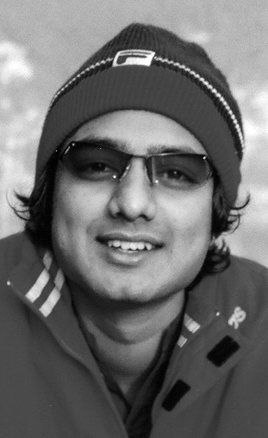 Ankur Betageri, (18/11/83), is a bilingual writer based in New Delhi. His poetry collection in English is titled The Sea of Silence (2000, C.V.G. Publications.) Two collections in Kannada are titled Hidida Usiru (Breath Caught, 2004, Abhinava Prakashana)and Idara Hesaru (It’s Name, 2006, Abhinava Prakashana) He has also published a collection of Japanese Haiku translations called Haladi Pustaka (The Yellow Book, 2009, Kanva Prakashana). He holds a Masters in Clinical Psychology from Christ College, Bangalore. He co-edits the journal Indian Literature published by Sahitya Akademi and is contributing editor(India) of the Singapore-based ezine writersconnect.org. Recently, he represented India as a Poet at the III International Delphic Games held at Jeju, South Korea.
The quiet and rising tension in the jaw of the common man
You are drinking chai in the office canteen
looking out the window absentmindedly
at the unreal summer shadows of trees
thrown about carelessly
with the occasional bird
lighting the bough
and preening its brilliant wings
when suddenly you hear someone StaMMeRinG!
You look around and see
your whole inner self
in all its trembling
irritably burning
nakedness
splayed out in the shuddering body
of the ‘boy’ who serves chai.
Racked by the nervous torment that being here
has become, he is stammering
unable to utter a sensible word,
he is stammering in a terrible frothing anger
at a bully customer
and – I realize – at a world that has failed him.
I see chai-drinking chootias around me
smiling; I gulp the chai and unable to make out
what is happening to me,
unable to contain the trembling which is possessing me,
unable to go on sitting at the table, on the chair
in this stable world, in this insanely stable world
which will continue to be stable even after my death,
unable to do anything that could stop
his quaking body from stammering,
unable to do anything about the laughter
which goes on quietly massacring,
I drink chai
chai-drinking, English-speaking, afsar-cunt that I am
I continue to drink chai as if nothing has happened,
as if nothing will ever happen,
as if the trembling within me has
nothing to do with what is outside
as if yoga, meditation, shitty self-help books
are what I require,
as if happy hours at the bar, Sunday-sair with a girl
would instantly restore me to normalcy –
ah happy-cunt of the great Indian middle class!
ah intellectual-cunt debating in news channels!
ah corporate-cunt discussing growth in ac boardrooms!
ah poet-cunt churning out verse for international journals!
ah bollywood-cunt selling flaccid dreams to the poor!
ah cunt on the election poster
ah cunt in the complicit rooms of police stations!
ah cunt selling merchandize and noise on FM channels!
ah cunt running newspaper by splattering naked bodies of women!
ah student-cunt fornicating and agitating in college campuses!
ah actor-cunt asking us to end poverty from your palaces!
ah brand-ambassador-cunt for fair skin, white teeth and slim hips!
ah soulless empire of cunts
looking down from hoardings, ad-widgets and social-networking sites!
I shall exorcise myself of you and your ghosts!
I shall speak now of the wrongs, speak now of the murders
I really have had enough of your chai!
I – the Cunt with a Conscience – shall master this human trembling
I shall rescue from the rot this precious inner feeling
I shall hug the fevered hearts and speak for all those
still
stammering.
The Indian Soul
for Shri Vidiadhar Surajprasad Naipaul
The Indian soul is pure
no amount of money, corruption and sophistry in the world of high art
can corrupt its soul
look at the Indian dog licking at the worn out tyres of a Maruti 800
look at its eyes and you know it is sacred
its hungry and cold in the misty Delhi winter
and you can weep out of pity for it
(my head grows soft like a peeled cucumber
as my face weeps inside the cheeks)
but the dog doesn’t need my pity
it feels my love and runs away barking
as if its dangerous to linger in my pity…
The Indian women are pure
I loathe them and call them rubbish
and they let me go
yes, they tried to shackle my heart, break my spirit
yes, they enticed me with the dream of babies
BUT when they saw my purpose they let me go
I slept over them like on the warm sunny beaches
and looked at the sun take the sea with it
and when I rose they fell off my body
like so much sand,
they never stuck to me –
(it was I who stuck to them
coming in the way of their life in comfortable cars
bearing sun-faced babies and listening to technicolour songs –
and when they saw that my spirit was getting muddy
in the warm pools of their cosy homes
it was they who kicked me out
complementing me, indirectly:
you are too much for us, too much!)
The Indian women are pure
they mind their business and know
each one has his own destiny to fulfill –
Just look at the beautiful women in the sarees
how graceful their movement and many-splendored their bangled hands!
its just that they are not for me
and they smile at me warmly and let me go
and I smile back at them happily, flapping my wings.
The Indian soul, no matter how deep in the muck it gets pushed
is pure and full of joy
look at the Indian cow lying on a bed of its own dung
look at the buffaloes wallowing in their own shit
but still giving – two times a day – pure white milk!
look into the buffalo’s eyes
can anyone be as calm and quietly contented as her?
The Indian soul is pure and joyous and sacred
and no amount of western shit splattered on the shop fronts
hoardings and newspapers can change it –
Half-naked women swing hips to tasteless tunes of bollywood?
Let them! Let the buffoons and jokers pass themselves off as heroes
and once done, let them do netagiri
folding hands, showing teeth and all –
none of it is going to change the Indian soul
it will always be deep and pure and joyous
away from all that is ephemeral!
The Indian soul – no kidding, guys, – is pure
(no, not as pure as the beauty soap just taken out of the box
like they show us in the ads
but pure in a way our drugged imagination cannot even conceive –)
Deep in the Delhi night
I breathe the glacier-pure air
it quivers in my nostrils, in my lungs, in my hair
I breathe in the great expanse
and breathe it back in space
The Indian soul is us, a will that has found its sap
the Indian soul is us, a light that cannot be stopped
and India is the earth, whose map cannot be drawn.
Rae Desmond Jones
Continue reading for only $5 per month
Subscribe for full access to Mascara Literary Review or login
Adam Aitken
Continue reading for only $5 per month
Subscribe for full access to Mascara Literary Review or login
Alex Kuo: Creative Writing Programs: An Essay
Continue reading for only $5 per month
Subscribe for full access to Mascara Literary Review or login
Cameron Lowe Reviews The Best Australian Poems 2009
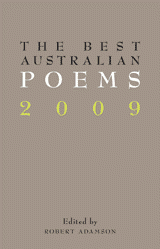 The Best Australian Poems
Edited by Robert Adamson
Black Inc. 2009
ISBN 9781863954525
Reviewed by CAMERON LOWE
http://www.blackincbooks.com/books/best-australian-poems-2009
The first thing to say about this anthology is that it is full of birds. Currawongs, crows, egrets, magpies, cockatoos, finches, owls—the list could go on. This is hardly surprising given Robert Adamson’s preoccupations with birds in his own writing. The second thing to say is that while birds—and the natural world more generally—are a common thematic in the anthology, it is a less pervasive theme than a first reading might suggest. Adamson’s anthology is far more than the sum of its birds.
None of which is to imply that there is anything wrong with writing about birds. On the contrary, A. Frances Johnson’s ‘Black Cockatoo: Calyptorhynchus funereus’, Barry Hill’s ‘Egret’, or Lia Hills’ ‘an anatomy of birds’—a beautiful meditation on a bird’s skeleton—show clearly that Adamson is not the only contemporary Australian poet writing excellent poems structured around bird as subject.
The value of these annual collections—and the UQP anthology should be recognised in this respect as well—is not simply limited to providing an interesting batch of what are arguably the best poems written in the past twelve months or so. They are also, in a sense, a meeting place, where readers may engage with writing by celebrated poets, as well as work from talented new (or lesser-known poets). Additionally, although in a perhaps less tangible way, they are also a meeting place for the poets themelves; as Adamson somewhat romantically notes in his introduction, ‘the poets sing to each other and their poems set words dancing in our souls’.
The coming together of the new and the established is a major feature of these anthologies, one that Adamson has been keen to continue. Interestingly, for Adamson it was the work of lesser-known writers emerging out of the selection process that excited him most: ‘the exuberance in the language and ideas of poets whose names I hardly knew…started to threaten to take over the space reserved for those whose poetry I have been following for many years’. Just how ‘new’ is new is of course problematic; most of the poets represented in the anthology, even the younger ones such as Lucy Holt and Elizabeth Campbell, have published at least one full book-length collection of poetry. One notable exception is Sarah K Bell—younger again than Holt and Campbell—whose ‘Reconstructing A Rabbit’ was first published in Cordite Poetry Review, underscoring the value of including on-line publications within the scope of these anthologies. While it is understandable that Adamson may be unfamiliar with many of these poets, it is also worth noting that in most cases they have been publishing in newspapers and journals for some time.
Adamson’s stated intent for the ‘book to be a fairly inclusive survey of the “best” poetry written in Australia in the last year’, has led to the anthology being relatively long, with this year’s version nearly seventy pages longer than that of 2008. Additionally, there are no biographical details of the poets in this anthology, which means even more space is dedicated to the poetry itself. While this is seemingly positive, in that a larger number of poets are represented, there is also a concern that such a long anthology potentially dilutes the overall quality of the writing. As with most ‘best of’ collections—and without wishing to unfairly single out individual poems, or more pertinently the poets—readers will undoubtedly come across poems in such a large anthology that don’t seem to make the ‘grade’. Happily though, judging by the majority of Adamson’s selections, Australian poetry is in a pretty healthy state.
One of the benefits of Adamson’s inclusive approach is the diversity of the writing. From Ali Cobby Eckermann’s powerful performance piece ‘Intervention Pay Back’—a highly political work focused on recent events in the Northern Territory—to Stephen Edgar’s formal rhyme scheme in ‘Murray Dreaming’, the anthology covers a wide range of poetic voices and styles. Indeed, Adamson has even included the lyrics to two songs by Paul Kelly, and while they may lack somewhat for musical accompaniment Kelly fans will still hear the musician’s distinctive vocals while reading the poems.
There are many fine poems from established poets in the anthology. Peter Rose’s ‘Morbid Transfers’—a response to the fifth poem from Bruce Beaver’s Letters to Live Poets (1969)—is a disturbing account of a young man dying while playing table tennis. Rose’s poem, like Beaver’s, articulates at once the fragility of life and the seeming indifference of those bearing witness:
Finally, a bouncing ball invaded the mortuary
and the server, too spirited for niceties
or condolences, stepped over the low excluding fence,
negotiated the crumpled mystery at his feet
and retrieved his urgent ball without a word.
Ken Bolton’s ‘Outdoor Pig-keeping, 1954 & My Other Books on Farming Pigs’ is also a wonderful poem. Written in the unmistakable Bolton style, the poem takes a haunting turn when the narrator imagines a farmer, alone at night, writing on the methods of farming pigs in an exercise book that once belonged to his dead daughter:
Perhaps he writes with
extra care because it is her book. Perhaps he writes
because it is her book. He has not written
anything else before. He writes now
because she is gone.
Other worthy poems from the established poets in the anthology include Philip Salom’s ‘Reading Francis Webb’, John Watson’s long poem ‘Four Ways to Approach the Numinous’, and Meredith Wattison’s brilliant ‘Holbein Through Silk’ where:
Death, the cool, black ambassadress, is foetal, rigor,
silk in that rough skull’s glass mouth.
Death, she sits, the foliate weave of her fingers
is their tender matrix. The intuitive, the profane,
the incalculable, the vernal seat, indulged.
Of the less established poets, at least as far as published books are concerned, David McCooey’s ‘Memory and Slaughter’ is deserving of attention. Unusually long for McCooey, the poem explores the gaps and imperfections of our memories, where much of our personal history is an act of re-imagining the past, an act of writing it into being. In McCooey’s case the result is a narrative of hazy details in which ‘memory now repeats, like / a stone skipping across bright water’.
Equally impressive is Lisa Gorton’s ‘A Description of the Storm Glass and Guide to Its Use in Forecasting Weather’. Gorton’s beautiful imagery has a dream-like quality, where crystals of ‘fantastical ambition’ create:
…tomorrow’s weather
haunting a small room. Clouds, which hurry for no one,
which, amassing, betoken
that undifferentiated grudge some call ambition, here confide
motive without gesture
As if to say There is
another world.
Anne Elvey’s ‘Between’, like Gorton’s poem, also works to make the familiar strange. A poem of approaching loss, Elvey has crafted a work that speaks of the limits of poetry as much as it does the inevitable coming of death:
A speck on the horizon! Charon comes
but not tonight. And my fingers tell you I can’t go
past the thin place between the word and the thing,
nor write the way for you, in the hieroglyphs of home.
Elvey’s poem has an elegiac tone, is in a sense an elegy for what will soon be lost. There are many other fine elegiac poems within the anthology, such as Pam Brown’s ‘Blue Glow’, or joanne burns’ ‘harbinger’. But perhaps most successful is Martin Harrison’s superbly understated ‘Word’, in memory of Dorothy Porter: ‘in which briefly suddenly one voice’s glimmer is lost’.
And finally, still on the subject of loss, it is worth noting Fiona Wright’s ‘Kinglake’. Now that it is slightly more than twelves months since the Black Saturday bushfires in Victoria, Wright’s poem returns us to the horror of that weekend, but finishes with a note of hope: ‘I send you irises, / and try to write / some kind of greening.’
There are, of course, many other fine poems in such a large anthology that have not been mentioned in this review. Readers will find them for themselves, which is one of the joys of reading new books of poetry; finding that image that resonates, that sequence of words beautiful just for their sound. Black Inc. should be commended for continuing to publish the work of our finest poets, as should Robert Adamson for his efforts in compiling this impressive collection of poems.
Margaret Bradstock Reviews Possession by Anna Kerdijk Nicholson
Continue reading for only $5 per month
Subscribe for full access to Mascara Literary Review or login
Judith Beveridge: Video translation by Prometeo
.jpg)
Featured poet, Judith Beveridge has published four books of poetry: The Domesticity of Giraffes (Black Lightning Press, 1987), Accidental Grace (UQP, 1996), Wolf Notes (Giramondo Publishing 2003), Storm and Honey (Giramondo Publishing 2009). She has won many awards for her poetry including the NSW Premier’s Award, The Victorian Premier’s Award and the Judith Wright Calanthe Award. In 2005 she was awarded the Philip Hodgins Memorial Medal for excellence in literature. She is currently the poetry editor for Meanjin and teaches poetry writing at postgraduate level at the University of Sydney.
This poem was video translated at the Memoria del Festival Internacional de Poesía de Medellín, Colombia. The International Poetry Festival at Medellin was founded by Feranando Rendón “to oppose terror with beauty, to bring poetry face to face with violent death. We interpreted the love of poetry and the will to live of thousands of people, at the right moment.” (Poetry International Web, July 2007) In 2006 the festival was awarded the Alternative Nobel Peace Prize.
La poeta australiana Judith Beveridge interviene en el curso del IX Festival Internacional de Poesía de Medellín, leyendo un poema que contiene una dura metáfora sobre la melancolía y la hecatombe. Judith Beveridge nació en Londres, en 1956. Vive en Australia. Ha publicado los libros de poemas: La domesticidad de las jirafas (1987); Un paracaídas de azul (1995) y La gracia accidental (1996). Ha ganado diversos premios de Poesía en Australia. Se ha desempeñado como docente de Literatura y como colaboradora habitual de revistas y periódicos en su país. Fue incluida en la Antología de Poesía Contemporánea de Australia, editada por Trilce Editores, Bogotá, 1997.
Gurcharan Rampuri translated by Amritjit Singh and Judy Ray

Gurcharan Rampuri (born 1929) has been writing poetry in Punjabi for six decades. Author of ten volumes of poetry, he moved to Vancouver, British Columbia, in 1964. He has won many awards, and his poems have been translated into many languages, including Russian, Hindi, Gujarati, and English. His Collected Poems appeared in India in 2001. Many of his lyrical poems have been set to music and sung by well-known singers such as Surinder Kaur and Jagjit Zirvi. He has won numerous awards in both India and Canada, including the 2007 Lifetime Achievement Award from the Punjabi Writers Forum of Vancouver, as well as the 2009 Achievement Award for Contributions to Punjabi Literature from the University of British Columbia.

Amritjit Singh, Langston Hughes Professor of English at Ohio University, is a freelance writer, editor, translator, and book reviewer. He has authored and co-edited well over a dozen books, including The Novels of the Harlem Renaissance; Indian Literature in English, 1827-1979: An Information Guide; India: An Anthology of Contemporary Writing; Conversations with Ralph Ellison; Postcolonial Theory and the United States; The Collected Writings of Wallace Thurman; and Interviews with Edward W. Said
Judy Ray grew up on a farm in Sussex, England, and has lived in Uganda, India, Australia, and New Zealand. Currently she lives in Tucson, Arizona, where she is a volunteer ESL teacher. Her books and chapbooks include Pebble Rings, Pigeons in the Chandeliers, The Jaipur Sketchbook, Tokens, Tangents, Fishing in Green Waters, and To Fly without Wings. With poet David Ray, she has edited Fathers: A Collection of Poems (St. Martin’s, 1997).
Ghazal
Love smiles when it stumbles.
A star shines throughout its fall.
It takes an age to numb just one pain.
The next moment awakens another hundred.
How can one sleep when longing for the absent one,
And who will sleep on the night of love?
Sadness is my only companion.
Who would befriend me in my melancholy?
The peacocks cry even as they dance.
The swan sings even as it dies.
Beauty yearns for love
as surely as the moon goes around the earth.
One thought contains the universe.
The moon illumines a dewdrop.
Ghazal
I have just burned your letters.
Look, I have bathed in the fire!
Through this pilgrimage to the grave of love
I have revived forgotten pains.
The smooth dark night of your hair –
my fingers have caressed its lush shadows.
I have spent a tearful night
and the dawn is red-eyed.
I have consoled my weeping heart
by imagining scenes of intimacy.
The stars want an encore
though I am done telling my tale.
Life is both sorrow and music,
and I just sang your song.
To light up a glimpse of you in my dreams
I extinguish my own lamp.
Songs, Promises, Tears, Hopes
have won over my estranged lover.
Pet Lies
Lies, lies, lies all the time, repeated
until they become today’s truth.
A lie sits in the seat of power,
lies are armed with daggers,
lies have many followers.
The platform sure is crowded, in thick fog,
with the confused old holy man in command at the center.
A deafening racket blasts all around
and dark clouds of ruthless death
overshadow the skies.
Brutality, rage, fear and helplessness prevail,
but we cannot escape the need for food.
The terrifying abyss of need has deepened.
Death lies in ambush at every corner.
There is someone walking toward me,
but I don’t know if he is friend or foe.
Should I trust his smile, or is it poison?
I will not make eye contact with him,
weighed down as I am by guilt
of sins I didn’t commit.
These cheats and cowardly braggarts
keep on throwing dust in the people’s eyes,
leading them on with deceitful, well-rehearsed lies.
Professional politicians on the one hand
and the ruling elite on the other,
together they have built their empire of lies.
Opportunists
Yesterday’s friends are today’s foes.
Even a brother has a sinister look about him.
Now he accuses with stinging words.
Blood relationships are meaningless.
Today, venomous arrows, daggers, poniards, lances
are plunged into the hearts of one’s own.
Yesterday’s enemies are in close embrace today.
With wounds from the sword healed,
these sycophants ignore the poison of hate in their hearts
as they dance to the pipes of self-interest,
kiss and lick each other.
Labels pinned on one person yesterday
are now used for another.
Those who were called corrupt
are now held to be virtuous.
It is easy to line up arguments
to justify any good or bad deeds.
Since the dead will not return,
who will want to lose today’s profit for their sake?
In pursuing a dream of ideals,
who will ignore the weight of power?
Who will sacrifice national interests
and ignore the lines that divide communities?
Who can beat these sharp villains in glib debate?
So what if they commit awful deeds?
Today
Yesterday was bearing
a dream called Today.
Revolutionary fervor for the dream
powered a restless sleep.
The enchanting dream
smiled like a golden dawn.
The cursed mother committed
a horrendous crime, killed the newborn dream.
Then with a wild laugh
she went alone and buried the baby.
Yesterday bore Today,
but Today also had a dream which the mother killed.
Now the stunned, murderous soul
stares at the empty space.
Cath Vidler
Continue reading for only $5 per month
Subscribe for full access to Mascara Literary Review or login
Desmond Kon
Continue reading for only $5 per month
Subscribe for full access to Mascara Literary Review or login
Nathanael O’Reilly
.jpg)
A dual Australian-Irish citizen, Nathanael O’Reilly was born in Warrnambool and raised in Ballarat, Brisbane and Shepparton. He has lived in England, Ireland, Germany, Ukraine and the United States, where he currently resides. His poetry has appeared in numerous journals, including Antipodes, Harvest, Windmills, LiNQ, Postcolonial Text, Transnational Literature, Prosopisia, and Blackmail Press. He is the author of the chapbook Symptoms of Homesickness (Picaro Press, 2010).
Driving in Texas
I.
A woman pushes a baby
In a stroller down the centre
Of a busy four-lane highway
As traffic speeds by on either side.
II.
A black pick-up truck overloaded
With tools, bricks and buckets
Weaves in and out of its lane
On a narrow county road.
III.
Three African-Americans kneel
In the grass facing away from the road,
Their hands cuffed behind their backs
As cops search their Cadillac.
IV.
A helmetless motorcyclist wearing
Shorts and t-shirt hurtles down
The freeway at ninety miles per hour
Zigzagging through heavy traffic.
V.
Five white flower-adorned crosses
Ranging in descending order
From daddy-sized to baby-sized
Testify in the grass beside the highway.
VI.
A roadside canvas marquee bears
A hand painted sign proclaiming
Holy Spirit Revival
7:30 nightly 24/7 prayer
Too Young
We killed time at the empty skate park
In Matamata, where I pretended I had
A board, running up the quarterpipe
Chucking one-eighties, sliding along
Steel rails, simulating ollies and kickflips
While your mum toured hobbit holes.
Too young to be embarrassed,
You thought I was hilarious.
Worn out, we retired to a main street café
Where we drank chocolate milk and a latte
While sharing an Anzac biscuit,
Then drove until we found a playground.
You joined in with the Maori kids,
Too young to know or care about race
Or nationality, rolling down an embankment
Into a pile of crunchy June leaves
While I exchanged nods with the other dads.
When your mum returned from the tour
We took the narrow backroads in the rain
To Te Awamutu, hoping in vain to find
A monument to the Finns. We had to settle
For Waikato Draught at the Commercial Hotel.
You sipped lemonade, too young to understand
Why we cared about music from New Zealand.