Author: mascara

Roberta Lowing

Roberta Lowing recently graduated with a Master Of Letters from the University of Sydney. Her poetry has appeared in Meanjin, Blue Dog, and Overland journals. For the past four years she has run the monthly PoetryUnLimited Press Poetry Readings and Open Mic Competitions in Sydney. In 2007, she edited PULP’s Ilumina Journal.


North

The past is only just now reaching us
and the last perfect place of exile

is another gateway to the dead


Even when we smelled the blackened hands

of the officials abandoning the capsized tanker

we kept applauding those who cut arteries of rock

and severed the ocean’s silver-scaled veins


We lived at the heart of the crystal

surrounded by ice roses and frosted fossils

we thought we could merely open another door to another north

and the devil would rush by


When the shadows appeared out of that first bruise-coloured dusk

(bird-shaped, seal-shaped) we didn’t listen to the cracking

from the battles of past winters     we didn’t realize

our black pages would never be white again


As the graveyard pools washed up on shore

our cliffs were reduced to midnight silhouettes

tendrils of shotgun smoke froze above the slumped bodies

ropes hung rigid from wooden beams in the boat houses


In other places

the land is knocked down by noisy winds

or it murmurs in resignation

as it swells into blurriness after the winter storms


Places that die every winter

are revived by the returning sun

but in Cordova Alaska

there are no new beginnings


We must stand glistening like chandeliers

crystal knots of tears on our cheeks

as the snow

falls burning on our hands


The Country Behind Us

Strangers who drove through Badourie in 1938

must have thought the war already happened: 

the bomb to end all bombs had bitten into the flat plain

and hissed out a grey wind, red around the edges.


It must have been more than the sun that bleached

the splitting fences and the cattle ribs that hugged the fissures,

chiselled out the wooden blades of the windmill

so it frowned, gap-toothed, over


the crumbling wattle-and-daub houses, the absence

of children staring from doorways, dogs

rolling their tufted yellow bellies

into the cleft shadow of the rotting porch.


In bullock-breath weather,

the ice gripping the wooden teeth clicks

as it turns under a sky as thin and white

as chalk smeared by a falling hand,


the birds remain blurs on the horizon,

the ground leans away to the summoned faces.

The windmill grimaces as the days descend

with their hammers of sun.   


Neda

you lie on your back

 in your jeans and headscarf

on your new bed of blue asphalt and red lace

when I rock the developing tray

your arms flail through the wet yellow smoke

under the crimson globe


lapping water is the only sound in my darkroom

but your world reverberates

with beating garbage tin lids


defiant cries from rooftops  

the soft hiss as the air divides

for stones flung by desperate students


we are satellites apart – the chemical smell

that bites my nostrils comes from your world –

but as I place the tongs over your heart


it seems we are the ones running through smoke

chased by razor-wielding men

in black helmets on black unmarked motorbikes


my hands are still

but you keep moving

sending out your indissoluble ripples


Brook Emery reviews Motherlode and Not A Muse


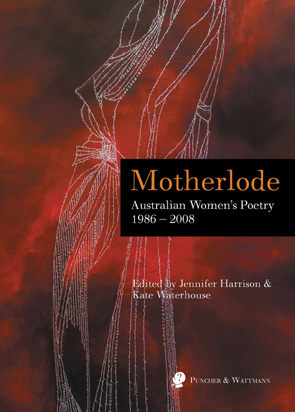
Motherlode: Australian Women’s Poetry, 1986-2008


Jennifer Harrison & Kate Waterhouse (eds)


Puncher and Wattmann, 2009

ISBN9781921450167

www.puncherandwattmann.com/pwmotherlode.html


Not A Muse

Kate Rogers, Viki Holmes (eds)

Haven Books, Hong Kong 

ISBN 978-988-18094-1-4

http://www.havenbooksonline.com/books/catalogue/not-a-muse 


Reviewed by BROOK EMERY


               What are my credentials, or lack thereof, to review these two anthologies of women’s poetry?


            Despite an androgynous first name, I am a sliced-white-bread, baby-boomer male. Husband not wife. Father not mother. I am also instinctively uneasy with categorisations that assume difference based on gender. Boys Book, Chick Lit – leave me out. Men analytical, women emotional; men aggressive, women nurturing – stop it! Men’s movements re-discovering the bear or hunter in themselves, women learning to be assertive – how sad. Single sex schools – indefensible, an admission of failure. Once, after a reading, I was told by one poet that my ‘sensibility was very feminine’ and, almost immediately afterwards, by another poet that my ‘voice was so masculine’. What to make of this? (That difference is in the ear of the beholder?) What to do? (Shrug and laugh?)


           But biology and evolution cannot be denied, and neither can social conditioning, nor entrenched beliefs and prejudices, and historically, politically and culturally it was, and, unfortunately, maybe still is, important that spaces are made for ‘women’s writing’, though something will have to be done about such a term because it implicitly defines itself not just against the non-existent term ‘men’s writing’ but against ‘writing’ .


          Perhaps it’s not so strange that I should have felt compelled to question my reviewing credentials as, in their own ways, the editors of each book exhibit a little nervousness about the reception of their projects and feel a need to position their anthologies within the history of feminism and so-called post-feminism. Harrison and Waterhouse write in their joint introduction to Motherlode:


We have been asked whether this is a feminist book and it undoubtedly is, if feminism is defined as that which women know and strive to make known.


         They acknowledge that much has changed in the lives of women as a result of feminism but identify the enduring experiences as:


the realities of fertility, pregnancy, birth and the bonds between mothers and their mothers, daughters and sons.


          The editors of Not A Muse: the inner lives of women are more political. Kate Rogers writes that the book explores,


how we define ourselves as women. Are we living our lives honestly, completely true to ourselves? If we choose an unconventional life, what are the costs? Not a Muse is, in part, about our choices. How we define ourselves as women and poets. How we define freedom.


          Viki Holmes asks rhetorically, ‘To what end an anthology of women only in this post-feminist era? Shouldn’t we be looking beyond divisions of gender in the 21st century?’ She doesn’t really answer these questions specifically other than to assert a right, or need, to speak and occupy the foreground:


Woman as mysterious, retreating Other; an enigmatic figure retreating in the distance, inspiring and intriguing – and silent. But what happens when the muse speaks? Not a Muse began as an attempt to redress this relegating of women to be sources of inspiration rather than creators. The voices in this anthology speak eloquently, reflectively, and with certainty, about the roles women have chosen for themselves – perhaps enigmatic, certainly inspiring and intriguing – but never in the distant background.


          In a preface, ‘On Reading Woman’, the Indonesian poet Laksmi Pamuntjak tackles possible objections to the anthology even more directly. She asks:


Aren’t the days of being jumpy at the very mention of the word ‘female’ or ‘feminine’ finally over, because women have advanced by leaps and bounds to assert themselves as a subject first and foremost, of which ‘woman’ is only part? … Hasn’t women’s liberation gone to such amazing lengths that many modern-day feminists now even believe that the very concept of woman is a fiction, thus raising the possibility that the concept of women’s oppression is finally obsolete and feminism’s raison d’etre has fallen away?


More pertinently: do we still need an anthology of women’s writing? Does it not seem an endorsement of the gender polarisation that women have fought so long and hard to batter down?


         Her answers to the last two questions are unequivocal: ‘yes’, then ‘no’. They rest. in part, on an undeniable political truth: ‘ in many parts of the world where women have no voice, no discourse, no place from which to speak, defining the ‘feminine’ is a luxury that cannot be corralled into the collective’.


          Really, neither book needs an apology or a theoretical feminist defence. The impregnable defence of both anthologies is just that they are artful, interesting explorations of human experience. Each one demonstrates the power of good poetry to engage people on emotional and conceptual levels not easily accessed by other means. How much more powerful, subtle and informing these poems are than shelves full of theory, therapy or self-help.


         Motherlode is a great title playing as it does on all the resonances of exploration, mining and discovery, of richness, abundance and centrality, while gently ghosting the homophone ‘load’ with its connotations of weight and burden. With 125 poets, 172 poems, and at over 300 pages it is abundant indeed. Published by the innovative and relatively new Sydney publishing house Puncher and Wattmann, it is also a beautifully produced book, attractive to look at and to hold. The cover is flexi-case which is closer to traditional hardcover than soft cover, there is a headband at the top and bottom of the spine, and even an attached bookmark ribbon. The binding is stitched, the paper gorgeous, and it is sharply printed and laid out: the packaging does justice to the content.


            The focus of Motherlode is clearly defined and circumscribed. It is dedicated to ‘our mothers’ and is not designed to include all shades of female experience but to explore the experience of motherhood and to make this accessible to the general reader. The anthology is divided into twelve sections: nature, icons, pregnancy, birth, infancy, sons and daughters, daily grind, loss, old wives tales, mothers and grandmothers, the world, this last retreat. 


            The editors suggest that the anthology be considered as a collective narrative and they invite us to read it sequentially as one would a novel. This can work, as poem after poem seems to be a conversation with and a departure from the one preceding it. To read it thus is, perhaps, to impose a narrative consistency and might lead to the temptation to construct archetypes corresponding to the section headings. Thus, to take for example the section heading ‘Birth’, the reader might move from ‘I am waiting / for what emerges / from the white edges / of catastrophe’ (Alison Croggon), to ‘Prostaglandin spreads like cold honey / my cervix ripening, as an avocado in brown paper’ (Kathryn Lomer) to ‘The next pain / takes your spine apart. / Pelvis gags / some kind of thing with horns / in its throat’ (Rebecca Edwards), to ‘Out from you as if in a continuum / is she still yourself? Finally she is not / She separates calmly, not crying’ (Phyllis Perlstone), to ‘This is the first thing I want you to know. I am your mother and you arrived in me and from me. You arrived not “child as other” but as the child of my centre, the child of grass and orchards, of mulberries in summer’ (Jennifer Harrison) to ‘Early this morning, when workmen were switching on lights / in chilly kitchens, packing their lunch boxes / into their Gladstone bags, starting their utes in the cold / and driving down quiet streets under misty lamps, / my daughter bore a son’ (Margaret Scott), to ‘At Bindawalla, the hospital / where only Aboriginal babies were born, / the nurses laughed as they put me in a shoe-box / and gave me to my mother; she cried’ (Elizabeth Hodgson), and finally to Rosemary Dobson: ‘Eight times it flowered in the dark, / Eight times my hand reached out to break / That icy wreath to bear away / Its pointed flowers beneath my heart. / Sharp are the pains and long the way / Down, down into the depths of night / Where one goes for another’s sake’. 


           There is nothing wrong with this way of reading unless the reader imposes unwarranted  generalisations rather than paying attention to the particularities of individual poems; to the way in which the same subject and similar experiences provoke such different responses and voices. Perhaps, though, just as profitably one can dip in and out of this collection reading each poem as poem and not worrying about its place in any sequence, jumping from, say, Jan Owen’s ‘We have no tender name / for you, small being, / drawn awry by some sad chance / as though you thought to play / too early with earth’s creatures, / fish, fowl, seal’ to J S Harry’s ‘I am mrs mothers’ day / I will hire myself out to you / for the 364 other days / I will not be satisfied by / 1 plus 364 / grottybunches of whitechrysanthemum / you choose to offer me snottynose’. Either way the reader will find lively poems which refuse to be shaped to fit any theory – one of the strengths of this anthology is that the editors, while elegantly shaping the collection, have not sought to impose boundaries.  


          Motherlode’s timeframe is restricted. The book concentrates on poems published between 1986 and 2008 and aims to be as representative as possible of the range of poets writing in that period. 1986 is chosen as the starting date because that was when the groundbreaking  Penguin Book of Australian Women Poets was published and, although comparison is not intended, inevitably and valuably, Motherlode will allow readers to consider what changes and continuities they can detect over this period. Motherlode publishes a number of poets (Judith Wright, Gwen Harwood, Faye Zwicky, Judith Rodriguez, Margaret Scott, Oodgeroo Noonuccal, Bobbi Sykes and Rosemary Dobson among them), and a few poems, which appeared in the earlier anthology but it also gives space to newer and younger poets including Rebecca Edwards, Morgan Yasbincek, L K Holt, Petra White, Elizabeth Campbell, Jane Gibian, Esther Ottaway, Lisa Gorton, Judith Bishop and Francesca Haig. The editors say that, to make their selection, they read over 500 books of poetry (plus print and on-line journals).  One of the excitements of this generous and generous-spirited anthology is to discover the number of Australian women poets writing now and the strength of their writing – from my own reading I’d hazard a guess that among the emerging generation of poets it is the women who are the most numerous and impressive. Opening the anthology with Gwen Harwood’s ‘Mother Who Gave Me Life’ and closing it with Judith Wright’s ‘Woman to Child’ provide powerful vantage points from which to view the achievement and consider the evolution of the tradition.  


            If Motherlode is a big book, Not A Muse, at over 500 pages, is huge. It features 114 poets from 24 countries. Ten of the poets (Pam Brown, Michelle Cahill, Suzanne Gervay, Margaret Grace, Tanya Hart, Jayne Fenton Keane, Laura Jean McKay, Kate Middleton, Leanne Murphy, Katrin Talbot) are Australian and, of these, only two, Pam Brown and Michelle Cahill, appear in Motherlode, and six were previously unknown to me. Perhaps the lack of crossover can be explained by the selection process – as I understand it the poets in Not A Muse were chosen by submission rather than by reading the available literature though, perhaps, some of the more well-known poets (Margaret Atwood, Sharon Olds, Erica Jong, Lorna Crozier, Laksmi Pamuntjak,) may have been invited to submit. This selection by submission does mean the quality of the poetry is a uneven and representation might be a little unbalanced but I don’t want that to sound like a serious criticism as I found much within these pages to enjoy and much that was new to me. The many countries represented allow for speculation about what might be thought universal and what culturally or personally specific.


          Not A Muse is dedicated to ‘our mothers and sisters’. Its intent can be guessed by the politically and emotionally charged ‘sisters’ and it’s conceptual scope gauged by the sections into which it is divided. Each is conceived as an aspect of female identity, so each heading, bar the last, is preceded by the words ‘Woman as’: creator, family, archetype, explorer, myth maker, home maker, landscape, lover, freedom fighter, keeper of secrets, keeper of memories, ageing. It is tempting to read Not A Muse, more so than Motherlode, as a single, multi-voiced argument, as chapters in a developing thesis. The title is a rejection or a negative definition, specifically of Robert Graves’s conception of woman as poetic muse. The collection overtly celebrates woman as subject and agent, active, outspoken, central to the creation of her own life and the life of others. Here the section headings really do read like archetypes and could be said to be imposing limits on the conception ‘woman’. Can you imagine a collection with headings like: homemaker, housekeeper, spouse, companion or, indeed, muse?


            This last question is not intended seriously. Poems on my imagined subjects do appear in the anthology and, indeed, ‘home maker’ is one of the headings. Individual poems in this anthology escape the confines of any characterisation even when they are at their most political and assertive and as I was reading I kept mentally thinking this poem could equally appear under this heading or that one. Try fitting the following excerpts under their assigned headings (answers appear, in order, at the end of the review):


Inside me, an Eastern European poet

is trying to get out. He’s killing me,

and I, with my recurring ear infections

and job, am slowly stifling him.

(Joan Hewitt)


I’m not getting up

when you call

I don’t want to

do your bidding


I’ll just lie here

chase some flies

with my eyes


You can be

forgiving

(Kavita Jindal)


Like a river feeding itself to the ocean,

Child, I continue to give myself to you

Until I become undone – scattered pockets

Of primitive earth, peeled bare.

(Tammy Ho Lai-Ming)


Because, like a poem, the city doesn’t know where our feet will

take us, we walked, unseeing, inaudible, heart-shaped. Too

many signs to follow. But there was a delight in being lost,

and rivering along took care of that until our voices

grew shrill and words

hung

        in the air

(Laksmi Pamuntjak)


imagine your mother

down on her knees

and sucking cock

and understand you will never really know her

(Nicole Homer)


I have not swept the floor – the Amy of Now

must pass that task to the Amy of Tomorrow

along with folding the clothes

and taking the garbage out. Tomorrow’s Amy

may not mind, she might open the day

eager to eat chores with a fork

(Amy Maclennan)


The black of Radha’s hair is cow dung

and soot

Her arms of yellow

tumeric, pollen or perhaps

lime and the milk

of banyan leaves

   (Nitoo Das)


One day she will put her hands out, fingers long

like yours

and she will

hold you

play you


and she will find the words that will turn you

into a cunt

(Sridala Swami)


A funnel has been shoved into my mouth

through which I am force-fed the sky.

I have eaten thunderheads, slaughtered angels.

And now they are mashing up the stars

into baby gruel.

‘You can eat anything,’ the doctors say

(Pascale Petit)


a Kurdish woman sang me a lullaby,

she said bab meant gate,

she said I know no poems

but I can sing to my dead child,

will you listen? And I think,

the whole world is listening,

you just don’t know it.

(Kirsten Rian)


I open my hand, see wrinkles, cold marks

of God’s anger upon my flesh. In these veins

runs depleted blood, returning capillary

by capillary from the centre of this rot.

Once, when I was a girl, I stood at the edge

of the sea and was tumbled over

by a rogue wave. What would it have been like

to glide on the undertow past kelp gardens

and coral reefs …

(Carol Dorf)


Who wants to hear about

two old farts getting it on

in the back seat of a buick,

in the garden shed among vermiculite,

in the kitchen where we should be drinking

ovaltine and saying no?

(Lorna Crozier)


           The differences between women (writers) are as great as the similarities. The similarities between men and women (writers) are as great as the differences. The particular disproves any generalisation but generalisations persist. The strength of both these books, on social, political and artistic levels, is that they give voice to similarities and differences, to the particularity and generality of female experiences. These are poems by women from women’s perspectives about women’s experiences but they are not just for women. It would be a terrible failure of  sensibility if a male reader were unable to imaginatively and enjoyably live within the poems in these two valuable collections. Both books belong in all public and educational libraries and would certainly augment a private collection.


(Answers: Creator, Family, Archetype, Explorer, Myth Maker, Home Maker, Landscape, Lover, Freedom Fighter, Keeper of Secrets, Keeper of Memories, Ageing.)


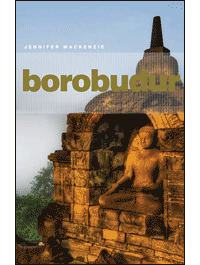
Stephen Atkinson reviews Borobudur by Jennifer Mackenzie

Borobudur

by Jennifer Mackenzie

Transit Lounge

ISBN 978-0-9804616-6-4

Reviewed by STEPHEN ATKINSON     


Journeys, actual and metaphorical, geographical and spiritual, and the cultural exchanges they facilitate, are at the heart of Australian poet Jennifer Mackenzie’s epic Borobudur, in which the pilgrimages of Borobudur’s priest-architect, Gunavarman are a reflection of the writer’s own travels through the region and the writing process.

For Mackenzie, wandering and poetry are in many regards the one thing, both conducted along similar trajectories and according to the same states of mind. Of the creative process of writing Borobudur she has said that, ‘texts, my own travels and experiences pointed in a certain direction and I followed’. Along the way she came upon the poets of the Javanese epics, and Kukai, the peripatetic Japanese monk in whose poetry, to her delight, Mackenzie found echoes of the voice she had worked hard to establish for Gunavarman.


            Soon, we are in lockstep with the poet and her guides, feeling the path beneath the soles of their ‘iris-dyed sandals’, embarking on voyages and alighting in sometimes unplanned destinations, hoisted on palanquins, and treated to the hospitality of princes, sages and scribes. The mandala-like structure of the 8th century Buddhist sanctuary of Borobudur was itself designed to be walked, successive clock-wise circumambulations allowing novices to ascend to progressively higher levels on the path to enlightenment, and so the figure of the journey acquires another layer of meaning, welding the experience of space to the rhythm of steady footfall, and to meditation, movement and poetry.


            Thomas Stamford Raffles, who governed Java for the British over a brief period from 1811 to 1815, is said to have been sitting in his stately residence in Semarang on the Java Sea when he first heard stories of an immense ancient wonder that lay part buried near the plain of Kedu in Central Java. Borobudur, though the subject of lontar texts and folk tales, and clearly known to people living in the immediate vicinity, was nevertheless shrouded in a mystery maintained by a curse: for members of the Javanese nobility, to visit the site meant certain death. It is said that a young prince, who determined to see for himself the ‘warriors in cages’, vomited blood and died shortly after his return.


            Raffles was a product of the English enlightenment, a linguist and scholar fascinated by the cultures, history and antiquities of the places he was assigned to govern. After hearing these fantastical descriptions, he summonsed the Dutch superintendent of historical monuments, Hermann Cornelius, who gathered a team to begin the task of locating Borobudur and disentangling it from centuries of obscurity. After months of steady labour, the extent of the structure and the technical and artistic virtuosity of its creators were revealed. This was almost fifty years before Angkor Wat was hacked from the jungle by a team led by Henri Mouhot, and so constituted Europeans’ first glimpse of the elaborate splendour of the Southeast Asian civilisations that predated their own. Such discoveries could have unsettled some of the presuppositions of superiority that increasingly came to underpin the whole colonial project, but the relatively new field of archaeology, and other disciplines like ethnology that busied themselves with the collection of artefacts, data and knowledge, at the same time constituted another form of conquest.


            Mackenzie’s project in some ways runs counter to the task of archaeology because it is more concerned with the limits of knowledge, the restitution of mystery and a return of some of the dust so assiduously swept away. If archaeology undoes the work of time, Borobudur reaffirms it. Central to all investigations into the past, though often unacknowledged, is the matter of mortality. And if Borobudur has something to teach us, it could be that we are all, like everything else, subject to the same processes of transformation, and that the change inherent in movement and time has somehow to be embraced. While staying with a family of dancers in the Indian Buddhist centre of Nalanda, Gunavarman learns ‘that stone and dance could be equivalent’, and


that in the weathering of stone

I anticipated my own weathering

in the elegance of the gesture

I could traverse that weathering like a god (65)


            While Raffles’ caretaker administration was short-lived, the West’s fascination with Borobudur and structures like it continued, scented with a romance and taste for the exotic not satisfied perhaps by the more austere relics of Europe. The nature of this continuing fascination, Mackenzie’s included, is interesting to ponder. In part it seems to be a case of sunlight and climate, a brightness and clarity that shimmers, sensual and fragrant, and Mackenzie’s verse is full of allusions to colours and light that fill the eyes to aching. Take for example, the sibilant whisper and crystal stillness of:


the lake’s transparent water

luxuriant with lotuses

the blue mountain’s snow-capped

summit moves easily

on its surface (p.62)


            Here, what is more, is a striking image of a time before time, before the white noise of the present, and core to the affect of Borobudur is its concern with time’s passing, with the difficulty of grappling with either eternity or mortality, and with the poignancy of grand endeavours to achieve posterity that tumble into pointlessness, leaving, at best, an enigma, whose meanings are spent and purposes lost just at the moment of their realisation.


            Borobudur gathers together lifetimes lived more slowly and with more conviction, to when journeys embarked upon in the pursuit of wisdom and higher learning could easily stretch to decades. A feature of Borobudur’s strength as a work of poetic cross-cultural interpretation is that it progresses through an engagement with, and imagined dialogue between, the lives, travels and works of the old Javanese poets whose witness offers another glimpse into Borobudur’s historic and cultural significance. In addition to her debt to poets such as Monaguna and Kertayasha, Mackenzie draws inspiration and insights from Prapanca, a documenter of the Majapahit Empire, whose fourteenth-century Negarakertagama makes reference to a Borobudur already long abandoned. That these writers were not all contemporaneous allows Mackenzie to eschew the tyranny of chronology to explore what we mean by timelessness, that is, what we mean when we describe a monument like Borobudur as timeless.


            Borobudur can be read as a companion piece to more conventional guidebooks and histories: one that sets out to complicate as the other explicates, to obscure as the other reveals, to propose dimensions less measurable, to replicate Borobudur as it condensed in the mind of its architect, to explore the conditions of its conception, and to remind us that stone is as ephemeral as the people who shift, shape, and attribute meanings to it. Mackenzie renders it all lyrically as clearly as Gunavarman choreographed his epic dance of stone. It presents a Borobudur that visitors today might not immediately recognise as they pay their admission and run the gauntlet of souvenir vendors, but which lingers in the atmosphere, in the evidence of the chisel, in the favourable aspect of the site, and in the spectacular views and blossoming trees that led in part to its selection.


            While the poems in the remaining section of this slim, beautifully designed volume, ‘Angkor and other poems’ arrive via different routes, they are similarly the product of Mackenzie’s personal engagement and fascination with the region and they also explore the relationship between wandering and poetry, people and nature, the material and the ethereal, time and disappearance. The haunted final poem of the collection, ‘The Botanist Lost at Lake Maninjau’, suggests the existence of portals to realms outside of time, asynchronous and invisible. For Mackenzie, to be lost in the jungle is to cease to exist or to have entered a world of disappearances. It ends:


he entered this light-filled canopy

walked ten minutes

broad leaves coalesced, undergrowth clotted

the air streamed with the inky curlicues of vines

the matte white of a sketch pad appeared iridescent


he turned around. the exit had disappeared.


Nija Dalal

Nija Dalal was born in Atlanta, GA; she’s a second-generation Indian-American, currently living in Sydney, Australia. She holds a Bachelor’s Degree from Georgia State University, and she produces for Final Draft, a radio show all about books and writing on 2SERfm. Her work has been published in Dry Ink, an online magazine based in Atlanta, and in Ordinary, an online magazine from Sydney.
photograph by Dorothy O’Connor


A Midget Toe


A sign of inbreeding long ago that weaves through generations from a small Indian village, where people still die of live wires in water, to a city where the rich live in sparkle-ugly towers built on top of slums. This minute warp in genetic code weft its way through my mother’s DNA and winds with her across oceans and continents, over, under, over, under.

I have named it “the midget toe.” The fourth toe on my right foot, it sits slightly higher than the others; it’s never quite fit in. It assumes a superior attitude, never touching ground unless forced, leaving the other toes to do the actual work of walking.

Because of the midget toe, my right foot’s profile looks oddly truncated. A delicate heel, an elegant curve at the arch, a big toe, and the rest is misery. A downward sloping hill ends with a shock flat diving board. The other foot bears no match; no, the toes of my left foot follow the graceful gradient you might expect, if you ever expect things about toes. The midget toe means every open-toed shoe purchase is fraught with one very disconcerting question: does it create the illusion of symmetry? The sales girl is never paid well enough to respond kindly; closed-toed is my refuge.

Like a grown woman wearing a padded bra, I hide my toe’s shortcoming and my shame with curved rigid structure. It feels wrong inside my shoe, self-consciously insufficient, while the left foot rolls easy and confident.

I share the midget toe with my mother, my grandmother, my aunt, but not all the women in my family. Irregular, unpredictable, like a needle skipping stitches, the toe dances with some, slights others. If my lineage were woven in an ever-lengthening fabric, if the midget toes were marked, the tapestry would show a sort of hidden genealogy, a kind of coded secret, and it seems slightly magical, fairy lights twinkling in a family tree. I didn’t choose to have it; life might be easier without it. But the marvel of the midget toe lies in the knowledge that no matter how far I travel, if I unravel, a twisting thread keeps me tethered across oceans and continents to an immigrant home, a leafy Southern suburb, a sour-smelling sea-borne city, and a small Indian village, over, under, over, under.


Zuzanna Nitecka

Born in Warsaw, Poland, Zuzanna Nitecka left her home country in June 2008 to seek inspiration under the palm trees of Spain. Her greatest inspiration is the magical world of Richard Brautigan’s imagination. She is currently living in Madrid, writing, wandering around at night and making friends with struggling musicians. And teaching English in her free time.


After

You get on the train at 6:45 giving off waves of afterlove frequency.

There is a glow under your skin as if you had dozens of very small Christmas candles in your belly. You stand out against the cold fluorescence of the metro. Eyes turn to follow you as you pass by in search of a seat. You sit down, oblivious: perhaps you pull out a book from you bag or sip tea from a green thermos. All the while. The car gradually fills up with your mind that is aglow.


Loss

There’s nothing more sadly sensual than after-rain pine trees stuck into earth like paper umbrellas dropped into a cocktail glass.

As I walk under dripping branches, thinking my thoughts, I see a black scarf on the concrete path before me. It belonged to a woman. She wears heels and perfect make up. Sweet perfume. She is afraid of growing old. The wind must have untangled the scarf from her shoulders. She walked all the way home from this little park with the ghost of the scarf wrapped around her neck. Before she realized it was gone.


Concert

The clanking of pots and pans drowns out the music (a sonata of practicality). She brings out the dinner: rice in asparagus sauce. As the music begins, she will fidget. Thinking about plates that should be washed; drinks to be served; stains on the tablecloth. Meanwhile, the musician plays

as if he was taking revenge on the world. To avenge some terrible grievance. Then. The trembling of strings announces it’s over. In the silence

that comes, a question: “Will you help me clean up?”


(…)

The demon of disturbed sleep

broods

in bright daylight


(…)

A hudred years ago, it was 7 am. Beds rocked softly

on cold floor like empty peanut shells.


Usha Kishore

Born and brought up in Thiruvananthapuram, Kerala, Usha Kishore now lives on the Isle of Man, UK. Usha was educated at the University of Kerala (India), Sheffield Hallam University (UK) and Canterbury Christ Church University College (UK).   After having taught for some time in the British Secondary and Tertiary Sector, Usha now teaches English at a Secondary School on the Isle of Man . Usha’s poetry has been published in magazines and anthologies in the US, UK, Ireland, Europe, New Zealand, India and online. Some of her poems have been translated into German, Spanish and Gujurati. She also writes critical articles for international magazines.  Her poetry has won prizes in UK competitions and has been part of national and international projects. Her short story “Dowry” was shortlisted for a major UK literary award, the Asham Award (UK) in 2005.  Usha also translates from Sanskrit; her translations of Sankara have been published in India, the UK and USA.   She is now translating Kalidasa’s Ritusamhara, in conjunction with Dr.Rati Saxena of Shree Shankaracharya Sanskrit University, Kalady, Kerala.


For The Dynasty Of the Moon
(after reading Kylie Rose)

For the dynasty of the Moon,
A hundred thousand lives lost
in verse…

Metres of battle scanned into
Krishna’s eternal song –
A stoic sage chronicles the

end of his own dynasty –
a patient elephant God scribes
into eternity…

In the Vela kali of yesteryear’s
setting sun, I hear the battle cry of
the lone sun-warrior, who challenges

the house of the moon.
Panchavadya notes echo
into twilight memory –

The raga hindola, mourning the death
of the lone young warrior killed
by deceit. Arjuna takes a terrible

vow and Krishna smiles in the
bugles of Panchajanya, while a
lone monkey mediates on the flagstaff…

From the carvings on the temple wall,
she, with unravelled hair, calls out to my
soul from stone – screaming revenge for

the disrobing of womanhood….


Krishna’s eternal song – The Hindu “Gita”
Vela kali – Temple art (dance) form
Panchavadya – five instruments played together
Hindola – a raga in Carnatic music
Panchajanya – the conch of Krishna (The poem is based on the Hindu epic Mahabharatha)


Nikhat’s Mother

She stands out in a crowd –
Her shocking pink
dupatta carrying
songs from the Gilgit –

She is without
a language here –
I am her interpreter –
translating her
language, her culture
her colour–

She does not understand
why Nikhat has to attend
school daily – Nikhat is at
her sister-in law’s cousin’s
wedding in Bradford–
Today is Mehendi, tomorrow
is the Nikah  and Nikhat will
not be in school for a week –

She does not understand
why Nikhat is harassed
by school bobbies –
Bibi jaan, taleem lena,
dena hamara mamla hai –
Ye gore kyun dakl dete
hain?

Biting back half-an hour’s
exasperated laughter,
I interpret to the irate
Head of School:
Nikhat’s mother  does not
understand the concept
of compulsory education…


Mehendi – The henna festival before marriage
dupatta – veil/scarf
Nikah –  Muslim Wedding ceremony
The Urdu dialogue can be translated as:  Madam, education is our personal business, why are the whites interfering?
Gilgit – a city in Northern Pakistan and is the gateway to the Karakoram ranges of the Himalayas.


Johanna Featherstone

Johanna Featherstone is a Sydney-based poet and founder and Artistic Director of The Red Room Company: www.redroomcompany.org.


After the Funeral

Family space vibrates with Grampa’s past effects;
to the left shoulder of an elegant desk, a square
gold frame holding the smile of his son,
dead at twelve year’s old. Toiletries, wallet things,
collected from the hospital, weigh down the single
bed that recently held his butterfly body.
On the dresser, pollen flakes from a posy of blue
cornflowers, pulled from their garden plot.
Dust particles through light, fuzz forms atop
rubbish bags, packed with his clothes, for the tip.


The Fernery

Ferns shroud the bench where I sit.
Each frond settles in its own moist corner,
a rivulet trickles beneath the simple teak bridge.

Moments grow. Then your shape enters the
miniature jungle. Our bodies cowled in vines;
plants and ants witness our licks, until tourists
with cameras snap open the yielding bodies –

and we run from the radiance, leaving behind
(for next time)
the filtered light and vanishing faces of mist.


Shannon Burns: The Translator

Shannon Burns: The Translator

Shannon Burns is a writer who lives in Adelaide.


The Translator

I am, you should know, by trade, a translator, which is to say I know several languages, and I can turn one language into another, as it were, so I am no amateur to this, whatever it is, if there is a name for it, which I doubt, since I haven’t come across it, and I have come across a lot of names, in many languages, but not the name for this, to what we are doing, or what I am doing, or what the world is doing with us both, whether we like it or not – and whether or not we like it I cannot honestly say.
=================================

Continue reading for only $5 per month

Subscribe for full access to Mascara Literary Review or login

Continue reading

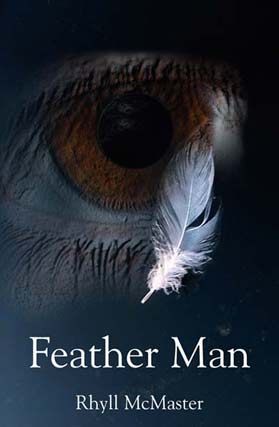
Debbie Lim Reviews Feather Man by Rhyll McMaster

Debbie Lim Reviews Feather Man by Rhyll McMaster

Feather Man

by Rhyll McMaster

Brandl & Schlesinger, 2007

ISBN: 9781876040833

Reviewed by DEBBIE LIM


What repels can often also compel. In Feather Man, author Rhyll McMaster seems to know this as she draws us into the life of Sooky – a girl who is sexually abused by her neighbour in 1950s suburban Brisbane. The story opens with Sooky helping her perpetrator, Lionel, in his chook yard. By the third page, we cannot help but read in growing horror as Lionel commits the violation that will set up the damaging patterns that define Sooky’s relationships in adulthood.

=================================

Continue reading for only $5 per month

Subscribe for full access to Mascara Literary Review or login

Continue reading

Eileen Chong

Eileen Chong is a Singapore-born, Sydney-based writer and photographer. An essay of hers was published in Hecate in 2008. Her poetry has appeared in the first issue of Meanjin this year. Her Polaroid photography has been featured in D2, a Norwegian arts magazine. She lives with her husband and two moggy cats.


What a poem is

A poem is a heavy thing. It weighs
as you scrub the potatoes,
rub them with salt, then decide
to boil them instead. A poem
is a heavy thing. You carry its strain
as you lay plates on the table, as you set
out cutlery. A poem is
a heavy thing. Even the brownness
of the chicken’s skin reminds you
of your grandfather’s hands
in the dirt. Of his feet on the deck
when he caught the fish. A poem is a heavy
thing. You’d wanted greens
but instead bought beansprouts, pale
with their arching necks, tails intact
because you couldn’t bear the smell
of your grandmother’s hours
at the sink: plucking, washing, plucking.
A poem is a heavy thing.
When your husband comes
home from work, you think
man, labour, dust, evensong
as he kisses you and asks
how your day was. Heavy,
you tell him. Heavy.


Blue Velvet

I bought her those shoes. I was the only one
who ever bought her shoes. I knew her
size. I knew what she liked. She’d always
picked on me, but I was the only one
who ever bought her shoes
in her size that she liked.

She had told her oldest son
that when death called
for her, she wanted to be wearing
those shoes. He said
they were house slippers, too flimsy
for her walk in the other world.

Yet in the end, afraid, he gave me
the shoes – hand-embroidered
with phoenixes decked out
in sequins, gold thread, green
beads for eyes – I sheathed
the old lady’s cold, rigid feet.

Thank god I had bought them
in blue, not red. She would not
have been allowed to been buried
in anything red. Not unless we wanted her
to come back from the dead, shuffling
in those slippers, going to the courtyard
to beat the night’s blankets
in the dawning sun.


Summer in London

Summer in London is not
to be experienced without
a raincoat and an umbrella.
London cabs are big and black
but their drivers are not. The British Museum
is a collection of loot. The pubs
are the same as English pubs everywhere. The food
is awful. The train stations are beautiful
with their skeletons of efficiency
and clockwork hearts. Trains coming
and leaving like lovers, disgorging passengers
like bile. The Underground is exciting, but only
in name. The warrens smell
of pee. The streets have the same names
as the streets in Singapore, in Australia.
We’ve all dreamt
of Piccadilly Circus. Mine is complete
with horse-cabs, bobbies and whips. It turns out to be
just a rather large roundabout. The hotel
is not grandiose. The bed
has broken springs. At night I turn to you
but, your back hurting, you face
away. I close my eyes
but London calls. My London
with its clocks and castles and
the will-o-the-wisp shimmering
over the moonlit moors.


Anindita Sengupta

Anindita Sengupta’s full-length collection of poems City of Water was published by Sahitya Akademi earlier this year. Her work has previously been published in several journals including Eclectica, NthPosition, Quay, Yellow Medicine Review, Origami Condom, Pratilipi, Cha: An Asian Journal, Kritya, and Muse India. It has also appeared in the anthologies Mosaic (Unisun, 2008), Not A Muse (Haven Books, 2009), and Poetry with Prakriti (Prakriti Foundation, 2010). In 2008, she received the Toto Funds the Arts Award for Creative Writing and in 2010, she received a writer’s fellowship from the Charles Wallace India Trust for the University of Kent, England. She has contributed articles to The Guardian (UK), The Hindu, Outlook Traveler and Bangalore Mirror. She is also founder-editor of Ultra Violet, a site for contemporary feminism in India.


Entropy

(to grandfather)

A fuchsia scatter in the courtyard:
the bougainvillea dishevels.

Sheila and I squat on the back porch
where the clothesline frays in the wind.
Elephant grass gnaws at cement
and a spider silks the windows shut.
 

‘Weeds have outgrown
mangoes this year,’ she says,

rubbing her sheared head
with one hand. I light a cigarette.

We drag quick and sharp,
as if you’ll still tap down
the garden path, find us there,
grown-up children,
shame us with a frown.

The house falls in flecks—
our clutch of childhood
now wasteland, warm dust,
wormhole.


Storm-Chasing

I came to find the essence of it,
to taste on my tongue its whiteness
like sugar crystals.
I came for the blur and hurry,
the blurry hurl,  the hurly-burly
of devastation.
I rattled up in a red jeep, battling
eyes open against wind.
Past my window flew bits of paper,
tin cans, a shirt from a forgotten clothesline.
I hunkered down, gripped the wheel,
and pressed my big toe
on the accelerator. (Speed was essential.
It would distract me from fear.)
I came for the infinite moment.
I came to chill the tornado’s coil
around me like a giant python.
I came to risk blood.
I came to inhale the un-breathable breath
and fill up like a balloon.
I came to burst or rise,
to dazzle through air like Dorothy,
to dissolve like stardust.
I came to find that one moment
when nothing mattered. Not sex
or sin or ache. Not even love.
There are things a storm can do to you, darling,
that you wouldn’t imagine.

 
We left Bombay to start over

We left Bombay to start over.
It was tumbling rain and vegetarians.
Strings of sausage, once hung like rosaries
at grocery stores, were replaced with rows
of frozen peas. Orange flags had gagged
lesbian flicks. Between polls and pools,
we didn’t know which was dirtier.
A stampede was due.
We left because there was money to be made
in a city with thighs of steel. We left
because hope is tiny and lodges
between a man’s ribs like cancer. But mostly,
we left because we were promised things.
We flew south like geese, twigged a nest
in the outsider neighborhood.
Flyovers flayed the city
but none would hook us across.
We didn’t know that then.
I sat in cafés, scrabbled for love,
stashed postcards like stamps,
tried to stop sneezing.
There comes a time
when home and home
begin to sound the same.
That hasn’t happened yet.
But I’m told a decade’s
too short.