Author: mascara

Stuart Barnes

Stuart Barnes

In 2009 Stuart Barnes’s unpublished memoir, A Cold Decade was shortlisted for the Olvar Wood Fellowship Award; and his poem “Solomon” was shortlisted for the Newcastle Poetry Prize. He lives in Melbourne.


Blood Taken

God’s grey waiting room

eyes like stray cats’
stench
of rotting compost

patients spin between doctors
like coloured tops between children

a transaction:
questions,
answers

tests specified on paper
in puzzling Latin

roll call: the nurse
hums a golden
oldie like a vampire

blackout


=================================

Continue reading for only $5 per month

Subscribe for full access to Mascara Literary Review or login

Continue reading

Cassandra L Atherton: Neck

Cassandra L Atherton: Neck

Cassandra Atherton is a Melbourne writer and critic.  She lectures in
Creative Writing and Romanticism at The University of Melbourne.  Her book of poetry, After Lolita, was published earlier this year by Ahadada Press and her first novel, The Man Jar, was published in September by Printed Matter Press.  Her short stories and poems have been published in Australian and international journals.  She is currently working on a book, Wise Guys, examining the role and responsibility of the American public intellectual, after interviewing Noam Chomsky, Harold Bloom, Camille Paglia, Stephen Greenblatt and many more.  She is writing her second novel, Cherry Bomb, set in Japan after receiving a fellowship to study the floating world.


Neck

She always wore her hair in a chignon. It was one of the first things he noticed about her. Silver-blonde hair swept back with a diamante barrette, always in aqua. He never saw her face then, as he was always running late and entering at the back of the lecture theatre, always sitting behind her. It was the back of her neck that got him through all those Psychology lectures. He began to time the lectures, searching for a pattern. His notebook was filled with useless words, nonsense figures and in the margins were endless sketches of her neck. Once, when he thought he was ready, she wore a strapless dress. He left in disgust.

=================================

Continue reading for only $5 per month

Subscribe for full access to Mascara Literary Review or login

Continue reading

Geoff Page

Geoff Page is an Australian poet who has published eighteen collections of poetry as well as two novels, four verse novels and several other works including anthologies, translations and a biography of the jazz musician, Bernie McGann. He retired at the end of 2001 from being in charge of the English Department at Narrabundah College in the ACT, a position he had held since 1974. He has won several awards, including the ACT Poetry Award, the Grace Leven Prize, the Christopher Brennan Award, the Queensland Premier’s Prize for Poetry and the 2001 Patrick White Literary Award. Selections from his work have been translated into Chinese, German, Serbian, Slovenian and Greek. He has also read his work and talked on Australian poetry in throughout Europe as well as in India, Singapore, China, Korea, the United States and New Zealand.


Classics

A few of them he’s seen already, arriving in the early dawn, staying in a small hotel not too far from the station. He’s walked their boulevards, their backstreets, the pathways of their parks; he’s strolled beside their rivers, those enigmatic swirlings, and sometimes on the esplanades, dressed a little out of season, wondering at their moody seas. He’s probably seen more than most  and yet he’s not well-travelled. 

Arriving all his life as rumours, as traveller’s tales or deft allusions, they line up as a reprimand, these classics that he hasn’t seen. Now, with just these ten years left (or weeks or hours) he knows a visit’s less than likely. He thinks about the schedules, the brochures with their gloss and colour — and thus to inconveniences, the quality of coffee, the noise on the piazzas. The weather, too. Autumn would be best. Spring, for him, ironic — the heat and cold on either side needlessly extreme. Neither is what he’s had in mind. He thinks, too, of the work that made them, fierce obsessions, dreams translated into stone. Or brick. Or glass and steel more recently.  He thinks about those half translations, the ones he’s used so far — the photographs, the moving pictures, the acreage of Baedekers, milky slides in living rooms forty years  forgotten. 

He looks down at his cup; takes some water from a glass. Sometimes the coffee’s brought too hot — though never scalded. He wouldn’t be here if it were. He lets it cool and stares a while at what a blonde barista’s made with just one flourish of a spoon. This, too, is art.  How easily it’s done. He folds his hands around the cup. Time now to begin.  There’ll be a few more yet, he thinks, and sees himself in ticket queues, impatient at a counter or travelling in cramped compartments. He’ll walk the cobblestones and hear the slanting of their consonants, the strangeness of their vowels. How many more? Say three or four, the ones unseen already turning into myth. 

Oblivion is the word he wants. Unique to him at first. And then.


Cameron Lowe

Cameron Lowe

Cameron Lowe lives in Geelong. A collection of his poetry, Porch Music, will be published by Whitmore Press in 2010. He is currently a postgraduate student at The University of Melbourne.


The Watcher

Under such graceful instruction
the surge of coral roses
in the vase

releases the porcelain lady
to be all that she can be,
Autumn days sliding over

the quiet child’s angel face—
he who watches
and watches in the drifting light.

So the morning is shaped
with a certain wonder,
sunlight joyfully

playing across green water,
seagulls ascending into a sky
of polished glass,

the quarter moon still hanging,
like a child’s charm,
over the silence of the house.


=================================

Continue reading for only $5 per month

Subscribe for full access to Mascara Literary Review or login

Continue reading

Charlotte Clutterbuck

Charlotte Clutterbuck lives in Canberra and writes essays and poetry. Her collection of poems, Soundings, was published by Five Islands Press in 1997. She won the Romanos the Melodist Prize for religious poetry in 2002 and the David Campbell Prize in 2009.


auxiliaries


There were causes:


            we could have

            we should have

            we might have

            we weren’t

            we mustn’t have


and also:


            I did and

            I could be

I was but

            I shouldn’t have been


not to mention:


            he might have

            he wouldn’t

            he was but

he couldn’t


But these facts remain


I am not there


I am here


I will not be there when he hears


I live at the periphery of what used to be central

the Hume Highway is long

my back aches as much as my heart.


building


this first year

foundations – taking sights

laying out lines


ceremony of first sod

spadefuls of loam

barrowed away for turnips


pickaxe and crow

dislodging old coins

a smashed teapot


the builders’ dogs

faithful or busy, eyeing

each other, settling


rain setting in

overnight, trenches

full of muddy water


thud and shock

jackhammers

juddering rock


burnt and sweaty

shoulders heaving

rubble to surface


hands blistered

bruised and scratched

with limey soil


only in minds’ eyes

Satan flying west    

on judgment door


mermaids on misericords

under baritone bums

sopranos shifting


spirits above

transcept into a spire

that’s yet to be


flat earth


I’ve stepped off the edge of my life

a contortionist’s tangled legs and arms

flailing, the music of the spheres rude

with shock, feathers drifting down

onto flattened vestiges of garden


I twist my neck to see

my crumpled limbs

through other people’s telescopes

unbalancing profit and loss

I knew but did not know the costs

could not preempt these doubts


peremptory love under spring boughs

bring me a cup of tea

kiss my cold shoulders and feet

tell me there’s no rabbit trap

pressing into my skull


let your voice and fingers

keep telling me of the wild place

somewhere in the mountains

where sparks from a twilit

bonfire fly above these jagged slopes


Anthony Lawrence

Anthony Lawrence’s most recent book of poems, Bark (UQP, 2008) was shortlisted for the Age Poetry Book of the Year and the Judith Wright Calanthe Award. A verse novella, The Welfare of My Enemy and a new collection of poems, The Unfairground are both forthcoming from UQP in 2011. He lives in Newcastle.


Whistling Fox


My father could whistle up a fox
with the bent lid of a jam tin.
Pursing his lips, he would blow the cries
of a wounded hare into cold Glen Innes hills.
Into a giant’s marble game of balancing granite;
the wind-peeled stones on the tablelands
of New England; a sound like a child
crying called the fox from its nest of skin and bones.

I was there the day my father flew
the eyes from a small red fox.
He fired, opened the shotgun over his knee,
and handed me two smoking shells.

It had come to us like any whistled dog,
leaving its padmarks in frosty grass.
That day it left its winter coat behind
with blood like rubies sown into the dripping hem.
 

Trapping on the Foggy

for Richard


When I’m trapping on the Foggy,
fifteen miles off Catherine Hill Bay,
the world is good.

In the morning paper, a murder
in Leichhardt; someone’s fist
photographed under rubble in Mexico.

Out here, the blue wind makes calm
the most violent of days.

Daydreaming over my landline,
the ocean settles me, and I drift.


I watch the tankers come and go,
fixed heavily to their destinations.

It’s mostly routine, but once
a bronze whaler followed a trap
to the surface – it came out of the water
and laid its great head over the stern,
snapping in the air, tipping the runabout’s
nose to the sky. I looked into its eyes
and knew it wanted me.


I must have sent down a thousand traps,
each one with its lines of chicken gut
woven through the wire.

And with every trap, I release myself
slowly, descending through miles
of green, sun-shafted water, down
through the bubbles, in touch with everything.

I tip a barnacled ledge somewhere far below,
and wavering there, settle on the reef.


I finger the handline like a downcast kite,
translating each bite into possibilities.

These curious fish inspect the bait
like terriers, and when the snapper throw up
their luminous bodies, thrashing and curling
in the phosphorescent deep, I’m a child again,
staring into tidal pools, my hands bent
and pale in clear water, counting bright shells.

Just below the Falls

This is how it is, just below the falls,
with a fine spray of mist in my eyes
and a whipbird cracking into the trees.
I’m here because the poems are on the move again.
There will be no quiet stirrings of experience,
distilled by the years and ready for translation –
what’s approaching’s got its tail dragging in my blood.
It’s a fertile time, knowing that the love poem
and the elegy will be equally attended; knowing too
that the footprints I’ve left on previous encounters
with the falls will soon be gone, stamped out
like a shell’s flattened spiral into the stone.
It’s been coming on for days, entering my speech
and sleep, bringing news from the other side.
This is how it is, where the sandstone ledge
I’m standing on is breaking away, and the whipbird’s
ricochet is lost to water’s thunder.
Something will happen if I stand here long enough –
a poem will come or the ledge give way,
though I’m through with falling back on the notion
of the suffering artist – we all have our demons
to contend with in our time.
This is how it is, just below the falls,
where rainbows hang in a bloom of spray
and the poems come on in stages. Where the cycle ends,
the ledge falls down like dark, like heavy rain. 


Tidal Dreaming

You wake and tell me that your dream was tidal –
the rattle of stones, the miles of salty wind
giving voice to trees and honeycombed caves.
You tell me quietly about the gentle rocking
motion of the waves, your warm body moving
slowly upon my body, advancing and receding.
And as I listen I remember that I too
had been dreaming, that possibly I had taken
leave of my body’s sleeping anchorage.
In the wide bays of each other’s arms
or sleeping alone, our places in the bed
still wear the positions we made as we turned,
seeking comfort or space in the dark.
No need to question how far we travel
when behind our eyes time and distance
disengage their symbols to flicker and collapse
like glass in the skylight of a kaleidoscope.
When I lean forward to kiss you, pine needles
fall from my hair. On my skin, a smear
of charcoal where fitfully I’d passed,
brushing burnt-out trees. And it seems
you were there beside me, flying over
the wreckage of week-old fires – in your hair
also, the evidence of pines, on your skin
the ash-grey stains.
Coming to rest,
we gathered ourselves into wakefulness, moving
again with moon-drawn water, our voices
returning from caves and forests. And silence
by morning’s pale-blue noise, our shadows
passed with belief in love beyond the tired
streets of light and work, our heartbeats
measured by the pulse of the waves, incoming
deep and regular. To sleep beside you
is to know the secret dark each other’s
dreaming has encountered – forests and caves,
where stalagmites and stalactites
grow towards each other like patient tongues.


The Aerialist

Blonding (Jean François Gravelet), 1824–1897

Despite the legs, varicose like branches
veined with congealing sap,
the hands, gnarled and knotted with disuse,
I could still conjure a terrible height
from the verandah to the lawn,
do a softshoe along the railing
then walk the length of the drive,
pausing to dig the stones from my palms.
The life of an aerialist is no worse or less
potent because the body is grounding itself,
weighted to the marrow with decay.
It is only the tools of my high-risk trade
that have fallen to redundancy: the cable
on which I travelled above the falls
of North America, the long pole I held –
an eagle’s slow dark flapping –
they are warping and unravelling in the shed.
My retirement from the windy meridians
of balance and applause has refined
a discipline displaced by youth for the brief
flirtations I made with death and acclamation.
I’ve not forgotten the surreal heliography
of a thousand upturned eyes and cameras,
or the collective gasp from a crowd of mouths
as I wheeled a barrow stacked with knives
towards Niagara’s roaring vanishing-point.
Once the wind rocked the barrow violently,
and knives flashed like slender-bodied salmon
falling back from an unsuccessful spawning.
These days I walk the wire in the high
and silent air of meditation. I can twirl
a blue umbrella, or wheel a box of blades
above the falls for hours – the cheers
and the mist still around me as I rise
then step away into the shadow of an elm.
I’ve returned in recent years to stand alone
at night behind the safety rail.
They’ve lit the falls with spotlights,
now white thunder is a rainbow veil,
with Beethoven’s Sixth coming awkwardly
like muted weeping through the spray.
I rarely discuss my time in the air.
Talk is a tripwire on memory’s corroding line.
Though, when asked to remember
the most difficult walk I’ve made I tell
a story about my father. One night he came
staggering home through the rain into death,
his heart and balance quartered. I met him
at the gate, then carried him inside.
He was breathing hard the words I would later
speak like prayer above the water and the crowds:
I’ve been trying for years
to heal the private wounds of my life
.


The Syllables in Your Name

I finger the Rosary beads I found
in a country church
after lighting a candle
under Gothic spires, dark
with thoughts of prayers for you.

Reasons for our separation
come through remembering candleflame
that lit the feet
of a slumped and wing-attended Christ,
shadows blue as snow, and now

the click of beads, but mostly
I mouth the syllables in your name.
Today the string came apart,
and there was a sound you’d expect
scattering beads to make.

Sympathetic hands came forward
with beads to a man who had
yet to complete the Rosary.
With a passive vocabulary, I thanked,
moved off and disappointed them.

In the generous shadow of a column,
as a man swept last night’s rain
from the floor of the Pantheon,
I threaded beads
onto the twist of purple wool I’d found

where Nigerians stand selling
handbags and cartons of cigarettes.
When each bead could be numbered and praised,
I mouthed, like a mantra over the reasons
for our separation, the syllables in your name.

These poems appear in New and Selected Poems, (University of Queensland Press, 1989)


Scars and Their Origins

For the lesson in how to harness martial energy,
I did not have to study the sea-
facing towers and blades on a wind farm,
or replay footage of a cheetah ending its run
when the wildebeest moved out of range,
or hear a street-fighter who found God
talk of devotion as paying homage
to the tissue of scars and their origins, no,
I learned how to listen and when to distance
myself from the moment, and where I once
went to school on the immediate
and the external, now all I have to do
is remember how you wept and turned away
from the open lesions of my anger.


In the Shadows of a Rockspill

darken your hands
in a seepage of the gathering dark
and then move off into something new
like the eyelid of a sleeping lizard
sealed with the blue rivets of ticks
or a flourish of air
in the path of the owl you disturbed
not unintentionally
     All this will appear to you
          as you travel
attentive or unapproachable
under the hard veneer of your life
saying I will remember this
or you will be captive to the constant
awful noise of reclusiveness
which is not solitude or absence
but simply another place you have entered
in order to leave

These poems appear in Bark, (University of Queensland Press, 2008)

Shearwaters

The storm is isolated, black, and comes in fast
breaking lines across a torn embroidery of foam.
I stand looking out from a shelled water table
over stones the wash has kelped and waved aside.

At first it’s like unspooling celluloid, under-
exposed in hard, projected light:
an incoming tide of shapes
that merge to seed a furrow
where the sea’s dark pelt and raining wind combine –
a closing front, loud with acoustic whips of air
as angled wings snap past and lift away.

I will not move, though fear has not disabled me.
It is the upright, spell-bound grace of being
where instinct drives a self-repairing wall
of light and shade.

The precision that keeps a wing-tip
just above the waves keeps me from harm.
Grounded they will rest, feed, then make arrangements
for another touring season.

When the last birds have swept aside
their lapsed itineraries, and climbed wet air
to oversee the underworld of burrows
they claimed years ago: the rank, game-reeking cavities
beneath headland grass, I will leave.

Can the scent and texture of our skin be changed
by such encounters?
Stepping over pools where anemones bloom
like tidal resurrections of red flowers
I put my hand to the sun
to see lit blood illuminate the webbing.
Climbing high, I listen
for the sounds of welcome and arrival.
When amazement breaks the filters

our senses wear in uneventful light
we move beyond the place
where memory harvests meaning.
I move and I am changed, then changed again
by the telling of it.


Street Theatre

At a high open window, working with rags
to buff the brass Buddha she used to weight paper
a woman is frozen by fright and alarm.
When he slipped from her grip and fell, he glanced
off the head of the man who comes
each day, his face and hands painted silver
to stand on a box to make money.
A black and tan kelpie is first on the scene
followed by a rodeo clown
wearing overalls, makeup and dust, then a girl
whose white tasselled boots had been worn down
from being worn out.
The standing man was lying on his side
unconscious or worse, surrounded by coins.
The Buddha was sitting upright in the gutter
and apart from a scratch on his shoulder
he was fine.
Not since locals bashed act from the word actor
            had an inland city seen such street theatre.
 

Stephen Edgar

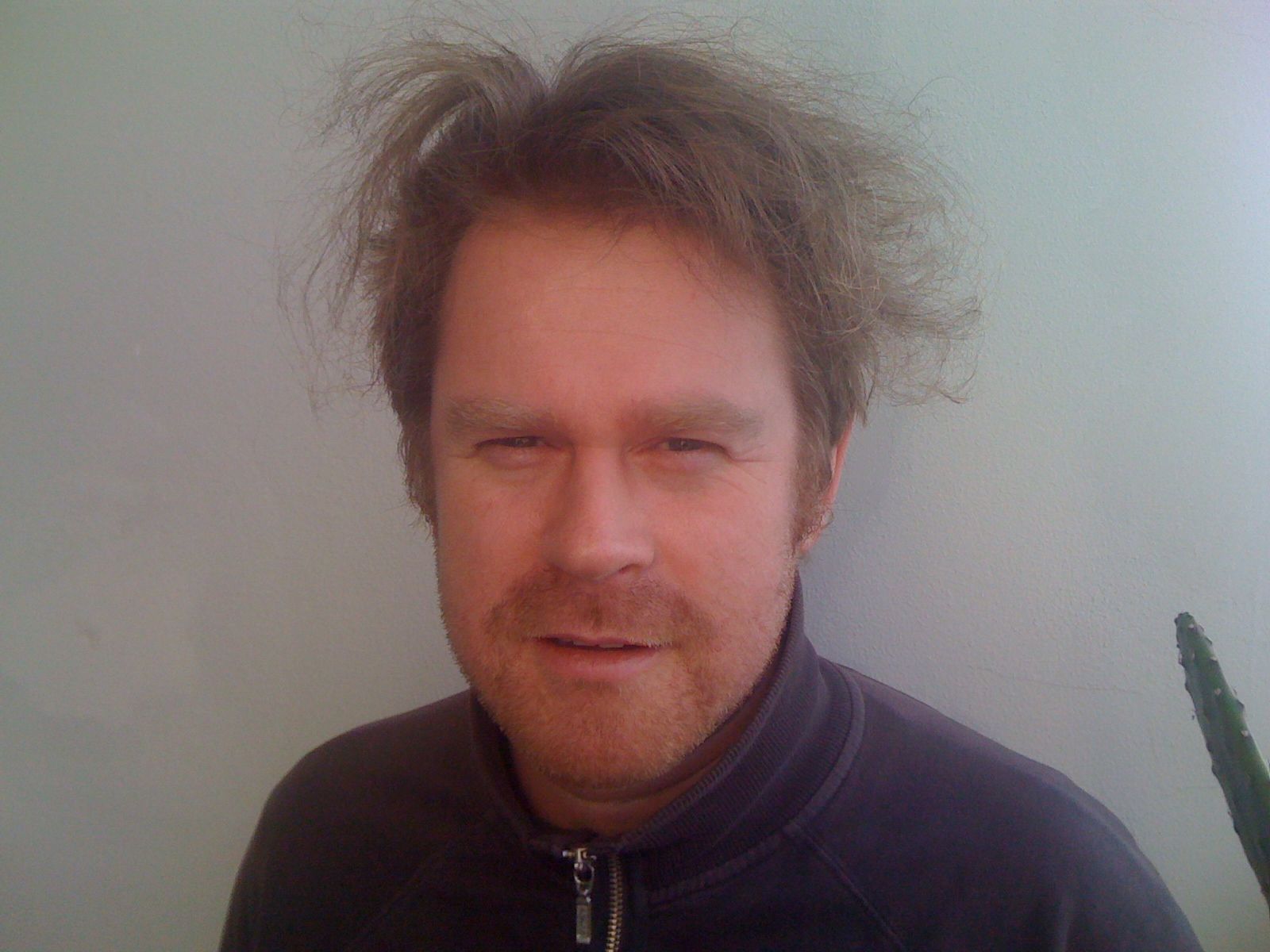
Stephen Edgar has published seven collections of poetry, the most recent being History of the Day (Black Pepper Publishing), which was awarded the William Baylebridge Memorial Prize for 2009. “The Fifth Element”, from which three sections appear in this issue of Mascara Literary Review, is one of three interlinked narrative poems at the heart of his next book, Eldershaw.

  Photograph by Vicki Frerer


The Fifth Element

Truly, though our element is time,
We are not suited to the long perspectives
Open at each instant of our lives.

                                                Philip Larkin


December 1945. Isabel. Earth

Her tread, light as it is, disturbs a floorboard
And sends the footnote of a seismic shiver
Up through the kitchen table, registered
By a faint tinkling of the beads that weight
The doily on the milk jug she left out.
It’s probably gone off. Those words of his
Set up their tremor too among her thoughts,
The faintest ringing, practically too low
To be recorded in her consciousness,
At least until the day’s competing noises
Had quietened and left her clear. The moon,
As big, it seems, as earlier the sun
Which weighted down the sky’s opposing quarter,
Sheds the revers of that illumination,
As though she looked again at the same scene
The other way, as though the sky turned round
And showed her from behind its silver stitching.
She’s left him sleeping—Isabel assumes
That Evan’s sleeping—and slips quietly
Away through this interstice of the dark
To think it out. One more reversal, this,
It now occurs to her: four years ago,
She’d slipped out briefly on their wedding night
To say goodnight (at that hour?) to her mother,
Though really, if the truth were told, to pause
A little longer in that strained abeyance
Before the feared requirement of the flesh
That she must answer. Was it a mistake?
Marry in haste, repent at leisure. Not
The least of this war’s fateful dislocations
Was speeding sweethearts to the marriage bed
Who might have thought again, given more time.
But who can unsay love? And she would not
Have seen him off into that conflagration
From which he very well might come no more
With nothing but the memory of a wish
For what had never been to set beside
His everlasting absence. She at least
Could call herself his widow, no small thing
To salvage from the ruins of the world.

But there. He had survived. He did come back.
And she had met him at the Quay to end
The long hiatus between consummation
And married life, and they had come down here
To have a few days’ quietness alone,
The two of them, before their lives should start.
And maybe he had died in any case.
He seemed a body uninhabited.
Late in the afternoon on the veranda
They’d sat out looking at the gentle hills.
A little way below, where the land sloped down,
A stand of gum trees gathered to itself
Such greens as summer nourished, while, beyond,
The paddocks muzzily laid out their grasses,
Parched in the faded memory of colour
The heat had left them, shifting separately
And different ways as you looked here and there.
The air seemed thick with powder, not a dust,
But some particulation of the light
Applied across, or rather through the miles
Between here and the faint blue hazy sky,
In which the sun, a smouldering orange disc
Behind a screen, was sinking gradually
As though the air resisted its decline.
How beautiful she thought it. “I don’t know,”
He said at last, “it all looks dead to me.”


December 1978. Luke

The lassitude of Christmas makes a dull
And heavy progress through him like a drug.
Is it the season or the humid weight
Of air, or their perverse coincidence
That always settles on him when he visits?
Or is it that? His simply visiting,
Which, like the signal that a hypnotist
Implants, brings forth at once its cued behaviour?
“You can’t go home again.” Well, yes, and no.
He thinks of yesterday’s transparent rage
That Isabel and Evan stared straight through,
Oblivious. When Isabel recounted
How round at Angela’s Craig slapped their son
For some slight naughtiness not worth the notice—
More than one slap, and hard, which left him howling—
Evan, all indignation, had exploded
And called Craig all the names under the sun
For such brutal reproof. Jesus, Luke thought,
Look who is talking. He remembers well,
If Evan can’t, being summoned by his voice
Out to the dark street of a Sunday night
When, under television’s new enchantment,
He stayed too long a few doors down the road.
He stood beneath a street light, friendly-seeming,
And when Luke reached him, up his right hand rose
And down the strap flashed, curling like a whip
Around his legs—imagined more than seen,
Felt more than both—again, again, again,
To send him screaming home, where there was more
Considered application. Called to the bathroom
To have the red welts on his backside soothed
With ointment, in his terror he believed
More strokes were yet to come. Nor was that night
Uniquely memorable. Such violent
And such incontinent fury, where did they
Break out from when they took him? Who was he?
“What are you looking so self-righteous for?”
Evan barked savagely at Isabel
On one occasion when she glanced at him
Her pale unspeakable reproach. Those words,
They’re scored like strap marks in Luke’s memory.
To know all, as the old saw glibly has it,
Is to forgive all. Who can know so much?
Blocked by such banked-up anger and resentment,
Luke bit his tongue and let the moment pass.

Later he wanders up to the garage
Where Evan’s pottering. A peaceful and
Companionable mood rises between them
In idle conversation, punctuated
By silences that almost seem like touching
And say as much as words, especially
Since both of them know perfectly what subjects
May not be spoken of. “Here, hold this, mate.”
Luke grips the fishing rod and keeps it steady
While Evan winds the twine, eyelet by eyelet,
With single-minded care, one of those tasks
Of shared participation which enlarge
But don’t drag out the moment that they make.
Evan sings snatches of old prewar love songs—
Who can know so much?—in his expressive,
Beautiful and untutored baritone.


April 1945. Evan. Fire.

At some point in the flight, inevitably,
The Oxford would begin to sputter and stall,
No matter how precise were his instructions,
How clearly and methodically delivered,
How dire the consequences, should they not
Be followed faithfully. Up here in August,
The sky an excerpt from a pastoral
In watercolours, soft blue smudged with clouds,
And spread below, all stitched and hemmed with hedges,
And here and there the crocheted clumps of woodland,
Those meadows of unrealistic green,
So concentrated a viridian
You’d think that it would wash out in the rain
Like dye and stain the footpaths—floating here,
You wouldn’t know there was a war at all,
Not, certainly, a war that you were in
And might well die of, not so far away.
Amazing, with a little altitude,
How far his vision went—the width of England
All the way from the Wash to the Bristol Channel.
Too bad he could see across but not ahead.
And now the nose had dipped and down it went
In whining plummet, the white-faced trainee
In panic trying to regain control
Before that field, impossibly remote
From here, you’d think, reached up and through the glass.
Evan, who’d seen all this—oh, he’d lost count—
Dozens of times, was perfectly relaxed
And in good spirits. He secretly enjoyed
This part the best and usually turned,
As now, to tweak the trainee’s fear a notch,
And looked back ruefully with shaking head
At those exalted heights they’d fallen from,
Or down towards the cruel end that loomed
Below them. Judging to a nicety
The last safe moment, Evan snatched control
And pulled the plane up from its fatal dive.

That pastoral was over. In the war’s
Last months he does what until now he’s only
Been training others, and himself, to do.
What hand of destiny had chosen Bonn,
His favourite composer’s natal city,
For his first bombing mission? “Thus fate knocks
At the door,” Beethoven said of those four chords.
He played that mighty music in his head.
Hannover. Magdeburg. Each time a friend
Or more would disappear. Wiesbaden. Mainz.
At first you steel yourself not to return.
Eventually, though you don’t lose your fear,
You step aside, you step outside of it
And move in some dimension parallel
To life and sense and self. Each one of them
Was both unique and interchangeable,
Each death was every death. Stuttgart. Mannheim.
How tempting to persuade yourself that you
Are destined to survive. Don’t think of it.
Then fearful March. Berlin. Bremen. Erfurt.
Berlin. Berlin. Berlin. Berlin. Berlin.
The cold cramped cockpit and the juddering frame,
The searchlights calling you to come to them,
Scouring the sky for you, the rising fire
That seems to climb as high, the abrupt thud
Of guns that shake you sideways, and the fighters
That, thank Christ, a Mosquito can outrun.
And down there Germany, a starlit sky
As though the Milky Way has come to earth.
Each chosen city angry as a star
Burning with energy enough to make
Whole worlds. He doesn’t know, or cannot now
Allow himself to think, as one more night,
Delivered of his sole four-thousand-pounder,
He flies away, how that pure stellar heat
Is melting lives from bone and boiling blood,
Volatilizing screams from a thousand mouths,
Setting the corpses of Vesuvius
In charred arthritic postures underneath
The buildings burst around them—if they’re not
Calcined from history—sucking out the air
From cellars where the people cower, their lungs
Emptied and burnt out by the vanished breath.

Angela Meyer reviews Iran: My Grandfather by Ali Alizadeh

Iran: My Grandfather 

by Ali Alizadeh

Transit Lounge, 2010

ISBN 9780980571745

Reviewed by ANGELA MEYER


Iran’s fascinating, in parts beautiful and in parts horrific history is worthy of account: the contextual conflict; religion versus progress; and all the complex in-betweens. So many good intentions, misinterpretations, capitulations, and fluctuations has this country endured. Its citizens have swayed with vicissitudes, standing up and being beaten down, feeling that one thing

Continue reading

Jen Webb

Jen Webb lives in Canberra, and is the author of a number of works including the poetry collection, Proverbs from Sierra Leone (Five Islands Press, 2004).


Bête à chagrin


a thin morning, Canberra cold, and the cat 

is sleeping outside, he’s dozing out there

dying in the sun, not knowing it, he thinks

perhaps how sunlight feels on skin, how birds’ wings

sound the air, he tastes the drugs on his tongue


this is the matter of his life

a life of feeling       not thinking. Of being       not might be

a human heart can’t be:  I am want, he is satisfied with is 


for him an easy death, for me old words 

like chagrin come to mind, and I

must make the call, rule the line


he purrs again, I stroke his staring coat 

he’s metaphor of course; all cats are, all loves

he blinks, dying in the sun


I can’t find the gap between want and ought 

now might be shifts into will and don’t becomes yes

the sun the only bright spot on a hard-edged day


Outside Euclid’s box

the cyberworld has given up the fight: space is still solid,

time remains a mystery, the fundamentals still rule – that

geometry of one and three, time and space, that box our world


but you know, and I know, time is sometimes now, sometimes then

or when: outside Euclid’s box it folds like a paper crane, taut

surfaces hiding what Euclid could not know;


tug the paper wing and time is squeezed in here, stretched out there

the walls shift, the tremble takes its time, one wall falls, three

remain – height and length and width – they shudder


as space shifts like a tale; as there is folded onto then

as where is drawn out beyond what seemed to be its end –

what remains?


the story arcs from me to you, time trembles, and space,

the walls fail: when does far away become

just here, or then become now? When


does that old arc thread

here to there, the line from then to now,

the story, the trembling tale?


Wednesday morning


So here we are again, back at the tipping point

poised between stop and go

Another Wednesday lifts its blinds to check the day.


Sun, again. Blue sky.

A flotilla of clouds heading this way

morning light of course on leaves.


Below the tree three birds stand, eyes on the sky

where the hawk takes his thermal ride


the little birds describe his flight

then freeze as he turns their way.


The tree falls still; even time hesitates: the clocks run

to and fro


confused by the unlikely sky

Janus scratches his head, looks to

and fro, defers the day