Author: mascara
Paul Giffard-Foret reviews Anam by André Dao
 Anam
Anam
by André Dao
ISBN:9781761046940
Reviewed by PAUL GIFFARD-FORET
André Dao’s debut novel Anam is like a house with many rooms and windows, to use an image employed by its author. Its multiple locales account for the shattering, scattering, and smattering of Vietnamese people across the globe, and their resettlement in outer migrant suburbs, in Paris’ Boissy-Saint-Léger or Melbourne’s Footscray. Alongside a distinctly cosmopolitan, diasporic feel, the novel opens up a thought-provoking cultural conversation on Vietnam’s colonial and postcolonial histories – and in so doing, digs up a lot of mud. This endeavour may have been facilitated by Dao’s outsider perspective as a Viet Kieu (Overseas Vietnamese) born and having grown up in Australia, which provides him with sufficient hindsight. It is no surprise, then, that the names excavated from Vietnam’s past ought to be figures of exile, beginning with Dao’s grandfather. While a Penguin review noted how this “work of autofiction, this part-memoir, part-novel is twelve years in the making”, Dao’s grandfather spent ten years throughout the 1980s at the infamous Chi Hoa jail located in Saigon (now Ho Chi Minh City) as a political prisoner of conscience under the Communist regime, before being sent away on a plane to France upon release. The narrator compares his grandfather to those decimated Angolan antelopes who are the victims of inter-imperialist rivalry and proxy wars in Africa – “he, a colonial subject of an empire that no longer exists, a forgotten ghost of an already embarrassing past”.
Exile
Despite associating with a political current of anti-colonial Catholic nationalists, his grandfather collaborated both with the French and Americans in their fight against Communism, failing to understand, after the Fall of Saigon in 1975, that he was now on the losing side of history. Identified as a traitor, he is reluctant to leave the scene and defers his departure from Vietnam. The themes of losing, failing, and waiting (until it is too late) recur over and over again in Dao’s novel. This makes his characters all the more humane and sympathetic as anti-heroes. Dao’s grandfather’s failure to exist in the nation’s archives echoes a fêlure (French for crack, a homonym of the word ‘failure’) in Vietnam’s psyche through its inability to reconcile both streaks of its identity: North and South, East and West. In identifying with none, the narrator looks up instead to interlopers such as Tran Duc Tao or Ngo Vinh Long for authoritative models. The former’s life as an intellectual trained and versed in Western philosophy but keen on liberating his country from colonialism led to the silencing of his voice and turned him into an outcast, both in France and Vietnam. The latter became the first Viet to go to Harvard on a scholarship, in part thanks to his role as native informant (“at fifteen he convinced American officers to hire him as a map-maker”) and ‘mimic man’ (“He taught himself English with a bilingual dictionary and a copy of Great Expectations”). Yet his later involvement in, and commitment to, the anti-war movement would be mocked and dismissed at Harvard, while “on the anti-war speaking circuit” he remained sidelined as a “token Viet”.
Much of the story’s appeal precisely comes from Dao’s refusal to play the token Viet in the eyes of Australia. Indeed, can a narrative taking place to a large extent in France and in Cambridge, England – where the narrator writes his thesis and contemplates settling down on a permanent basis – still be called Australian, or Asian Australian for that matter? Do these territorial labels still make sense when one is aware, as Dao is, of the fact that mapping (of the imagination) precedes and to a certain extent forecloses the possibility of place? When asked whether Australia is home during an interview with an academic researching on an oral history of second-generation Vietnamese in Australia at a community centre in Footscray, the narrator’s answer is no:
She didn’t seem convinced. She pressed me: But you were born here, you grew up here, didn’t you? Your family lived here. Your daughter was born here. How can you say Australia isn’t home for you? Haven’t you had a good education here? Haven’t you prospered here? If Australia isn’t your home, then what is it? A playground, or a marketplace from which you grabbed what you needed? And now you’re off to England, to Cambridge. Will that be home? Or will you wander the earth like – she stretched for the right words – like a rootless thing, like one with no place to rest?
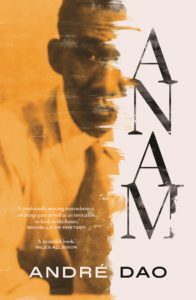
The narrator’s superficial emotional attachment, though, does not stem from lack of care or cold materialism but from the multiple fêlures opened up by the failures to remember and to forget/forgive the past at once. One therefore cannot be nostalgic about home when home no longer exists or never existed, except as a figment of the imagination. One can only melancholically mourn the ghostly traces of that which remains, those haunted fragments or slices of life we dare to call memory, and which make Being a deeply traumatic, problematic event in itself. Though chiefly focused on an attempt at memorialising his grandparents’ and grandfather’s life in particular (whose half-effaced photo features on the book cover), Dao’s novel thus raises metaphysical, existential questions that are larger than the merely anecdotic. In researching on memories of his grandfather, the narrator ends up projecting his personality onto him as a prodigal son of sorts, feeling guilty about endlessly postponing the writing of his memoir. Yet the exercise remains an arduous task, akin to observing far-away galaxies, which, owing to the speed of light, may already be long gone and dead by the time their image reaches the astronomer’s telescope. It means accepting to warp and write oneself into another’s spatial temporality in the disjointed mode of future anteriority. The narration of the novel, indeed, starts off by means of such a mode and creative black hole: “This will be the last time that I will have begun again – the last, because I will have learnt to see what I failed to see at the beginning.”
Exist
The novel’s title, Anam (otherwise spelled Annam), once referred to the French protectorate for Vietnam, which was part of French Indochina. Its lost currency as a term allows Dao to recall the spirit of Vietnam, which under its spectral shadow becomes the site of an aporia. Dao throughout the novel asks: What makes a people’s collective unconscious when riven by guilt and strategic amnesia and erasure of its own past, as is Vietnam? Can it possibly be based on remembering, on traditions passed on from one generation to the next, when this heritage appears dubious and truncated? As a result, Anam is not a hagiography of Dao’s grandfather, who never had the benefit of having his bronze statue sitting “in pride of place” in the middle of his relatives’ wealthy home in Hanoi, unlike his brother, a former general to Bac Ho (Ho Chi Minh). Nor is it, strictly speaking, a biography since Dao is aware of the shortcomings of reception and representation of someone else’s experience, especially one as incommensurate as the collective famine that took place in 1944-5 and is believed to have killed between one to two million Vietnamese (about one tenth of the total population). Instead, Dao in his writing deploys a number of devices to circumvent some of the pitfalls associated with the literary genre of the memoir. To start with, he makes frequent use of interpolation (i.e, the insertion of something of a different nature into something else) by interweaving and blurring borders between sundry narratives (actual, remembered, imagined), discourses (academic, historiographic, personal) or registers (factual, introspective, fictitious). Interpolation can be opposed to interpellation, that is, the hailing or arrest of the sign and memory attached to it, thereby leading to its reification as monument (like his great-uncle’s bronze bust at the narrator’s relatives’). Another device related to that of interpolation between the author-as-narrator (Dao) and the narrated (Dao’s grandfather) is anamnesis (i.e., the recollection, especially of a supposed previous existence). Dao is acutely cognizant of those filial echoes of the past repeating upon the present and does not seek truthfulness at all costs, only its effects and affects, instead working in part through blind faith in his task as ghost-writer walking in the footsteps of his predecessors and eager to repay his debt. He will work as a lawyer, partly to please his grandfather and partly because his father had failed to do so, owing to the interruptions of war. As a review of the novel by Tess Do reminded, Dao is “a refugee advocate who co-founded Behind the Wire, an oral history project documenting people’s experience of immigration detention”. The narrator’s function is that of an amanuensis (i.e., a literary assistant taking dictation). Hence, the narration bears from within a ventriloquising resonance as Dao records his grandparents’ voice in their tiny apartment on the outskirts of Paris in Boissy-Saint-Léger, where the Eiffel Tower can be seen in “the far distance, a little upright prick on the horizon”, or as he listens to the audio recordings of S., a refugee from Sri Lanka indefinitely stuck in an offshore prison facility by Australian customs on the remote Pacific Island of Manus.
Exit
S.’ reported predicament operates a further line of flight as parallels are made with the narrator’s grandfather’s time at Chi Hoa, and with other celebrated manuscripts about, or devised in, jail, from Gramsci to Mandela. Dao does not seek to hide the traces of these multiple transfers but instead questions his legitimacy upon visiting and inhabiting them through his writing, having never been incarcerated himself, albeit also hailing from a family of refugees. Thus, Dao’s novel is also a book about other books (yet another interpolation), besides dealing with family. His philosophical musings embrace the thoughts of Derrida, Levinas, or Arendt, but Dao is especially interested in phenomenology (i.e., an approach that concentrates on the study of consciousness and the objects of direct experience), perhaps because in so doing, he hopes to grasp the unfathomable trauma endured by jailed refugees or political dissidents lingering in limbo, or the shared atrocities of the Indochina and Vietnam Wars. Though we may wish to rank one atrocity above the other in a magnitude scale of suffering, pain can hardly be measured up. Eventually, it has little to do with issues of right or wrong, with political or ideological affiliations and leanings, harkening back instead to our being (all too) human as suggested in this exchange between the narrator and his Vietnamese Australian interviewer in Melbourne’s Footscray:
When we compared crimes – me, the 1945 famine caused, I said, by French and Japanese and American imperial policies, her, the kangaroo courts and summary executions of landlords and wealthy peasants and the socially unpopular during the mid-fifties land reforms in Communist DRV, me, the Agent Orange and the millions of tons of bombs dropped on Vietnam, Laos and Cambodia, her, the massacre at Huê during the Têt Offensive, me, Lieutenant William Calley and My Lai, her, the re-education camps and prisons like Chi Hoa where for years and years men and women, including my grandfather, rotted away (a mistake, that, to use the cliché about rotting – it made it so much easier for me not to hear, not to feel, the sting in her words) – when we compared crimes like that, we were really trying to interrupt the other’s nostos, their return home.
While indicative of a failure to commiserate with the Other, these interruptions (from the Latin inter ‘between’ + rumpere ‘to break’) are also the site and the expression of a reciprocal fêlure, thus marking the possibility of an exit breakthrough in the form of a pause or a cesura – a suspended truce of sorts for want of reaching a final truth, which would allow for redemption. A small victory still for a hugely promising debut novel and writer.
CITATIONS
“This ‘transcendent’ new novel is a must-read for literary fiction fans.” Review of Anam, by André Dao. Penguin Books Australia, 12 May 2023.
Do, Tess. Review of Anam, by André Dao. The Conversation, 30 April 2023.
PAUL GIFFARD-FORET obtained his PhD from Monash University, Melbourne, on the subject of Southeast Asian Australian women’s writing. He lives in Paris, where he teaches English across various academic locations and carries out research on postcolonial literatures while being politically committed as an activist on the French far left.
Marie-Claire Colyer reviews Chai Time at Cinnamon Gardens by Shankari Chandran
 Chai Time at Cinnamon Gardens
by Shankari Chandran
ISBN 9781761151408
Reviewed by MARIE-CLAIRE COLYER
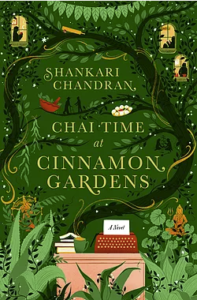
Chai Time at Cinnamon Gardens, Shankari Chandran’s third published novel, is a narrative of substance. You could be excused for expecting a light-hearted romp through an old people’s home, if you judged this book by the cover and title alone. Indeed, there are light-hearted moments. But this is so much more. Beyond its cover illustration lies a powerful and interlaced tale.
Encompassing years of the Sri Lankan civil war, dispossession and migration, Chai Time at Cinnamon Gardens presents the hurdles many migrants to new lands face in merging with the accepted norm. The characters have powerful narratives to tell. Secrets that they hold close and divulge only in cathartic moments of revelation.
Megan Cheong reviews Funny Ethnics by Shirley Le
Megan Cheong reviews Funny Ethnics by Shirley Le
 Funny Ethnics
by Shirley Le
ISBN: 9781922863737
Affirm Press
Reviewed by MEGAN CHEONG
My greatest flaw as a critic is my inability to maintain critical distance. I actively seek out books that I expect will resonate with me: a novel about a mother who writes poetry, a collection of essays exploring the nature of intergenerational trauma. Shirley Le’s debut novel, Funny Ethnics, is about Sylvia Nguyen – the only child of Vietnamese refugees – and the formative experiences that are supposed to culminate in her ‘coming of age’. Instead, Sylvia exhibits Sinbad levels of endurance as she sweats through multiple cycles of the same institutionally-inflicted suffering (tutoring centre, selective high school, law degree) until she is rendered ‘physically incapable of absorbing any more dry information’ (213). This reads like a
=================================Continue reading for only $5 per month
Subscribe for full access to Mascara Literary Review or login
Liel Bridgford
Continue reading for only $5 per month
Subscribe for full access to Mascara Literary Review or login

Samuel Cox reviews Harvest Lingo by Lionel Fogarty
 Harvest Lingo
Lionel Fogarty
ISBN 9781925336177
Reviewed by SAMUEL COX
Despite having been named the ‘poet laureate’ of Aboriginal literature by author Alexis Wright and the ‘greatest living poet in Australia’ by poet John Kinsella, Lionel Fogarty’s poetry, previously published by small independent presses, has remained both critically and popularly underappreciated. I count myself as a relative newcomer to Fogarty’s work, but with the weight of his body of work growing, the publication of his fourteenth collection, Harvest Lingo by Giramondo, presents the perfect opportunity to become acquainted with Fogarty’s fiery and yet sophisticated poetics. As Fogarty reminds us in this collection, being a poet, let alone a black protest poet in Australia, is bloody ‘Hard Work’ (4). However, for those readers who are ready to roll up their sleeves, this collection offers a rich harvest indeed: lingo that unearths a sense of global solidarity through transit across cultural and linguistic boundaries, disrupting underlying assumptions that form the solid ground of the English language in the process.
Lionel Fogarty is a Yugambeh man from South Western Queensland who, since publishing his first collection in 1980, has built up a formidable body of work. His longstanding commitment to poetry is deeply intertwined with his experiences as an Indigenous rights activist, which led Fogarty to arrive at the realisation that poetic understanding must precede (and enable) politics. Fogarty’s Harvest Lingo is divided into four sections and taking a cursory look across the poems in this work, the reader will recognise the Indigenous fight for land and rights in Australia as a common theme. However, what makes this collection especially distinctive is the geographic reach of Fogarty’s work, most strikingly in Section Two’s ‘India Poems,’ but also apparent in poems such as ‘Aloha for Aotearoa,’ ‘Save Our Inland Sea G20,’ ‘By Our Memories Zapata.’ Fogarty looks out onto the world, often to inevitably look back upon Australia, finding common cause in Trans-Indigeneity, revolutionary spirit and with those who Uruguayan writer Eduardo Galeano famously referred to as ‘Los Nadies’ (The Nobodies): the poor and the oppressed of the world. Underlying Fogarty’s Harvest Lingo is a rich lingua franca of experience and history that has slipped through the cracks of official records.
The collection opens strongly, with the second poem ‘Hands Bleeding,’ allusively grabbing the attention. On the back of this edition, Fogarty declares that he seeks to use English ‘as a tool,’ and this poem reminds the reader of the complexities of this undertaking. Fogarty self-reflexively writes of the ‘protest poet’ (4) struggling with his task. This ‘protest poet’ must labour in the open fields of language, even as his very tools and hands – calloused, we must assume, by the difficulty of the task – drip with blood. Fogarty writes, ‘massacre the thoughts of murderers’ before concluding, ‘Be a Poet: Fucking Hard Work’ (4). This final line not only resonates with Fogarty’s present personal precarity (https://www.gofundme.com/f/donate-to-support-lionel-fogarty), but undoubtedly refers to the protest poet’s task of grappling with politics, history and that double-edged tool (the English language itself), which finds itself implicated in the very thoughts he seeks to fight.
Patrick White once spoke of struggling with the rocks and sticks of words to describe the struggle to match the English language to the Australian environment. For an Indigenous writer, this difficulty is doubled by the need to fight against oppression in the very language of the oppressor, with poetics – the question of how we represent – the natural and arguably the most fundamental battleground. Fogarty labours, hands bloody, at his task – ‘Fucking Hard Work’ – but it is not simply the author who toils; Fogarty puts his reader to work, defamiliarising the working tools that create that seemingly stable ground of the English language, disrupting the established roots and spreading new tendrils, only to enlist the resulting harvest in the fight. Familiar words combine in unusual ways, as language takes on an opacity that makes the familiar terrain of English appear suddenly a foreign land.
The ‘fields’ Fogarty is tending might have deep resonances with the history of colonial oppression, but they are conceptually antagonistic to that heritage. He makes this clear in the final poem of Section One, ‘Modern Canvas Boats Comfort Who Cares’:
This world is not homeland
The earth is a homeland …
Seasons are the timeless fields
Set them to write speak sing the struggles
(18)
Fogarty seems to suggest that this world, in its current form, shaped by Western modernity through colonialism (often mediated through the English language), offers a false home. The earth, which is in many senses has become merely another of the oppressed, is truly home and this collection suggests that it is not only the Indigenous people of Australia but the native and exploited people of the world who possess the knowledge to ‘write speak sing’ its song.
However, the English Language is not merely a tool of oppression; its spread across the globe has led to creolisation and the development of many keys and registers, not least, the Aboriginal English within which Fogarty has been said to operate. Tyson Yunkaporta has noted that English was a trading language – a conduit to other places and lingo – and Fogarty retraces some of these routes: through dirty back streets and tea fields of the subcontinent; over the Tasman and out into the Pacific; across to the revolutionary plantations of Central America, even as the roots of his poetry are grounded in those who ‘write speak sing the struggles.’ Inverting many of the dominant associations and viewpoints of one who might travel through these regions using the English language, Fogarty finds common cause in Trans-Indigeneity, those who are native, and solidarity with the poor underbelly of society in all places. There is a sense across this collection that these are the places where the fight (for land and rights), human life (intertwined with the earth), and even language itself truly flourishes, yielding lingo ripe for the harvest.
‘Ideal Crowded Streets’ from Fogarty’s India poems catches the many moods and sheer dynamism of India’s street life; however, his authentic sense of identification with the underclass of Indian society speaks to a common cause that elevates his work beyond what we might deem ‘touristic.’ From this place of authenticity, there is a rich cross-pollination of lingo and resultant ideas. ‘Dalit Lets Fees Histories’ (22) references ‘Dalit’ identities and the oppression that has subjugated those previously known in India as ‘untouchables’. Fogarty uses wordplay and the fertile shifting ground between languages to great effect. The poem continues with ‘Coffee pays fees, tea rewriting history’ (22), drawing on two colonial ‘harvest’ crops, before Fogarty plays on the presence of the abbreviation ‘lit’ for literature in ‘Dalit’, writing, ‘Lit area coming century / Dalit must light the writers / Where multilingual arise powers must’ (22). Fogarty appears to suggest that in this century, it is the Dalit – the broken and scattered in society – where stories will flourish. His final sentence shows how his disruption of conventional sentence structures is not merely a technique of defamiliarisation, as I have highlighted, but is a tool to undermine the emphasis and meaning of words. A conventional construction of this sentence might read, ‘Where multilingual powers must arise’; in Fogarty’s creation, instead of the emphasis falling on ‘powers,’ which evokes the nation-state and geopolitics, it centres on ‘multilingual,’ altering the hermeneutic yield.
Such techniques are evident in the excellent and expansive poem that dominates Section Three, ‘Aloha for Aotearoa,’ where Fogarty utilises the homophonetic similarities between ‘Murri’ and ‘Maori’ (39) to poetically and humorously entwine the two; this is a fraternal and sororal relationship based on the shared groundwork of Trans-(Tasman-)Indigeneity. Native is a term Fogarty uses throughout the collection, and like so many English terms it carries with it colonial baggage, but Fogarty imbibes it with fresh meaning when he writes, ‘… Maori brother and sister are native wise bright’ (43).
‘Aloha for Aotearoa’ references 1840 as the year of The Treaty of Waitangi, but this date is also roughly approximate to when Europeans first entered Yugambeh lands, a connection Fogarty appears to draw upon in Section Four’s ‘MINYUGAI (WHEN) BUD’HERA.’ Seemingly asking ‘When Good’ (78) the poem begins:
DIRTY ORIGIN
HARVEST LINGO
1840 IS NO DIFFERENT
BAD BLOOD BREW
(78).
On one hand, the poem confronts the endurance of racialised ideas and structures in society, a reminder, as the collection opened, that Fogarty’s poetics is gritty and even bloody work; on the other hand, it draws upon the global connections he has mustered across this collection. Fogarty alludes to these connections through the modern technological language of networks, presenting a ‘bite-sized’ ‘international interface’ of ‘modules’, and intertwining them with ‘warrior’ encounters and strategies (78).
Fogarty’s final poem, ‘By Our Memories Zapata,’ expands this interface to include the iconic Mexican revolutionary Emiliano Zapata, who led a people’s revolution centred on land rights and agrarian reform, based on the premise that the land belongs to the tiller. Making common cause, Fogarty declares ‘We are these Mexican Australian’ (84), connecting the year of Zapata’s birth, 1879, with August 2018, a month in which far-right politics made an obvious resurgence as One Nation Senator Fraser Anning advocated for the return of the White Australia policy in parliament. In response the poem, and indeed the collection, concludes defiantly:
… rasping flags causes we’ll
Sone your ideas down.
Non poets never revolutionary
Señor ZAPATA
VIVA
(84).
Cultivating his poetics through outrage at enduring colonial and societal oppression and a deep sense of relation to the earth, Fogarty has his hands on the tiller: the resulting yield is one that lingers and continues to grow, in the mind of this reviewer at least, long after the initial harvest.
SAMUEL COX is a PhD candidate and researcher of Australian literature at the University of Adelaide. His work has been published in The Saltbush Review, Westerly, JASAL, ALS, Motifs, SWAMP and selected for Raining Poetry in Adelaide. He won ASAL’s A.D. Hope Prize in 2022.
Purbasha Roy
Continue reading for only $5 per month
Subscribe for full access to Mascara Literary Review or login

Javeria Hasnain
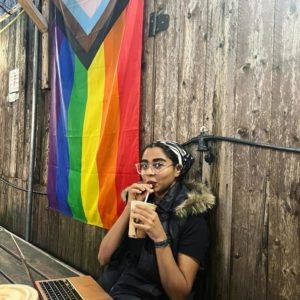 Javeria Hasnain is a Pakistani poet and writer, a Fulbright scholar, and an MFA student at The New School, NY. Her prose and poetry have appeared/is forthcoming in Poet Lore, The Margins, Isele, and elsewhere. She was a runner-up for the 2022 The Bird in Your Hands prize and an honorable mention in the 2022 Penrose Poetry Prize. She currently works at Cave Canem and reads poetry for Alice James Books. She has received support from Tin House Workshops, The Kenyon Review, Sundress, and International Writing Program.
BRIDE
Every evening in Ramzan, alone in my Bed-Stuy apartment kitchen, I pick three bananas, an apple, a peach, and an orange. I slice the bananas, dice the apple and peach, mix them in a small tupperware that belonged to the previous tenant. I punch a hole in the orange and squeeze its juice directly into the fruit mix. I let loose in the melodic tunes of Sabri brothers’ Tajdar-e-haram—grip the orange harder as it creates more holes, filling my palms with pulp that drips, drop by drop, into the mix. I don’t care for the seeds or the grime that infiltrates my otherwise purified delicacy.
Marion May Campbell reviews I Have Decided To Remain Vertical by Gayelene Carbis
Marion May Campbell reviews I Have Decided To Remain Vertical by Gayelene Carbis
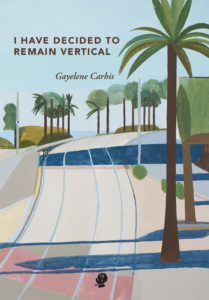 I Have Decided To Remain Vertical
by Gayelene Carbis
ISBN: 978122571489
Reviewed by MARION MAY CAMPBELL
I Have Decided To Remain Vertical is an exhilarating extension and intensification of some of the major themes of Carbis’s first collection Anecdotal Evidence: her never leaving Carnegie; a family strangely functional in the wake of brokenness, as poesis summons vivid mosaics from the fragments; the
=================================Continue reading for only $5 per month
Subscribe for full access to Mascara Literary Review or login
Mohamed Irba
 Mohamed Irba / محمد (he/him/هو) is an Omani Lebanese cis man who came to Australia in 2007 at sixteen to study and stayed for safety. He is an active member of his communities and continues to explore the meaning of belonging in everyday life and the intersections of his identity as a Queer Arab person living with HIV.
Taaf طاف
I was 16 years old when I landed in Melbourne airport on a cold winter morning. I came to study but stayed for safety.
My new guardian was waiting to pick me up. “Your English is really good!” she said. I will never forget her surprise and relief that I could speak. I was bewildered by that as most people spoke English where I came from, and sometimes English would be the third or fourth language. It was more than a statement. It came with a history of society that looked at me as uncivilised and barbaric. I also had not experienced winter before and could not stop shivering.
I wish I could hold my younger self now. I know he would never believe we could be writing a story like this one; telling my story to help others. I would not change any of my life experiences but I need to stop burying them deep inside where I cannot even remember them. If I do not speak of it, there can be no healing and I want to make sure my lessons are passed on to those who face similar challenges.
From the beginning, I had the responsibilities of the eldest son to carry. My culture puts so much pressure on the eldest son to be successful, study, get a well regarded job, marry and have many children. The parents are often called “Abu” and “Om” (name of eldest son) and it is very shameful if their son is not successful. These responsibilities meant additonal pressure. I was not “worldly” but I knew I was different and had to escape. I was the darkest out of my siblings and I was reminded of it daily. My mother tried to scrub the black out of me every day as a child. It did not work. If she knew about my difference, no doubt she would have tried to scrub that out too. Words like “queer” and “gay” were not in my vocabulary. Though it would be years before I learned, somehow I embodied them. In the sense of defiance, standing out, being strange and different. The words I did have were “haram”, “deviant”, and “pervert”.
I had so many questions for my parents and the answer was always, “We do not talk about these things, do not ask again,” with fear in their eyes. I knew that my urges were seen as sinful, so I pushed and pushed until I could not feel them, but there was no end to the racism and colourism I experienced and saw. No end to consumerism and obsession with material things, money and brands. I hated the focus on class and family origins that were so rooted in the culture, and convinced myself I did not belong in my desert home.
There was a fairy-tale across the sea, and I pointed to it: freedom of speech, democracy, minimum wage, queerness, dressing as you please, everything you could want.
Or so I thought, until I found my way here. Initially things were good, I loved the public transport and uncensored internet. Having access to all the knowledge I wanted and porn could not have come at a better time! I surfed websites such as gaydar.com, manjam, and manhunt and indulged the urge I couldn’t even name. It was like opening a big bucket of Maltesers and not being able to stop (which also happens). Despite the pleasure, these experiences still brought on extreme guilt. All the Islamic teachings from my parents and school did not suddenly go away. I felt like the worst person, that I was going to hell for sure. As my Islamic studies teacher taught me: “The fires of hell never stop and you will be tortured by their flames up until the brink of death only to be brought back again and go through the whole experience once more and more and more.”
Yet this did not stop me, and I fell for every (white) boy under the sun. What I did not know is that chasing these fruits would bring so much sorrow. Using these hook-up apps and websites muddied my understanding of what I was feeling, and of love itself. What I wanted more than anything was validation, but for every gratifying reply to my messages, there were hundreds of others that went ignored or blocked. Sex became my new hobby. I never had hobbies growing up as studying was my only purpose. I was to become the successful first born son that would make my parents proud and that was drilled into me before I was even ten. But sex was so much fun. I kept a record of them all—43 in the first 30 days I would proudly boast! I did it with everyone: old, young, educated, rich, poor, but especially white as that is what I was taught counted as “beautiful”. It took 10 years to unlearn this toxic and damaging racism, a product of how I was brought up, a product of white supremacist ideology.
Yet before I could unlearn the racism that plagued me, I practised it. I experienced it. Words like “sand monkey”, “N*****”, “curry muncher” (yes, I got the pleasure of receiving slurs for Arabs and South Asians too), “terrorist”, “takeaway”, and many more micro-aggressions. “What natio are you?” was the most common response I got. Brown skin stopped the white gaze at its place and resulted in a block. And still, I wanted their validation. I wanted a white prince to fulfil all my dreams and I would do anything for them. I was stereotyped, humiliated, and fetishized, yet I played along and laughed. The validation was too strong and I had nothing to fall back on anyway.
I wanted to fit in. I wanted it all. I remember going to my first gay bar called “the X-change” in Melbourne, the energy and excitement. I stared at every person without a shirt on kissing another, or more. I stared at a freedom I’d never imagined. I had fun, took on the Australian culture of over-drinking, danced, partied and met many temporary friends. “Bad Romance” by Lady Gaga and “What’s my name?” by Rihanna were on repeat as I washed away the past with binge drinking and blacking out.
At some point, I developed my own way of “coming out”. In order not to be discovered by family and friends back home, I did not talk to them. I deleted them all from social media so as not to accidentally be tagged in a “gay” photo. I wanted it all but would not risk it all. Time to make new friends, I said. No time for homophobia. And by homophobia I meant my own culture. I did everything I could to block it off. Like it never existed. This is Australia. I stopped using my mother tongue, and wouldn’t use it consistently for at least ten years, until I even started to lose confidence speaking it. There are displacements forced upon us, and there are displacements we put upon ourselves. What I really needed was real friendship. But it would take another few years to realise that.
My obsession with sex translated to what I thought was love and that was the beginning of many important life lessons. Relationships certainly started off strong and I insisted on moving in quickly even though I did not really know these men. I was seeking validation and safety in the wrong places again. The amount of emotional abuse I took on was compounding on my lack of self-worth and co-dependence. When I got my permanent residency through a de-facto relationship, his friends judged me and openly joked that I was an “overseas bride”. It reminded me of the white woman at the airport, the condescension. The way she spoke to me back on the first day I landed was that of an exotic being that she could not understand. The way they spoke to me now felt the same, as someone othered. I am not an Aussie and would never be, even as a resident. even as a citizen. I laughed it off as I have before. I knew it was wrong but I was so madly in love. Nine years later at the age of twenty seven, I finally ended the fairy-tale and saw reality.
Nothing prepared me for the disillusionment, the sense of rootlessness, the loss of identity, survivor’s guilt, the helplessness when things go wrong. I was so alone and yet did not know it. Sex did not equal friendship. Sex did not equal love. Sex did not equal validation. White Patriarchal Supremacy is in place and I will never gain its approval, which I no longer want, nor its validation, which I do not need.
I think many of us seek to escape to the West for the fantasy of safety and freedom. We all have our own personal journeys and this is mine. Lately, I have started reconnecting with my culture through language, books, food, music, films, and visits where possible. Finding other Queer Displaced people to connect with has been magical to me. I have also started helping others still in the homeland through online support groups who provide advice and information. Activism is extremely difficult and dangerous as it can result in arrest and prison sentence, but small actions like providing support through the knowledge gained here or the people on the ground providing safe spaces and social connections can help. This is very important to me—through it I’ve regained a sense of my own identity and purpose.
I am still not exactly sure what belonging means. This is my home now and a home should function as a safe haven for its occupants. I like to think I can still bring my culture to it. I do not have to assimilate in a way that erases me but rather, belong in a way that I can be proud of. With a long road ahead to acknowledging the history of this land and oppression facing First Nations peoples, I am grateful to be here. I am reminded of this not only by First Nations peoples but by others whose ancestors laid claim to the land. The colonial oppression continues here and overseas with our homelands continuing to suffer daily whether it is from real warfare or intergenerational and systemic damage caused by colonisation. We need to acknowledge as displaced people here that we are benefiting from stolen lands and colonisation, and that moving forward any progress has to benefit the First Nations peoples of this land and not come at their expense.
I do not want to beg or claim a space where others are in power and I am not. We are already here. We are to be acknowledged as part of the conversation and more importantly as active members of decision making.
There is freedom in being here and much to gain, but also loss. Loss does not go away easily. You do not have to disassociate from your cultures to belong. It’s a harder road but worth taking. Our existence is resistance, but we deserve more than to be seen only in opposition: we can and we will thrive.
I want to stand tall in front of you, I am a voice for others like me everywhere I go, and a changemaker. Speaking up is something I have struggled with as I sought to fit in and not cause waves. I am not afraid anymore; I look to the ocean which is not afraid of land, not afraid of itself. Waves that are powerful in unity and move where the sea goes. Waves that heal.
Note:
Taaf طاف: A word used in Khaleeji Arabic meaning to float but also as a means to brush someone off and not give them attention.
Lesh Karan reviews Acanthus by Claire Potter
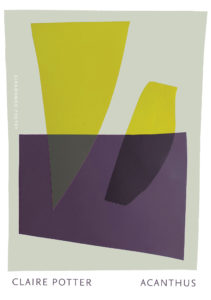 Acanthus
by Claire Potter
Reviewed by LESH KARAN
Acanthus is Claire Potter’s fourth collection of poetry. Potter writes in a language that weaves mythology with nature, fantasy with reality and then wraps it all up in tulle. If I had to write a one-word review, surreal feels apt, but I don’t, so I’ll start with another one: “acanthus”. This is to say that my first instinct is to look for a titular poem, because in my mind
the new Mascara team ….
Continue reading for only $5 per month
Subscribe for full access to Mascara Literary Review or login
Fernanda Dahlstrom reviews Freedom, Only Freedom by Behrouz Boochani
Continue reading for only $5 per month
Subscribe for full access to Mascara Literary Review or login
Kirli Saunders
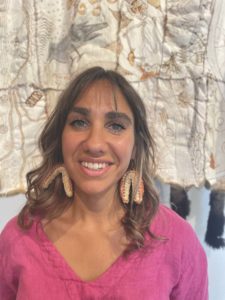 Kirli Saunders (OAM) is a proud Gunai Woman and award-winning multidisciplinary artist and consultant. An experienced writer, speaker and facilitator advocating for the environment and equality, Kirli creates to connect to make change. She was the NSW Aboriginal Woman of the Year (2020) and was awarded an Order of Australia Medal in 2022 for her contribution to the arts, particularly literature.
Kirli’s celebrated books include Bindi, Our Dreaming, Kindred and The Incredible Freedom Machines. Kirli’s writing features in magazines and journals with Vogue, National Geographic, Kill Your Darlings, and in public art with partners, Red Room Poetry, Aesop, and The Royal Botanic Gardens, Victoria.
Her art has been commissioned by Google, Fender, Sydney Opera House and Government. She is currently working on a world pride exhibition at Cement Fondue and developing her solo play, Going Home, and her second Visual Poetry Collection, Returning (Magabala, 2023).
Community Possum Skin Cloak
(forthcoming in Returning, Magabala, 2023)
~ With thanks to Aunty Loretta Parsley, Nicole Smede, Jo and the O&S Foundation & Bundanon for supporting Aunt & I to teach a community possum skin cloak making project on the river. And to all of the Aunties and Sissys who participated in this magical week of making, thank you.
monoprinted ferns
bakers dozen emerald bower birds
wattle marbled on Banggali
like creamed honey
sore thumb
cherry blossom
and fire weed
beneath shea-oak and gum
a meditation begun
with singing-bowl bees.
Luina–
the Blue Wren
fluffs feathers
and cleans beak
of insect crumbs
currawong slinks between
spotted and fig-strangled trees
egret
skips the stones
of her belly
on river skin
within, the marra
rejoice for the warmth of this day
noting the skies
and with them, seasons
always change,
rays of sun
sling sticky silver linings
on clouds in celebration,
they knead the path
from mountains to sea
where
Country
Ancestors,
and seven generations
are proud
of the sewing
we’ve done.

Kavita Nandan
 Kavita Ivy Nandan was born in New Delhi, grew up in Suva and migrated to Australia in 1987 after the Fiji military coups. She completed a PhD in Literature on the postcolonial narratives of Salman Rushdie and VS Naipaul at the Australian National University. In 2017, she moved from Canberra to Sydney with her husband, Michael and son, Jesse. Kavita teaches Creative Writing at Macquarie University. She is the author of a book of poems, Return to what Remains (Ginninderra Press, 2022) and a novel, Home after Dark (USP Press, 2014). She is also the editor of a book of memoirs, Stolen Worlds: Fiji-Indian Fragments and co-editor of a book of essays, Unfinished Journeys: India File From Canberra and a book of poetry and short fiction, Writing the Pacific. Her poetry and fiction are published in LiteLitOne, Not Very Quiet, Mindfood, Mascara Literary Review, Transnational Literature, Landfall, The Island Review and Asiatic. She has been a recipient of the artsACT grant three times.
Cartwheels in space
Remember those damn kids
Who did cartwheels on the front lawn
On your strip of earth, in front of your damn house
To show you how damn good they were?
Those sporty-straight-legged girls with golden skin
And you tried too, because you wanted to be like them
Never in front of those deep-blue-Pacific-Ocean eyes of course
But in private
But you never
Could achieve that spinning momentum
Dumped on the back lawn each time
With your legs feeling like two lamb shanks
Your dark hair and skin frizzing in the sun upside down
Experiencing disappointment, like a firecracker that fizzled out.
Today, the latest images from Webb’s telescope
Captured the collision of two galaxies:
A cartwheel galaxy.
And you swore to yourself:
failure is transitory/
miracles do exist.
The perfect weather
A colony of witches’ broom
swept over the sleeping reserve
a trident of coldness that
pried open the mouth with vapours,
set upon the mind, haunting it with unfavourable thoughts,
such as sidewalk paraphernalia – plugs and wires –
getting wet in the rain and
feet sinking in soggy ground;
all of which makes one queasy.
Yet it was the perfect weather
to buy a coffin: black, $1,050, until,
the street lamps flickered off
night transitioned into day, and
the sun came out.
Naomi Williams
Continue reading for only $5 per month
Subscribe for full access to Mascara Literary Review or login
Maki Morita
Continue reading for only $5 per month
Subscribe for full access to Mascara Literary Review or login
Anthea Yang
 Anthea Yang is a writer and poet living on unceded Wurundjeri land. Her writing has appeared in Going Down Swinging, Kill Your Darlings, Voiceworks and the HEIDE+Rabbit House of Ideas: Modern Women anthology, among others. She has been longlisted for the 2021 Kuracca Prize for Australian Literature, shortlisted for the 2020 Dorothy Porter Award for Poetry, and has performed her poetry as part of Emerging Writers’ Festival, Melbourne Writers Festival, and Red Room Poetry’s 2022 Victorian Poetry Month Gala. Born in Perth, Western Australia, her favourite season is summer.
Onward
i do not know how this ends
except there is a line drawn between me
and my body / me and
the person sitting next to me on the train / me and
everyone i have ever loved deeply /
a line between me
and the place where i am hungry to be
my memory is desiring linearity
remembers touch as an unripened mango, firm except a thumb-shaped bruise touching the surface / soft but unclear of the cause
perhaps what i am trying to trace is a lineage
perhaps what i am always trying to find is a line
let me try one more time:
memory is reaching / is waking to
the moonlight casting a patchwork of shadows
on my throat / i wonder
how much language i am losing / every day
a character learned now missing a stroke
until i am left with just the beginning / 一
the first stroke from left to right: a horizon
one late afternoon i watch the sun blow through
a lineage of trees, casting a shadow
on the building opposite my balcony
and i think about how the word 梦 is made up of
a forest sitting above the evening / how this is a dream
of my real life / this landscape
where I am standing on a mountaintop watching time settle
comfortably into the horizon as if it has done so before / here
my body melts into the shadows and here / in the poem
in the archives / in the memory
i am in abundance.

Patrick Flanery
 Patrick Flanery is the author of four novels, including Absolution (2012), which was shortlisted for the International IMPAC Dublin Literary award, and a memoir, The Ginger Child. He is Chair of Creative Writing at the University of Adelaide.
Photograph by: Andrew van der Vlies
Casualties
Logic
Logic aside, I blame my daughter. She was not here when it happened and has not been here for some time. And because she went ahead with the move only a week after the accident, I cannot stop blaming her. I know she knows I blame her and although this makes me fret from time to time it does not keep me awake, even in the afternoon when sleep overcomes me. Sometimes it concerns me so little I almost don’t recognize himself. My despair is to blame.
Fool
Ilse insisted she would go for a walk on her own. I was in the kitchen drinking an espresso and told her to be careful but did not drive up the hill to place myself at Ilse’s terrace door and prevent her going out when anyone would say a 95-year-old blind in one eye and deaf as granite should not be walking alone in the mist on a cold July morning. Natalie asked what I was doing at the time, but I can’t remember. It may have been the morning a brushtail fell down the chimney and sat dazed in the ash blinking until I put on the fireplace gloves and wrestled it screaming into a box while France whined from the bedroom.
What I do remember is that when I went to pick up Ilse for lunch that day, she was greyer than usual. At the organic market, she would not eat her sweet potato soup or slice of sourdough. After dropping her at home and insisting she turn on the heat, I phoned Natalie in Taipei and reported what Ilse had told me: that she took a fall on her walk and might have bruised her ribs. She said she was nauseated and having trouble breathing.
‘A fall to folly,’ I said.
‘What? You have to take her to hospital,’ Natalie said in her dogmatic way, ‘she might have broken something. And you’d better call her sons. We can’t do this again.’
‘I don’t want to go behind Ilse’s back. You know that’s part of our bargain.’
Later that afternoon, at Natalie’s urging, I went to check on Ilse. She wanted to go buy a crate of wine, which made no sense when she had a cellar full of it. I told her Natalie thought she should go to hospital and let her sons know what had happened. That was the first time I was seriously worried because I could see she did not understand what I was saying. I had to repeat myself three times and when she did finally understand she snapped.
‘I just want to go to the fucking bottle-o,’ she whispered, ‘so stop wasting my time.’
We were sitting in my car, which she had laboured into, wincing with every move. It was the second to last time we sat together in my car. For twenty years we had sat together in cars, going to Shakespeare in the Vines, Chardonnay May luncheons, La Bohème on the beach. It’s not Europe, but then nothing else is, Ilse always complained, even when she’d enjoyed herself. It’s not the Royal Shakespeare Company, but then nothing else is. It’s not Meursault, but then nothing else is. It’s not La Scala, but then nothing else is.
‘I don’t need to go to a hospital or phone my bastard sons,’ she gasped. ‘They will simply do what Natalie has done, which is to say respond as if this is the disaster,’ she wheezed, ‘that it clearly is not. Now take me to the bottle-o.’
I knew she meant the disaster for which her sons had been waiting to have an excuse to put her into a home. Six months earlier, the eldest, Laurent, sold the car out from under her after she changed lanes on the Prince’s Highway coming home from the theatre and sideswiped a Ute whose driver threatened to sue. Even though I disapproved of Laurent’s highhandedness, it was a relief not to have her driving anymore. A month later Laurent took away Ilse’s black pug, Fool, and rehomed it with one of his clients in Kenthurst because he said a dog as pudgy and aggressive as Fool would pull her off her feet and make her break a hip. She was never the same after.
Reason
The morning after her fall in Cleland, when I phoned Ilse at our usual check-in time, she did not answer. I drove to her house and found her unwashed and lying on the white Italian leather sofa in muddy jeans and sweatshirt. On the coffee table were two empty bottles of the single-vineyard pinot she’d bought the previous night. She blinked but did not reply when I spoke. I approached to see if she was alive and her breath was wind through sheoaks in my ear. At that point I told her we must seek medical attention.
‘No fucking ambulance,’ she whispered before struggling one last time into my car.
The young doctor who clearly fancied himself did an x-ray while we waited and after an hour returned and reported: ‘Two broken ribs and a collapsed lung. You’re going to hospital, Ilse, whether you like it or not.’ Dogmatic, like Natalie. He did not make eye contact with either of us but kept checking his own reflection in the mirror above the sink.
Laurent arrived after lunch on a flight from Sydney and the youngest, Florian, rolled in the next morning from Melbourne, by which time Ilse was no longer speaking and neither the doctor nor nurses could say why she was not speaking or whether her lung would reinflate. They did a scan to check for signs of stroke, but there were no such indications.
‘Sometimes,’ the doctor told Laurent in my hearing, ‘this happens with very old people. One significant trauma and they go headlong over the edge. It’s just nature culling, to put it bluntly.’
A short while later Ilse no longer recognized me and did not recognize her sons and by the time her middle child, Maurice, arrived from Singapore, she was thrashing around and had to be sedated. By the end of the week, she was dead. I was not in the room when it happened and did not for a while believe it had and then spent an hour alone with Ilse’s body and understood it had definitely happened. Her skin grew cold. I thought of my mother and father, how icy their hands were in death, how unresponsive.
That evening I phoned Natalie in Taipei as she was packing to move to Los Angeles with her husband. She made sympathetic noises and looked as though she might cry. Her new job was starting and they had been waiting on the American visas for more than a year. ‘I cannot fuck this up given the direction of travel vis-à-vis the whole China situation,’ she said, ‘and I’m sure I don’t have to tell you that it’s past time we got out.’
‘Does that mean you won’t come?’
‘It means I can’t come, Dad. I’m sorry. I wish I could be there for you. But I can’t let passion get in the way of reason.’
‘Passion? Is that what you’d call it?’
‘Don’t make this more difficult for me than it is. I was fond of Ilse, you know that.’
So, I blame her. I have tried to reason myself into a more forgiving frame of mind but cannot manage it. If Ilse had been her mother, or even, I believe, if Ilse and I had been married, Natalie would not have delayed. But because of the nature of the relationship, neither my daughter nor any of Ilse’s sons think we were anything other than flirtatious friends. So, I blame them. I blame all of them.
Witness
Laurent, Florian, and Maurice make all the arrangements without consulting me, going ahead with the cremation and not even doing me the courtesy of asking if I might want to attend. On top of it they have chosen a ghastly funeral home called Practical Services, which gets only two stars online. Ilse would have been furious. I also fail to understand why I was not named as a witness on the death certificate.
‘Yeah, but, you weren’t even in the room when Ilse died and therefore you cannot technically have been a witness. Do you understand that?’ Natalie says when I mention it. ‘Just because you think you see everything does not mean you are witness to the whole world.’
I want to tell my daughter I have repeatedly imagined the thrashing and rattle and frantic gaze followed by an exhalation and silence. I have seen it as if I had been there, so some part of me believes that I did witness Ilse’s passing.
Also, what does it matter whether I was there or not? Who does it serve, except Laurent, who was alone in the room and wants everyone to know it.
Ilse would not have quibbled over facts.
Inheritance
Florian phones the following afternoon.
‘Hi, hiya, Peter, I just wanted to see if maybe there’s anything from Mum’s house you want?’
‘No,’ I assure him, not a scrap, although there are several of my items in the house. Baking trays and muffin tins left behind over the course of years. A red enamel casserole dish of some value. Sheet music from when I still had the upright piano, the score to Puccini’s Tosca. LPs and CDs and cassette tapes. A complete recording of the Shostakovich quartets. Several rare books on music, a selection of modern novels. But I fear the sons would suspect me of inventing ownership to do them out of their inheritance, the fiends.
A few days later, Florian drops by with some blue napkins Ilse bought when Natalie and her husband took us to Kyoto a decade ago. Florian is thinner than I remember, balder too. I think of him as perpetually thirty but he is over fifty now and still dressing like a boy.
‘I thought you might like these little tokens as a remembrance of my mother. I know you were, you know, special friends.’
‘We were more than friends, Florian.’
‘Yes, of course, you know what I meant,’ Florian coughs, blushing.
‘Would you like to come in for a coffee?’
He peeks behind me as if assessing the state of the house. ‘No, I won’t trouble you. I’ve still got lots of clearing out to do before I head back to Melbourne. Thanks anyway. Okay, bye, Peter, bye. See you soon.’
The boys sell or donate most of the smaller articles and take away only a few pieces of furniture while their wives divvy up Ilse’s jewellery. Without the boys knowing I am the bidder, I purchase some of the discarded furniture at auction. That way I get Ilse’s cane porter chair in which I used to sit on summer afternoons during a break from working in her rose beds. I also buy back my casserole dish, a gift from my ex-wife more than forty years ago, and a box of my books that neither the boys nor the auctioneers noticed are all modern firsts. These, I note with horror, are sold by meterage of shelf space. For twenty dollars plus the buyer’s premium I get three metres of my own books and all of Ilse’s cookbooks. Someone outbids me on the Shostakovich LPs, most of which Natalie scratched beyond repair as a child.
Property
As the weeks pass, I suspect my daughter is back-channelling with the bastard sons because Natalie keeps asking if I have keys to Ilse’s place, telling me if I do have a set I must absolutely not under any circumstances at all go in the house.
‘They’ve had an alarm system installed and if you do have keys and aren’t telling me—no, let me speak, Dad, stop interrupting—or you find a set that you’ve forgotten you have, you should courier them to Laurent.’
‘I have no keys, I assure you. That was one thing Ilse would not part with,’ I lie.
It is true I thought of entering the house after it was cleared but when I got to the front door I noticed the alarm panel just inside and did not want to face a security company or the police.
A month after Ilse’s death, the realtors dress the house professionally, filling it with ersatz French Country furniture and giant framed photos of kookaburras and banksias, lavender fields, and Highland cattle. They are unbecoming in the space, but that is what people want these days. While there is not a pool, the brochure acknowledges, the old croquet lawn could be dug up. There is staff accommodation that might be turned into a holiday rental. And the Bunya pine in the garden is described as ‘a tree of note’. The façade and roofline are both on the historic register, the terracing at the front all edged with box. At the open house the first Saturday after its listing there is a forty-minute queue to get inside. A koala has clambered into the gum near the front door.
The estate agent, a man who looks too young to be selling a house of this quality, nods at the koala: ‘That little bugger should add a hundred thousand to the price.’
Because it is ‘a large heritage property’ and significant expense has been put towards creating the illusion it is a naff boutique hotel, crowds have come to gawp, even those who clearly have neither the intention nor means to buy.
Ilse would have been horrified.
The house sells in less than a week. After the sale, I stop walking past it when I go on my daily to Cleland, although it’s on the most direct route. One night, however, I drive over and stop the car just short of the wrought-iron gate. As I watch, the new family goes about their evening routine, curtains open and lights on. It’s either too late or too early to phone Natalie and there is no one else to call but I can’t for some time pull myself together to drive the two minutes back home past the line of skeleton gums. When I do make it back, I feed France before pouring a large glass of finger-lime gin and slumping down to watch the food channel. In the morning I wake to find my laptop purring on the floor but cannot remember leaving it there.
Service
Ilse’s sons conclude no one would come to a funeral held in winter, at least not the relatives from elsewhere, those who have emigrated or, now the borders are open, locals who might be spending the winter in scorching southern Europe or boiling North America. So the interment of the ashes has been delayed until summer, and I foolishly imagined Natalie and her scowling husband would attend. But getting settled in America is taking time and they have only just moved into a house in Echo Park where she claims to be too busy for such a long trip so soon after the move.
‘If I’m going to come,’ Natalie says, turning her face from the camera, ‘it needs to be a trip of, you know, real consequence.’ These days she rarely speaks without looking away from me. Eye contact appears to cause her almost physical pain.
I wake one morning having dreamt I was looking for a job as a music teacher in Santa Monica. A few days later, I begin receiving job alerts for such positions and disconcertingly personal communications from recruiters who thank me for having already taken the time to speak to them and asking for a follow-up meeting or evidence of my credentials, C.V., etc. These messages come in such quantities I begin to wonder if I am really alone in my own house, dealing with my grief, alone, and there is not some secret companion, Ilse even, haunting like a dark angel or foul fiend, making mischief for me.
Rest
So you find me now, abandoned by my daughter and left alone to negotiate with Laurent, Maurice, and Florian, plus their four-score cavalcade of relatives flying in from Auckland and the south of France, from Switzerland and Bali. I have thought of saying to Natalie, if Ilse’s all-and-sundry can pitch up, then why can’t you?
Since I began receiving those recruiting messages, Natalie has started managing my email. She relays only what she judges important, so I no longer hear from the local Labor Party. I no longer hear from the World Wildlife Fund or the State Theatre or the vineyard outside Hahndorf where I’m certain I’m still a member of the wine club but from which I have not received my usual half case. I communicate with my book group and other friends via message or phone. I suspect Natalie has been betraying me but have no proof. She insists on scheduling my doctors’ appointments for early morning so she can join by phone from Los Angeles.
There is to be a graveside service and a luncheon at Mount Lofty House where, I am aghast to discover, ‘people are invited to tell stories about Ilse, whether or not they are true’. All of Laurent’s communications about his mother have an edge of glibness, as if the man is relieved she is gone and wants to needle her in the grave. In the evening there will be a dinner at a wine estate near Uraidla whose whites Ilse judged pale imitations of their European antecedents. The beggarly sons have spared no expense on the events where their own enjoyment is paramount. Ilse is paying for it all, even in death.
The morning of the service I get up at six and take a terracotta pot full of pink pelargoniums, drag it on a tarp to the car, drive to the Stirling Cemetery, and manoeuvre it to the plot. With my phone I snap a photo of the crypt and my terracotta pot next to it and send this to Natalie, who responds asking whether it would not have been a good idea to take a newer looking pot and not one covered in moss. She fails to understand that Ilse would have thought such a pot perfectly right, because used and useful. Ilse, in fact, might have been the one who bought the pot in the first place, but Natalie does not know that.
I drive home. The grouting in the bathroom should be redone but is unlikely to reach a crisis before my death. Although Ilse did not want a stuffy funeral, I put on a suit and collar shirt and tie. Ilse would say someone dressed in such attire risks being mistaken for hired help. Ilse is not here to say it.
The sons have brought their spouses and children and their children have brought their spouses and children, and those children, in two cases, have brought their own spouses and children. Ilse could never remember the names of her great-grandchildren because there were already twelve grands and she struggled with them as well. In recent months she could not retrieve her son Maurice’s name and often blurted out ‘Mollusc’ or ‘Mortice’ and after three or four false starts might land on ‘Morris’ which is not, in Ilse’s family, homophonous. I can remember the names of the grandchildren (bar two whose faces I find offensively smug) but none of the great-grandchildren.
The sons greet me. Their spouses greet me. Some of the grandchildren nod in my direction but do not speak. In the parlance of Ilse’s family, I am the late matriarch’s ‘boyfriend’. They look at me as if I were some geriatric gigolo, fifteen years younger than Ilse and with designs on her fortune. Only the point about age is true. Would they be surprised to know Ilse and I never did anything more intimate in two decades than hold hands, share a bed on travels, and kiss chastely, which is to say only on the lips, always with eyes closed. It was what she wished. As with all things, she had been frank about that when her husband died and I, passing the house on my daily walk to Cleland, began stopping to chat once we discovered common tastes. Blues and pinks in a garden, no hot colours. Pinot Noir and Grüner Veltliner, no Merlot or Sauvignon Blanc. Wagner and Shostakovich, no Haydn or Prokofiev. How easy. A case of happy casualty, as someone might have put it.
Because Ilse did not want a traditional funeral there is no clergy. Laurent officiates. It is hot with no shade. A flock of fairy wrens flits chattering around the monuments. Laurent tells a story about his mother that describes a person I do not recognize. Maurice reads a rhyming poem by a poet no actual poet would credit. Florian is the only one who tries to speak from the heart, as it were, the only one who appears moved. Leave it to the youngest, the one picked upon by his older brothers, to mention his mother’s garden and love of birds, walks, and even the joy she found after their father’s death. It is as close as anyone comes to acknowledging their mother’s relationship to me. Florian invited me to speak but I could not find words I trusted myself to pronounce without losing the capacity to finish. She is dead, I would say, gone forever, dead in the earth. I see my reflection in the polished stone her breath no longer stains.
A few of my friends from the university retirees club and book club have come to support me but the only person I wish were here is in Los Angeles waiting for the opportunity to make a trip of consequence. I suppose she has in mind the consequence of a retirement village in Hahndorf. She can get stuffed if that is the idea.
The family tomb, Ilse’s rather than her late husband’s, is in the corner of the cemetery, at the juncture of the pine forest and valley of gums to the southeast. It was the late husband who chose the dour black granite and neoclassical design with engraved thistles because his family was once Scottish. It is a two-person tomb. If I wished to be buried near Ilse it would be at some distance, not even in the same alley of graves. Natalie will not approve of me being interred so far from wherever she chooses to live—if she ever makes a definitive choice. More likely she will have the ashes compressed into a diamond she can set in platinum or port me about in an urn as the political winds shift. There is a strong chance she will be moving on from Los Angeles in less time than it took her to flee Taipei.
At least Stirling’s is a well-kept cemetery. Not like British cemeteries so often neglected, overrun with ivy. This is more like a French or Austrian, even a Swedish burial ground, although it has not quite achieved the refinement of those countries that raise tending the dead to a national art. A cemetery in Uppsala once made me weep, after the divorce, because I could not imagine anyone tending my own grave so assiduously. The only signs of neglect here are several of the older graves whose plots were topped with concrete and the surface has collapsed in grisly, body-shaped oblongs. Stone is more durable. The monuments to those killed at Gallipoli look as new as the day they were erected. In another century, Ilse’s grave, notwithstanding earthquake or fire, will appear just as it does today.
Contract
At the last minute I decide not to attend the luncheon or dinner, offering an excuse about the new variants and being around so many unmasked people, but I can tell that none of the sons, not even sympathetic Florian, really believes me. Instead, I go home to prune the Japanese maples and send Natalie a message asking her to arrange for garden services to do a full clean-up before it gets any hotter or drier. The flowers are wilting in the heat because I’ve not turned on the irrigation system. The bore needs a new pump. I take France for a walk past Ilse’s old house and don’t even clean up when it squats in her driveway. At home I pour a double measure of finger-lime gin and then a second and turn on the high-brow movie channel where a Japanese film featuring an old man in a medieval setting is reaching its violent conclusion. Superimposed on the beard and long white hair of the actor I again notice my own reflection in the rain and wind and thunder. France sticks his snout in the glass trying to get the last of my gin.
Tomorrow the boys will be returning to their homes. Flights out on Sunday morning. Late that afternoon, I drive back to the cemetery where the arrangements of flowers have been heaped on Ilse’s side of the tomb. In the heat they are already drooping. Since there is no one else about, I gather the arrangements, half a dozen bouquets, and carry them to the car.
At home, I pick out what can be salvaged and put the rearranged flowers in five vases along the sideboard as France watches, panting. When I tell Natalie about it on Monday morning she acts as if I have committed a crime, as if she does not see that I am, although never married to Ilse, her widower.
‘But the point is to leave the flowers, Dad. That’s why people take arrangements to graves,’ Natalie says. She does not say what I imagine she is thinking: the only people entitled to take the arrangements are the bastard sons, who are, legally speaking, Ilse’s only next of kin. I know I am a legal nonentity. ‘There might have been surveillance cameras.’ No, I assure her, there are no such devices. ‘What if the police had come?’ she asks.
‘The police have graver concerns.’
‘Is that meant to be a joke?’
‘Take it as you like, Natalie. Don’t let it disquiet you.’
‘I don’t think it’s funny.’
‘As far as I can tell, you think very little is funny.’
On her side of the planet she is sitting in the evening glow of a wildfire sky. When the day comes that my doctor tells me I have no choice, I am going to hospital, when the words stop arranging themselves in my mind, when the faces of strangers look like friends and friends like strangers, I wonder if Natalie will have time in her schedule to make the trip from Los Angeles, or wherever else she may be living. In her face there is stark concern, not for wildfires in the San Gabriel Mountains, but for a father who does what she thinks he should not. Imagine her asking friends for a gut check to see whether others think it strange that I should transgress an unwritten social contract with the dead. He would not do well in Asia, I imagine Natalie saying to her husband. No, perhaps not. Some new facet of myself, new to the self who is present on this call with Natalie, sees that the self who took the arrangements from Ilse’s grave was not acting out of love or common sense but was instead fired by malice. New selves are best handled as mercy cases. Put them down before they suffer.
But how dare Ilse’s sons? How dare she herself? Did Ilse not think, even in her final months, that I might wish to accompany her, as was long the case, wherever she might travel?
Belonging
The next day I drive to the half-acre burial ground next to a vineyard where my parents are interred. With kitchen shears I cut the grass around their monument, collect dead leaves, wipe dust from the stone. Using an old toothbrush, I scrub away what has accumulated in the engraved letters. My mother’s determination to be buried next to my father still troubles me; I cannot understand why she should wish to spend eternity lying next to a man who had been so cruel to her, so cruel to me. I scrub my father’s side of the grave, harder than my mother’s. My grandparents are here, and great-grandparents, and their parents who came from England as Primitive Methodists. Though not a Primitive Methodist I have a plot here, adjacent to my parents’; I do not wish to be buried with my forebears. There is little reason to believe such a feeling will translate into action. This is where I will lie, in sight of the vineyard, down the road from the house where my people first settled. They came and they stayed and I have stayed, as if that great leap from North to South was so taxing that every generation hence could not imagine moving on, until Natalie.
Natalie will not be tending my grave. Perhaps if she puts up a monument, she will visit when she returns to the city where she grew up. With no family left in these parts, however, my death may mark her final trip home. My resting place will be left to the mercy of the council or whatever volunteers take it upon themselves to tend the forgotten.
On the drive home, I recall my mother’s funeral. There had been solemnity and kindness for her. Ilse’s family seemed to feel little more than relief that this chapter of their lives had reached its conclusion and they would no longer have to tolerate her sharp tongue. The promise of inheritance perverts relations between the generations. I have written Natalie out of my will, though she does not know it.
When I turn the key in the lock, I wonder why France is not at the door to greet me, why I suddenly catch Ilse’s scent. A woman stands a few paces from me. Her face collapses as she cries out. A man has appeared, shouting, and children are sobbing in the corridor behind the adults, a little girl wailing as if she has, at last, seen the ghost of her nightmares in the flesh.
‘Oh,’ I hear myself say, ‘oh.’ Ilse’s scent flows from the kitchen cupboards, from the parquet and sisal rugs. I raise the key in my hand, dangling its chain. ‘This must be yours.’
Natalie phones me the next morning. It is late afternoon in Los Angeles. Laurent has been in touch with her. Police were involved, although the new owners have been persuaded not to press charges.
‘I had to explain that you were deranged by grief,’ Natalie says, dogmatic.
‘Mad as the sea?’
‘Huh? Stop it, Dad.’ Her features are fixed. She scarcely moves her lips. It is obvious she is in some kind of state. A consequential state, perhaps. ‘I’ve booked a flight for tomorrow,’ she says, staring off to one side. ‘It is time we made arrangements.’
Announcing the 2023 Mascara Varuna Writers’ and Editors’ Residency
JUDGE’S COMMENTS
The judging panel for the 2023 Mascara Writers’ and Editors’ Varuna Residency was impressed by the outstanding quality of many of the submissions. Of 78 entries, the range and breadth of voices, styles and genres on display is an indicative sign of the innovation pursued at the desks of First Nations and CALD writers across Australia, whether in cities or small towns, by the coast or in the bush, whether young and emerging, or older and emerging, or more established in their writing career. Many works evoke little-known aspects of Australian life, ranging from individual biographical studies to stories of local families and communities, to large-scale retrievals of national history. These explorations draw from experiments with archival records, as well as experiments with the writing body, all contributing to an ongoing questioning of what it means to document presence and history in this country. A dominant theme running through these works is the complexity of place, whether encountered as a recent arrival to these shores, or as a writer holding deep ancestral ties to the land. The courage and ambition propelling these undertakings are to be commended in the highest possible terms.
Of this high-quality field, four submissions were exceptional for the grace, precision, and perception of their writing. These submissions resonate with a contemporary edge, vividly foreshadowing new futures in Australian writing. Poetic modes of inquiry prevail across a rich array of genres, not only in lyric and experimental poetry, but also in long form fiction and non-fiction. They are also projects that are eminently realisable within the scope of the residency and hold the potential to be significantly developed through the editorial process. We are thrilled to announce that the four residencies go to: Timmah Ball’s Blue Print for Another World; Alison J. Barton’s Not Telling; Maria van Neerven’s To Give Them a Voice; and Vivienne Cleven’s Beautiful Monsters. These strong submissions reflect a considerable diversity of genre, aesthetic, and style, and represent a range of ages, backgrounds, and experiences within First Nations’ writing.
Timmah Ball
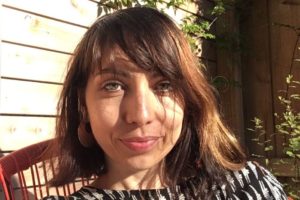 Timmah Ball is a writer and zine maker of Ballardong Noongar heritage. Previous zines and micro publications include Wild Tongue in collaboration with Loving Feminist Literature for Melbourne Fringe (2016), Wild Tongue Vol. 2 in collaboration with Azja Kulpinska for Next Wave Festival (2018) and Do Planners Dream of Electric Trees? (2021) created through Arts House Makeshift public residency. Her writing has appeared in a range of anthologies and literary magazines including Sydney Review of Books, Meanjin, The Griffith Review and Columbia University’s The Avery Review. In 2016 she won the Westerly Patricia Hackett Prize.
BLUE PRINT FOR ANOTHER WORLD
Timmah Ball’s collection of experimental non-fiction examines dispossession in the context of contemporary urban planning. Through playful yet committed theoretical engagement and radical self-reading of her own experience as an urbanist, Ball sets out to deconstruct the western logic of space (states, borders, regions, cities) and recast place in terms of the ‘powerful tapestry of First Nation countries that make up this continent.’ Her writing is richly engaged, revealing a strong social commitment to the connection between poetics and cartography, between language and country.
Alison J. Barton
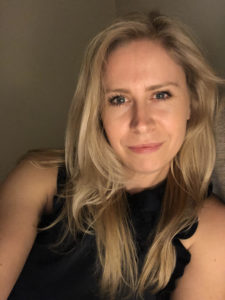 Alison J Barton is a Wiradjuri poet based in Naarm. Themes of race relations, Aboriginal-Australian history, colonisation, gender and psychoanalytic theory are central to her work. Her work appears in Meanjin, Overland, Best of Australian Poetry 2022 (APJ), the Liquid Amber Prize Anthology: Poetry of Encounter, Australian Poetry Journal, Otoliths, Rabbit, Westerly Mag, StylusLit, Resilience (Ed. Mascara) , The Storms (Ireland), Poethead (Ireland), The Night Heron Barks (USA), Under Bunjil, Yarra Libraries Receipt Poetry, Bluebottle Journal and LinkBund. In 2022 Alison received a commended place in the WB Yeats Poetry Prize for Australia, was shortlisted for both the Queensland Poetry Oodgeroo Noonuccal Poetry Prize (for ‘buried light’) and the Pratik Magazine Fire and Rain edition prize (for ‘How to grieve in the open air’) and longlisted for the inaugural Liquid Amber Press Poetry Prize.
She can be found on Instagram @alison_j_barton
NOT TELLING
Alison J. Barton’s first full-length collection of poetry draws from family lore, Australian history, archival material, and psychoanalytic theory in its attempt to realise the potential of language to retrieve identity. Barton’s poetry proceeds as an act of literary decolonisation, in pursuit of the healing, relatedness, and telling the truth.
Vivienne Cleven
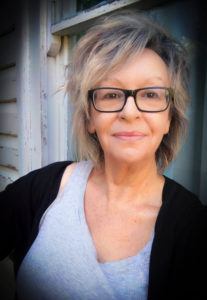 Kamilaroi author Vivienne Cleven was born in 1968 and grew up in outback Queensland. She left school at thirteen to work with her father as a jillaroo: building fences and mustering sheep and cattle. She also worked as a cleaner, barmaid, roustabout, nanny, and photographer, among other jobs. Her novel Bitin’ Back won the David Unaipon Award and shortlisted in the 2002 Courier-Mail Book of the Year Award and the 2002 South Australian Premier’s Award for Fiction. She wrote the playscript for Bitin’ Back, which was performed by Brisbane’s Kooemba Jdarra Indigenous Theatre Company. Sister’s Eye was published in 2002 and was chosen in the 2003 People’s Choice shortlist of One Book One Brisbane. Her writing is included in Fresh Cuttings, the first anthology of UQP Black Australian Writing, published in 2003.
BEAUTIFUL MONSTERS
Beautiful Monsters is a dark satire about small town life, beauty, false identities, racism, belonging and self-love. Cleven’s language is wry, imagistic and lexically creative; her narrative focalisations of direct and indirect Aboriginal English are are deft, seamless and culturally specific. Her characters and idioms are memorable and original in subverting the settler tropes of crime and outback noir.
Maria Van Neerven
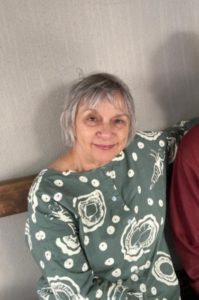 Maria van Neerven is a Mununjali Yugambeh women from south-east Queensland. She is a retired library technician who loves reading and writing poetry. Her first published story was in the journal The Lifted Brow: Blak Brow (2018) and she has also published poetry in In Our Hands, (2022) a collection of poetry from Elders and knowledge keepers. Maria has performed her work on stages across Alice Springs and Brisbane and is working on her first collection.
TO GIVE THEM A VOICE
The poems in this collection are as poignant as they are assured in the smallest movement of the heart, in the caesura of the spoken word, in the multi-tonal shape of the page which honours the rituals of daily life through trauma, violence, poverty and joy. These lyrical cameos remind us of family, colonisation, discrimination and mental health. They are precise, carefully restored through memory’s portal and gentle in their healing as they look to the future.