 Patrick Flanery is the author of four novels, including Absolution (2012), which was shortlisted for the International IMPAC Dublin Literary award, and a memoir, The Ginger Child. He is Chair of Creative Writing at the University of Adelaide.
Photograph by: Andrew van der Vlies
Casualties
Logic
Logic aside, I blame my daughter. She was not here when it happened and has not been here for some time. And because she went ahead with the move only a week after the accident, I cannot stop blaming her. I know she knows I blame her and although this makes me fret from time to time it does not keep me awake, even in the afternoon when sleep overcomes me. Sometimes it concerns me so little I almost don’t recognize himself. My despair is to blame.
Fool
Ilse insisted she would go for a walk on her own. I was in the kitchen drinking an espresso and told her to be careful but did not drive up the hill to place myself at Ilse’s terrace door and prevent her going out when anyone would say a 95-year-old blind in one eye and deaf as granite should not be walking alone in the mist on a cold July morning. Natalie asked what I was doing at the time, but I can’t remember. It may have been the morning a brushtail fell down the chimney and sat dazed in the ash blinking until I put on the fireplace gloves and wrestled it screaming into a box while France whined from the bedroom.
What I do remember is that when I went to pick up Ilse for lunch that day, she was greyer than usual. At the organic market, she would not eat her sweet potato soup or slice of sourdough. After dropping her at home and insisting she turn on the heat, I phoned Natalie in Taipei and reported what Ilse had told me: that she took a fall on her walk and might have bruised her ribs. She said she was nauseated and having trouble breathing.
‘A fall to folly,’ I said.
‘What? You have to take her to hospital,’ Natalie said in her dogmatic way, ‘she might have broken something. And you’d better call her sons. We can’t do this again.’
‘I don’t want to go behind Ilse’s back. You know that’s part of our bargain.’
Later that afternoon, at Natalie’s urging, I went to check on Ilse. She wanted to go buy a crate of wine, which made no sense when she had a cellar full of it. I told her Natalie thought she should go to hospital and let her sons know what had happened. That was the first time I was seriously worried because I could see she did not understand what I was saying. I had to repeat myself three times and when she did finally understand she snapped.
‘I just want to go to the fucking bottle-o,’ she whispered, ‘so stop wasting my time.’
We were sitting in my car, which she had laboured into, wincing with every move. It was the second to last time we sat together in my car. For twenty years we had sat together in cars, going to Shakespeare in the Vines, Chardonnay May luncheons, La Bohème on the beach. It’s not Europe, but then nothing else is, Ilse always complained, even when she’d enjoyed herself. It’s not the Royal Shakespeare Company, but then nothing else is. It’s not Meursault, but then nothing else is. It’s not La Scala, but then nothing else is.
‘I don’t need to go to a hospital or phone my bastard sons,’ she gasped. ‘They will simply do what Natalie has done, which is to say respond as if this is the disaster,’ she wheezed, ‘that it clearly is not. Now take me to the bottle-o.’
I knew she meant the disaster for which her sons had been waiting to have an excuse to put her into a home. Six months earlier, the eldest, Laurent, sold the car out from under her after she changed lanes on the Prince’s Highway coming home from the theatre and sideswiped a Ute whose driver threatened to sue. Even though I disapproved of Laurent’s highhandedness, it was a relief not to have her driving anymore. A month later Laurent took away Ilse’s black pug, Fool, and rehomed it with one of his clients in Kenthurst because he said a dog as pudgy and aggressive as Fool would pull her off her feet and make her break a hip. She was never the same after.
Reason
The morning after her fall in Cleland, when I phoned Ilse at our usual check-in time, she did not answer. I drove to her house and found her unwashed and lying on the white Italian leather sofa in muddy jeans and sweatshirt. On the coffee table were two empty bottles of the single-vineyard pinot she’d bought the previous night. She blinked but did not reply when I spoke. I approached to see if she was alive and her breath was wind through sheoaks in my ear. At that point I told her we must seek medical attention.
‘No fucking ambulance,’ she whispered before struggling one last time into my car.
The young doctor who clearly fancied himself did an x-ray while we waited and after an hour returned and reported: ‘Two broken ribs and a collapsed lung. You’re going to hospital, Ilse, whether you like it or not.’ Dogmatic, like Natalie. He did not make eye contact with either of us but kept checking his own reflection in the mirror above the sink.
Laurent arrived after lunch on a flight from Sydney and the youngest, Florian, rolled in the next morning from Melbourne, by which time Ilse was no longer speaking and neither the doctor nor nurses could say why she was not speaking or whether her lung would reinflate. They did a scan to check for signs of stroke, but there were no such indications.
‘Sometimes,’ the doctor told Laurent in my hearing, ‘this happens with very old people. One significant trauma and they go headlong over the edge. It’s just nature culling, to put it bluntly.’
A short while later Ilse no longer recognized me and did not recognize her sons and by the time her middle child, Maurice, arrived from Singapore, she was thrashing around and had to be sedated. By the end of the week, she was dead. I was not in the room when it happened and did not for a while believe it had and then spent an hour alone with Ilse’s body and understood it had definitely happened. Her skin grew cold. I thought of my mother and father, how icy their hands were in death, how unresponsive.
That evening I phoned Natalie in Taipei as she was packing to move to Los Angeles with her husband. She made sympathetic noises and looked as though she might cry. Her new job was starting and they had been waiting on the American visas for more than a year. ‘I cannot fuck this up given the direction of travel vis-à-vis the whole China situation,’ she said, ‘and I’m sure I don’t have to tell you that it’s past time we got out.’
‘Does that mean you won’t come?’
‘It means I can’t come, Dad. I’m sorry. I wish I could be there for you. But I can’t let passion get in the way of reason.’
‘Passion? Is that what you’d call it?’
‘Don’t make this more difficult for me than it is. I was fond of Ilse, you know that.’
So, I blame her. I have tried to reason myself into a more forgiving frame of mind but cannot manage it. If Ilse had been her mother, or even, I believe, if Ilse and I had been married, Natalie would not have delayed. But because of the nature of the relationship, neither my daughter nor any of Ilse’s sons think we were anything other than flirtatious friends. So, I blame them. I blame all of them.
Witness
Laurent, Florian, and Maurice make all the arrangements without consulting me, going ahead with the cremation and not even doing me the courtesy of asking if I might want to attend. On top of it they have chosen a ghastly funeral home called Practical Services, which gets only two stars online. Ilse would have been furious. I also fail to understand why I was not named as a witness on the death certificate.
‘Yeah, but, you weren’t even in the room when Ilse died and therefore you cannot technically have been a witness. Do you understand that?’ Natalie says when I mention it. ‘Just because you think you see everything does not mean you are witness to the whole world.’
I want to tell my daughter I have repeatedly imagined the thrashing and rattle and frantic gaze followed by an exhalation and silence. I have seen it as if I had been there, so some part of me believes that I did witness Ilse’s passing.
Also, what does it matter whether I was there or not? Who does it serve, except Laurent, who was alone in the room and wants everyone to know it.
Ilse would not have quibbled over facts.
Inheritance
Florian phones the following afternoon.
‘Hi, hiya, Peter, I just wanted to see if maybe there’s anything from Mum’s house you want?’
‘No,’ I assure him, not a scrap, although there are several of my items in the house. Baking trays and muffin tins left behind over the course of years. A red enamel casserole dish of some value. Sheet music from when I still had the upright piano, the score to Puccini’s Tosca. LPs and CDs and cassette tapes. A complete recording of the Shostakovich quartets. Several rare books on music, a selection of modern novels. But I fear the sons would suspect me of inventing ownership to do them out of their inheritance, the fiends.
A few days later, Florian drops by with some blue napkins Ilse bought when Natalie and her husband took us to Kyoto a decade ago. Florian is thinner than I remember, balder too. I think of him as perpetually thirty but he is over fifty now and still dressing like a boy.
‘I thought you might like these little tokens as a remembrance of my mother. I know you were, you know, special friends.’
‘We were more than friends, Florian.’
‘Yes, of course, you know what I meant,’ Florian coughs, blushing.
‘Would you like to come in for a coffee?’
He peeks behind me as if assessing the state of the house. ‘No, I won’t trouble you. I’ve still got lots of clearing out to do before I head back to Melbourne. Thanks anyway. Okay, bye, Peter, bye. See you soon.’
The boys sell or donate most of the smaller articles and take away only a few pieces of furniture while their wives divvy up Ilse’s jewellery. Without the boys knowing I am the bidder, I purchase some of the discarded furniture at auction. That way I get Ilse’s cane porter chair in which I used to sit on summer afternoons during a break from working in her rose beds. I also buy back my casserole dish, a gift from my ex-wife more than forty years ago, and a box of my books that neither the boys nor the auctioneers noticed are all modern firsts. These, I note with horror, are sold by meterage of shelf space. For twenty dollars plus the buyer’s premium I get three metres of my own books and all of Ilse’s cookbooks. Someone outbids me on the Shostakovich LPs, most of which Natalie scratched beyond repair as a child.
Property
As the weeks pass, I suspect my daughter is back-channelling with the bastard sons because Natalie keeps asking if I have keys to Ilse’s place, telling me if I do have a set I must absolutely not under any circumstances at all go in the house.
‘They’ve had an alarm system installed and if you do have keys and aren’t telling me—no, let me speak, Dad, stop interrupting—or you find a set that you’ve forgotten you have, you should courier them to Laurent.’
‘I have no keys, I assure you. That was one thing Ilse would not part with,’ I lie.
It is true I thought of entering the house after it was cleared but when I got to the front door I noticed the alarm panel just inside and did not want to face a security company or the police.
A month after Ilse’s death, the realtors dress the house professionally, filling it with ersatz French Country furniture and giant framed photos of kookaburras and banksias, lavender fields, and Highland cattle. They are unbecoming in the space, but that is what people want these days. While there is not a pool, the brochure acknowledges, the old croquet lawn could be dug up. There is staff accommodation that might be turned into a holiday rental. And the Bunya pine in the garden is described as ‘a tree of note’. The façade and roofline are both on the historic register, the terracing at the front all edged with box. At the open house the first Saturday after its listing there is a forty-minute queue to get inside. A koala has clambered into the gum near the front door.
The estate agent, a man who looks too young to be selling a house of this quality, nods at the koala: ‘That little bugger should add a hundred thousand to the price.’
Because it is ‘a large heritage property’ and significant expense has been put towards creating the illusion it is a naff boutique hotel, crowds have come to gawp, even those who clearly have neither the intention nor means to buy.
Ilse would have been horrified.
The house sells in less than a week. After the sale, I stop walking past it when I go on my daily to Cleland, although it’s on the most direct route. One night, however, I drive over and stop the car just short of the wrought-iron gate. As I watch, the new family goes about their evening routine, curtains open and lights on. It’s either too late or too early to phone Natalie and there is no one else to call but I can’t for some time pull myself together to drive the two minutes back home past the line of skeleton gums. When I do make it back, I feed France before pouring a large glass of finger-lime gin and slumping down to watch the food channel. In the morning I wake to find my laptop purring on the floor but cannot remember leaving it there.
Service
Ilse’s sons conclude no one would come to a funeral held in winter, at least not the relatives from elsewhere, those who have emigrated or, now the borders are open, locals who might be spending the winter in scorching southern Europe or boiling North America. So the interment of the ashes has been delayed until summer, and I foolishly imagined Natalie and her scowling husband would attend. But getting settled in America is taking time and they have only just moved into a house in Echo Park where she claims to be too busy for such a long trip so soon after the move.
‘If I’m going to come,’ Natalie says, turning her face from the camera, ‘it needs to be a trip of, you know, real consequence.’ These days she rarely speaks without looking away from me. Eye contact appears to cause her almost physical pain.
I wake one morning having dreamt I was looking for a job as a music teacher in Santa Monica. A few days later, I begin receiving job alerts for such positions and disconcertingly personal communications from recruiters who thank me for having already taken the time to speak to them and asking for a follow-up meeting or evidence of my credentials, C.V., etc. These messages come in such quantities I begin to wonder if I am really alone in my own house, dealing with my grief, alone, and there is not some secret companion, Ilse even, haunting like a dark angel or foul fiend, making mischief for me.
Rest
So you find me now, abandoned by my daughter and left alone to negotiate with Laurent, Maurice, and Florian, plus their four-score cavalcade of relatives flying in from Auckland and the south of France, from Switzerland and Bali. I have thought of saying to Natalie, if Ilse’s all-and-sundry can pitch up, then why can’t you?
Since I began receiving those recruiting messages, Natalie has started managing my email. She relays only what she judges important, so I no longer hear from the local Labor Party. I no longer hear from the World Wildlife Fund or the State Theatre or the vineyard outside Hahndorf where I’m certain I’m still a member of the wine club but from which I have not received my usual half case. I communicate with my book group and other friends via message or phone. I suspect Natalie has been betraying me but have no proof. She insists on scheduling my doctors’ appointments for early morning so she can join by phone from Los Angeles.
There is to be a graveside service and a luncheon at Mount Lofty House where, I am aghast to discover, ‘people are invited to tell stories about Ilse, whether or not they are true’. All of Laurent’s communications about his mother have an edge of glibness, as if the man is relieved she is gone and wants to needle her in the grave. In the evening there will be a dinner at a wine estate near Uraidla whose whites Ilse judged pale imitations of their European antecedents. The beggarly sons have spared no expense on the events where their own enjoyment is paramount. Ilse is paying for it all, even in death.
The morning of the service I get up at six and take a terracotta pot full of pink pelargoniums, drag it on a tarp to the car, drive to the Stirling Cemetery, and manoeuvre it to the plot. With my phone I snap a photo of the crypt and my terracotta pot next to it and send this to Natalie, who responds asking whether it would not have been a good idea to take a newer looking pot and not one covered in moss. She fails to understand that Ilse would have thought such a pot perfectly right, because used and useful. Ilse, in fact, might have been the one who bought the pot in the first place, but Natalie does not know that.
I drive home. The grouting in the bathroom should be redone but is unlikely to reach a crisis before my death. Although Ilse did not want a stuffy funeral, I put on a suit and collar shirt and tie. Ilse would say someone dressed in such attire risks being mistaken for hired help. Ilse is not here to say it.
The sons have brought their spouses and children and their children have brought their spouses and children, and those children, in two cases, have brought their own spouses and children. Ilse could never remember the names of her great-grandchildren because there were already twelve grands and she struggled with them as well. In recent months she could not retrieve her son Maurice’s name and often blurted out ‘Mollusc’ or ‘Mortice’ and after three or four false starts might land on ‘Morris’ which is not, in Ilse’s family, homophonous. I can remember the names of the grandchildren (bar two whose faces I find offensively smug) but none of the great-grandchildren.
The sons greet me. Their spouses greet me. Some of the grandchildren nod in my direction but do not speak. In the parlance of Ilse’s family, I am the late matriarch’s ‘boyfriend’. They look at me as if I were some geriatric gigolo, fifteen years younger than Ilse and with designs on her fortune. Only the point about age is true. Would they be surprised to know Ilse and I never did anything more intimate in two decades than hold hands, share a bed on travels, and kiss chastely, which is to say only on the lips, always with eyes closed. It was what she wished. As with all things, she had been frank about that when her husband died and I, passing the house on my daily walk to Cleland, began stopping to chat once we discovered common tastes. Blues and pinks in a garden, no hot colours. Pinot Noir and Grüner Veltliner, no Merlot or Sauvignon Blanc. Wagner and Shostakovich, no Haydn or Prokofiev. How easy. A case of happy casualty, as someone might have put it.
Because Ilse did not want a traditional funeral there is no clergy. Laurent officiates. It is hot with no shade. A flock of fairy wrens flits chattering around the monuments. Laurent tells a story about his mother that describes a person I do not recognize. Maurice reads a rhyming poem by a poet no actual poet would credit. Florian is the only one who tries to speak from the heart, as it were, the only one who appears moved. Leave it to the youngest, the one picked upon by his older brothers, to mention his mother’s garden and love of birds, walks, and even the joy she found after their father’s death. It is as close as anyone comes to acknowledging their mother’s relationship to me. Florian invited me to speak but I could not find words I trusted myself to pronounce without losing the capacity to finish. She is dead, I would say, gone forever, dead in the earth. I see my reflection in the polished stone her breath no longer stains.
A few of my friends from the university retirees club and book club have come to support me but the only person I wish were here is in Los Angeles waiting for the opportunity to make a trip of consequence. I suppose she has in mind the consequence of a retirement village in Hahndorf. She can get stuffed if that is the idea.
The family tomb, Ilse’s rather than her late husband’s, is in the corner of the cemetery, at the juncture of the pine forest and valley of gums to the southeast. It was the late husband who chose the dour black granite and neoclassical design with engraved thistles because his family was once Scottish. It is a two-person tomb. If I wished to be buried near Ilse it would be at some distance, not even in the same alley of graves. Natalie will not approve of me being interred so far from wherever she chooses to live—if she ever makes a definitive choice. More likely she will have the ashes compressed into a diamond she can set in platinum or port me about in an urn as the political winds shift. There is a strong chance she will be moving on from Los Angeles in less time than it took her to flee Taipei.
At least Stirling’s is a well-kept cemetery. Not like British cemeteries so often neglected, overrun with ivy. This is more like a French or Austrian, even a Swedish burial ground, although it has not quite achieved the refinement of those countries that raise tending the dead to a national art. A cemetery in Uppsala once made me weep, after the divorce, because I could not imagine anyone tending my own grave so assiduously. The only signs of neglect here are several of the older graves whose plots were topped with concrete and the surface has collapsed in grisly, body-shaped oblongs. Stone is more durable. The monuments to those killed at Gallipoli look as new as the day they were erected. In another century, Ilse’s grave, notwithstanding earthquake or fire, will appear just as it does today.
Contract
At the last minute I decide not to attend the luncheon or dinner, offering an excuse about the new variants and being around so many unmasked people, but I can tell that none of the sons, not even sympathetic Florian, really believes me. Instead, I go home to prune the Japanese maples and send Natalie a message asking her to arrange for garden services to do a full clean-up before it gets any hotter or drier. The flowers are wilting in the heat because I’ve not turned on the irrigation system. The bore needs a new pump. I take France for a walk past Ilse’s old house and don’t even clean up when it squats in her driveway. At home I pour a double measure of finger-lime gin and then a second and turn on the high-brow movie channel where a Japanese film featuring an old man in a medieval setting is reaching its violent conclusion. Superimposed on the beard and long white hair of the actor I again notice my own reflection in the rain and wind and thunder. France sticks his snout in the glass trying to get the last of my gin.
Tomorrow the boys will be returning to their homes. Flights out on Sunday morning. Late that afternoon, I drive back to the cemetery where the arrangements of flowers have been heaped on Ilse’s side of the tomb. In the heat they are already drooping. Since there is no one else about, I gather the arrangements, half a dozen bouquets, and carry them to the car.
At home, I pick out what can be salvaged and put the rearranged flowers in five vases along the sideboard as France watches, panting. When I tell Natalie about it on Monday morning she acts as if I have committed a crime, as if she does not see that I am, although never married to Ilse, her widower.
‘But the point is to leave the flowers, Dad. That’s why people take arrangements to graves,’ Natalie says. She does not say what I imagine she is thinking: the only people entitled to take the arrangements are the bastard sons, who are, legally speaking, Ilse’s only next of kin. I know I am a legal nonentity. ‘There might have been surveillance cameras.’ No, I assure her, there are no such devices. ‘What if the police had come?’ she asks.
‘The police have graver concerns.’
‘Is that meant to be a joke?’
‘Take it as you like, Natalie. Don’t let it disquiet you.’
‘I don’t think it’s funny.’
‘As far as I can tell, you think very little is funny.’
On her side of the planet she is sitting in the evening glow of a wildfire sky. When the day comes that my doctor tells me I have no choice, I am going to hospital, when the words stop arranging themselves in my mind, when the faces of strangers look like friends and friends like strangers, I wonder if Natalie will have time in her schedule to make the trip from Los Angeles, or wherever else she may be living. In her face there is stark concern, not for wildfires in the San Gabriel Mountains, but for a father who does what she thinks he should not. Imagine her asking friends for a gut check to see whether others think it strange that I should transgress an unwritten social contract with the dead. He would not do well in Asia, I imagine Natalie saying to her husband. No, perhaps not. Some new facet of myself, new to the self who is present on this call with Natalie, sees that the self who took the arrangements from Ilse’s grave was not acting out of love or common sense but was instead fired by malice. New selves are best handled as mercy cases. Put them down before they suffer.
But how dare Ilse’s sons? How dare she herself? Did Ilse not think, even in her final months, that I might wish to accompany her, as was long the case, wherever she might travel?
Belonging
The next day I drive to the half-acre burial ground next to a vineyard where my parents are interred. With kitchen shears I cut the grass around their monument, collect dead leaves, wipe dust from the stone. Using an old toothbrush, I scrub away what has accumulated in the engraved letters. My mother’s determination to be buried next to my father still troubles me; I cannot understand why she should wish to spend eternity lying next to a man who had been so cruel to her, so cruel to me. I scrub my father’s side of the grave, harder than my mother’s. My grandparents are here, and great-grandparents, and their parents who came from England as Primitive Methodists. Though not a Primitive Methodist I have a plot here, adjacent to my parents’; I do not wish to be buried with my forebears. There is little reason to believe such a feeling will translate into action. This is where I will lie, in sight of the vineyard, down the road from the house where my people first settled. They came and they stayed and I have stayed, as if that great leap from North to South was so taxing that every generation hence could not imagine moving on, until Natalie.
Natalie will not be tending my grave. Perhaps if she puts up a monument, she will visit when she returns to the city where she grew up. With no family left in these parts, however, my death may mark her final trip home. My resting place will be left to the mercy of the council or whatever volunteers take it upon themselves to tend the forgotten.
On the drive home, I recall my mother’s funeral. There had been solemnity and kindness for her. Ilse’s family seemed to feel little more than relief that this chapter of their lives had reached its conclusion and they would no longer have to tolerate her sharp tongue. The promise of inheritance perverts relations between the generations. I have written Natalie out of my will, though she does not know it.
When I turn the key in the lock, I wonder why France is not at the door to greet me, why I suddenly catch Ilse’s scent. A woman stands a few paces from me. Her face collapses as she cries out. A man has appeared, shouting, and children are sobbing in the corridor behind the adults, a little girl wailing as if she has, at last, seen the ghost of her nightmares in the flesh.
‘Oh,’ I hear myself say, ‘oh.’ Ilse’s scent flows from the kitchen cupboards, from the parquet and sisal rugs. I raise the key in my hand, dangling its chain. ‘This must be yours.’
Natalie phones me the next morning. It is late afternoon in Los Angeles. Laurent has been in touch with her. Police were involved, although the new owners have been persuaded not to press charges.
‘I had to explain that you were deranged by grief,’ Natalie says, dogmatic.
‘Mad as the sea?’
‘Huh? Stop it, Dad.’ Her features are fixed. She scarcely moves her lips. It is obvious she is in some kind of state. A consequential state, perhaps. ‘I’ve booked a flight for tomorrow,’ she says, staring off to one side. ‘It is time we made arrangements.’
 Mohamed Irba / محمد (he/him/هو) is an Omani Lebanese cis man who came to Australia in 2007 at sixteen to study and stayed for safety. He is an active member of his communities and continues to explore the meaning of belonging in everyday life and the intersections of his identity as a Queer Arab person living with HIV.
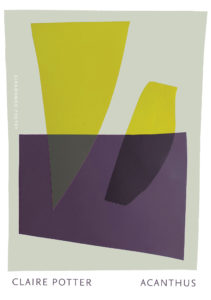 Acanthus
  Kirli Saunders (OAM) is a proud Gunai Woman and award-winning multidisciplinary artist and consultant. An experienced writer, speaker and facilitator advocating for the environment and equality, Kirli creates to connect to make change. She was the NSW Aboriginal Woman of the Year (2020) and was awarded an Order of Australia Medal in 2022 for her contribution to the arts, particularly literature.
 Kavita Ivy Nandan was born in New Delhi, grew up in Suva and migrated to Australia in 1987 after the Fiji military coups. She completed a PhD in Literature on the postcolonial narratives of Salman Rushdie and VS Naipaul at the Australian National University. In 2017, she moved from Canberra to Sydney with her husband, Michael and son, Jesse. Kavita teaches Creative Writing at Macquarie University. She is the author of a book of poems, Return to what Remains (Ginninderra Press, 2022) and a novel, Home after Dark (USP Press, 2014). She is also the editor of a book of memoirs, Stolen Worlds: Fiji-Indian Fragments and co-editor of a book of essays, Unfinished Journeys: India File From Canberra and a book of poetry and short fiction, Writing the Pacific. Her poetry and fiction are published in LiteLitOne, Not Very Quiet, Mindfood, Mascara Literary Review, Transnational Literature, Landfall, The Island Review and Asiatic. She has been a recipient of the artsACT grant three times.
 Anthea Yang is a writer and poet living on unceded Wurundjeri land. Her writing has appeared in Going Down Swinging, Kill Your Darlings, Voiceworks and the HEIDE+Rabbit House of Ideas: Modern Women anthology, among others. She has been longlisted for the 2021 Kuracca Prize for Australian Literature, shortlisted for the 2020 Dorothy Porter Award for Poetry, and has performed her poetry as part of Emerging Writers’ Festival, Melbourne Writers Festival, and Red Room Poetry’s 2022 Victorian Poetry Month Gala. Born in Perth, Western Australia, her favourite season is summer.
 Timmah Ball is a writer and zine maker of Ballardong Noongar heritage. Previous zines and micro publications include Wild Tongue in collaboration with Loving Feminist Literature for Melbourne Fringe (2016), Wild Tongue Vol. 2 in collaboration with Azja Kulpinska for Next Wave Festival (2018) and Do Planners Dream of Electric Trees? (2021) created through Arts House Makeshift public residency. Her writing has appeared in a range of anthologies and literary magazines including Sydney Review of Books, Meanjin, The Griffith Review and Columbia University’s The Avery Review. In 2016 she won the Westerly Patricia Hackett Prize.
 Alison J Barton is a Wiradjuri poet based in Naarm. Themes of race relations, Aboriginal-Australian history, colonisation, gender and psychoanalytic theory are central to her work. Her work appears in Meanjin, Overland, Best of Australian Poetry 2022 (APJ), the Liquid Amber Prize Anthology: Poetry of Encounter, Australian Poetry Journal, Otoliths, Rabbit, Westerly Mag, StylusLit, Resilience (Ed. Mascara) , The Storms (Ireland), Poethead (Ireland), The Night Heron Barks (USA), Under Bunjil, Yarra Libraries Receipt Poetry, Bluebottle Journal and LinkBund. In 2022 Alison received a commended place in the WB Yeats Poetry Prize for Australia, was shortlisted for both the Queensland Poetry Oodgeroo Noonuccal Poetry Prize (for ‘buried light’) and the Pratik Magazine Fire and Rain edition prize (for ‘How to grieve in the open air’) and longlisted for the inaugural Liquid Amber Press Poetry Prize.
 Kamilaroi author Vivienne Cleven was born in 1968 and grew up in outback Queensland. She left school at thirteen to work with her father as a jillaroo: building fences and mustering sheep and cattle. She also worked as a cleaner, barmaid, roustabout, nanny, and photographer, among other jobs. Her novel Bitin’ Back won the David Unaipon Award and shortlisted in the 2002 Courier-Mail Book of the Year Award and the 2002 South Australian Premier’s Award for Fiction. She wrote the playscript for Bitin’ Back, which was performed by Brisbane’s Kooemba Jdarra Indigenous Theatre Company. Sister’s Eye was published in 2002 and was chosen in the 2003 People’s Choice shortlist of One Book One Brisbane. Her writing is included in Fresh Cuttings, the first anthology of UQP Black Australian Writing, published in 2003.
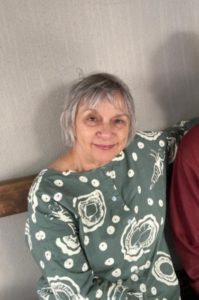 Maria van Neerven is a Mununjali Yugambeh women from south-east Queensland. She is a retired library technician who loves reading and writing poetry. Her first published story was in the journal The Lifted Brow: Blak Brow (2018) and she has also published poetry in In Our Hands, (2022) a collection of poetry from Elders and knowledge keepers. Maria has performed her work on stages across Alice Springs and Brisbane and is working on her first collection.
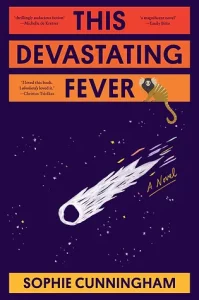 This Devastating Fever
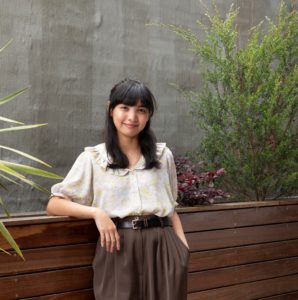 Anneliz Marie Erese is a Filipino writer whose works have appeared or are forthcoming in The Saturday Paper, Meanjin, Island Online and Cordite Poetry Review, among others. She has previously received writing prizes such as the Nick Joaquin Asia Pacific Literary Awards (2019) and the Deakin Postgraduate Prize in Writing and Literature (2022). She was also the 2022 Deborah Cass Prize winner. Most recently, she was awarded a scholarship to Faber Writing Academy at Allen & Unwin. She lives on the unceded lands of the Wurundjeri people.
 Gayatri Nair is an Indian-Australian writer, poet and DJ based on the land of the Wangal people of the Eora nation in Sydney’s inner west. She is a member of Sweatshop: Western Sydney Literacy Movement, has qualifications in Law and Arts, and is working in human rights policy, research and advocacy. She is passionate about pride in cultural identity and using art to affect change. Gayatri has been published in Sweatshop Women Volumes 1 and 2, Red Room Poetry, Mascara Literary Review, The Guardian and Swampland Magazine.
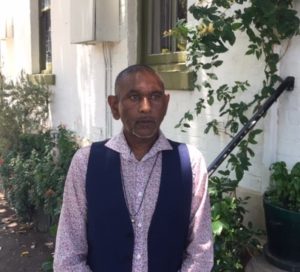 Christopher Cyrill is the author of the novels The Ganges and its Tributaries and Hymns for the Drowning. He has also published numerous stories, articles and written a number of broadcasted radio plays. For many years he was the fiction editor of HEAT and the fiction editor of Giramondo Publishing. Cyrill has taught at Sydney University and Macquarie University and currently runs his own writing academy mentoring writers.
 Lesh Karan is a Naarm/Melbourne-based writer and poet. Her work has been published in Best of Australian Poems 2022, Australian Poetry Journal, Cordite Poetry Review, Island, Mascara Literary Review and Rabbit, amongst others. Lesh is currently completing a Master of Creative Writing, Publishing and Editing at the University of Melbourne. She’s of Fiji Indian heritage.