Accessibility Tools

Skip to main content

Author: mascara

Anuradha Vijayakrishnan

Anuradha Vijayakrishnan was born in Cochin, India. She completed a B.Tech in Chemical Engineering from Calicut University, Kerala and a post graduation in Management from XLRI, Jamshedpur. She writes fiction and poetry while pursuing a full time corporate career. In 2007, the unpublished manuscript of her first novel, Seeing the girl, was long listed for the 2007 Man Asian Literary Prize. Her work has appeared or is due to appear in Eclectica, Bare Root Review, Nth Position, Orbis, Desilit, Aesthetica, The Pedestal Magazine, Every Day Poets, Stony Thursday Anthology, Poetry Chain, Indian Literature, Muse India , Asia Literary Review and Magma.


Beads

In her hands they are like dust. Or sun-dried
blood, fine-polished. Glittering, unlike
her eyes that slept through the day and through
the caveman nights that came snaking
out of their den and shed their skin
on hers; on hers, for god’s sake.

With her hands, she unravels them on her
skin; that skin scrubbed twice and raw. The beads
drizzle over, touching off cold sparks, tiny
nerve spots that meet and combust. So there is
life yet, and there is something that lives. Rubies
beneath the damaged soil, secret black emeralds
that laugh at the night, laugh at the scarred day.

On her hands she makes red markings. One cross
for every spent force, one knot for each thing
that was taken. She moves those hands in clenched
circles – willing them to cleanse
and be cleaned.

The beads find their way to her feet. Sunspots fall
into her eyes and she turns them into tears.


Who dances?

When I dance, I am like a rustic. Oily-haired
and round armed. I flap my head and grin
at invisible birds. I rise and fall in the garden
sand, laugh out loud when the rhythm
beats my feet.

So this music suits; this wooden bench
on which I can dance suits too. I can clank
my rings, my beaded chains here. Can imagine
wood drums, swing my bountiful hips, go one-two
with my heels, my shoulders, my chin.
Snake-dance, peacock-dance; dance even
like a happy calf with new milk sloshing
in my mouth. Kick my donkey heels
as if they can’t break.

And then, the neighbours fall off, their pet dogs
and their studio kitchens fall
off. My cellphone shatters against the wall, and the internet
dissolves into unreality. Beetles and moths
gather in the corners to watch.

Green plants in window boxes shiver
at the feet, of this goddess
who dances, like a rustic.


Les Wicks

Les Wicks has toured widely and seen publication across 11 countries in 7 languages. His 8th book of poetry is the Ambrosiacs (Island,2009).

http://leswicks.tripod.com/lw.htm


Boy Soldier

He talks about childhood
and prays for old age. There is no middle.

Ishmael Beah shot their feet and after a day of screams
shot their heads for the birdless quiet of evening.
Soldiers in the grasslands
reciting Shakespeare while they
snort brown-brown.

He was twelve.
We are all programmed to believe, a flaw
in the biology.
Our flaky hearts
on all those disappointing flags.


Heather Taylor Johnson

Heather Taylor Johnson

Heather Taylor Johnson moved from America to Adelaide in 1999. She holds a PhD in Creative Writing from the University of Adelaide, is a poetry editor for Wet Ink magazine, and the author of the poetry collection Exit Wounds. She reviews poetry and other artforms for various publications. She has a husband, three children under six and a feisty pup, and finds the bathtub a welcome office space.  


Shovelling Snow
 
There is subtlety in a morning snow
silent from the picture window and I’m curled cat-like
on my favourite couch, hot chocolate in my favourite mug,
=================================

Continue reading for only $5 per month

Subscribe for full access to Mascara Literary Review or login

Continue reading

Angela Meyer reviews Fragile Context by Kristin Hannaford

Angela Meyer reviews Fragile Context by Kristin Hannaford

Fragile Context
By Kristin Hannaford
Post Pressed
ISBN 9781921214189.
324/50 Macquarie St,
Teneriffe, Qld, 4005
order from postpressed@gmail.com
 
Reviewed by ANGELA MEYER
Poetry can exist between boundaries of communication. It can have an awareness of itself in the uniqueness of its form, unlike a blanket of prose which acts to unfold a narrative. Kristin Hannaford’s poems also thematically blur or dissolve lines, those related ones that exist between culture and nature. She invokes the binary to acknowledge one’s reliance on the other, to promote the reader’s recognition of one because of the other,

=================================

Continue reading for only $5 per month

Subscribe for full access to Mascara Literary Review or login

Continue reading

Jaydeep Sarangi reviews Touch by Meena Kandasamy

Touch

By Meena Kandasamy
Peacock Books Mumbai
ISBN: 81-88811-87-4
Reviewed by JAYDEEP SARANGI


Dalit literatures in India are subversive, or structurally alternative to the models prescribed by traditional Hindu aesthetics precisely because they are literatures of sociological oppression and economical exploitation. Dalit literatures are essentially a shock to tradition and sense. They are an assault to the anthropomorphic practice of castism in Indian social convention. A sound piece of Dalit literature is militant in texture and aggressively blunt in meaning. It challenges codified language (because it has so far been used and manipulated only by the dominant, discriminating powers); it challenges assumptions; it challenges age-old, world-views. Its temporal and political designation does not give justice to the artist whose intentions may subsequently be ignored . It is an aesthetics of pain, and a prolonged longing; a powerful aesthetics of resistance. The poems in Touch  by Meena Kandasamy amplifies, illustrates, and carries on this struggle for power and autonomy by women poets. Apart from her expert use of language, she has a sincerity of feeling and an honesty of experience rarely encountered. For Meena Kandasamy, the young Tamil poetess, poetry is about empirical truth and experience and she writes and reflects from where she is:
 
We: their daughters,
We: the daughters of their soil.
 
We, mostly, write.”     (‘Their Daughters’)
 
Her poetry is at best of private sensibility. Her consciousness is firmly yoked to the world around her, a world characterised by ecstasy and pain, love and despair. Touch contains a  ‘Foreword’ by Kamala Das where the renowned poetess writes, ‘Older by nearly half a century, I acknowledge the superiority of her poetic vision’. Meena follows the psychological tradition of Sylvia Plath and Langston Hughes, a ‘fabric rare and strange’. Womens’ fixed role as caregivers was ideologically determined by their biological capacity to bear children and that was through a fixed set of codes represented by ‘categorizers’ as Kamala Das has expressed in her own poem, ‘An Introduction’. Meena Kandasamy regards her poetic corpus as a process of coming to terms with her identity and consciousness : her “womanness, Tamilness and low/ outcasteness”, labels that she wears with pride. Meena has honed her sociological awareness of what it means to be a woman in the caste-ridden, social groupism of Tamil Nadu (a Southern state in India).
Her poetic self gasps in darkness to search for her emotional root proclaiming it as her heritage. This becomes a source of vitality for the poet’s journey. Her confessional mode is not as radical as we find in Mamang Dai, Archana Sahani and Kamala Das. She explores a wide range of subjective possibilities and relates them to her own identity and sociological formulation. Her poetry arises not out of reading and knowledge, but out of active engagement. Touch is rich with varied dexterity that explore the states of mind and genuine feminine sentiments.
 
          Writing becomes a means of creating a place in the world; the use of the personal voice and self-revelation are means of self-assertion. Meena’s self-expressive poems permit forbidden or ignored emotions to be expressed in ways which reflect the true voice of feeling; she shows how an Indian woman poet can create a space for herself in the public world. Across time and space, the woman writer, especially the woman poet, is engaged in an on going dialectic with the dominant cultural hegemonies to negotiate a space for the creative woman, where authentic female experiences can be articulated freely. Meena’s poems record the age-old class hierarchy in Indian society. Her poem, ‘Becoming a Brahmin’ records the sad plight of the so-called lower class people of Indian society:
 
Step 1: Take a beautiful Sudra girl
Step 2: Make her marry a Brahmin
Step 3: Let her give birth to his female child
Step 4: Let this child marry a Brahmin
Step 5: Repeat steps 3-4 six times
Step 6: Display the end product. It is a Brahmin.
 
Here words are like quicksilver carrying with them the sparkle of sense. In the sheer magic of rhythm, music and in the beauty of coalescing visual and auditory sensations, these lines are rarely surpassed in modern Indian poetry in English.
 
 
Flaming green of a morning that awaits rain
And my lover speaks of rape through silences,
Swallowed words and the shadowed tones
Of voice. Quivering, I fill in his blanks.
Green turns to unsightly teal of hospital beds
And he is softer than feathers, but I fly away
To shield myself from the retch of the burns
Ward, the shrill sounds of dying declarations,
The floral pink-white sad skins of dowry deaths.
                                   
                        ( “My Lover Speaks of Rape”)
 
 
             Meena’s poetic mode ranges from the meditative to sensuous where the metaphysical subtlety of arrivals and departures are ambivalent. A feature that impresses and ultimately convinces the readers is the poet’s readiness to allow conflicting voices to be heard from all contending perspectives. Her poems pose a tension that reaches out to the reader, arousing in one a sense of need that will not be satisfied:
 
“What will you say of your feeling
Living with a sister who terrorizes
Even manic depressions out of your mind?
 
 (‘Sage in the Cubicle’)
 
There is always a haunting note of despondency marked in Meena’s poetic lines. We may refer to her poem, ‘Immanuel’:
 
Now, if there be any mourning
Let it be for our heroes
Yet to die, fighting…
 
Meena’s poetic lines seem to echo from life itself, from the pauses of loss and vacuity in her sociological repression in a class-stratified Tamil society. Meena deeply penetrates the inner pores of the feminine psyche and brings out the strength and power of life. Sanjukta Dasguta, a Bengali poetess, writes
 
I am sangam and shakti
Power of fire, water, air and earth(.)
 
 (‘Identity’, Sanjukta Dasgupta)
 
Like all confessional poets, Meena gives literary form a new sense of personality, attaching value to the image of man. She raises her confessional traits to the level of a specific universal appeal. Her quest for identity is not the spiritual Odyssey; it is a human journey, a sociological journey that dignifies the reader:
 
Caste, yet again authored a tragedy
He, disease wrecked , downtrodden.
( ‘Prayers’)
 
In the poem ‘Take This for an Answering’ Meena records her voice of protest ;
 
You press me into answering
When and why and where and how
I could start to dislike you.
 
             Debates over Dalit studies in India have intensified studies of anti-colonial resistance in general which have been augmented and contested by a broad range of studies. Through Meena’s conscious poetic lines Dalits are hitting back in coloniser’s tongue. The poems in Touch represent the indigenous lifestyle. They resist colonial acts of authority and oppression through their textual transmission.


Mario Licon Cabrera translates poems by Michael Brennan

Mario Licón Cabrera (México, 1949) has lived in Sydney since 1992. His third collection of poetry, La Reverberación de la Ceniza was publshed by Mora & Cantúa Editores in 2005. His work features in an architecture and poetry installation, Metaphors of Space, at this year’s Sydney Writers’ Festival. He has translated the poetry of Dorothy Porter, Judith Beveridge, Peter Boyle, J.S. Harry, Robert Adamson, amongst other Australian poets, into Spanish. His collection, Yuxtas, a bilingual collection (Spanish/English), written with the assistance of a grant from the Australia Council for the Arts/Literature Board. These poems are selected translations from Michael Brennan’s latest collection, Unanimous Night, which is short-listed in the NSW Premier’s Literary Award.


Carta a casa /2
 
Llegó Noviembre.
Meses más cáldos en gestación,
bandejas con tuberculos a la vista, tulipanes,
azafrán, lirios, robustas y doradas ofrendas
limpias de la negra tierra del norte,
nombres tan brillantes y extraños como un rezo:
Azul Delft, Juana de Arco, Remembranza,
nombres, los misterios ordinaries,
La señora de John T. Scheepers, Groenlandia,
Perico negrot, El récord del portero,
cada quien a la espera de ásperas manos
para regresarlos a la tierra oscura,
para ser enterrados
en paciente incertidumbre,
y esperar
hasta el fin del invierno.
Letter home

November already.
Warmer months finding form,
trays of bulbs laid out, tulips, crocus,
lilies, fat and golden offerings
brushed clean of black northern earth,
names bright and strange as prayer :
Delft Blue, Jeanne d’Arc, Remembrance,
names, the ordinary mysteries,
Mrs John T. Scheepers, Groenland,
Black Parrot, Doorman’s Record,
each waiting for weathered hands
to give them back to blind earth,
to bury them
in patient unknowing,
and wait
until winter’s end.


Carta a casa /3
 
Debo decirles, que no hay nada como el hogar.
Ninguno de ellos piensa que soy un forastero.
Me reciben en sus casas con manos
toscas y me brindan deliciosos manjares.
Después de cada comida, ellos frotan mis cejas
y mi barba, y secan las lágrimas
que por meses han corrido por mis mejillas
al viajar de pueblo en pueblo.
Me dicen que ellos son forasteros aquí,
y en la fresca atmósfera nocturna
cuelgan sus palabras por tal cosa,
entre la suava caricia de la barba
y los tiernos ojos del más viejo de ellos.
Me dicen que pronto me dejaran,
pro que en su ausencia debo seguir con los banquetes
que alguien vendrá y yo debo recibirlo,
no debo hablar de más, pero sí alimentar al invitado
y después secar sus lágrimas. Antes de irme debo decirle
que está en su casa, que él aquí no es un forastero.
Ellos dicen, ninguno de estos es forastero.
Ellos dicen, que esperaran por mí en el próximo pueblo
con sus manos gentiles y sus alegres ojos,
que el tren me llevará allá, y en el camino
podré escuchar el llanto del hombre viejo
y dejar a la tierna noche tocar mi rostro,
podré recordar los manjares caseros,
y esperar a que el silencio tenga lo suyo.
Dicen, cuando nos encontremos en el próximo pueblo,
ellos me lo explicaran todo. bare
Letter home

I should tell you, it’s nothing like home.
Not one of them thinks of me as a stranger.
They welcome me to their houses with rough
hands and feed me delicious feasts.
After each meal, they stroke my eyebrows
and beard, and dry the tears
that have run down my cheeks over months
travelling from town to town.
They tell me they are stranger here,
hanging their word for such things
in the cool night air, between the beard-stroking
and the young eyes of the oldest among them.
They say soon they will leave me,
but I am to keep feasting in their absence,
that someone will come and I must invite him in,
I must not say too much, but feed him and afterwards
dry his tears. Before I leave, I must tell him
this is his home now, that he is no stranger here.
They say, none of this is strange.
They say, they will wait for me in the next town
with their gentle hands and playful eyes,
that the train will take me there, and on the way
I can listen to the old man’s crying
and let the lightness of night find my face,
I can remember the feasts from home,
and wait for silence to have its fill.
They tell me, when we meet in the next town,
they will explain it all.


Carta a casa /4
 
Estás cerca,
tu aliento agitándose
entre los cedres
de ochocientos años de edad,
piedras
erosionadas
por cosas invisibles,
particulas de arena
y rocas,
flotantes
en la brisa,
la insignificancia
definiéndolo todo,
aquí donde un poeta
observó
nada
más
que el paso
de una estación,
y el aire otoñal
entibiando
el aliento,
y así
continuamos
nuestro ascenso lento,
un millar y
cuatrocientos
cincuenta escalones 
tallados en piedra
de esta montaña,
erigiéndose,
nombrando el templo
donde nos sentamos.
La vista,
el valle
que emerge,
hojas castañs
dadas
a un frío filoso y quemante,
el verde profundo
de los árboles añejos
en total quietud,
la brisaa ancestral
ahora corriendo veloz,
invisible y suave
a través de las piedras
suave a través
de la superficie
de nuestros ojos,
partículas
invisibles
interminablemente
borrando
cada
cosa.


Letter Home

You are close,
breath drawing
fast amongst
eight hundred
year old cedars,
stones
weathered bare
by invisible things,
specks of sand
and rock,
carried
on the breeze,
insignificance
shaping everything,
here where a poet
noted
nothing
more
than a season
passing
and autumn air
warmed
on breath
and so
we continue
our slow ascent
one thousand
four hundred
and fifty steps
of stone hewn
from this
mountain
rising
naming
the temple
where we sit
the view
the valley
appearing now
russet leaves
given
to a sharp cold fire
the deep green
of ancient trees
holding still,
the ancient breeze
running fast now
smooth and invisible
across stones,
smooth across
the surfaces
of our eyes,
invisible
flecks
endlessly
erasing
each
thing.


Carta a casa /6
 
La primavera empiiza su lento striptease.
La gente con menos ropa cada día.
 
Los pesados abriigos de lana dan paso al algodón,
a las líneas curvas de caderas, pechos y nalgas.
 
Escucho la música que me enseñaste,
esa que se ubica lentamente entre cada cosa.
 
Esas palabras extrañas –Gentileza, amistad,
afecto –todavía más extrañas al decirlas
 
en la lengua que se habla aquí.
Sentado percibo el oleaje de la gente,
 
a ratos saboreándolo con una sonrisa
o con el trunco lenguaje
 
que estoy aprendiendo, confíanza
y gentileza hablan por todas partes,
 
Atento escucho expresiones de mi país
transformándose en otro lenguaje
 
entre amigos conversando
amontonados, la percusión suave
 
de una pareja joven, protejiéndose
del crudo ambiente invernal.
 
Desplazo mis dedos a lo largo de palabras
como si cada palabra fuera una plegaria.
Letter Home

Spring starts its slow striptease.
Each day people are wearing less,

thick woollen coats give way to cotton,
irmer lines of hips, buttocks and breasts.

I listen for the music you taught me,
one that settles slowly between each thing.

Those strange words — kindness, friendship,
care — stranger  still  spoken

in the language spoken here.
I sit sensing the tide of people,

sometimes testing it with a smile
or with the broken language

I’m learning, trust
kindness speaks anywhere.

I listen carefully to idioms of home
rising in another language

between friends huddled
in conversation, the gentle percussion

of a young couple sheltering
from late winter air.

I run my finger along words
as if each word was a prayer.


Ali Alizadeh translates a poem by Besmellah Rezaee

Besmellah Rezaee (Hamta) was born in Afghanistan and is an Australian Afghan who currently studies a double degree in Law and International studies at the University of Adelaide. In addition, He works as a Publication officer for Karawaan Organization; he is the executive Director of “Sokhane-nau” magazine, and hosts a show in radio Adelaide called ‘Dialogue’ every Sunday. He is the founder and president of AATSA (Association of Australian Tertiary Students from Afghanistan) at the present and also works as an interpreter with Multilingua ltd. 


اینجا کابل است!

          اقیانوس درد

                      ساحل غم

قصر دارالمان، کوه آسمایی، پل آرتن، زیارت سخی1

 روزگاری مهد:

                حاکمیت، غرور، محبت و نیایش بود!

 سیاهی وهم آلود جهل

بر کوی و برزن

بر در و دیوار

 بر آدم های این سر زمین

                               سایه افکنده است

کبوتران “سخی”2 رنگ باخته اند

“افشار”3 هنوز بوی خون میدهد

“ده افغانان”4 سینمای حرص و هوس شده است:

اینجا یکی در پی لقمه نانی

روزش آغاز و شبش پایان ندارد

و دیگری در پی لحظه هوسی

شبش آغاز و روزش پایان ندارد

دریای کابل

               بی آب و ماهی و موج

                                        در سکوت ابدی محبوس شده است

 کودکان اینجا

               بعد از زمان خویش به دنیا آمده اند

                                                 آنها علم را در دست فروشی فرا میگریند

 “گودارد”5 هم مرده است

  تا اینبار نیوریالیزم را در کابل احیا میکرد.

اینجا کابل است !  کابل!!!

1 نام جاهای معروف در کابل

 2 سخی نام زیارتگاهی است در کارته سخی کابل

 3 افشار نام منطقه است در قسمت غرب کابل که در جریان جنگهای داخلی کشتار دسته جمعی و قتل عام مردم در آنجا صورت گرفت

 4 نام جایی در مرکز شهر کابل

 5 جین لوک گودارد نویسنده و فیلمساز معروف فرانسوی بود که در بنیان گذاری مکتب بنام آتیریزم و فرنچ نیو ویو سهم بارز داشت


This is Kabul!

The ocean of pain
the shore of sorrow
the Dar al-Man palace, the Asemani mountain, the Arten bridge, the Sakhi shrine (1)
a time of cradle:
there was sovereignty, pride, kindness and benediction!
Damn the war…
the fearful blackness of ignorance
has cast a shadow
on every quarter and on every district
on the door and the wall
on the people of this land
The pigeons of the Sakhi have lost their colour  (2)
Afshar still reeks of blood (3)
Dah Afghanan has become a cinema of restriction and caprice (4)
Here a person seeking a bite of bread
never starts the day nor ends the night
and another seeking a moment of caprice
never starts the night nor ends the day
The seas of Kabul
without water or fish or waves
are exiled in eternal silence
The children here
have been born after their time
and will be educted in the future through hawking
Godard is also dead (5)
to once again revive neorealism in Kabul.

This is Kabul! Kabul!!!

[author’s footnotes]
(1) names of famous places in Afghanistan
(2)Sakhi is a name of a shrine in Kabul
(3)Afshar is a name of a district in west of Kabul where massacres took place during the civil war
(4)the name of a place in central Kabul
(5) filmmaker


Ali Alizadeh


Ali Alizadeh is an Iranian-born Australian writer. His books include the novel The New Angel (Transit Lounge Publishing, 2008); with Ken Avery, translations of medieval Sufi poetry Fifty Poems of Attar (re.press, 2007); and the collection of poetry Eyes in Times of War (Salt Publishing, 2006). The main themes of his writing are history, spirituality and dissent. His current projects include a nonfiction novel about the life of his grandfather (to be published in 2009) and, with John Kinsella, an anthology of Persian poetry in translation.


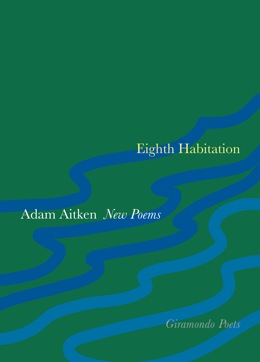
Kim Cheng Boey reviews Eighth Habitation by Adam Aitken

Kim Cheng Boey reviews Eighth Habitation by Adam Aitken

Eighth Habitation

by Adam Aitken

Giramondo Publishing
Poetry, Paperback, 144pp
ISBN 978-1-920882-46-4
$24.00
Publication April 2009


Reviewed by KIM CHENG BOEY 


In “The Photo,” the concluding poem in Eight Habitation, the traveller-poet who has journeyed from the safe and familiar precincts of Sydney to the ravaged landscape of Cambodian history, poses a question: “To forget or not to, / to write or not to – therefore live – / to forgive the monster/ is this impossible question.”

=================================

Continue reading for only $5 per month

Subscribe for full access to Mascara Literary Review or login

Continue reading

Gina Forberg

 
Gina Forberg is an elementary school teacher in Westport, Connecticut.  She received her Masters of Arts Creative Writing at Manhattanville College.  Her work has appeared in The New Delta Review, The Mochila Review, Slant Magazine, Blueline Press, Squaw Valley Review, Anderbo Magazine,


The Turn

Maybe there is gratitude in the map
quest that steered us wrong, that allowed
us to meet our mate when we missed
the church, that prevented the accident
at mile 54. Perhaps we found our dream
house, a new favourite restaurant.
What if we returned to the simple scribble
on the page, the loops, curves of a writer’s
hand, the elegance of slant, the enjambment
of words. I’d  like to believe he is
intrigued by the white space, cares less
about cross-outs, erasures, knows not
what direction he is going.  For us
to worry about diction, syntax,
punctuation is to misplace the emotion,
to resist the turn we need to make.
The starts, the stops are what drive
our engines.  The setting aside restores us.
If we are willing to lose ourselves
in the extra miles we may be surprised
at our destination. If we are lucky,
a reader will follow close behind.


The Conditions and Events of The Winter Olympic Games as a Metaphor for Sex

i.
Snowfall must be sufficient enough to guarantee beyond question a heavy cover
during the prelimary practice.

ii.
Altitude should be sufficient to guarantee snowfall without unduly affecting the
respiration of the athletes.

iii.
If you are going to be a skiier choose freestyle. It has no restrictions.

iv.
It is important for a woman to use her hips during the turns in the downhill slalom.

v.
In classic freestyle, skiiers use the traditional straight-striding technique and do not
deviate from the parallel tracks.

vi.
The word “hockey” derives itself from the French word “hocquet” which refers to
crooked stick.

vii.
Skaters must wear rubber caps to reduce the amount of wind resistance.

viii.
In the luge there is no rule that says a doubles team must comprise members of the
same sex, but traditionally, men have ridden together with the larger man lying on top
for a more aerodynamic fit.

ix.
The luge event is designed to reward consistency, endurance and ability to withstand
pressure, particularly on the second day.

x.
In curling, the stone moves toward a series of concentric circles. The object is to get
the stone as close to the centre of the circle as possible.

xi.
In the biathalon relay each team member has two firing sequences and is allowed
three extra bullets to hit five targets.

xii.
Location changes every two years so make sure the conditions are conducive to your
specified event.


Weam Namou

Weam Namou was born in Baghdad, Iraq as a minority Christian, and came to America at age ten. The author of three novels, she studied poetry in Prague and screenwriting at MPI (Motion Picture Institute of Michigan). She is also the co-founder and president of IAA (Iraqi Artists Association). Her articles and poetry has appeared in national and international publications. http://www.pw.org/content/weam_namou


A Childhood in Iraq

Sun shines over a mélange of
green grass and white snow,
like a lime flavored slurpee.
Snow in rarely detected in Baghdad.

Through the window a squirrel
passes by, nibbles at the cereal
I’ve left for it on the deck.
Pets are not encouraged in Iraq.

A lunch of hot tea and a cold slice
of pepperoni pizza I prepare for me,
without removing the pepperoni.
Pork is not halal in the Arabic world.

I listen to the poetic Quranic verses on TV
even though I belong to a Christian minority
who still speak Aramaic, called the Chaldeans.
They’re being persecuted in their native land as we speak.

All praise is due to Allah, Lord of the Worlds…
the imam leads a prayer
I remember the paper bag of baby green apples
my father used to bring home for us.

My younger brother and I tied
their stems to a string,
treated the apples like yoyos.
We had no toys back then, nor swings.

We built play houses out of cardboard boxes
pretended pillows were our dolls,
pots and utensils our musical instruments.
In Iraq, today, children can’t afford to be that simple.

Didn’t need anyone to read to us a bedtime story
aunts and uncles, cousins and neighbors,
were our heroes and villains.
Now, terrorists and gangs rule that part of the earth.


America

I talk about you, as many others do,
sticking labels such as arrogant and gullible
over your name, like stamps over a large Christmas package.

You dress me with possibilities,
I try on this and that outfit of different colors and sizes,
meanwhile focusing on your limitations.

You do not reprimand me for my verbal thoughts,
rather, you listen, weigh the options and consider
whether what I have to say is worthy of action.

Oftentimes, I even receive applause
for pointing out your negativities and idiocies.
In return, you remain true to the First Amendment you’ve provided.

You’ve allowed me to take a deep look at your weaknesses
and in turn caused me to appreciate your strength and integrity.
That’s real balance, the yin and yang, of our planet.

While I love the country of my birth, of Iraq,
where I was blessed with the best childhood,
I must admit, had I remained there, as an adult,
Freedom of Speech is something I may never have experienced.

Anthony Lawrence

Anthony Lawrence’s most recent book of poems Bark (UQP 2008) was shortlisted for the Age Book of the Year Awards and the Judith Wright Calanthe Award. He is currently completing a PhD on the poetry of Richard Hugo, and a book-length poem The Welfare of My Enemy is forthcoming. He lives in Newcastle.


Your Letters

I can’t smell the oil-stained deck ropes
on the last boat leaving
the last town of the Cinque Terra,

or see the highlights in your hair
as you pass the Roman wall in Lucca,
but I can see you’re in a hurry –

the broken flourishes of your thinking
as you run for a train, the word because
reduced to bc in all your correspondence.

I can’t see you there, in that postcard
version of your dreaming, overseas
or when you returned to a life

doubled by keeping your options open
like a wound gone septic from neglect.
Today I see your name on my calendar.

Your birthday will come and go,
untroubled by gift or word, though under-
scored by this certainty: lost in the poor

terrain of your grammar, you worked
a moulting brush through muddy pigments
to abbreviate me.


The Sound of a Life

In frames of elapsed time
and contractions of deep sea light,
an open water dance
between science and bivalve
is bloodflow and the muted sound
of a life hinged and weighted
to its own design.
Behind the shelled meniscus
of a marine biologist’s faceplate,
where assessments of fact and beauty
play across her eyes, under pressure
she hears the blue mazurka
of loss and non-attachment
and she outbreathes what remains
in her tank to understand it.