Mark Young
Subscriber Only Access
Sorry you must be logged in and a current subscriber to view this content.
Please login and/or purchase a subscription.
Accessibility Tools
Sorry you must be logged in and a current subscriber to view this content.
Please login and/or purchase a subscription.
Sorry you must be logged in and a current subscriber to view this content.
Please login and/or purchase a subscription.
1. Itinerary
The one-time Marxist philosopher of religion and culture, Régis Debray wrote Religion: An Itinerary, a book on religion in which he worked by a series of staging points, an itinerary, as he called it. For me too, in considering Sudesh Mishra’s poems, a tour of sorts is at stake – and in this respect, this is less an article than it is an itinerary. Despite the hesitation many feel about the critic as mediator, it would seem that the work of one of Australia’s – and indeed, the Pacific’s – finest poets, requires a guide, one to check off the tour points, to make sense of the landmarks, to act even as curator (which in its Latin original concerns caring for, as well as being guardian of, in this case, the artwork).
Mediation is also at stake in the verse. For Mishra is a mediator of words and worlds, a shuttle driver of ideas and of textures. The locations, the key political milestones, the literary forms he uses, the major religious frameworks: these are the things that we need to check off as we proceed through this particular selection of verse, one generous in its amplitude and in its variety. There are, indeed, more poems here than I will, or wish, to discuss.
2. Envoi
The ending is, so to speak, at the beginning. The ending is also a sending. An envoi is a poetic ending, the concluding line – or lines – to a ballad. And those who know Mishra, or who read him carefully, will find not just references to music, but also, sonic dimensions to the poetry at every turn. In his choice of forms, as we shall see later, such as the sonnet, he invents new sounds in old genres – but does so in light of a rich and complex heritage of Fijian and Indo-Fijian, and Australian/European legacies.
And as Mishra’s allusive habit operates, envoi is also a French word, the basis of English envoy. It is also a heading in Jacques Derrida’s time-play book on the impossibilities of writing and of legacy, The Postcard: from Socrates to Freud and Beyond. The ending is at the beginning, and, as he puts it elsewhere, “So the snake devours its tail/And so the third-eye on itself prevails” (“Feejee,” Tandava 12). So, as Derrida might have put it, a (s)ending, something in flashback tells its end before the beginning.
The poem, “Envoi,” itself is about the sending and the ends of poetry – from its creation to its reception. Yet the poet is an artificer, he tells us. The “atomic flower of his brain/which radiates no light the hue of nectar,/Dry and dyeless as a reef in a book” (“Envoi”). “Drinking” on this art, the bees die. The end comes at the beginning as in Kagaaz ke Phool, the flawed and terrifying film by Guru Dutt, whose final song concerns, and flashes back to abandonment, but first (last) explains that aspiring youth should flee the fakeries of the cinema, that birds will not find nectar in the “paper flowers” of the cinema, that none of it is real. And yet, Dutt made the film, and Mishra wrote the poem, adding that while the poet is “sly to the artifice in its art,” he nevertheless waits and expects that the poem will find an audience, and thereby life….because poetry “lands a name on all that namelessness” and therein lies the value, the honey.
3. On Death
There is much to say about death, and Mishra’s poems do deal with it in many oblique ways. In “Fall,” for instance, there is an intense symmetry between a child’s loss of faith and the fall of the Archangel, Lucifer. But then there is the more prosaic angel of mercy, the ambulance driver.
In “Ambulance Driver,” the poem opens with a domestic scene, a sleeper evoked, shown stumbling over the crinkly cords of the telephone, while the rest of us sleep on. The poem’s trajectory of travel from home to hospital to home offers a view of emergency workers not just as service workers, but as secular agents of compassion. In this respect, they displace the clergy’s role, as they minister in practical ways, to the sick, the elderly and the dying. The miner does not “dare harvest” this seam, the one where the damaged need help. In its closing lines, the poem suggests that the ambulance driver do not always work, but rather, in their days off, they live among us, in cool valleys – and they fear what we fear, as in the midst of plenty they feel “terrors burn/Like music in our ears” (“Ambulance Driver”).
Death of course is not only harvested. Death is also deferred – and in terms of the desire for death, it affords also a terrifying politics. In “A Wishing Well in Suva,” Mishra’s most apocalyptic epiphany of Fiji, he lets forth a torrent of subjunctive and jussive declamations. At the head of both of its two stanzas, he opens with lines like these:
Let the tsunami come
Let it come as an ogre in grey armature….
O but let it come soon…
And wipe out everything,
Except perhaps a tuft of fern
(“A Wishing Well”)
The desire for utter annihilation, something also evinced in the title of his Tandava collection (with its evocation of Lord Shiva’s dance of death), is also a desire for cleansing, political cleansing. Such terrible desires arise from the legacies of Fiji’s many histories, and especially its histories of coups, of the corruption of culture and of people – and of land:
And the Ratu is consigning
All wilderness to woodchips
Over a hopsy lunch with a lumber
Baron from Malaysia;
And Colonel is admiring
In a circus mirror his shoulder pips.
(“A Wishing Well”)
The Ratu is a title applied to distinguish those with chiefly status from indigenous commoners. The Colonel, of course, was Sitiveni Rabuka. If the situation of coups and government has changed, the legacy of 1987 and the trauma of the Speight coup in particular, remain.
4. Diaspora, Colonisation, Memory
Many who write of diaspora do so in a way that seems to suggest that it is the riddle that holds keys to identity, power relations, and history. In fact, it is only a small part of that riddle, something Mishra’s own critical work has amply demonstrated (see especially, his book Diaspora Criticism). The interface of gender, class, and diaspora collide in his two part sonnet sequence, “Dowry.” In the first part, a complete sonnet, the dowry scene is presented, but not in simple terms. Many Hindi films show a father with tears in his eyes as a daughter is married, taken to the son’s parents’ home, handed over in a rite of Hindu celebration and tradition. Yet these are modern times – with memories in parental minds of marriages long ago – even if these are mixed with filmic representations.
In the poems themselves, the logic of arranged marriage, of dowry, and of domestic sorrow converge as a history. This is the story of parents, and of generations bearing witness to them. In this memory, the father is shown grimly turning his face aside from the scene he has helped create:
…she left home in a spray
Of pulse and flower, the tears soldering off
Her cheeks and her father looking away,
His eyes drilling holes through a stubborn bluff
Estranging like this stranger, drift-boned, shy,
He handpicked for the apple of his I.
(“Dowry”)
In the second poem, however, a vision of courage, of what can happen when the threads of a marriage unravel, emerges, and the poet, silenced by his own histories, nevertheless has the urge to cry out for her to leave:
How I want my dumb art to scream, to say:
“Mother, swim out into your doubting self.
Plunge in against the current. Go astray.”
Behind her of course, things are not so easy: the “insinuating chatter” makes her life a misery.
Public history, of course, is quite different in nature. Mishra does not dwell particularly on it, but it turns up as part of the weave of the present and of memory. This is the effect – and pattern – of European colonisation. Few who visit Suva can fail to miss Albert Park as they travel, perhaps en route to the Suva Museum (for an itinerary of a different kind of cared-for-memories). At Albert Park (named for Queen Victoria’s beloved), a memory of European history is sketched subtly with the evocation of the scene of the landing of Kingsford-Smith at the park, as the poem says, in 1928. The poems on the aviator are by turns jesting, by turns serious, yet shows how colonial life marked Suva and Fiji more generally. The excitement of the arrival of the aviator led to them felling trees,
…teak, kauri, the great ivi
Under which Degei pondered his creation,
Coiled in the lacework shade, a fossil of
Himself, bats fruiting in the boughs above.
The knolls were graded…
(“Albert Park, Kingsford-Smith”)
The destruction of sacred histories, not to mention great and ancient trees gives a darker note to the levity. Mishra writes that the “planter, taukei and kin” and “twelve coolies” were all on hand: these were to some extent the superimpositions of the colonial and colonising imagination. The planters are the colonial owners of farmland; the taukei are the indigenous Fijians. And the plane landed of course – blowing up its own storm that “stank of brine and carbon and of myth” (“Albert Park, Kingsford-Smith”). In the second part of the sequence, a comedy of the kind Homi Bhabha, would acknowledge as salient unfolds: the colonial society tries to entertain the guest, and the “Planter’s wife murdered Tchaikovsky/on a church organ” as the hero himself is imagined as wondering about the society in which he found himself, as well as about his adventures like Icarus (and their risks). But to all who witnessed it, there was an effect, including on the maid who “counting plumes on his bed/Saw him in the sunlight, half-man, half-bird” (“Icarus, Kingsford-Smith”).
5. Nature
It is rarely remarked, but Mishra writes often of nature. Sometimes, as in the passing reflection on forests being woodchipped by greedy landowners, it is a lament. At other times, it is mediated through other art, as in his poem on Gauguin (with a fascinating meditation on rotting fruit, something that is unavoidable anywhere, but which is very much in evidence in the tropical heat of Nadi). However, one of the most beautiful dimensions of Mishra’s work, from his earliest collection, Rahu (with its encounter with horses on the road between Nadi and Suva) is his attention to nature of all kinds. In this collection, there are many poems that deal with trees and plants, but perhaps the one that is most striking in its attention to nature is the poem, “Seal.” While it is not made explicit, the poet’s engagement with the seal is punctuated with a slap from its tail (whether harmless in the ocean or against the poet’s body is unclear). The poem, written on Kangaroo Island, reflects on the characteristic look and movement of the animal:
Your tail a swivelling T
Against a furious dusk:
Turner. Template. Tree.
(“Seal”)
Despite the tumult, and the fact it “bewilders the heart,” the encounter with the seal engenders a “recrudescence of happiness” (“Seal”).
The poems on plants, however, are the most striking dimension of Mishra’s attention to landscape and environment. Sometimes the relationship is indirect, as in “Grain,” where in a series of sonnets, he meditates on the transformation from tree to wood to product. These three poems mix classical references to the Trojan horse (made of wood) with the timbers of Fiji, and indeed of its history: as at the end of the sequence he is brought back to the shocking memory of the ship, the Leonidas that brought the first indentured labourers to Fiji:
But all at once you’re bereft.
Leonidas is berthing. The light’s in gold.
Sixteen dead spartans in the tuna hold.
(“Grain III”)
Why Spartans? The ship itself has a name that clearly is more pompous than its station: its name comes from the Spartan king.
In his nature poems, too, he frequently depicts a powerful relationship to human behaviour and history. This is especially true of his reflections on plants like sugar cane which are etched into the classed history of indenture. In his poem, “Cane,” it seems he will write only in light-hearted way of the sugar cane running “over the island in leaps and bounds” (“Cane”). However, he quickly rejoins this with the context of indenture:
…no islander says what it is.
“Prison bars,” says the resident farmer
When pressed, his tone uncrimped by irony.
(“Cane”)
Sugar has inscribed itself into Fiji-Indian indentured consciousness, and Mishra’s poem makes sense of this legacy in just these terms.
6. Form
Mishra has a fondness for technical experimentation. Even in his most free form poetry, there is a powerful sonic sense, as in the poem, “Flood,” where the tragedy of flood is given life with the image of two animal forms responding to it. The catform is one: running in the rain, deftly dodging puddles and muck; the other is the ox, plodding, dragging itself through the sludge, oblivious to what lies beneath its great bulk – and what it destroys as it walks. The poem itself is a free verse poem, but is filled with sonic cues: Flood and mud rhyme endlessly and without structure throughout the poem; and the “Mudox/Neither runs nor roars/But dumbly pours/ Its protean bulk/ Into wretched dreams” (“Flood”). The only thing that survives all this is, in one sense, everything: the town itself, captured in a series of sibilant sounds that suggest its very defiance and resilience (“Flood”).
Just as often though, Mishra toys with forms – the ten syllable pattern of the sonnet is a particular form that recurs. This has been evident since his Tandava collection, where in the opening “Feejee” sequence there are a number of sonnets, and where the collection closes with the ten-sonnet set of “Sonnets for a Valediction,” some of Mishra’s finest poems. In this collection, too, we find the form recurring, as in the poems discussed already – the poem sets on “Dowry,” on “Grain,” and on “Kingsford-Smith.” The poems that are not so tightly circumscribed, however, also have form, as Mishra plays with striking syntax and acrobatic wordplay (and vocabulary). His poems may at times have direct themes, but their sonic force, and their imaginative brilliance are a tour de force of the capacity of poetry to challenge and to confront.
Perhaps the best example of this is the well-known prose poem that I (and others) have discussed elsewhere. It is the title poem from his collection, Diaspora and the Difficult Art of Dying. The entire poem consists of one sentence. It narrates the history, the complete history, of the diaspora in Fiji. It starts with the recruiters, the voyage (on which everyone became jahajibhais – shipmates), and the landfall. But then, ingeniously, by means of a conceit of sorts (a bowdlerised Hindu tradition of levitating Gurus), Mishra imagines an illness that makes the entire Fiji Indian population lose connection with the earth, and float mysteriously above the ground. The ingenuity of the idea gathers together a culture by synecdoche (Mishra elsewhere in the prose poem points out that “chamars found brahmins, muslims found hindus, biharis found marathis” (“Diaspora”), and has them disconnect from reality – or at least the land – together. The poem ends in pessimism in some ways, partly in indictment of the diasporic population, for this very disconnection. But there is also sympathy for the histories that led to this, especially in terms of colonial historical segregation and class warfare.
7. Itineraries: Of Travel, and of the Heart
Mishra’s work mediates worlds, and I have tried to suggest this without recourse to the obvious: Mishra is a traveller. Analysis of his work could take the form of a literal itinerary. He has lived not just in Fiji, but also in Australia, and for a time in Scotland. Not only has he travelled widely, but also, in many of his poems (including some here) he has reflected on these travels. His travels are reflexive, and he dwells on poets like Garcia Lorca murdered in the Spanish Civil War, and on painters like Vincent van Gogh or Paul Gauguin. Yet they are also always local, paying attention to what is at hand, and in many ways, the sheer variety of his reflections may appear to require an itinerary of sorts.
Even so, this is not the kind of itinerary I have sketched. For me, the itinerary that is the most difficult to trace is the one that I find most challenging, and interesting, in his work. He offers an itinerary of the heart, as someone who feels the forces of nature intensely, as someone who senses the tragedy of its destruction, as someone who writes of injustice whether historical or current, whether of his own people or of others (witness his shocking and often-requested poem, “Palestine”). And he does so in a way that weaves words into a force of their own.
REFERENCES
Bhabha, Homi K. The Location of Culture. London: Routledge, 1994.
Débray, Regis. God: An Itinerary. London: Verso, 2004.
Derrida, Jacques. The Post Card: From Socrates to Freud and Beyond. Trans Alan Bass.
Chicago: U of Chicago Press, 1987.
Dutt, Guru. Dir. Kaagaz ke Phool [Paper Flowers]. Motion picture. Twentieth Century
Fox/Guru Dutt Films. With Guru Dutt and Waheda Rehman, 1959
Mishra, Sudesh. Tandava. Melbourne: Meanjin, 1992.
—. Diaspora and the Difficult Art of Dying. Otago: Otago UP, 2002
—. Rahu. Suva: Vision, 1987.
—. Diaspora Criticism. Edinburgh: Edinburgh UP, 2006.
JOHN O’CARROLL is a researcher in the fields of Australian and Pacific Literature, as well as aspects of social and cultural analysis, currently working at Charles Sturt University teaching English. He has published many articles on literature, both in Australia and in the Pacific. With Chris Fleming, he has also recently published a chapter in Kafka’s Cages, a book on modernity and Franz Kafka’s Trial. He has also written books, one with Chris McGillion on the lives of priests, and one with Bob Hodge
on Australian multiculturalism. Apart from his present position at Charles Sturt, he has worked also at James Cook University, Murdoch University, the University of Western Sydney, and the University of the South Pacific.
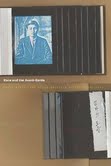 Race and the Avant-Garde: Experimental and Asian American Poetry since 1965
by Timothy Yu
Stanford University Press, 2009
Gwee. Your book Race and the Avant-Garde, published in 2009, gives voice to the racial complications in the poetic avant-garde of America since the 1960s. You strongly suggest that its various formations have never been defined by mere abstract aesthetic principles. How do you describe the gap between white experimental poetry and Asian-American poetry and the development of this gap?
Yu. Part of my point is to question the existence of such a gap–or perhaps more precisely, to historicize the emergence of this gap. I argue in the book that at the time of its emergence in the 1970s, Asian American poetry was highly experimental. Asian American poets had as part of their challenge the task of defining what an Asian American poetic voice would sound like. So they experimented with different forms, styles, and influences. And I also argue that white experimental poets of the same period–particularly those associated with language writing–were quite self-conscious about their racial position. So while these two groups of writers may not have sounded the same, I’m suggesting that they shared similar impulses at the outset.
The idea of a gap between Asian American and (white) experimental writing seems to have emerged somewhat later, when both modes of writing had become more institutionalized, and the idea that Asian American writing was primarily autobiographical and narrative had gotten quite entrenched. In the book, I quote Ron Silliman stating that writers of color primarily want to “have their stories told,” while white progressive writers seek to deconstruct their own speaking positions (i.e., write “experimental” work). The perception of such a gap has persisted. What I tried to show is that this gap has a history and that it isn’t something essential about Asian American or experimental writing.
Gwee. Theresa Hak Kyung Cha is an enigmatic figure for you. Her ethnic identity used to be suppressed in white avant-garde discourse while her experimentalism was overlooked by Asian-American criticism. How is she central to your argument?
Yu. Cha is fascinating to me because, as an avant-garde artist, she was originally not seen as fitting into Asian American literature at all! I quote a number of Asian American critics saying that they initially hated the book and couldn’t identify with it. Later, in the 1990s, of course, Cha’s Dictee, her best known work published in 1982, was embraced by Asian American readers, who hailed it as marking a new moment of hybridity and experimentation in Asian America. But in my view, many still couldn’t quite come to terms with those more abstract or avant-garde elements of the text, instead trying to link it to more traditional narratives of Asian American identity. Cha’s work seems to have this unique ability to disrupt our critical categories, and the reception of her work shows us the histories of categories like “experimental” and “Asian American.”
Gwee. You point to how black experimentalists are able to absorb and deploy a rhetoric of dissent in a manner that escapes Asian-American writers. Does this trajectory not fall back on a measure of cultural stereotyping: eg. Asians are more practical-minded, have an inassimilable, ancient culture, etc.?
Yu. My point isn’t that Asian Americans don’t have a history of dissent and resistance; they do, of course. But many Americans who saw themselves as progressive or radical in the post-1960s era tended to look to the African American example of struggle, particularly in the civil rights movement. I cite a number of examples of Asian American activists quite consciously taking African American activism as their model. Remember that “Asian American” was an invention of this activist era; Asian Americans as a pan-ethnic coalition didn’t exist before that. Of course, white radicals often felt the same anxiety with regard to the African American example; for example, I cite Tom Hayden saying of African American activists, “We should speak their revolutionary language without mocking it.”
Gwee. There is a word you appear to resist using directly in your book: racism. Is there a reason for this? What do you think the scope for such a charge in the various relationships you observe is?
Yu. That’s an interesting observation. I’ve heard at least a few people say of the book that I should have been far less hesitant to label particular attitudes or statements as racist, and that I went too easy on certain figures in this regard. I even read one review that said I embraced a “post-racial” viewpoint! Well, I didn’t consciously try to avoid talking about racism–obviously the entire Asian American political project is an anti-racist one. But if I did avoid labeling certain writers or works racist, it was probably because I wanted to contextualize and historicize rather than to issue an easy judgment. I was more interested in the fact that for Silliman and many other white experimental writers, there was an active conversation going on about race, behind the work and often within it as well–even if some elements of that conversation might create some discomfort as we read it.
It may be true that racism isn’t a major focus in my discussion of Asian American poetry, perhaps because I’m looking at the constructive dialogue happening within Asian American writing (during the 1970s particularly) about the invention of an Asian American voice. Of course responding to racism is a part of that, but it was also a matter of how Asian Americans would address each other in literature and form a literary culture, perhaps distinct from that of the (racist) mainstream.
Gwee. The term “Asian-American” is itself broad, compounding multiple distinct traditions, journeys, and private struggles. Does an insistence on the singularity of dislocation, alienation, and adaption not prove ironically restrictive in some way?
Yu. I certainly wouldn’t insist on the singularity of Asian American experience. I hope one thing I did in recovering some of the history of Asian American poetry was showing how much struggle there has been over its definition and how capacious it has been as a category. Anyone who thinks that Asian American writing is restricted to a limited number of themes probably simply hasn’t read very much Asian American writing. To be fair, though, even most Asian Americans are unaware of the breadth of work that has been done by Asian American writers. Asian American critics have often been as guilty as anyone about returning to the same narratives and the same few canonical works. What I find most interesting in Asian American poetry is its interest in opening aesthetic and thematic questions rather than limiting them.
Gwee. What do you see as the challenges to Asian-American writing today?
Yu. In a lot of ways, Asian American writing is more vibrant than it has ever been. We now have several generations of prominent writers who can serve as models and mentors, a growing number of organizations and publications devoted to Asian American writing, and a truly astonishing number and range of young Asian American writers. What I think leads a lot of younger writers to still feel that being an Asian American writer is a struggle is a continuing sense of isolation–a sense that they are working on their own. One thing that I think can help in this respect is simply more knowledge–an awareness that there is a powerful tradition of Asian American writing out there, and that they can find in it support for almost anything they want to do. Universities are still doing a pretty poor job of informing young writers about this tradition; although the situation has certainly improved, I still find that most young writers are hungry for more knowledge about Asian American writing, past and present. I’d like to hope that as a critic and teacher, I can provide some help to younger writers who are seeking to understand the tradition from which their work emerges.
Gwee: Thank you for this opportunity to engage you and for your insightful answers.
Gwee Li Sui is a literary critic, a poet, and a graphic artist. He wrote Singapore’s first comic-book novel, Myth of the Stone, in 1993 and published a volume of humorous verse, Who Wants to Buy a Book of Poems?, in 1998. A familiar name in Singapore’s literary scene, he has written essays on a range of cultural subjects as well as edited Sharing Borders: Studies in Contemporary Singaporean-Malaysian Literature II (2009), Telltale: Eleven Stories (2010), and Man/Born/Free: Writings on the Human Spirit from Singapore (2011).
Sorry you must be logged in and a current subscriber to view this content.
Please login and/or purchase a subscription.
Sorry you must be logged in and a current subscriber to view this content.
Please login and/or purchase a subscription.
Sorry you must be logged in and a current subscriber to view this content.
Please login and/or purchase a subscription.
Sorry you must be logged in and a current subscriber to view this content.
Please login and/or purchase a subscription.
Sorry you must be logged in and a current subscriber to view this content.
Please login and/or purchase a subscription.
Sorry you must be logged in and a current subscriber to view this content.
Please login and/or purchase a subscription.
Sorry you must be logged in and a current subscriber to view this content.
Please login and/or purchase a subscription.

Waylaid
brought a book
but watch her instead
only the width of the bar
between me and her workstation,
heat of the wood-fired oven
she kneads expertly
her brown fingers slender and sure
but must be in training
while twirling the dough
says shit when she rips it
mounds my green salad too high
popping into her mouth
the fallen leaves
Crow Catching
A few deft steps.
Striking with both hands,
my father caught the crow–
wings pinned,
talons pointed away.
We had been strolling–
my mother and father,
my wife and me.
Their first visit
to our first home,
an apartment overlooking
a dumpster near the levee.
I never saw him
do this before,
though I knew
my grandmother
sometimes made
bird soup.
Performance now,
provision then.
Seraphim
Billy Collins writes of readers
who tie up poems, beat them with hoses,
torture confessions out of them.
But some poems are so strong
they cannot be bound.
We can wrestle with them
like Jacob with the angel,
but they grant us no blessing.
These seraphim–
ropes burn right off their blazing bodies.
Only turn the page and hope
they let us be.
On Eating Peanuts
It only hurts when I chew
on the left side of my mouth.
My dentist tried three times
to fix the offending tooth,
but I will not let him try again.
It’s not his fault. He trained at Harvard.
Who am I to live pain-free?
Now I’ve the opportunity to remember
frailty, mortality. Pain
a part of life, each peanut a jolt
of awareness and sin.
Thomas More had his hair shirt,
I molar #19.
Sorry you must be logged in and a current subscriber to view this content.
Please login and/or purchase a subscription.
Sorry you must be logged in and a current subscriber to view this content.
Please login and/or purchase a subscription.
Sorry you must be logged in and a current subscriber to view this content.
Please login and/or purchase a subscription.
Sorry you must be logged in and a current subscriber to view this content.
Please login and/or purchase a subscription.

Jenna Le’s first full-length collection of poetry, Six Rivers, was published by New York Quarterly Books in 2011. Her poems, essays, and translations have been published by Barrow Street, The Brooklyn Rail, New York Quarterly, Post Road, The Rumpus, Salamander, Sycamore Review, and others. She has been a finalist in the William Carlos Williams Poetry Competition, a Pushcart Prize nominee, and a nominee for the PEN Emerging Writers Award.
Phillips Beach, 6 AM
The moon, to Tantric Buddhists, is a symbol
of masculinity. Watch how he ambles
around the earth, an active little boy
gathering dirt-clods in his grubby hands,
gathering the tides, while the sun smiles blandly
from her throne at the milling hoi polloi.
It’s easy to see these things from the helm
of a boat off Phillips Beach at 6 AM:
the sun cupping her pregnant belly with both palms
the way a pyromaniac cups a flame.
Devotional
With the underside of your whiskered boar,
cast a shadow on my sprouting bean.
Bite a clay pipe while drowsing in my chair,
but no harder than you’d chew your own lip.
When tides submerge the footbridge between us,
send a moth in a box as your proxy.
Mention your wife in your will, but only as often
as you’ve cried out her name in dreams.
In my orchard, the apples wear eyepatches
to hide their brown spots from view.
At the bottom of my wishing well,
a merman half-devoured by sharks lies gasping:
it’s been years since the well has known how to tell
my deepest wishes apart from his.
To an Aspiring Blues Singer
Your voice is so sweet that a heifer in heat
would tan her own hide, just to make you new shoes.
Your voice is so pure, all the butter and meat
in my pantry is yours to devour, if you choose.
Your voice is as green as unripe apple juice
that on your piano keys dribbles and spills.
But you’ll never be able to master the blues
if you think love’s an illness responsive to pills.
If you doubt me, just look at blues music’s elite:
Etta James, the great dame who on old records coos
that blindness is preferable to keen-eyed defeat,
knew all about love’s brutal nature. She knew
neither cigarettes, heroin, Prozac, nor booze
can stifle the pain of love’s porcupine quills.
Knew you’ll never be able to master the blues
if you think love’s an illness responsive to pills.
Or consider Ms. Joplin, who, quite indiscreet,
took the stage to lament all the blowhards she’d screw
and be screwed by. Love’s nothing so simple or neat
as a serotonin shortage, eh, shaggy chanteuse?
Love’s no less than a god, the dark twin of the Muse,
and Janis was one of his martyrs, his kills.
Child, you’ll never be able to master the blues
if you think love’s an illness responsive to pills.
I know what’s at stake, what you’re risking to lose:
when folks doubt you’re sane, they belittle your skills.
But you’ll never be able to master the blues
if you think love’s an illness responsive to pills.
Sorry you must be logged in and a current subscriber to view this content.
Please login and/or purchase a subscription.
Sorry you must be logged in and a current subscriber to view this content.
Please login and/or purchase a subscription.
Sorry you must be logged in and a current subscriber to view this content.
Please login and/or purchase a subscription.