‘Between Trauma and Beauty Itself’: Mothers, Memory and Forgetting by JT Tait
Subscriber Only Access
Sorry you must be logged in and a current subscriber to view this content.
Please login and/or purchase a subscription.
Accessibility Tools
Sorry you must be logged in and a current subscriber to view this content.
Please login and/or purchase a subscription.
 Laura McPhee-Browne is a writer and social worker from Melbourne, Australia. She is currently working on what she hopes will be her first book, ‘Cooee’, a collection of echo stories inspired by the short fiction of her favourite female writers.
Wet Towards the Waterfall
for Silvina Ocampo
We fell in love quickly, he and I. That was certainly my way, to dive in without testing the water with my toes, to sweep up the consequences, later murmuring, “well at least I lived”. For him I could sense that it was an abnormality; that he was in above his head, that he was used to taking months where we were taking hours. But there was never a question of stalling, of taking
=================================Sorry you must be logged in and a current subscriber to view the rest of this content.
Please login and/or purchase a subscription.
 Paul Dawson’s first book of poems, Imagining Winter (IP, 2006), won the IP Picks Best Poetry Award in 2006, and his work has been anthologized in Contemporary Asian Australian Poets (Puncher & Wattmann, 2013), Harbour City Poems: Sydney in Verse 1888-2008 (Puncher & Wattmann, 2009), and the Newcastle Poetry Prize Anthology, 2016 (Hunter Writers Centre, 2016). Paul teaches in the School of the Arts and Media at the University of New South Wales.
The Wreck of the Heartland
You have chosen your compass for this voyage.
It is not the fixity of the astronomer’s chart –
the neck-craning gaze of the brilliant night.
It is not the arrow that aligns itself to those
distant winters in your palm. It is the ebb-tide
below you, the bloody chamber that tells you
with each rushed second that you are alive
for now. It is constant in its fickle desire.
You will pursue this course beyond the
wreck of the heartland, into the spittle of the ocean
into the blue eyes of the horizon, the slaughtering
waters beneath you. Good night,
good morning, and good night again, you say
because the electricity that sundered the sky
that once, that dawn, is enough, and all.
Sorry you must be logged in and a current subscriber to view this content.
Please login and/or purchase a subscription.
Sorry you must be logged in and a current subscriber to view this content.
Please login and/or purchase a subscription.
Sorry you must be logged in and a current subscriber to view this content.
Please login and/or purchase a subscription.
 Exhibits of the Sun
by Stephen Edgar
ISBN 978 1 876044 88 6
Reviewed by DAVID GILBEY
‘… the sinople eye of a butterfly wing …’ Sarah Howe
Edgar’s poetry is like that – detailed, deceptive, minutely crafted, significant and changing – implicating both the watcher and the watched. In Sarah Howe’s ‘Two Systems’ lecture at Harvard’s Radcliffe Institute last year, speaking of her own poetry’s slippage between different cultural and historical referents, she cited Heather McHugh’s dictum ‘All poetry is fragment … shaped by its breakages at every turn.’ Edgar’s is like that too: shardish, provisional, ‘hispid’ (to poach one of his clever, obscure words).
=================================Sorry you must be logged in and a current subscriber to view the rest of this content.
Please login and/or purchase a subscription.
Sorry you must be logged in and a current subscriber to view this content.
Please login and/or purchase a subscription.
Sorry you must be logged in and a current subscriber to view this content.
Please login and/or purchase a subscription.

 Fragments
by Antigone Kefala
ISBN 978-1-925336-19-1
Reviewed by DIMITRA HARVEY
Stark, radiant imagery; lean punctuation; the slightly disorienting effect of the syntax; an imaginative vision of sensuous waking life enmeshed in subterranean realms of memory and dream, struck me on my first encounter with Australian poet Antigone Kefala’s work: an English-Greek bilingual edition I stumbled across several years ago containing selections from each of her then published collections, The Alien (1973), Thirsty Weather (1978), European Notebook (1988), and Absence (1992). Fragments (2016) represents Kefala’s first collection of new poems in more than twenty years. Like those earlier collections, Fragments effects Banksy’s famous maxim, that ‘art should…disturb the comfortable’.
=================================Sorry you must be logged in and a current subscriber to view the rest of this content.
Please login and/or purchase a subscription.
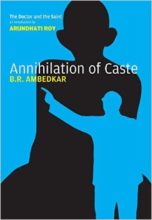 Annihilation of Caste
B.R. Ambedkar
ISBN 9781742588018
Reviewed by ROBERT WOOD
When I was living in Chembur (Bombay) in 2016, there was a statue of a portly and bespectacled B. R. Ambedkar at the end of my street. This suggests he has been lionised in India, if not quite canonised, something aided in ‘the West’ by Arundhati Roy’s well-publicised talk ‘The Doctor and the Saint’ that favourably compares Ambedkar to Gandhi. And so, it was with the contour of knowledge that I opened Annihilation of Caste. I do, of course, come from an Indian family and have parents who were born as colonial subjects in occupied Kerala. But our path to liberation was different from the national story, inflected by a regional identity, a Communist atmosphere and a Catholic bent. So what was I to make of the lessons in Annihilation of Caste and what can we learn from them to make sense of contemporary India?
The Annihilation of Caste was a radical work for its time, a critique too of the establishment as it set about decolonising itself. Its central plank revolves around the negative impact of the caste system as it matters for ‘untouchables’ like Ambedkar himself. This was about the liberation from a centuries old social structure that oppressed a huge number of people. Ambedkar highlights one particular case, where Hindus demanded that Balais (‘untouchables’) follow the rules listed below:
Balais must not wear gold-lace-bordered pugrees.
They must not wear dhotis with coloured or fancy borders.
They must convey intimation [=information] of the death of any Hindu to relatives of the deceased—no matter how
far away these relatives may be living.
In all Hindu marriages, Balais must play music before the processions and during the marriage.
Balai women must not wear gold or silver ornaments; they must not wear fancy gowns or jackets.
Balai women must attend all cases of confinement [= childbirth] of Hindu women.
Balais must render services without demanding remuneration, and must accept whatever a Hindu is pleased to
give.
If the Balais do not agree to abide by these terms, they must clear out of the villages.
Having established this as a fact of dalit life, Ambedkar asks a series of rhetorical questions to political-minded Hindus, namely:
Are you fit for political power even though you do not allow a large class of your own countrymen like the untouchables to use public schools? Are you fit for political power even though class of your own countrymen like the untouchables to use public schools? Are you fit for political power even though you do not allow them the use of public wells? Are you fit for political power even though you do not allow them the use of public streets? Are you fit for political power even though you do not allow them to wear what apparel or ornaments they like? Are you fit for political power even though you do not allow them to eat any food they like?
The effect of this is to pierce the Hindu consciousness, to highlight the inequality through emphasising the basic conditions of India at the time. This political question, or the question of political reform is coupled with social reform and economic reform, thinking through the entirety of Indian society from the perspectives of dalits. For Ambedkar, it is caste that prohibits real progress including the ability to form a truly national society; it is caste that prevents a fellow feeling of social inclusion; caste that inhibits uplift of aboriginal peoples. His ideal social contract is one of true equality and liberty, an India of genuine freedom at all levels of society. To destroy the caste system is possible only with the destruction of the shastras and so Annihilation of Caste ends up being a critique of the holy scriptures of Hinduism itself as well as its material manifestations. This is a critique levelled with passion, logic, panache, flair and evidence. It is written from a truly subaltern perspective and informed by liberalism, freedom and personal experience. Reading Ambedkar today still gives one nerves, hope and possibility.
The caste system is still one of the central aspects of Indian politics, society and economy today. However, and thanks in large part to Ambedkar’s articulation, there is most definitely a self-aware subaltern politics just as there is a broader sectarian/communal question that focuses on religion in general. However, both of these seem to prevent a conversation about gender rather than leading to liberal intersectionalities as they matter in ‘the West’. The true liberation of India must involve the material freedom of women, girls and those who female identify. That is what it is to read Ambedkar now and learn from his example. One can only hope that the opening he makes in the field can lead us away from female infanticide, the negative aspects of the dowry system and towards femme empowerment in the workforce and home as well as making public space safer on the whole. It is not only the annihilation of caste that we seek then but also the annihilation of chauvinism in the 21st century.
ROBERT WOOD grew up in suburban Perth. He has published work in Southerly, Cordite, Jacket2 and other journals. At present he lives at Redgate in Wardandi country and is working on a series of essays.
Sorry you must be logged in and a current subscriber to view this content.
Please login and/or purchase a subscription.
Sorry you must be logged in and a current subscriber to view this content.
Please login and/or purchase a subscription.
 Darlene Silva Soberano is a young Filipino poet who immigrated to Australia at an early age. She is currently completing a Bachelor of Arts at Deakin University. This is her first published poem. You can find her on Twitter at @drlnsbrn
You Like The Smiths?
there’s someone in class today who looks like
you / she’s got the hunch of your back / the
spread of your teeth / & your hair when we
were 17 / but she’s not you / & I’m sorry for
that, but I’m glad, & I’m sorry for being glad /
sorry I never called you again / sorry this is
gonna be the year I don’t forget about your
birthday / but won’t send you a text / sorry
about ignoring you at the party last year / you
know which one / sorry you’ll never be a
passenger in my MINI / when we had so many
memories in my mother’s car / the Christmas
lights on that street in Wyndham Vale / & the
time we sat / singing / to die by your side / is
such a heavenly way to die / all the windows
down / a country road / I’m sorry I never
looked over at you like you always wanted
/ sorry we never got the scene in a film right
before the truck hits the car / I swear that was
never about love but about safety / which I
suppose are the same thing anyway / which is
all to say I loved you from our 15-minute
drives / to our 2-hour drives / & to the trip to
Sydney we planned but never went / & I loved
you when we walked / I loved you when we sat
on your bed listening to Stevie Nicks / singing
/ well, here you go again, you say / you want
your freedom / well, I got my freedom now / &
I listen to Stevie Nicks, still / & think of you /
singing / I’ve been afraid of changing / ’cause
I’ve built my life around you / well, I hadn’t
back then & I still haven’t now / & I’m sorry
for that too
Sorry you must be logged in and a current subscriber to view this content.
Please login and/or purchase a subscription.
Sorry you must be logged in and a current subscriber to view this content.
Please login and/or purchase a subscription.
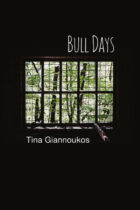 Bull Days
by Tina Giannoukos
Arcadia Press
ISBN
Reviewed by GEOFF PAGE
Tina Giannoukos’s first book, In a Bigger City (Five Islands Press 2005), was a highly evocative and rather unsparing portrait of Melbourne at the time. The observations were close and clear-eyed, the tone generally colloquial. There was also a considerable social range in the poems though many of the protagonists seemed to be somewhat down on their luck.
Giannoukos’s second book, Bull Days, a collection of 58 sonnets, is very different and not just because of the stricter form employed. Sonnet sequences go back to the late Middle Ages and in their contemporary form (where rhyme and consistent line length are not considered essential) they offer poets considerable flexibility as well as an impression of on-going form.
Almost all the poems in Bull Days are written in the first person and are seemingly confessional (though, of course, this may not be the case). As in most of In a Bigger City the narrator is not very fortunate in love and many of the poems lament poor treatment by lovers who have proved to be less worthy than they seemed at first. A few poems are specifically erotic; most are more generalised. Occasionally, as in “Sonnet X” and “Sonnet XII”, the narrator seems to change. In the first we have the lines “These breasts are honey to your eyes, / nipples harden as lips close around them”. In the second we have “Her breasts are honey to my eyes, nipples / harden as lips close round them.”
In other poems the (presumably) female narrator seems to identify with a bull being slowly tormented and killed in an arena — along perhaps with mythical suggestions of the minotaur. The last ten lines of “Sonnet XX”, for instance, do much to explain the book’s title and dramatise the “lover’s complaint” theme that runs through most of the collection. “Sex is not easy, but it is natural. / I am your bull charging you and you, / a working matador, show your control, / drive the steel into my heart. / When you removed your blackwinged hat, / recall her to whom you dedicate this bull’s death. / What trophy to keep? My ears, my tail, my hooves? / No, throw the body parts to your sweetheart. / I hope she hurls flowers at you for it. / The crowd will wave their handkerchiefs.”
To some readers this extended metaphor will be poignant and effective. To others, it may seem excessive as do some of the book’s metaphors to this reviewer. I think particularly of “the mellifluous alphabet of ache” (“Sonnet XV”) or the simile “his sensuous fringe / like blond rivers of yearning” (“Sonnet XXIII”).
Not all of the book, however, is at this level of emotional drama. Occasionally, Giannoukos returns to the colloquial which was such a feature of her first book. “Sonnet XVIII”, for instance, begins with the feisty lines: “All this politicking. It’s a sign. Yeah! / Nothing in it if you’re single. Fuck! / Thirty per cent of women live alone. Whoa! / Let’s work out a way to tax silence. Cool!” Bull Days could probably have benefitted from a little more of this kind of thing.
“Sonnet XXI” is also a welcome change from the tearful and revisits the talent for sardonic social observation which characterised In a Bigger City. At times the integration of dialogue and clever rhyming is reminiscent of Sydney poet John Tranter’s skill with the form — and it’s no coincidence, perhaps, that twelve of this poem’s lines rhyme in the way one might expect. The first four lines establish the tone: “ ‘At the café? Eat in? Or take-away?’ / Oh, that’s my lover being open-handed. / That’s fine for him. He says it’s so passé / the wine-and-dine obsession. I’m branded … “
Taken as a whole, Bull Days, has the flexibility and variety we have come to expect of the sonnet sequence over the centuries. It has more than a few entertaining moments, as the above indicates, but it also strays into the over-written at times. Some readers may complain (in an old-fashioned way) that most of the sonnets don’t rhyme and that many don’t use the pentameter consistently but these features operate mainly to enhance the book’s diversity of tone and manner — which is considerable.
It’s an interesting exercise, on finishing Bull Days, to look back over the opening lines and see what they promise. “Sonnet II” starts: “When you touch me it is the hand of God”. That sounds a bit grand. “Sonnet XLIX”, on the other hand, begins: “My lover is shitty-eyed” and goes on engagingly to point out that: “He will not sit with my friends, whom he calls amoral, / so he sits alone relishing his principles. Now he’s forlorn / and a hypocrite, enjoying surreptitiously / the wobbles of the waitress’s sallow breasts.”
It is in poems like this that Giannoukos is at her artful best: those alliterating “w” sounds (“wobbles of the waitress’s”), the hissing onomatopoeia of “surreptitiously — and so much of the narrator’s irritation and resentment packed into that single word “sallow”.
It is also good to to see the Melbourne-based Arcadia imprint making one of its relatively rare excursions into poetry on this occasion.
GEOFF PAGE’s 1953 (UQP) was shortlisted for the 2014 Prime Minister’s Literary Award for poetry. He lives in Canberra and has published 21 poetry collections, as well as novels, memoir and biography. He edited The Best Australian Poems 2014 and 2015 (Black Inc.) Hard Horizons is forthcoming in 2017 from Pitt St Poetry
Sorry you must be logged in and a current subscriber to view this content.
Please login and/or purchase a subscription.
Sorry you must be logged in and a current subscriber to view this content.
Please login and/or purchase a subscription.
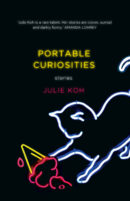 Portable Curiosities
By Julie Koh
University of Queensland Press
ISBN 978-0-7022-5404-8
Reviewed by Stacey Trick
“There is something wrong with those who won’t see the laughing, and something is wrong with those who won’t see the crying. Don’t play dumb with me, China Doll.” ~ ‘Sight’ in Portable Curiosities.
The short story form, historically, has been regarded as a literary art form in its own right that often creatively explores the zeitgeist of a particular time and the psyche of the human condition. Throughout history, celebrated writers have often influenced a fixed supposition in their reader’s imaginations. When we think of Ernest Hemingway, the trials and tribulations of being a poor
Sorry you must be logged in and a current subscriber to view the rest of this content.
Please login and/or purchase a subscription.