Carol Chan
Subscriber Only Access
Sorry you must be logged in and a current subscriber to view this content.
Please login and/or purchase a subscription.
Accessibility Tools
Sorry you must be logged in and a current subscriber to view this content.
Please login and/or purchase a subscription.
Sorry you must be logged in and a current subscriber to view this content.
Please login and/or purchase a subscription.
Sorry you must be logged in and a current subscriber to view this content.
Please login and/or purchase a subscription.
Sorry you must be logged in and a current subscriber to view this content.
Please login and/or purchase a subscription.
Sorry you must be logged in and a current subscriber to view this content.
Please login and/or purchase a subscription.
 A.K. Kulshreshth has had stories published in two anthologies of new writing (Bear Fruit, Singapore, 2009 and Silverfish 4, Kuala Lumpur, 2003) Muse India and Asia Literary Review. He holds Bachelors and Masters degrees in Engineering and a Ph.D. in Management.
Innocence
He lay on his belly, fifteen feet above the ground. The ants floated down gracefully, some of them drifting a bit with the breeze. They would land on all sixes, take a few seconds to orient themselves and then soldier back to one of the points on their long line.
He was eleven, and this was his favourite spot in their house in an industrial township in the middle of a jungle in East India. He lay still there, not minding the sun on his back or the hard concrete of the roof barely carpeted with tar below him. Once in a while he would cross and uncross his legs. His chin rested on the fingers of his left hand. At random intervals – when he felt like it – he let his right thumb twitch and get out of the way of his middle finger which had been straining against it. Another ant would be neatly dispatched. It was important to do it neatly. There was time.
There was a big guava tree in the backyard which he used to climb up to the roof of the house. There was another route along the ledge which he used to climb down, and then cross over a small boundary wall to the roof of the servant’s quarter. From there he would move on to the big boundary wall separating them from the neighbours behind them and get back to the tree which had grown into their neighbours’ space. It made a nice circuit, and he could spend hours moving lazily along it especially in the afternoons before his playtime.
On some days, like that day, there were large black ants. He used to tick them off the roof and watch them floating down. You couldn’t fool around with the red ones, and the small black ones were no fun. With the large black ones, you had to be careful and get the action right so that they couldn’t bite you. It hurt like hell if they did. But over time he had mastered the art of flicking the ants off the roof, with an action like a carom stroke. They were so small, and they were pushed off firm ground into thin air and made to drift through a distance which must have seemed enormous to them. It fascinated him that it didn’t seem to matter to them. They didn’t get into a group and attack him, and sometimes he used to wonder why. They would just meander a longish distance so that he couldn’t get to them any more. He didn’t ask his parents about it – may be because he didn’t want to tell them about the game he had invented.
He had left his Bata slippers on the ground below him. Only an idiot would navigate the crevices, stumps and holds of that circuit unless he was barefoot. His slippers had worn unevenly, tapering to a jagged sharp edge at the end where his feet had outgrown them. The balls of his feet had ground hollows into them. The hollows were blue like the straps and the rest of the soles were a muddy white. He wore a brown cotton T- shirt which had once been carefully tucked in to his dark blue shorts as he changed out of his school uniform.
He lay at one corner of their roof. To his right, there was a narrow concrete side lane followed by a stretch of domesticated greenery. Here there were trees at regular intervals, surrounded by decorative latticed brick walls which were taller than him, and which he sometimes climbed over when they played hide and seek. Further right there was the road which marked the end of their township. It was narrow but smooth, unlike the roads outside the township which were wider but mostly run down. In the township, the roads were neatly lined on both sides with red gravel. After the road, there were the electricity and telephone lines. Still further to the right there was the storm water drain with gentle slopes. He had navigated his Atlas cycle into it when he rode it the first time without support. He had left behind his cousin who was pushing him and he didn’t know how to get off it. After the drain, there were the remnants of the thick jungle of mainly saal trees which had been razed to make place for the factory and the township.
At the crossing a few hundred metres below his feet, a concrete signpost announced the names of the roads. Long Road. Ridge Road. There weren’t too many roads actually, in that small township, but they were all announced proudly.
To his left, and above and below him, there were neat rows of houses. In his part of the township, they were built on eight hundred square yards each. The company was still doing well, and the houses and signs were kept gleaming most of the time. Every house compulsorily had a neat lawn in front, and a kitchen garden in the back. Their kitchen garden was dominated by the guava tree, but they also had two papaya trees, a lemon tree, tomato plants, the sacred basil plant, curry leaf, peas and a few plots of coriander and mint. Across the big boundary wall, there was an equally diverse garden but it did not have a single big tree dominating it.
To those who grew up in these industrial towns which dotted the country, even those who left early as some factories closed down, the time they spent there has a magical quality. The intervening years have tinted their memories so that they mostly remember the culture as an uber-cosmopolitan, super-civilized one. He doesn’t argue about it, but he’s not sure he wants to live in a “township” with his colleagues.
Anyway, he was up there, and that was when he got the feeling the first time – the feeling you get that someone you haven’t yet seen is watching you. He has got it a million times since then, but for sure that was the first time. By some magic, you choose between all the degrees of rotation available to you and zero in on the right direction to look at whoever is looking at you.
He saw the maid Sandhya who had stopped coming to their place – he didn’t get to know why. She was still working with their neighbours who lived behind them. She had just plucked a few guavas from the tree with a bamboo pole.
The pole was still in her hands and the guavas were in the fold of her green sari. They hadn’t made the thud of landing on the ground because she had got them in to fall into a pouch she made with her sari. He had seen her do that earlier.
There was this time when he had got whacked because of her. He and his friends used to cycle a lot. He had a red-and-white Atlas cycle to start with, and much later a black Sen Raleigh. The jungle at the edge of the township had well-worn paths through it where people and animals had passed through. They cycled through the jungle to reach an abandoned shooting range. The range was a twenty- feet- high brick wall supporting a mound of mud, and a field in front. They climbed the mud hill and found the shells of cartridges embedded in the mud. They went cycling behind the nearby government hospital, and saw a dog carrying a small skull away. These experiences were their deepest secrets, and they whetted their risk- taking ability. The parents didn’t mind, or may be they forgot to tell them. Once they decided on a stretch target and headed for the hill at City Centre. He did the trip when he went back many years later. It is about three kilometers, and the hill is piddly. Back then, it was the farthest they would have been ever, without an adult or a Dada or Didi accompanying them. You not only left the safe haven of the township, but also crossed another township and drove along the infamous Grand Trunk Road. They made it to the hill and back, but Sandhya saw them on the way back. Of course he got whacked by his mother, and so did his friends by their respective parents. They were forbidden to leave the township after that. A child had died in road accident a while back. Sandhya later told him that she had to tell his parents because it just wasn’t safe for him. She stroked his head.
And then there was the other time. She had been bending over to grate some mangos once and he couldn’t take his eyes off her soft curves. It crossed his mind that she had had them all along but he had never looked. He knew he shouldn’t be looking now but he couldn’t stop. Then suddenly she had looked up straight into his eyes. He had felt an uncomfortable flush come over him and the stiffness happened. They looked at each other for a few seconds and then he turned his gaze away, but not before he saw that she smiled at him. It wasn’t a smile of malice or mockery. There was something about it which made him realize that she was amused but she didn’t look down on him. She had stopped coming to their place a little later.
He didn’t actually think about either of these incidents as he lay on the roof that afternoon. But they were a part of him, like a snake and a ladder on the path to that point in his life.
He had been pretty still in that corner up there, with only his head projecting from the roof so that he could watch the ants floating down. She probably saw him when he moved a bit and then their gazes locked. Her eyebrows rose and her jaw dropped. From that distance, he saw furrows form fleetingly on her forehead. Then the furrows disappeared and she lowered her gaze. When she looked up again, she stared calmly at him. They looked at each other for a while. There was the distance between them, and the wall.
He doesn’t know how long the moment lasted.
His face broke into a smile. She didn’t smile back, but something changed in the lines of her face. They became softer. She unfroze and disappeared effortlessly. The green of her sari melted into the trees.
Glossary
Saal – species of tree found in Eastern India and other parts of South Asia.
Dada – elder brother.
Didi – elder sister
 Everyday Static
by Toby Fitch
16 pages
Reviewed by ASHLEY CAPES
There is a fascinating tension in Toby Fitch’s Everyday Static, where beauty is wrung from points where the cityscape and the natural world intersect. On one hand the city is a great provider of poetry for Fitch, both through its parade of objects (especially objects of transit, like trains and cars, even shopping trolleys) and the way it stars in many of the poems within. At the same time he presents the city as a place accented by the images and hints of the natural world, where it presses in and survives, in mountains beyond busy harbours, in rain, in clouds, sunbeams and the moon.
The opening poem “On the Slink” embodies this idea, where the owls are placed beside wires, alley cats beside bottles in gutters
Sobering up, a breeze –
if I cast a stone up through the air,
between the wires, the tooting owls,
beyond the rooftops
into the twisting funnel of stars –
I could almost crack open the night
and swig
Set against the natural world is the street, with its traffic jams and stoplights and gutters, like a great, frozen urban river. An undercurrent to the collection is the theme of movement suspended, or even denied. Fitch places the reader inside the car in poems like “Tangents”, “Everyday Static” and “Junction” or within adjunct spaces, beneath lampposts and walking the streets, effectively trapping us in the narrative. It reveals a real disappointment when such movement is denied, a place of potential that has become but a place of traffic jams and bottlenecks. We look through his windshield and feel the same city
Driving along alone
between unforgiving buildings,
raindrops flicked up by tyres,
airwaves breaking
like rain on a windscreen
from “Everyday Static”. In “Junction” we see traffic “piled up in the rearview mirror/like a whitewash of words/none of which can tell me the right way.”
But in the street, in the jam, in the collection itself even, water is often a saviour. A titular poem “Everyday Static” exemplifies this, where the crush of routine and being trapped with flat tyres and tired windscreen wipers, is challenged by the water, which holds the potential for escape:
the world at water level as we pulled up
and gazed out into the harbour,
mountains and rain dissolving in lumpy waves
and in “Reaching Out” where we might
scale the ocean’s abyss,
soar up, above,
beyond the last port of call
and leave behind
a thousand thoughts,
a hundred hearts,
ten nicknames
Fitch’s poems possess strength of imagery and metaphor, one that lies often in their unexpectedness within the context of a given poem. In fact, it’s really pleasing to see such inventiveness, such surrealism at times, in the pieces. Perhaps my favourite stanza in the collection (from “The River Seine”) reveals this skill best “you can see the horn-sounds/as colour above the river.” “Floe” is another example, we are given an ocean liner wedged in “fat” ice within a “skull full of hard rain” or the “wheezing stars” from “Irritations” and in closing poem “Winded on a Trampoline” an explosion of colour:
I clutch at clouds, burn my brow on sunbeams, lick blue moons with a rainbow scythe.
“Meanwhile”demonstrates the same stunning imagery, where falling snowflakes are “emptying the sky of stars” which are later thrown like “great shooting snowballs.” “Meanwhile” is one of the poems in the collection, which stands out, partly because we catch a glimpse of Fitch in a more relaxed frame as a writer, and the poem is beautiful in part due to this lessening of tension.
Everyday Static is cohesive collection of fourteen short poems that develop an undercurrent of struggle between movement and stasis, city and natural landscape, one that impresses not just with the narrator’s role within the themes, but with its attention to image, juxtaposition and metaphor.
 Felt
Felt
by Johanna Featherstone
14 pages
Reviewed by ASHLEY CAPES
Johanna Featherstone has collected an intimate group of (mostly) short poems in her chapbook Felt, poems that explore the personal and universal with a welcome attention to detail.
Take the opening poem “Expectant”, which reveals that attention to meaningful or evocative detail that is a hallmark of the entire collection. It offers a gentle beginning on a beach where “boats nose the horizon” and small hands collect objects hurled up by the deep. The short poem is like a film or an experience, where we as readers see a clean moment in time without having it described to us. It is this deft touch that I enjoyed so much throughout the collection, a touch that draws memory from the reader, linking it to the poetry.
Featherstone’s imagery is often an effective mix of the abstract and the beautiful or the innocent and the worldly. “Argyle Diamond Mine”, “Toyko Metro” and “Bedside Table” are but three which rely on such juxtaposition. The miners in “Argyle Diamond Mine” for instance, hide walls “stuck with glow-stars and fast-car posters” but are also presented as dealing stoically with the realities of adult life, where “…each man de-underpants/for the shower, swaying as he shaves and soaps free grit/from under the hood of his penis.”
In the meditative “Bedside Table” we see the world around a nursing home described most convincingly, through Featherstone’s use of colour, enjambment and her haiku-like eye for detail
Waking up in the same space teeth
brush after teeth brush, from below, a
gentle snare drum swish,
the ground is being
patted and brushed in ‘shhh’
steps: fluorescent green vest of a mammoth
council path sweeper, against
a newly popped orange rose.
The other great strength Felt possesses is its heart – making ‘Felt’ an apt title. The autobiographical elements of the chapbook are not self-indulgent; they balance personal remembrance and universal detail. They reveal a poet aware of language’s power to stir emotion, especially when it is used to describe objects which take on new and different meanings after momentous events, like the beautiful portrait of “Woodwork Classes” or “After the Funeral”, which hits hard
Toiletries, wallet things,
collected from the hospital, weigh down the single bed
that recently held his butterfly body…
…Fuzz settles on rubbish bags
packed with his clothes, ready for the tip.
A sense of loss and the sharpness of memory are themes returned to throughout the collection, usually as they can be applied to immediate family groups or friends. In “Mother looking into her son’s bedroom” the idea of loss is many-fold, but most interesting is where Featherstone includes the heartbreak associated with lack of mobility. The poem touches on the struggle associated with ‘care’ and weaves through memories that heighten the loss
After decades of friendship, he remains bedridden. Once, with a surfer’s frame, he’d ribbon through Bronte’s tides. Every Saturday, with friends, fry eggs on hot, waxed boards.
Featherstone places my favourite poem “Toyko Metro” toward the end of the collection. This compact but richly poetic piece stands out the context of surrounding pieces, by nature of its subject matter. It does not deal directly with family, but rather places familiar people within a snapshot of Japan’s train system; schoolgirls, “palm-sized grannies” and “loyal businessmen.” Here, as elsewhere, the poet’s descriptive skill holds attention
Thigh-high in uniforms, a posse
of pigeon-toed girls flirt through text
messages & languid blinks
palm-sized grannies fold into bows & nap
alongside loyal businessmen who store
years of sleep in bags beneath their eyes
everyone dreams between stops
on these overpopulated trains,
silent as chopsticks on rice.
The poems in Felt are refreshingly free of conceit to my eye, poems written with care and respect, wasting no syllables and punctuating for clarity. It would be interesting to see how Featherstone might bring the strength of her economy, restraint and tact to longer narrative pieces.
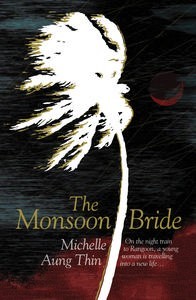 The Monsoon Bride
by Michelle Aung Thin
ISBN 9781921758638
Reviewed by Paul Giffard-Foret
Politics of Desire and the Colonial Machine
In the much politicised and somewhat romanticised discourse around present Burma (a.k.a. Myanmar) in the Occident, Michelle Aung Thin in her debut novel The Monsoon Bride has chosen to explore the nation’s British colonial past instead in such a way that encourages the reader to trace a historical lineage of oppressive power structure between the current Burmese military-based dictatorial regime and the colonial state that preceded it.
Michelle was born in Rangoon, Burma, and moved to live in Canada with her family as a child. She completed her PhD in creative writing in Adelaide under the supervision of Australia’s acclaimed author Brian Castro, and now lives in Melbourne. The Monsoon Bride is the product of her doctorate. Like Castro, her novel demonstrates a strong interest in questions of identity, belonging, and hybridity.
Two of its main characters are from mixed-raced, Eurasian backgrounds. This “third field” of vision is I believe what allows Aung Thin’s novel to distance itself from traditional Orientalist narratives of Burma and the East more generally, as well as from “nativist” discourses of authenticity which in the politically-charged context of Burmese intestine wars is a potential asset and the producer of valuable critical insights.
Chiefly drawing from family tales and personal research rather than memory or the actual experience of living in Burma, The Monsoon Bride is not a historical novel, but rather a fictionalised account of life in Rangoon in an attempt at capturing what Aung Thin herself describes at the time as ‘a very vibrant city [with] different people from all over the world who’ve come to make their fortunes.’[1]
The year is 1930, in an in-between time of ontological uncertainty directly following the stock market crash with the rise of Burmese independent movement and the gradual decline of Britain’s colonial grip over Burma’s internal affairs. Not incidentally perhaps, as Aung Thin commented elsewhere, an earthquake happened in 1930, a year she sees as ‘formative’, for ‘those are the pressures that have created the Burma that is there today.’[2]
In the words of Mary Callahan in her political essay on ‘Myanmar’s perpetual junta’ published in New Left Review, ‘the [British] decapitated the indigenous social order, and instituted a policy of ethnic divide-and-rule – ‘martial’ frontier races against the centre – that was extreme even by imperial standards.’[3] As she adds: ‘If the military and jurisdictional division of the country had first been imposed by British colonialism, its continuation after independence represented both a political and a moral failure on the part of the Burman-dominated state.’[4]
Nationalism
With such legacy in mind, The Monsoon Bride, like most postcolonial fiction, remains wary of the nationalist project that led to independence. As an illustration, Aung Thin’s depiction of the nationwide Dobama Asiayone, or “Our Burma Association”, formed in 1930 and mainly composed of students and lawyers, is particularly scathing. The association aimed ‘to promote unionization and worker-peasant solidarity [against the colonial administration] and was in the forefront of the strikes and demonstrations of the time.’[5]
So at the start of the novel, Winsome, a convent girl from the countryside recently married off to Desmond, of mixed-race too, finds herself submerged by a seawave of protesters marching in the streets and shouting ‘ ‘we’ (or maybe ‘us’) and this we/us was repeated again and again.’ (30) The sense of collectivity, of ‘be[ing] one among so many,’ (31) is however called into question as she realises how ‘we/us so easily might mean not-you.’ (30)
The individual’s dilution into ‘one seething skin, born from that one voice, we/us’ (31) in which she felt entirely alone (31) gives way to a larger critique in the parodial mode of the Thakins’ movement (meaning ‘master’ in ironic defiance of the British’s paternalistic attitude towards the colonised) and the Marxist project to which they subscribed.
Of middle-class background, highly educated, some of them in London, and with ‘an unwavering faith in ‘progress’ and modernity,’[6] as Callahan argues, their portrayal by Aung Thin in turn reduces them to “mimic men” – ‘ for they were all men…black men, brown men, yellow men…hard-eyed with thin, pinched faces’ (30) – with ‘no centre and no direction’ (32) and who play at being, rather than are, communists, as evident in one of the rare women present at the demonstration and the speech she delivers to the crowd:
‘My friends’, came the girl’s voice through the megaphone, a little reedy for being further away, ‘my comrades, we share a cause.’ There were jeers from the labourers – comrades, they would be laughing at the very idea – but of course this did not deter that steely young woman, who merely adjusted the angle of her attack. ‘Wealth,’ she cried, ‘is the foundation of all power. And we shall be poor no longer.’ (32)
Desire
Contra the “Great March of History” and the big narratives of modernity, Aung Thin as a writer with an interest in subjectivity and interpersonal relationships instead articulates in her novel what may be defined as a politics of desire through focusing on the triangular love affair between Winsome, Desmond, and his British employer Jonathan Grace.
The novel however does not fall into the postmodernist trap of removing the Subject from history or agency. Personal desire is primarily shaped by external factors, colonialism in particular. Such is in effect the driving force and law of (e)motion behind the characters’ actions – what constitutes in the incipit a metaphor for those “lines of flight” that Winsome seeks as she boards the train toward a new life in Rangoon:
She had felt a violent lurch to the left and when she looked out the window into the dark night, there was the gleam of a new track running along them. That glimmer was a sign the city was close and indeed she could feel this imminence in the train’s momentum. ‘Soon, soon, Rangoon, Rangoon…’ (3)
Perhaps Aung Thin’s greatest achievement in The Monsoon Bride is the way she powerfully communicates the paradoxical sense of Oriental lethargic spleen and langor, ‘boredom and loneliness’ (18), decay and disease, as well as a feeling of agitation, over-excitement and rebirth, which is not so much symptomatic of Rangoon’s tropical climate as it characterises the stulsifying rigidity, the ‘sucking stillness’ (14) of the colonial theatrical decorum and its stratisfied hierarchies.
This is how Winsome reviews her surroundings at the European Refreshment Room:
Around the room, white men and women in expensive travelling clothes watched from over their own cups while along the walls, behind the boilers, black eyes stared out of impassive brown faces. The bearer waited. Desmond stood stiffly, his arms at his sides. (14)
Ultimately, both are forced to leave since they do not fit into the picture, neither black nor white.
Within the colonial machine, based on ‘an ‘us’ and a ‘them’ maintained by a small set of rules’ (188), desire – the desire for transcendence, for love, for being able to reach the ‘Other’ – occurs through simultaneous ‘revulsion’ and ‘desire’, ‘one so like the other’ (104). Colonialism and the longing (and fear) of becoming-other – ‘between here and that other life, like the space between one heartbeat and the next, the difference between who you were and who you might become’ (190) – is what pushes Winsome and Jonathan towards each other and what eventually pulls them apart.
As newness enters the world toward the end of the novel, and as Jonathan and Winsome are forced beyond the illusion of romance to confront hard facts, love is temporarily stripped bare of its social weight to become “pure” desire: ‘He moved his hands across her lips, over her hair, her breasts, he rubbed his face against her skin, his fingers searching for this new woman, measuring her against the one he had known.’ (223)
Again, desire in the novel is not merely sexual, but (bio)political. Such is the strength of The Monsoon Bride that it always associates physical desire with the lack of, or hunger for, a world beyond the colonial machine: ‘There was a word for it, a word like poverty. Paucity. That was it. She would have said it out loud if he had not been beside her. It meant not enough, never enough.’ (136) The impending Burmese revolution itself is in fact driven by a politics of desire.
This is how Winsome’s employer, a respected Burmese photographer and a representative of Rangoon’s aspiring middle-class as well as a supporter of the Thakin Movement, describes her sojourn in Europe: ‘It was not awe that she felt among those much lauded icons of their civilisations, not jealousy either, but something worse; it was as if she had lived through a famine and could never again have enough to eat.’ (161)
Becoming-woman
In her essay, ‘The Name Game’, Michelle Aung Thin expressed her fear that the word ‘bride’ in the title of her novel may seem too ‘girly’: ‘You see, while I write like a woman I find that I am worried about being read as one.’[7] Like her female character Winsome, Michelle’s writerly journey is driven by a similar desire to subvert socio-cultural expectations of a woman (writer)’s place, and her awareness that ‘only a fraction of women are reviewed in the major literary magazines compared to men.’[8]
In this regard as in many other aspects, The Monsoon Bride is a immense success. As for Winsome,
These were heaty days, when something in the thick air loosened her joints and razed her judgment so that she looked when she should have turned away, stared when she should have cast her eyes down. It was on a heaty day that she first realised Rangoon was a city of men; men pulled rickshaws, drove buses, important men in light-coloured suits rushed along Phayre Street, holding their noses against the smell of drains. White men, brown men, black and yellow men, bunched like so much ripening fruit. She imagined them falling, warm from the branch, onto the flat of her hand. (27)
[1] Aung Thin, Michelle. ‘Interview’.
<http://rastous.podomatic.com/player/web/2011-08-24T18_07_46-07_00>
[2] Aung Thin, Michelle. ‘Interview’.
<http://podcast.3cr.org.au/pod/3CRCast-2011-09-15-70155.mp3>
[3] Callahan, Mary. ‘Myanmar’s perpetual junta’, New Left Review 60, Nov-Dec 2009, p. 56.
[4] Ibid, p. 31.
[5] Ibid, p. 36.
[6] Ibid, p. 39.
[7] Aung Thin, Michelle. ‘The Name Game’. (2010)
<http://wheelercentre.com/dailies/post/ed76a7fe9b16/>
[8] Ibid.
 Every Man in this Village is a Liar
by Megan Stack New York,
Doubleday, 2010 This edition: Scribe, 2011
ISBN: 9781921844096
RRP $24.95
Reviewed by TESSA LUNNEY
As it turned out, the first thing I learned about war was also the truest, and maybe it’s as true for nations as for individuals: You can survive and not survive, both at the same time. (4)
This book is Megan Stack’s education in survival. The quote summarises the Prologue in which she first learns about war through the combat duty and subsequent suicide of her uncle. The survival she is educated in is not physical. Corpses litter the pages, both materially and in the imagination. It is the corpse in the mind and the physical body in the world that she is interested in, how the two co-exist and how to navigate the slippages and cracks between them.
Stack tells the reader where she is going, but it takes a while to get there. She starts out almost as naïve as when she heard about her uncle surviving a bombing in Beirut in 1982 (1). In Afghanistan, in 2001, in the first flush of war with its 9/11 rhetoric, her first war, Stack is preoccupied with truth. Chapter One, Every Man in This Village is a Liar, starts with Stack being sexually harassed by an Afghan warlord who is leading her to stories. This develops into a discussion of the title of the chapter and the book:
Back in Pakistan, before I crossed over into Afghanistan, somebody said to me: “Every man in this village is a liar”. It was the punch line to a parable, the tale of an ancient Greek traveller who plods into a foreign village and is greeted with those words. It is a twist on the Epimenides paradox, named after the Cretan philosopher who declared, “All Cretans are liars.” It’s one of the world’s oldest logic problems, folding in on itself like an Escher sketch. If he’s telling the truth, he’s lying. If he’s lying, he’s telling the truth.
That was Afghanistan after September 11. (9)
Both as an idea, and as a metaphoric representation of eight years in the Middle East, this idea is important. Firstly, due to her lack of experience and her outsider status, there was no way to work out who was lying and who was telling the truth. Secondly, it shows her journalistic drive for a real story, and not just gossip. Thirdly, it sets up the environment where stories of bombings were denied by the US Government and her paper wouldn’t run them, where she was denied access to information because she was a woman, where she could not foresee the consequences of her actions as the regimes she was working within were opaque. Finally, it goes back to the paradox of survival, where the Cretan can be lying and telling the truth at the same time, Stack can survive and not survive, both at once.
Stack’s reportage is well written in clear, concise language that quickly conveys the political complexity and emotional nuance of a situation. Like Geraldine Brooks’ Nine Parts of Desire, it tells stories of the Islamic world from a female perspective, but in a new century, with new wars. It is geographically broad, but tightly focused on the details of the consequences of war in an individual life. By writing about several countries, it departs from the usual trope of reportage, found in such works as Dispatches by Michael Herr or War by Sebastian Junger, where the author takes the story of one conflict and creates a narrative around their tour. Stack’s ‘tour’ was too long and fragmented for such a neat story-telling device, and her journey was not of herself through a war, but herself within war. “The war no longer feels temporary”(237) she writes in the second last chapter. Writing in the present tense, and then placing this sentence near the end of the book, shows that there is no end to the war she experiences, nor to the way of life within it. It is interesting to read this book in late 2011, after the Arab Spring protests and the changes that daily occur in the region. The chapters on Libya and Egypt show a world only just gone, and sketch the fomenting passions of oppressed people. My knowledge of Middle Eastern news is patchy and gained in a haphazard manner, and it was excellent to have this solid, personal context for the events of earlier this year.
The book is subtitled “An Education in War”, and in many ways feels like a series of lectures by a journalist living in the Middle East. Each chapter looks at a different country, or a different aspect of a country, in a region that stretches from Afghanistan to Libya. Iraq and Lebanon feature heavily, with the invasions that tore them apart in the years in which Stack was reporting. Only in the third chapter does she go home, after her first tour to Afghanistan in 2001, and realises that if you are not in sync with your compatriots, home can be a foreign place too. Few of the people she talks about able to move beyond the borders of their own conflict, and therefore also remain bound by their own chapter. But Stack looks at their lives in context, how their lives intersect with her own. In Chapter Fifteen, she writes about Ahmed and his girlfriend, and their view of Iraqi life from the bottom of society. She looks at how she might have endangered their lives simply because they agreed to talk to her. She has no idea what happened to them, and can only write their story as well as possible. This chapter is a tipping point, and in Chapter Sixteen, Killing the Dead, she traces her trauma and pain with firmer lines, using her scramble through the Lebanese countryside as Israeli bombs are falling to chart her own breakdown.
But the education she gives the reader is not on Middle Eastern politics, nor the rise of Islamism, nor the structure of oppressive Arabic regimes. It is on the details of daily life, and therefore the details of mental, emotional and physical survival. Her focus is personal, about a particular constellation of bodies of how she negotiated her way through them. The portraits she draws of the locals who work with her are brilliant, but fleeting. The real subject, as the only constant, is herself, and herself in war.
A focus on oneself, both as a journalist and as an individual citizen, is one of the most exciting things about extended, book-form reportage such as this. The ideal of objective reporting is dropped, and all the intangibles that make a life present in the writing are put back in. We read about the smells and tastes, about the rumour and gossip, about the bad vibes, coincidences and lucky escapes that are not news and, in particular, she writes about how the situations made her feel, charting her emotional progress through the years. In Chapters Seven and Nine we read about a young woman who goes clubbing with her translator, who is high on watching history as it happens. By Chapter Sixteen, we read about her as a much older woman, one who is dealing with the consequences of seeing so much conflict, and who can longer separate herself from her story. This is not done without artifice, and at the end of the book you get a strong sense of the craft of her writing. She talks about her boyfriend Tom in the final chapter, and how he had been present with her through much of her time in the Middle East (245). Tom is her husband in the Acknowledgements (254), so we can only guess at the extent of his influence. Her family is rarely addressed directly, and the same goes for her American colleagues at the LA Times. This is to be expected, but nonetheless shows how her personal, emotional stories are still a crafted political point.
The clarity of her writing in the final chapters gives a perfect summary of this political point:
When the adrenaline really gets going you can’t get sick, you don’t need sleep, and you feel you can do anything. I know when this is over it will be like dying. (230)
It was festival night in Amman… Underneath the cleanness of the non-war, I was still not there. I had survived, I was alive. The shadow of death had passed over my body. But I had left myself there, in the salt and blood and crazy sunlight. (245)
In Iraq, 4,369 U.S. soldiers have died, and 873 in Afghanistan, and more all the time. That is not counting the deaths of local people who are tallied as combatants, or wading in the question of whether they were or weren’t. Either way, that’s six digits of people, dead for a cause I cannot articulate except in the most abstract terms. (251)
That you can survive and not survive, both at the same time. That in war, every man in this village is a liar.
TESSA LUNNEY is undertaking a Doctorate of Creative Arts at the University of Western Sydney. She is looking at silences in contemporary Australian war fiction, and is writing a novel as the bulk of her dissertation. She has previously published reviews in Southerly, and poetry and short fiction in Illumina, Hermes and Phoenix. She lives in Sydney.
Sorry you must be logged in and a current subscriber to view this content.
Please login and/or purchase a subscription.
 This Woman
by Adrienne Eberhard
ISBN 9781876044725
Reviewed by MARGARET BRADSTOCK
As the collection’s title suggests, This Woman is a book of poetry situating the poet within her world. It is female poetry, confessional poetry, celebrating motherhood, children, love, nature and its fecundity and, above all, the significance of place, “where what matters is/ something other than us” (p.66).
The prevalence of Tasmanian landscape in the poems is strong, and conjures up an awareness of the island’s history and geography. “Littoral” links the present, encapsulated in the figures of the poet’s sons, with her own responses to the coastal landmarks:
These two, mushrooms under the faded indigo
of their hats, are the sign posts of her days,
the far-reaches of her paddock marked by
their small figures running……………………
…………………………………………………………
histories, pulling her
like the way they lift their heads to watch
the finger-winged passage of a sea eagle sailing the air,
its territory marked by the nest of young and the far gum tree.
(pp.9-10)
The sequence “Mt. Wellington Poems” goes further back into the past, 10,000 years and more, to the time of Gondwana land’s geology and plants: “This could be airy ground in Africa,/ the cloud-capped Mountains of the Moon” (p.61). A response to the Mt. Wellington Festival of 2002, in collaboration with poets and scientists, the sequence teaches respect for the native flora and an awareness of its history: “This mountain’s history is collection: flanks scoured,/ plants sampled, examined, described and stored” (p.59). The concept is extended and deepened, both literally and metaphorically, in “Managing the Mountain (or Mapping Time”:
yet mapped, on the table before us, the mountain shrinks,
reduced to kilometres of fire-trail, to the homogenisation
of trail head, sign, specification.
What’s being mapped is impact,
the scars of over-use.
(p.66)
A further poem celebrating landscape and its links to the human condition is “Mt Field.” Here the only scars are created by nature, and we are given a glimpse of a prelapsarian world. Death and life, whether of seasons or snowgum limbs, are natural processes in this poem. While the scenario is beautifully evoked, the end-point of anthropogenic destruction is not touched upon, as it might well have been in the contemporary climate. Likewise, “Recherche Bay” pays tribute to the conceptual fecundity of Lahaie’s garden and the imagined response to it of ship’s steward, Louise Girardon, but makes no mention of the Government-approved road and logging project that threatened the site of the garden as a historic feature in 2005.
Two poems, however, might be said to go beyond the idyll of nature undisrupted and extend their horizons in the direction of ecopoesis. The first and most important of these is “Trust,” dedicated to the poet’s husband, his adolescent naming of fish and fauna elevating these to “friend,” a passion later shared by his sons. Now, in an endangered world:
He reads the latest reports, insists they only fish
in waters swept by Southern Ocean currents,
while each day, his sons salvage bones and fossils,
shells and starfish to line their bedroom window sill,
pulling the river one wave closer each time
until at night it laps at their ears and they sleep,
their world too small yet for pollution, poison, extinction,
knowing only renewal, their trust huge in his hands.
(p.20)
In “Owls,” “the insolent slow flap/ of an owl across the bitumen’s sinuous curve” assails the persona driving home at night
she has not seen owls here for three years
their haunting of the dead gum a memory she links
to a time when the future was a bowl of blue sky
and infinity was the rest of their lives
………………………………………………………
tonight a second owl launches into the night in front of her
and she understands she has not lost the future or the past
it is here this feather-claw-beak moment
that she has found
(p.30)
Notable also, by its near-absence, is the issue of Aboriginality in Tasmania’s black history. There’s a reference to a rock-wall hand imprint on p.1, to “native women in this Edenic/ world” (p.57), but neither the harmonious relations between the d’Entrecasteaux expedition and Lylueqonny natives in 1792, nor the horrific massacres of 1824-31, receive a mention.
When it comes to invasions of the landscape of the human body, however, the poet is more confronting. “Breast Strokes” provides a fine commentary on the representation of women’s breasts by traditional male artists, with a contemporary bombshell in the closing stanza on Rembrandt’s contribution:
a silent time bomb: her breast − a million breasts − flowering
with deadly beauty, the cells that lie, tucked
and hidden, shaping the future into which, oblivious, we sail.
(p.29)
Almost a conceit, the poem progresses through repetition of key words, through images of flowers and sailing, to a conclusion which powerfully reverses their expected significance. The centrality of these images is continued in the title sequence, “This Woman”:
She’s not interested
in figureheads, their breasts and tresses
a form of treason, it’s more the way a yacht lies under sail,
its ability to displace, and sometimes plane,
as astonishing as flight.
………………………………………….
A boat knows its own destiny;
this is the most disturbing thing of all,
that in its relentless fracturing
of the blue meniscus that surrounds her,
a boat is more certain of the futurethan she can ever be.
(p.33)
There is the starkness of recognition, encapsulated in spare, hard-hitting language:
The surgeon will take his knife
and chase the trail of spoor, cut and probe, then sew
and rectify. Her breast will follow the knife’s hollowing,
all pertness spent in the sharpness of steel,
falling into itself, as if trying to salvage something.
(p.35)
and the images of violation: “nothing has prepared her for this…blood cells bones clawing each other/ civil war,” followed ultimately by defiant hope: “belief, in everyday miracles;/ anything, the paper nautilus tells her, is possible.” Reliant on the importance of ‘the small personal voice,’ “Breast Strokes” and “This Woman,” taken together, provide one of the strongest poetic statements in this collection. By contrast, “Maze” is an afterthought, its frame of reference from legend and fairytale unconvincing.
Eberhard works best when re-creating the reality of her world, on its own terms. The poem “Vision,” about her son’s colour-blindness, provides an example of this technique. Images and metaphors arise naturally from the subject-matter:
In my son’s classroom the children’s postcards
line cupboard doors, each asked to draw
what they see: 28 blue vases holding flowers,
the 29th, pink.
…………………………………………………………….
the cones of his retina
white-washed into seeing the world awry.
In his drawings, he’s a stickler for detail
as if in its sharpness and accuracy
his brain balances out chroma-deficiency,
allowing 3D perspectives, upside-down views,
a vision unfettered by distance and the quotidian.
(pp.75-6)
Technically, the poet exhibits a penchant for sequences which allow her to explore different aspects of her subject-matter. Some of the images that arise are startling, metaphysical in their implications (“Walking in the wind, it seemed/ as if the world was a knotted/ ball of wool unravelling,” p.3; “This hut is a harbour, hooked to the mountain,/ scoparias and waratahs burning red candles,” p.68; “This rib you found, leached like driftwood/ and light as pumice stone,” p.70). Many are maternal, based on her awareness of the female body and its responses (“the net the fishermen pull/ is full of grief: the stilled voice/ of a new-born child,” p.21; “it’s a journey into time, when the mountain/ was a child sleeping in its mother’s womb,” p.66). Sometimes, this approach results in over-contrivance (as in the poem “Maze”) or the possibility of a clichéd central concept (“Setting Out,” “Bird Song,” “Seeds”). Overall, however, language in the collection is wielded with style and precision, contributing to the shock of recognition that is poetry’s function:
Some words
are like this: when you come across
the right ones, their electric stab
is like stepping into the ocean,
being broken and made whole again,
drawing a body to a different realm
where uprights and verticals are gone,
where sky and water stream in,
jettisoning all the mind’s freight.
(“The Words,” p.43)
Margaret Bradstock has five published collections of poetry, amongst which are The Pomelo Tree (awarded the Wesley Michel Wright Prize), Coast (2005) and How Like the Past (2009). She has recently edited Antipodes, the first anthology of Aboriginal and white poetic responses to “settlement” (Phoenix, 2011). Margaret was Asialink writer-in-residence at Peking University in 2003 and co-editor of Five Bells from 2001-10. She is now on the Board of Directors for Australian Poetry.
 After Gilgamesh
by Jenny Lewis
ISBN 9781907327100
Reviewed by ROBERTA LOWING
It would be easy to categorize After Gilgamesh (1) as a missed opportunity or a token memento. This 64-page paperback is a record of what is billed as the “unique contemporary music theatre production” (2) After Gilgamesh, which was performed in March 2011 by the Pegasus Youth Theatre Companies, comprising of the Pegasus Youth Theatre, Dance and Production Companies. (The paperback, here known as ‘the text’, was sold as a ‘special programme’ at that performance and can be ordered on-line, via the website www.mulfran.co.uk).
=================================Sorry you must be logged in and a current subscriber to view the rest of this content.
Please login and/or purchase a subscription.

Authentic Local
by Pam Brown
ISBN 9780980769517
Reviewed by HEATHER TAYLOR JOHNSON
There is a certain amount of cynicism in a thematic sense but not so much in Brown’s presentation. I don’t feel a harshness of approach to modernity, nor even a flashing warning, however dull it may be. And to say her tone is ‘matter of fact’ is to say there is a certain dryness to the poems, which I don’t believe is present either. Brown presents us with an acceptance of a fast-paced world which blinks with lights and buzzes with electrical currents, which multiplies cell by cell by cyber-cell and does not wait for us to catch our breath and smell the flowers. There are no flowers. And she is okay with that, just as she is okay with having lived in thirty-six homes. Clearly she has found balance and can embrace a materialistic world as easily as she can write poems on a computer.For longer than some of her readers have been alive, Pam Brown has consistently tried to pin down the impossibility of pinning down in her poetry. But not in an existentialist BIG way; rather in a meandering ‘humph’ way. Has Authentic Local gotten her any nearer to a grounded understanding of a cosmic legitimacy? At this point in her career I don’t think we should be questioning it. I think we should trust in the ticking away of her brain and the furious tapping of her keyboard and relax into her style on page one of this or any future book she will write. It’s a journey – a Pam Brown journey – and if you’re looking out her window, there is such a lot to see.
Sorry you must be logged in and a current subscriber to view this content.
Please login and/or purchase a subscription.
Sorry you must be logged in and a current subscriber to view this content.
Please login and/or purchase a subscription.
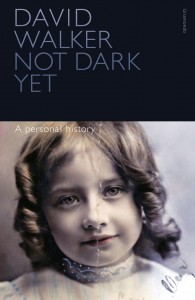
Not Dark Yet
by David Walker
Giramondo Press, 2011
ISBN 9781920882655
Reviewed by IPSITA SENGUPTA
Despite its humour and ebullience, Not Dark Yet has a Beowulf frame of loss, death and violence. Shadows of the author’s memory, his sight and familial love are played out in a mediterranean climate. Not all of the eighteen chapters of this “personal history” are located in Adelaide or other South Australian settlements, though David Walker hails from that state, from where he explores his ancestry.
=================================Sorry you must be logged in and a current subscriber to view the rest of this content.
Please login and/or purchase a subscription.
Sorry you must be logged in and a current subscriber to view this content.
Please login and/or purchase a subscription.
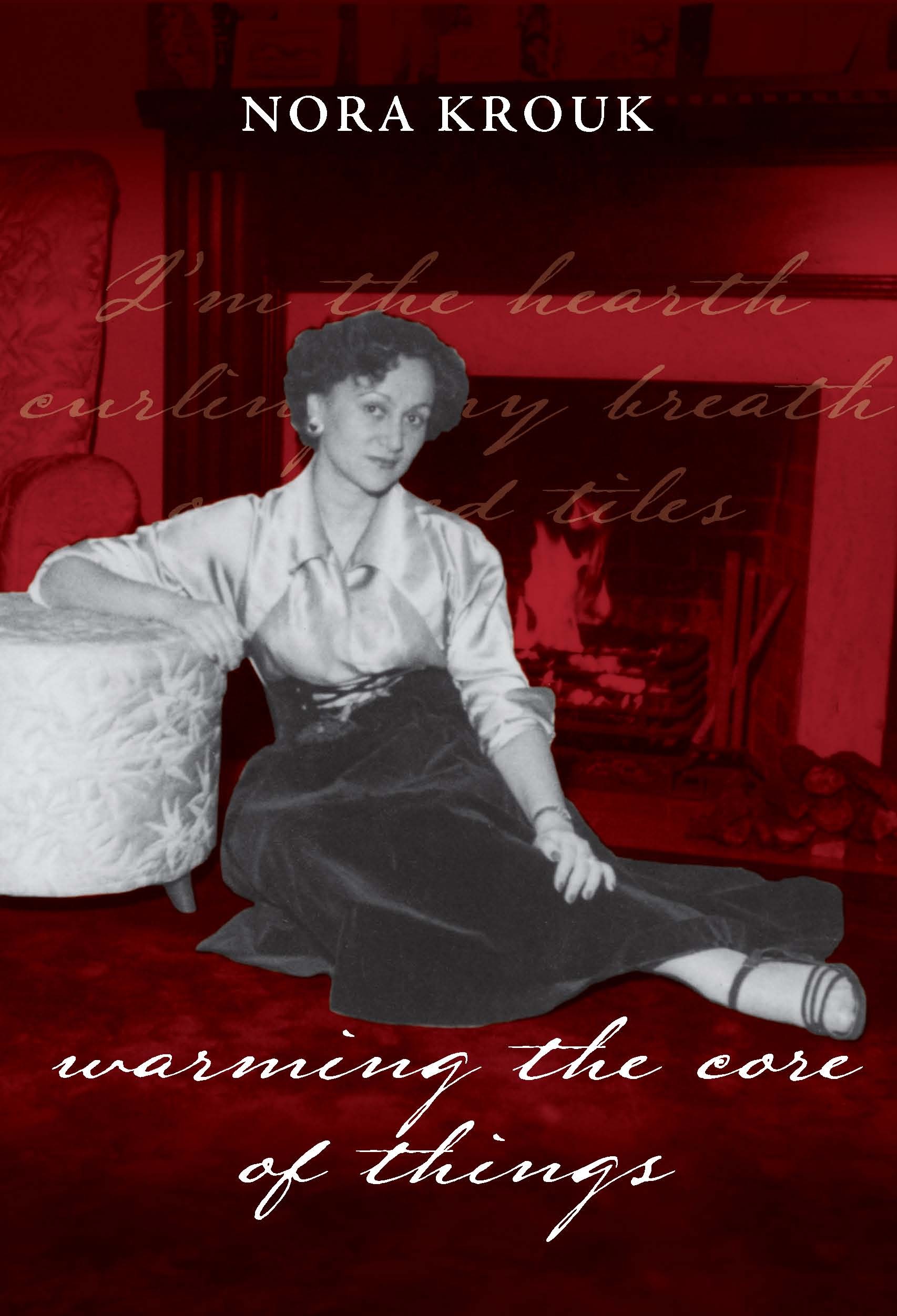 warming the core of things
by Nora Krouk
ISBN: 978192166543
Reviewed by BROOK EMERY
Over the last few months, while all the wise futurists have been forecasting the decline of the book and the ascension of the virtual word, I’ve been thinking about why I’m so attracted to books, specifically to poetry BOOKS, to collections of poetry. I’m not much good at reading poems on the web and I often feel dissatisfied when I read single poems by various authors in journals and anthologies, even in hard copy, even in canon-making anthologies such as The Norton. To me, in these formats poems seem to be isolated, un-contextualised, orphans. I find myself reading one poem after another subconsciously saying things like ‘Oh, that’s not bad’, ‘Yeah, I quite like that one’, ‘There’s not much in this one, is there?’ and flipping (or scrolling) to the next one without really engaging with the poems or feeling involved. I find myself hanging out for a book of poems by the one author so I can get some sense of narrative and coherence, a feeling that the poems speak to each other and enrich each other, a sense of the voice, and personality, and world experience behind the poems.
These considerations came back to me strongly as I was reading Nora’s warming the core of things for the first time. This is a book which invites you to enter and share a life. It is a book which, poem by poem, builds into a unified and challenging consideration of what has been observed and experienced over many years. It is a book in which the overwhelming feeling is ‘warmth’, literally and metaphorically. Such warmth is doubly attractive and welcoming at a time when a lot of poetry is cool, detached, clever, and sometimes seems to have lost touch with that really basic responsibility of poetry to reach out, to connect, and to explore what it is like to be human in our thoughts and feelings.
Warming the core of things is a book which is intimate, confessional (if you like). It celebrates the personal, the familial, and the emotional, it concerns itself with the relationships between people over time. It makes me think of lines from Jack Gilbert’s poem, ‘Highlights and Interstices’ where he writes ‘… our lives happen between / the memorable. I have lost two thousand habitual / breakfasts with Michiko. What I miss most about / her is that commonplace I can no longer remember.’ Like Gilbert, but in a very different way, Nora raises the everyday to moments of insight and appreciation. And like Gilbert, despite what he says about himself, Nora does remember both the ordinary and the extraordinary. Two of the things she and Gilbert remember and feel acutely are love and loss.
The first section of Nora’s collection is titled ‘In Memoriam’ and begins with a delicate poem to her husband Efim who died in 2008. The poem ends with the simple, dignified statement, ‘I miss you’ but this section is no simple, romanticised portrait of a long marriage and the death of a partner. It is clear-eyed, emotionally honest and vivid in its realism. It notes the tensions and ironies and ordinariness in lines such as, ‘she hates to leave him alone / yet itches to step outside’ (‘They are together most days’), in the white chair that waits ‘brazen with coloured cushions’ (‘Slumped in a chair’), in the ‘bare bottoms and other bits’ and the ‘inmates with anguished eyes / [who] search for themselves / [and] stumble over the shards’ (‘Ward 15’). The section expands to take in other deaths, other inevitabilities, and below the surface of them all are the perennial human questions, ‘Why?’ and ‘Couldn’t it have been different?’ Usually the questions are implied but sometimes they are explicitly stated as at the end of the poem ‘Blue Doona’ when Nora asks, ‘Couldn’t you just live?’ It is worth remembering that question from an early poem when you come to the last poem in the book. I’ll say something about this later because it reveals a great deal about Nora’s vision. These poems, these wishes, are moving, touching, but Nora doesn’t live in fantasy, she knows that what happened has happened and nothing can change it or take away the grief because, as she writes in ‘Birthday’, ‘Love is the most pitiless feeling of all’. To really understand the import of this statement, to unpick the relationship between ‘pity’, ‘pitiless’ and ‘love’, you not only have to read the whole poem but the whole collection. Only then will you appreciate the wisdom and emotional intelligence of this collection. Nora is a participant in these poems but she is also the thoughtful observer and interpreter. These are poems in which the border between life and art is more porous than is often the case. It takes courage, assurance and depth to be able to write, ‘My dearest dearest difficult / husband My love’ (‘What should I do’).
The capacity for love leads to an indignity at injustice, especially the injustice done to the individual by the impersonal forces of history. It is there explicitly in some poems and is the context in which the personal happens. Nora has lived a memorable life and she remembers and can see, at this distance, things as they were, that ‘The good times in Shanghai / [were] a 20th century masquerade / as the world burned’. Nora also sees, for example in the poem ‘For Leon K’, how the effects of not knowing – ‘What did they do / before his boots were filling with blood’ – can reverberate through the decades and continue to hurt, even cripple. Nora is witness and rememberer of a father who had to break with his Polish past, of a mother ‘buried in Chinese soil / without a headstone / during the Cultural / Revolution’ (‘A short visit’), of massacres in China, experiments on humans in Harbin, of atrocities committed in war. That the personal is the political is a bit of a silly phrase but Nora’s poetry reminds us that we are all part of events that seem to have happened ‘over there’ or ‘back then’ or to ‘someone else’. Reading these poems we are reminded that no man (no woman) is an island.
Warming the core of things changes gears somewhat in the second section which is called ‘Renewals’. Here the warmth and love which were manifest within the sadness and grief are expressed in a sensual joy in beauty and in a determination to appreciate the bounty of nature. Here the poems are overflowing with wisteria, lavender, roses, gardenias, asters, food, friends, and the warmth of the sun. In the first poem ‘A smile is hovering over our street’ (‘A young woman’), in another ‘this day is / a glob / of honey / a pouring warmth’ (‘Dust on the silver chimes’), in another ‘ Like that butterfly / drunk / on sun / I claim it all: My sun!’ (‘Like that butterfly’), in another Nora is ‘… grateful to Fate / for landing in the sun’. (‘Memory’), and in ‘Shanghai Sydney’ Nora is ‘moving through an amazing puzzle / picking a piece / here on my palm / wishing I knew a psalm / or a prayer of thanks // For everything’ (‘Shanghai Sydney). This section of Nora’s book transforms as well as renews.
If warmth and wisdom are the two dominant qualities of this book, it is the voice of the poems which makes them so attractive. Nora often jokes that her Russian typewriter mischievously makes syntactical or idiomatic mistakes in her poems or, perhaps, even writes the poems without her intervention. I don’t quite believe her because I hear her voice in so many of the poems, in little statements and questions, especially questions. I constantly hear Nora asking herself what she knows, what she has learnt, what she then believed and now believes, what she can do about fate, the inevitable. This is most notable in the third section of the book, ‘Transitions’ in which Nora has a number of conversations with God, humorously wonders about chaos theory and deals with a number of more or less philosophical issues. So many of these poems have a quality of consideration and reconsideration which is made explicit, appropriately near the end of the book, in the poem ‘Once I could plan or act’. This is not dogmatic poetry but the book does grope towards tentative, provisional answers. This testing of ideas can be seen, for example, in Nora’s identification with the sasanqua in ‘Sasanqua in May’
A similar hard-won understanding or, at least, acceptance occurs in the poem, ‘Discussions about God’ where she writes ‘My slender beautiful / jacaranda comes / into bloom slowly / It blooms and sheds / sheds and blooms // Is this the answer?
For me, a baby boomer born and raised safely in Sydney who has not known depression, revolution, war, dislocation, internment, expatriation or, on the other hand, the high, fashionable life, who has taught history but didn’t live it, these poems make me realise how little I know, how little I understand, how little I have experienced.
Here is where you have to remember that early poem.The last word in Nora’s book is ‘live’ with an exclamation mark and that feels appropriate and significant to me. As does the epigraph to the last section of the book, a Ukranian saying, ‘Wishing you good health, warm bread, and peaceful skies’. In its entirety, warming the core of things is full of life; it endorses and celebrates that Ukranian saying.
Sorry you must be logged in and a current subscriber to view this content.
Please login and/or purchase a subscription.
Sorry you must be logged in and a current subscriber to view this content.
Please login and/or purchase a subscription.