Accessibility Tools

Skip to main content

Author: mascara

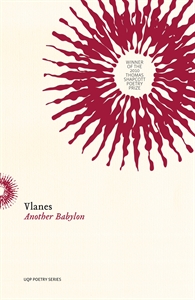
Natalie Owen-Jones reviews Another Babylon by Vlanes

Natalie Owen-Jones reviews Another Babylon by Vlanes

Another Babylon

by Vlanes

University of Queensland Press


Another Babylon is the first collection of Vlanes (or Vladislav Nekliaev); it was the recipient of the 2010 Thomas Shapcott Prize and its author has been a Brisbane-based poet since 2001. His Russian heritage and rich experience of languages remain an intriguing counterpoint to his poems: born in Astrakhan, Russia, he emigrated first to Athens and then to Australia and has an active linguistic life that encompasses not only Russian and English (and, as Jena Wodehouse says in her launch of the collection, he did not step foot in an English-speaking country before he was thirty), but Latin and ancient and modern Greek.

=================================

Sorry you must be logged in and a current subscriber to view the rest of this content.

Please login and/or purchase a subscription.

Continue reading

Laksmi Pamuntjak

Laksmi Pamuntjak

Laksmi Pamuntjak, writer and poet, was born in Jakarta, Indonesia. Author of two collections of poetry, Ellipsis (2005, one of The Herald UK’s Books of the Year) and The Anagram (2007), a treatise on violence and the Iliad entitled Perang, Langit dan Dua Perempuan (War, Heaven and Two Women) (2006), short stories in The Diary of R.S.: Musings on Art (2006) and four editions of the award-winning Jakarta Good Food Guide, she translated and edited Goenawan Mohamad’s Selected Poems and On God and Other Unfinished Things and wrote the preface to Not a Muse: International Anthology of Women’s Poetry (2008).

She publishes articles on politics, film, food, classical music and literature, and has participated in numerous international literary events and festivals including National Poetry Festival (Australia), Wordfest Festival (Canada), Struga International Poetry Festival (Macedonia), The Asia-Pacific International Writers’ Festival (Delhi, India) and Winternachten Festival (The Netherlands). Her poems and short stories have been published in numerous international journals, among others Poetry International (Holland), HEAT (Australia), Biblio (India), Asia Literary Review (Hong Kong), Takahe (New Zealand), Drunken Boat (New York) and PEN America (New York). Co-founder of Aksara bookstore, she owns Pena Klasik publishing house and produces art performances for Komunitas Utan Kayu. In 2009, she was appointed jury member of the Prince Claus Awards based in Amsterdam. Her first novel, The Blue Widow, will be published next year. She now writes for The Jakarta Globe.


Light Matters

All he ever talks about is the light.
In giving me a book about a writer’s
retreat to the homes of Capadoccian
monks, I suppose he also expects me

=================================

Sorry you must be logged in and a current subscriber to view the rest of this content.

Please login and/or purchase a subscription.

Continue reading

Michelle Dicinoski reviews Dark Night Walking With McCahon by Martin Edmond

Dark Night Walking With McCahon

by Martin Edmond

Auckland University Press

Reviewed by MICHELLE DICINOSKI


On April 11, 1984, the major New Zealand artist Colin McCahon disappeared unaccountably in the Sydney Botanic Gardens.  McCahon and his wife Anne were visiting Sydney as guests of the Sydney Biennale when McCahon, then aged 64, disappeared during a walk through the gardens. He was found five or six kilometres away, disoriented and suffering memory loss, in a routine patrol of Centennial Park in the early hours of April 12. He carried no identification with him, and could not say who he was.  When he was taken to hospital, he was diagnosed as suffering cerebral atrophy, probably the result of his long-term alcoholism.

What happened to McCahon during those lost hours? Where did he go, whom might he have met along the way, and what did he see on this “dark night”? These are the questions that provoked Martin Edmond to write Dark Night: Walking With McCahon, a creative non-fiction account of Edmond’s attempt to imagine, through walking the same part of Sydney, McCahon’s lost hours. Edmond explains:

I thought and thought about it, and at some point conceived the idea of replicating that lost journey—not in search of authenticity, nor documentary truth, nor even simple verisimilitude, since all of these were by definition impossible. Rather I wondered if I could arbitrarily choose a route and along it find equivalents for the fourteen Stations of the Cross?
(21)

The Stations of the Cross is a representation, in fourteen parts or ‘stations,’ of Christ’s last hours, beginning with his being condemned to death, and concluding with his death and entombment. In churches, visual depictions of the Stations of the Cross become stations through which worshippers pass on a circuit of devotion. Edmond’s decision to try to encounter McCahon and map equivalents for the Stations of the Cross through this ‘arbitrary’ route is not itself an arbitrary choice: McCahon’s work engaged with matters of faith, though he himself was not religious—“not anything”, as he strikingly put it.

Dark Night is structured in four parts. The first, “Testimony,” describes how Edmond’s life has briefly connected with McCahon’s in a few instances. Most importantly, Edmond spent his childhood in a bedroom in which a McCahon painting hung on the wall. The painting fascinated Edmond even as a small child; his curiosity with the artist and his art has been lifelong. The second, and longest, section, “Psychogeography,” describes Edmond’s journey through what might have the route that McCahon took in his lost hours, a route which is structured around the Stations of the Cross and ends in Centennial Park. The third section, “Dark Night,” describes a night spent in Centennial Park itself, and the fourth, “Beatitude,” takes Edmond back to New Zealand in a kind of coda.  

As perhaps may be evident from this structure, Dark Night is ambitious, but it also meanders, in the sense that it is willing to follow and linger along the routes of a curious mind, however non-linear those routes may be. Initially, it seems that Edmond is setting out in pursuit of something, though what it may be is unclear. What the book becomes, however, is something else. Edmond produces a kind of meticulous account of a small stretch of a city, a detailed and sharply observed portrait of Sydney a decade into the 21st century. It is a city of convenience stores and pubs, of homeless men sleeping in doorways, “each with his hands tucked between his thighs the way little children sometimes sleep,” of midnight parks in which the author claims to see the trees breathing.
 As he walks, Edmond also muses on a remarkable range of topics: his own father’s alcoholism, methods of crucifixion, how Torahs are constructed, the sex trade at the Wall, the development of Christian Science. When we roam with Edmond, we roam not only across the physical spaces of Sydney, but also more extensively through Edmond’s mind and the connections that he makes across time and space, between an older and a newer Sydney, and between his own life and McCahon’s, between the city and its people. He wonders about meaning, and connection, and creativity, and about faith and its absence, and how they affect lives generally, and McCahon’s life and work in particular. 

The structure of the book is shaped by its author’s range of interests, by his musings, and also, inevitably, by the impossibility of resolving his questions about McCahon. As Edmond himself remarks, quoting from a Pasternak poem: “To live a life is not to cross a field.” Edmond has worked as a cab driver, and his range of knowledge and his way of telling stories—picking up here and dropping off there—in some ways reflects the episodic nature of that work. But this is a book that is walking paced, and seen from the footpath rather than the street. Edmond is a flâneur, a stroller of the city, a walker who seeks to know the mind of another man by walking, and by spending a long night on a park bench.
One of the book’s greatest achievements is its depiction of Sydney now, in a now that has inevitably already passed. Edmond records highly specific details: how much change he has ($27.75) after paying his train fare ($3.80) to the city, the schooner he buys (Reschs, $5) at a pub (The East Sydney Hotel), and the discussion about the tenth Doctor Who, David Tennant, that takes place as he orders, the prints on the pub’s walls (Magritte, van Gogh, Cartier-Bresson). He describes churches, homeless shelters, excavation work, convict graffiti, contemporary graffiti, prostitutes, taxi drivers, revellers emerging from a gay club at dawn. His depiction of himself can be just as precise: he carries with him on one of his journeys “a thermos of black coffee laced with St Agnes brandy; a ham, cheese, and tomato sandwich; a banana; a tin or Café Cremes, ten small cigars of the vanilla-flavoured variety called Oriental”—along with warmer clothing and two different translations of St John of the Cross’s poem “Dark Night of the Soul.”


Dark Night
is a serious book with extensive research behind it, as can be expected of a work that is, at least in part, a biography. Edmond has written across a range of genres, including screenplays and poetry, and his exacting care for language is quite delightful. His descriptions of places are particularly striking, as when he writes of visiting a friend in an art deco building, Mont Clair, on Liverpool Street in Darlinghurst in the 1990s:

the air inside Mont Clair was cool and smelled strange, like embalming fluid or formaldehyde; a wan yellow light fell across the dark varnished wood from deco lamps high up on the walls and the vacant concierge’s booth always felt inhabited by some phantom interlocutor. The lift clanked and sighed in protest as it hauled me upwards and my reflection in the mirrors with which it was lined always looked vaguely corrupt if not actually demonic. The other residents in the building were rarely seen and, when spotted, seemed pale and affrighted …
(75-76)

And so Edmond takes us there, through Sydney past and present, and all its ghosts, in search of another kind of ghost. It is what we can see—a remarkable city, a fascinated and fascinating writer—that makes the lasting impression. McCahon, the brilliant artist, is a fugitive here, as perhaps he was in life. But what Edmond finds in his pursuit makes for a memorable portrait of a city and a man —not the man who came to Sydney in 1984 and was lost, but the man who came a quarter of a century later and tried to understand. 

 
MICHELLE DICINOSKI’s memoir Ghost Wife will be published by Black Inc. in 2013. Her poetry collection Electricity for Beginners was highly commended in the Anne Elder Award 2011, and she was awarded a Marten Bequest Travelling Scholarship (Poetry) in 2012-2013. She lives in Brisbane.


Jessie Tu

A music teacher currently calling Bondi home, Jessie Tu was born to Taiwanese mother and Chinese father. At the age of five, she immigrated to Australia- Melbourne, and then relocating to Sydney. She studied music at university having played the violin from the age of nine. She now teaches full time at the Rose Bay independent girls school Kambala and enjoys writing as a means of connecting with her community. Her poetry deals with her identity growing up as an immigrant and the comic trails and tribulations of being a ‘banana’ (white on the inside, yellow on the outside) and the shift from childhood to adulthood. She has recently received a 6 month residency as a Café Poet (a program funded by the government assisted  Australian Poetry Organization) at her favourite café in Sydney – WellCo Café in Glebe. She has had her writing published in Peril Magazine and VibeWire. In December 2011, she participated in a National Young Playwrights’ Studio workshop where a selected few young Australians from across the nation came together with industry leaders to write, learn and create new works.


My mother’s heart is a small, good thing

My mother’s heart is a small, good thing.
It is lovely and unassuming like my stain glassed mosaic lamp
illuminating a room as an angel lights the sky.
It is calm like the winds on a gentle Sunday at 3.
It hums quietly to itself when no one is listening.
It never stirs at the absence of peace.
My mother’s heart is a small, good thing.
It sings at the sight of a neighbour’s garden
transforms her willowy features to delicate soft expressions.
Her heart is a keen student.
It swallows with the force of a sea cave, it
kills all light
Her horrendous freedom, uncaged-
Her fear is mightier than might
She hums to her own tuneful language,
Her solid stare, unpardonable-
She leaks through me like a bleeding creature
Her agility fails tonight,
And I have nothing but my intermediate embrace
To comfort and progress. 


House

These walls tremor with their private language-
carves a sound sculpture of a musical elegy,
a requiem for my sleepless soul.

Unafraid,
I bring myself to this curtailing ostinato,
breathes soaked as self-pitying woe. 

The city abode confines me with
a strange solitude, yearning to disperse.

Feet crawl on broken pavements
obedient in structure and anatomy –
they pace with diligent trust in my heavy head, though-
they should beware
this head is too fruitful
for small talk
         and
hollow prayers.

They settle with a blur,
accepting the inevitable- 

tomorrow will rise like today,
a repetition of yesterday.


Susan Hawthorne translates Kālidāsa’s Meghadūta

Susan Hawthorne is the author of six collections of poetry, the latest of which is Cow (2011). Cow was written during a 2009 Asialink Literature Residency based at the University of Madras and funded by the Australia Council and Arts Queensland. Her previous book, Earth’s Breath (2009) was shortlisted for the 2010 Judith Wright Poetry Prize. A chapbook of poems about war, Valence, will be published in late 2011. She is Adjunct Professor in the Writing Program at James Cook University, Townsville. She has been studying Sanskrit at La Trobe University and ANU for five years.


Kālidāsa’s Meghadūta

Kālidāsa’s Meghadūta (Cloud Messenger) from approximately the 4th century CE is a poem of 111 stanzas. This poem is based on reading the first 20 stanzas of the poem in Sanskrit. Meghadūta is one of several lyric poems by Kālidāsa who wrote three plays as well as epic poems. He is one of the most important poets writing in Classical Sanskrit. Translating for Sanskrit provides many challenges, and in this version I take poetic licence in order to make the poem work in English. The Sanskrit metre in which it is written is mandākrānta, a slow elegiac metre.


Twenty stanzas of Meghadūta

a whole year passed and the Yakṣa pined
though he lived in pleasant surrounds
among Rāmagiri’s shady trees
and the holy waters of Sītā
yet still he ached
only himself to blame for Kubera’s curse

his mind bent by longing for her
love bangle slipped from his famished arm
with bittersweet pangs of love
he hungered on that lonely mountain top
on a windy day portending monsoon
he saw an elephant cloud rutting the cliff face

his yearning peaked as he stood
before this phantasm of elephant
dry-eyed tears welling inside
even the cheerful mind is ruffled
by the sight of a rough-skinned cloud
he wished his arms a necklace

as the month of Śrāvaṇa approached
the month of listening he prepared
to send news through the cloud ear
he made an offering of fresh kuṭaja flowers
spoke aloud his words filled with love
sustenance for his beloved

his mind bent by yearning
he clutches at cloud elements
vapour light water wind
mistakes cloud breath for vital breath
poor lovelorn Yakṣa can’t sense
the mirror from its reflection

Yakṣa speaks to the cloud saying
I know you are born into the world-wandering
shapeshifting clan related to thunder-bearing
Indra I call on you to help me most lofty one
my kin are far away and destiny tells me
to make a humble request though it be futile

rain-giver you are a refuge in sticky heat
Kubera has parted me from my beloved
and  I beg that you travel to her in Alakā
with my message where you’ll find a palace
bathed in the light of a crescent moon on the head
of Śiva standing in the outer garden

ascend the path of the wind sky-fly
so the wives need no longer sigh
at their unravelled hair imploring
their well-travelled husbands to return
whereas I in thrall to Kubera
have neglected my beloved

without obstruction follow the jet stream
how you float unlike my beloved
her heart like a wilted flower
she needs the thread of hope
to buoy up her spirits in fruitless
counting of days and nights

as the wind drives you slowly slowly
the cātaka bird sings sweetly sweetly
skeins of cranes are in flight
cloud seeded they fly in formation
like a garland aloft pleasing to
the sky-turned eye

your sky companions the gander kings
have heard your thundering gait
they long for Lake Mānasa so high
they watch for mushrooming earth
and carry food strips of lotus root
as you fly together to Mount Kailāsa

lofty mountain embraced by cloud
rain tears and farewells marked
by Rāmagiri’s receding footprints
steaming tears stream down
the mountain’s face a knot
of loss born of long separation

oh cloud listen to me
let your ears be drunk
on sound    listen follow
the path laid down
drink from bubbling streams
rest when exhausted

beneath you bewildered
women watch the crowd
of elephant clouds a shiver
of north wind carries off
the mountain tusk
beware the quarter elephants

face-to-face a sliver of Indra’s
bow rises from the anthill
a kaleidoscope of colours
in crystalline refraction
your indigo body glittering
like a glamour of peacocks

fruits of harvest grown
on moisture from you
fertile as the wombs
of women sweet sacred
smell of turned earth
climb the brow to the cloud-road

ride the spine of Āmrakūṭa
the ground awash with
your downpour extinguishing
wildfire such kindness is
returned providing refuge
for high flying friends

cloud braid lies along Āmrakūṭa’s
spine fringed with mango orbs
the mountain a curve of breast
its dark nipple in the middle
a coupling of gods looks
at the pale vastness of earth

the young wives of forest nomads
frolic in thick mountain arbours
you sprint the rim of mountain
streams riven by strewn boulders
like the cross-hatched pattern
decorating the body of an elephant

you whose rain is shed drink
the must-infused water of wild
elephants water-clumped
jambū trees obstruct your way
the wind cannot lift a solid mass
a void is light fullness is gravity


Gillian Telford

Gillian Telford is a NSW poet who lives on the Central Coast. Her poems have been published regularly in journals including Blue Dog, Five Bells, & Island & her first collection Moments of Perfect Poise was published (Ginninderra) in 2008. Longer poem sequences have twice been shortlisted for the Newcastle Poetry Prize & published in anthologies The Honey Fills the Cone (2006) & The Night Road (2009). In 2010 she worked in collaboration with choreographer Francoise Angenieux & composer Solange Kershaw on Poetica: Five Arrivals which featured as a regional event in the Sydney Writers Festival.


displacement

(i)

From the incoming tide
I rescue a stone—
deep olive green
tinged with yellow buff.

Its colours bring echoes
of old growth forest, as though lifted
from leaf-litter, moss and fungi
but stranded here

among the pastel shells,
the bleached and silvered grit,
it’s a misfit
dumped on a tidal surge.

I roll it in my palm, turn
and stroke it with my thumb,
rub away each grain of sand
and hold it till it warms.


(ii)

In waves of harassment, the hostile
natives dive and shriek—
From the fig’s leafy head,
crouched in defiance— a red-eyed

intruder, huge and pale, keeps
them at bay with great snaps
of its bill and raucous cries.
When we’re talking of birds

it’s a summer migrant with many names—
stormbird or fig-hawk, rainbird or hornbill;
a channel-billed cuckoo, flown south
to breed and find hosts for its eggs.

As I watch it struggle against the flock,
I think of its journey
across the ocean, grey wings beating,
hour upon hour—

driven by instinct and drawn
to our plenty,
each year they find nurture
despite the clamour.


(iii)

Across theTimor Sea, the boats
keep coming.
Some we hear about, some we don’t—

Some will wait quietly, others won’t.                 


the third bridge
for my mother

It was a clean, sharp day
cut through with winds
from the Southern Ocean, so we wrapped
her in rugs and pushed the wheelchair
along the boardwalk, through rushes
and reedbeds, the grieving swans
the calling, circling terns.

At the third bridge, we stopped.
Beneath us, a tidal high,
the wind-dragged, surging estuary,
its sun-flecked surface.
And there we took turns to toss
him over— handful by handful,
back to the river, back to the ocean.

But caught at first
on gusts of wind, his ashes
lifted against the light
then circled and swirled in exultant loops
before the final fall—
the quiet passage beneath the bridge.


Lyn Hatherly reviews Coda for Shirley by Geoff Page

Coda For Shirley

by Geoff Page

Interactive Press

ISBN 9781921869303


Reviewed by LYN HATHERLY


What a shame that light verse is currently not the most popular genre. For Geoff Page’s new book Coda for Shirley is playful, intriguing and beautifully constructed. This verse novel makes you wish that other poets might ‘Bring Back Scansion! Bring Back Rhyme’ as it does its best to persuade readers and other poets to share Geoff Page’s love of formed verse and the music that accompanies it. Geoff himself it seems has much in common with the gentle and ironic tutor who taught Shirley:

to master my tetrameters,
avoiding, with more stringent pen,
the doggerel of amateurs.                               (p.8)

Since these verses never lapse into doggerel, or waste words, they are both stringent and nicely astringent. Perhaps Geoff Page, like Whitman has found:

that free verse wafted off a little;
rhyme stayed closer to the ground.                (p.5)

This verse novel follows on from Geoff Page’s 2006 verse novel, Lawrie & Shirley: The Final Cadenza, and like that book it’s amusing to listen to as well as to read. It must have taken Geoff some time to get the metre and rhymes right, and I’m sure there were times he was tempted to give up the struggle. Finally, I think the effort is well worth it since these satirical tetrameters managed to fix themselves in my mind as mnemonics and stay there echoing through my dreams and days, entertaining me long after I’d put the book down. Geoff Page might be modest but this book is an immodest celebration, of love and poetry and joy, as well as a further addition to the definition of Aussie culture. As an example, his view of life in a nursing home is as darkly irreverent as it is comic:

Each day comes and each day goes,
the next exactly like the last
with all the shipwrecked sprawled in chairs,
thinking only of the past,

a small Titanic, if you will,
with one great iceberg up ahead,
our buoyancy half-gone already,
the lookout, in a deck-chair, dead.                 (p.29)

His older readers may not be reassured but they are amused. This latest verse novel also confirms the fact that this award winning writer is ever prolific, since he has now published eighteen collections of poetry as well as two novels, four verse novels and several other works including anthologies, translations and a biography of the jazz musician, Bernie McGann.

Except for Lawrie Wellcome who appears in Coda for Shirley only in memory, the characters from that previous verse novel carry on in this new narrative, one that is again unique in theme and narrative style. Each member of the cast is memorable and sharply drawn and the situations and antics in which Geoff Page involves his characters are fun to read or hear (http://www.youtube.com/watch?v=EmsniQUuDKw ). His stars may not be young, but I appreciate the way they remind us that uproarious life and love and sex do go on after 60 or 70 or even 80. The memory of Shirley’s affair with Lawrie and his caresses wafts musically throughout this book:

that sweet cadenza to his life
a duet only love can sing –                 (p.4)

Geoff treats his characters tenderly and with affection so they charm or intrigue their readers. No euphemism here; the characters are all too honest, human and multi-dimensional.  Shirley, ten years on from the first verse novel, is still witty, passionate and insightful in regard to herself and those people she loves. The action in Coda for Shirley revolves around her final will or coda and the way, in life and after death, she is determined to enforce her wishes on her daughters, Sarah and Jane. It was these errant progeny who tried to undermine her relationship with Lawrie, her great love, while Sarah’s children, Shirley’s grandsons, supported that relationship. There’s irony in the way she settles her possessions and those who inherit them. The book begins with Shirley’s voice, idiosyncratic and always amusing. She sets the scene, reminds us of past events, and introduces the other characters. While she may concur with Geoff Page about matters such as rhyme and metre, she’s very much her own woman.

Coda for Shirley has three sections and three sets of voices and each tells one version of the story and gives a response to Shirley’s coda. The book begins affectionately and directly and with some mystery:

Dearest daughters, Jane and Sarah,
You’ll read this only when I’m dead.
I’ll leave it with my cheerful lawyer
who, with her very well-trained head,

has seen how things might be arranged
when I am truly ‘done and dusted’,
about what goes to whom and who
might, at the end, be truly trusted.

The language seems clear and unambiguous but there are layers and certainly a hint of what’s gone on before. ‘Trusted’ gives a firm ending to the stanza but it’s also quite suggestive. And I like the collusion of ‘cheerful’ with ‘when I’m dead’. It does set a tone for the book and its author’s attitudes to life and death. The poetic lines of the first section reverberate through the second as Shirley’s dearest but unsympathetic daughters, Jane and Sarah, come to grips with their loss and their mother’s wishes:

The funeral was bad enough;
their mother’s poetry is worse,
reciting all their ‘failures’ via
the rigours of accented verse.

There’s some resolution in the moment when they finally accept that perhaps Shirley’s affair with Lawrie Wellcome may have been more positive that they previously wanted to believe. I like the way Geoff Page takes time for transformations and affirmations in this verse novel:

They stop a moment; both are smiling,
There’s not a smidgeon of chagrin,
They strike their glasses once together.
‘Here’s to Shirley’s “year of sin!”’

The characters from the third section who take the novel into the future are Shirley’s grandsons Giles and Jack. In the previous verse novel, Lawrie & Shirley,  they were sent by Sarah as shock troops to remind Shirley of her grandmotherly duties. Even as teenagers they were smart enough to see that love is not only more important, it had made Shirley happy and more beautiful. Now, having retreated from their parents expectations of ‘law and med’ they are working, each in their own ways, to improve the world. They seem to be as clear-sighted as Shirley and to have been blessed by the terms of the coda that so annoyed their aunt and mother:

‘Correct,’ says Giles, ‘but in proportion
it’s mainly down to Grandma Shirley.
She left her money straight to us,
not worrying about how surly

such a move would leave her daughters.
She knew how it would leave them numb,
those two up-market girls of hers –
one of whom is still our mum.                       (p.74)

So the book begins with mystery then sings and plays through three generations before it ends with joy and hope for the future. There is whimsy and rhyme and rhythm but also irony. There is death here but it not tragic and comedy overcomes any negative moments. Geoff Page’s character studies are, as Peter Goldsworthy remarks, ‘scalpel-sharp’ and his characters are always entertaining. They made me want to go back and read the first and connecting verse novel: Lawrie & Shirley. Geoff’s second verse novel is satirical and can, at times, show us life’s shadows. But it is such fun to read. Coda for Shirley is a celebration of life, love and a distinctly Australian way of speaking and thinking.


Mridula Nath Chakraborty reviews To Silence by Subhash Jaireth

Mridula Nath Chakraborty reviews To Silence by Subhash Jaireth

To Silence

by Subhash Jaireth

Puncher and Wattmann

Reviewed by MRIDULA NATH CHAKRABORTY


The titular aptness of Subhash Jaireth’s latest offering cannot be overstated. If silence can indeed be voiced, here it is, speaking volumes.

=================================

Sorry you must be logged in and a current subscriber to view the rest of this content.

Please login and/or purchase a subscription.

Continue reading

Nima Kian

Nima Kian was born in Tehran, Iran, but left the country during the early years of the Iran-Iraq War. He spent his childhood in Germany where he witnessed the fall of the Berlin Wall and the end of the Soviet Union, after which he immigrated to Los Angeles just in time for the L.A. Riots. A resident of L.A. Nima worked in the Entertainment Industry for nearly a decade before deciding to pursue graduate degrees. He currently resides in Lincoln, NE where he attends UNL as a PhD candidate in Poetry with specializations in Film Theory and Nineteenth Century Studies, focusing on Iranian representation in the western literature of that century.


A Persian Ripple

My father sipped his tea, picked up a single
dried green raisin from the tray,
and I watched his bifocals glisten;
his eyes blurred behind his lenses.
A dried green raisin in the tray,
the ideal place to share some words.
His eyes blurred behind his lenses.
Our eyes never need to meet,
the ideal way to share some words.
He spoke to the wooden table between us,
our eyes never met.
The table bounced his words to me.
He spoke to the wooden table between us,
he told me about the students
and the table bounced his words to me.
He told me they jabbed air with slogans.
He had told me about the students before,
they learned their slogans from a fist
so he told me they jabbed the air with them
months before Iran’s king flew to Egypt.
They learned their slogans from a fist,
he said again, months before you were born,
months before Iran’s king flew to Egypt.
Then they joined another direction,
he said again, months before you were born,
where marchers met the sea.
Then they joined another direction,
they crossed their nationalities
where marchers meet the sea
and catapulted themselves into “heaven.”
We crossed our nationalities
with a one-way ticket into America
and catapulted ourselves into “heaven.”
Did students break sticks to understand wood?
With a one-way ticket into America
we forgot that hell depends on heaven for endorsement.
Did students break sticks to understand wood?
Someone drank tea as the march tamed our grass.
We forgot that hell depends on heaven for endorsement.
Wind spun our echoes, defined days
as someone drank tea while the march tamed us
inside cement and brick buildings—lulled cities.
Breath spun our echoes, defined minutes
as my father left for another glass of tea
inside a cement and brick building—lulled me.
I heard him speak to the kitchen counter
after he left for another glass of tea,
inaudible words that demand tone for understanding.
I still hear him speak to kitchen counters.
The table got quiet and still,
inaudible words demand tone for understanding,
so I continued to throw my own words at it.
The table remained quiet and still;
the dried raisins: still dried raisins,
so I started to throw my own words at them:
We feed somewhere between commercials and headlines.
The dried raisins: still dried raisins.
My father, walking back, continued to speak to the floor.
We feed somewhere between commercials and headlines
was my repeated attempt at a conversation with green raisins.
My father continued to speak to the floor
until he reached our wooden table
and my repeated attempts at a conversation with green raisins.
Who will come home is in the mail, he said.
He had reached our wooden table
and I watched his bifocals glisten.
Who will go back is in the mail, he said.
My father sipped his tea with a single dried raisin.


After

An old woman had a conversation with the ground,
but it wasn’t her voice that spoke to it;
she faced the ground as if that was her labor.

There was no other to walk for her;
age brought her down and age kept her
there. I imagine knowing pain

in that position. Her body had become
a two-legged table that could not fold
beyond a right angle. Draped in blue plaid

she ignored her cane; she carried
a plastic bag of herbs. Every time
her eyes glanced at the scanty bag

she shoved the air that much harder,
shouldered illimitability that much faster.

Ahead, two donkeys grazed in purple flowers
where the mountains hold her people.


Abandoned Tehran

Father carried
two fig roots to the yard
where grass, yellowed, broke.

Mother wondered
if fruit tasted the same
because water had changed.