Alexandra McLeavy reviews The Life of Houses by Lisa Gorton
Subscriber Only Access
Sorry you must be logged in and a current subscriber to view this content.
Please login and/or purchase a subscription.
Accessibility Tools
Sorry you must be logged in and a current subscriber to view this content.
Please login and/or purchase a subscription.
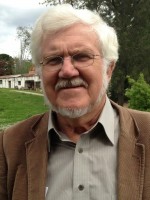 Geoff Page’s 1953 (UQP) was shortlisted for the 2014 Prime Minister’s Literary Award for poetry. He lives in Canberra and has published 21 poetry collections, as well as novels, memoir and biography. He edited The Best Australian Poems 2014 and 2015 (Black Inc.)
The Back-off
for two good friends
Forty years or so ago
the same straight back of conscience had them
fleeing the police.
The war was wrong. They wouldn’t go
though both had army fathers.
One torched his card in public;
the other did a week in Goulburn
before the draft was dumped.
Today, here in our group of five,
they’re meeting over coffee,
one, flat white, the other, black,
one still fresh from picketing
some notably obnoxious mine,
the other fired with new results
disproving warmist claims
from vaticans of scientists who
will brook no heretics.
Each man is well aware the other
knows his slant on carbon.
Their temperaments are of a kind.
One starts to talk about the forest
his open-cut will tear away.
The other counters ‘Well, you know’
but finds he’s trailing off.
They share a slow, reluctant smile;
we’re all too old for this.
Minds at our age don’t shift much.
They both look round to check the weather:
two of them and three of us.
The argument they’d planned to stage
would probably have proved uncivil.
Seamlessly, without intent,
we move to something different.
 Stories of Sydney
Ed by Michael Mohammed Ahmad
ISBN 978-1-921134-26-5
Reviewed by REBECCA ALLEN
Soaring white-tiled sails curve up into the cloudless sky. Below, foamy tails of boats criss-cross that famous stretch of liquid blue. Waves glitter in the summer sun. A post-card city.
Sydney shows off the same made-up face in thousands of glossy snapshots sold down at Circular Quay. Though irrefutably beautiful, there’s no denying this iconic image we so love to promote is, in fact, a fundamentally two-dimensional representation of a much more complex, multi-faceted reality.
=================================Sorry you must be logged in and a current subscriber to view the rest of this content.
Please login and/or purchase a subscription.
Sorry you must be logged in and a current subscriber to view this content.
Please login and/or purchase a subscription.
 The Blind Man With The Lamp
by Tasos Leivaditis (trans. N N Trakakis)
ISBN 978-960-7120-32-8
Reviewed by ANDY JACKSON
Ever since its emergence, the prose poem has been a uniquely potent embodiment of paradox. While a poem, arguably, could be defined as the literary form which declares itself to be “not prose”, a prose poem has it both ways. It moves with the energy of poetry, yet fills the page, withholding from the reader the relief of the line-break pause. No wonder spending any prolonged period of time within this space tends towards claustrophobia and anxiety. Poet Gretchen Henderson has written, “the prose poem, boxed as it is, for me seems to embody a want of movement – physical, aural or otherwise, made apparent by the limitations and liminality of its boxed-in body” (353).
In The Blind Man With The Lamp, Tasos Leivaditis takes up the haunting paradoxical temperament of the prose poem, and carries it into a register of existential fatigue and disquiet. The poems were originally published in 1983, when the poet was 61 years old and in declining health. Yet these precise and fluid translations from the Greek by N N Trakakis – the first English translation of a complete collection by Leivaditis – emphasise that while the biological kernel of these poems can hardly be denied, the book clearly emerges in the shadow of failed political visions. Behind it lies a questioning not only of political dogma but of humanity itself.
The Greece of Leivaditis’s childhood and adult life was dominated by war, economic depression, and ongoing internal conflict, the nation for many years subject to military dictatorship, ostensible democracy returning only in 1974. The Left which held Leivaditis’s sympathies was subject to ongoing and ruthless persecution. In 1948, the poet himself was arrested and imprisoned for three years. His poetry evolved from its modernist and surrealist beginnings, through overtly polemic political writing, to the poetry we find in The Blind Man With The Lamp – philosophical and religious in tone, yet wrenched with yearning and fatigue.
The poems inhabit a profound disillusionment, yet always leaning over the precipice rather than falling into it. The opening poem begins, “It was night and I had made the greatest decision of the century – I would save humanity – but how?”; then the titular blind man with the lamp appears. “’My dear brother’, I said to him, ‘God has sent you’, / and with zeal we both got down to work…”. The final poem of the book, “Lethal Game” has Leivaditis wake into a room “with the blinding light”, playing a seemingly endless game of cards, the stakes of which appear to be life itself. Suddenly he is alone in an abandoned and ruined city. “’Sweet mother of Christ’, I whispered, ‘at last all is finished. / Now I can start over again’.” At this point, we are back with the “blind man” – to my mind an unfortunate metaphorising of an embodied condition, yet emblematic of Leivaditis’s sense of loss and inevitability.
It comes as no surprise, then, to read in the excellent introduction by his translator Trakakis that in the middle of his career Leivaditis published a collection of “Kafkaesque” short stories. His poems invariably begin in the middle, with narrative momentum and a growing sense of confusion and dread, yet also with a kind of wonder. Perhaps analogous to the ghazal form, they are energised by an intense desire that can never be consummated, or rather they are fulfilled only in their own frustrated travel through the maze which has no exit.
While they are prose poems, the usual “box” shape of the form invariably breaks off, usually at the end, reminiscent of the form of a written letter. Some are truncated to the brevity of the aphorism – “I never would have imagined that so many days go to make up so short a life” (“The Deceptions of the Calendar”). Even the longer poems are shot through with long dashes, and drift off at the end with ellipses, either actual or implied. Leivaditis conjures the existential texture of moments of transition and frustration. Here is “Wayfarers” in its entirety –
We are those who have been on their way – we never had a place of our own – where are we going? where
are we coming from? On occasion we stay somewhere for a while, but
Fate quickly remembers us again and we leave.
And only on occasion, at the time when dusk falls and the few violets shudder amongst
the hedges, we are overwhelmed by a strange awe, a feeling as though we are returning to the
place from which we had been forever banished.
Or perhaps the twilight is our only homeland…
The liminal is a recurring trope of the book. Time and again, Leivaditis returns to images of dusk, night, outcasts, doors, dreams and silence. Though what is perhaps most striking about The Blind Man With The Lamp is how this sense of potential and inevitable night is combined with an acute theological yearning. Leivaditis seems to recognise that an entirely new world is not possible. His God seems to dwell, suspended, in absence.
I spent much of my teenage years and early adulthood in thrall to Christian evangelicalism, so I appreciate the existential and social engine behind the religious impulse. As time went on, though, the concepts and structures became transparent and suspect. I was left with only a kind of awe at the ineffability of life, and a sense of grief at injustice and suffering. This is the origin of Leivaditis’s poetry. Its paradox is that it sustains a deep piety hand in hand with its despair.
I should emphasise, though, that The Blind Man With The Lamp is no monochrome paean to resignation. These poems read as merciless confrontations with the real, but they are essentially elegies for existence. Leivaditis reminds me here of another master of the prose poem, Franz Wright – both exhibit a kind of cruel tenderness. In “The Birth”, Leivaditis enters the room of a crying man, who points out a crucifix on the wall. “’You see’, he said to me, ‘compassion is born’. I then bowed my head and I too cried, / for centuries and centuries would go by and we would not have anything more beautiful to say than that”.
In his short and potent book The Uprising: On Poetry and Finance, Franco Berardi asserts
Only if we’re able to disentangle the future… from the traps of growth and investment, will we find an escape from the vicious subjugation of life, wealth, and pleasure to the financial abstraction of semio-capital. The key to this disentanglement may be found in a new form of wisdom which harmonizes with exhaustion. (80-1)
I wonder if perhaps we will only survive (and reclaim the pleasure that is possible) by listening to the body – our own, others’, and the body of the earth. These bodies are tired of the impossible unceasing growth that is demanded of them. Leivaditis’s poetry emerges out of this fatigue, this bodily disavowing of the current paradigm. It sees clearly the dilemma of the present era, yet it also sees the pitfalls of our innumerable attempts to resolve this dilemma. In “The City”, “the protest march had just finished and the police officers were erasing an entire revolution that was written on the walls…” For Leivaditis, poetry is a place where we may hear God “walking heavily inside my words, eager to surmount the limits of the world” (“Conversations”). But it is also “another form of dying” (“Unknown Debts”), a reconciliation with the irreconcilable.
Citations
Berardi, Franco “Bifo.” The Uprising: On Poetry and Finance. Los Angeles, CA : Semiotext(e), 2012.
Henderson, Gretchen. “Poetics / ‘Exhibits.’” Beauty Is a Verb: The New Poetry of Disability. El Paso, TX : Cinco Puntos Press, 2011. 353–5. Print.
ANDY JACKSON’s poetry collection Among the Regulars was shortlisted for the 2011 Kenneth Slessor Prize. He won the 2013 Whitmore Press Manuscript Prize with the thin bridge, and his latest collection is Immune Systems (poems and ghazals on India and medical tourism). Andy has performed at literary events and arts festivals in Australia, India, USA and Ireland. He writes about the poetry of bodily difference at amongtheregulars.wordpress.com
Sorry you must be logged in and a current subscriber to view this content.
Please login and/or purchase a subscription.
 Captives
by Angela Meyer
ISBN 978-0-9875401-2-6
Reviewed by EUGEN BACON
The photographs, when they come out, look just like Victorian-era death portraits, only my subjects are still alive. (15)
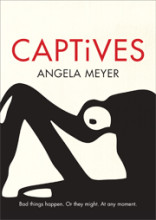
Noir graphics on the front cover of Captives foreshadow light and shade, life and death. A reader might approach this book of flash fiction with curiosity, wondering if these themed fragments are for everyone. But it is doubtable that one needs to find a penchant for the short form to locate these stories as windows to the real world. Clever harmony, or discord, in the text invites this reader to what author Sandra Horn calls a suggestion of more, a glimpse or hint of a wider story (2015).
=================================Sorry you must be logged in and a current subscriber to view the rest of this content.
Please login and/or purchase a subscription.
Sorry you must be logged in and a current subscriber to view this content.
Please login and/or purchase a subscription.
Peter Boyle lives in Sydney. He has published six collections of poetry, most recently Towns in the Great Desert (2013) and Apocrypha (2009) which won the Queensland Premiers Award in 2010. A new book of heteronymous poetry Ghostspeaking is due out next year with Vagabond Press. As a translator of French and Spanish poetry he has had four books published, including Anima (2011) and Tokonoma (2014) both by the Cuban poet José Kozer. He is currently completing a Doctorate of Creative Arts at the University of Western Sydney.
My attempts to find Maria Zafarelli Strega and The Card Collection
During my partner’s absence in Bhutan I went by myself to Buenos Aires in late May 2014 to find out what I could about Maria Zafarelli Strega. I had read the few poems by her included in the 2011 Antologia de Poesía Rioplatense published by Alianza Editores and wanted to find out more. It seemed she was still alive but where? A friend in the film and theatre business in Buenos Aires had suggested an address but no one there had heard of her. Asking at nightclubs and bars in the Palermo district (a suggestion sparked by correspondence with one of the staff at Alianza) eventually brought a result.
=================================Sorry you must be logged in and a current subscriber to view the rest of this content.
Please login and/or purchase a subscription.
Sorry you must be logged in and a current subscriber to view this content.
Please login and/or purchase a subscription.
 The Told World
by Angela Gardner
ISBN 978-1-84861-371-3
Reviewed by ROBERT WOOD
Le Serment des Horaces, a large neoclassical oil painting by the French artist Jacques-Louis David painted in 1784, depicts three Roman brothers saluting their father. The father holds their swords out for them so they can then go on to patriotically kill the three brothers Curiatii. 1784 is historical for us, but in 1784 the classical period was their epitome of History. This then is a typical ‘history painting’.
Angela Gardner begins her latest collection of poetry The Told World with a poem that bears this title. ‘History Painting’ is a work that reminded me of David for its lines ‘in the grand scale/what price heroic death, in brushmarks’. Where it differs is in the scene as a whole. Gardner is careful, cagey even, about what her history painting depicts, for it is ambiguous. There is ‘wind in long grass’, ‘children legging it away’, ‘a throat of gold’, but it ends with the lines ‘no more than the usual neurons’ trick/of light’. This conclusion is telling for it indicates to us what the major trope, organizing concept and device are in the book as a whole.
If The Told World is ‘about’ anything it is about light – as deception, as beauty, as thing. There are poems titled ‘Half-Light’, ‘Brightness’, ‘Night’ and ‘Beyond the Footlights’ and that is only in the final section ‘Solo estoy mirando’ alone. There is ‘Morning Light’ and ‘Animal Light’ besides. The eye, sight, looking, optics is there too in various phrases throughout. For example, ‘the one who looks at the mountain’ (‘Landscape with Birdsong’); ‘the tool’s crude optic’ (‘Barely Noticeable I’); ‘pathway beyond the eye’ (‘Pastoral’); ‘double mirrors’ (‘In Double Mirrors’).
Consider ‘Half-Light’ in which Gardner writes:
I’ll start you painting flat. Objects next:
modeling three dimensions until light-gleam
appears on something. Garment folds, soft
dark of velvet, a feather in an angel’s wing.
Distance then to frame – landscape
a mirror – so real birds dash against it.
Face and hands last, unless you count
everything pulled from background by light
and darkness a stillness as it develops.
At one level this is a directive – how the ‘I’ will start the ‘you’ painting. It is a list of ascending difficulty – objects, garments, feather, landscape to realistic quality, then face and hands. There is the return of ‘i’ as an organizing vowel – light-gleam/something/angel’s wing/everything /light/stillness – that gives a pleasing cadence and sense of circularity too. As a set of instructions it may be useful, but as a pensive thought to be left with we have a comment on ‘half-light’, on what is suggested by the title.
‘Half-Light’ is one of Gardner’s more linear pieces. There are of course concerns other than light and object – sky, body, bird, suburb, landscape, Star Trek, birds, language, pollen, metamorphosis, Gallipoli, GPS, hens, clouds, and birds once again. Indeed, birds as part of the pastoral and anti-pastoral are central. Occasionally one must work hard to ‘uncover’ the meaning of the poem, which may or may not be the point. Difficulty of course has an important place and to slow down and apprehend The Told World is what adds to its painterly quality. Surely we can luxuriate in the medium rather than try to read the message? As she writes, perhaps paradoxically, ‘nothing is settled’ (16).
The Told World exhibits a sort of deformed realism, somewhere between the style of Le Serment de Horaces but not quite like the abstract modernism of say Mark Rothko, or Gardner’s own paintings or even Paul Celan. In other words it occupies a middle ground that discusses the real world but in a language that can be elliptical and understandable rather than transparent or hermetic. It is this disjuncture that I found most interesting and productive for it attests to an ongoing exploration of ideas through different media rather than simply an application of frame in both word and paint. Gardner then knows how to make her materials respond. This is not a simple ekphrastic relationship.
There is only one poem that explicitly references painting, and that is ‘ilium’, which is ‘after Sidney Nolan’s Gallipoli series’. Ostensibly ‘about’ the beach landing, the poems chronicle the relationship of a man and his horse, with the sea and war playing a pivotal role. The poem is balletic in parts (‘bodies ripped in streaming light’/…/…/in limp animal-hipped shallows’), which resonates with Nolan’s bursting shells. Yet there is a stripped back, almost spare quality too, again capturing the spaciousness of Nolan’s series. Read now Gardner’s work seems less like an attempt to build nation, to show bravado and a certain type of emerging masculinity that Nolan’s can be read as, and more as a comment on what war does to people and animals. Her re-working is subtle, effective, resonant and apt for our time.
Painting has always had a different relationship to photography. This has as much to do with the medium as the historical and contemporary language of its exchange. Gardner has a painterly eye and turn of phrase – warmer, longer, slower than realism, more ‘Poetic’ than a photo. We linger in her descriptiveness even as we are not overcome with lyricism or nostalgia. For those who want to know what the seen world is like, The Told World is the place to start for it gives us a view of life out there and in our mind’s eye with resplendence, charm and chiaroscurotic ability.
ROBERT WOOD holds degrees from the Australian National University and the University of Pennsylvania, where he was a National Undergraduate Scholar and a Benjamin Franklin Fellow respectively. His work appears in Southerly, Plumwood Mountain, Counterpunch and academic journals including Foucault Studies, JASAL and Journal of Poetics Research.
Sorry you must be logged in and a current subscriber to view this content.
Please login and/or purchase a subscription.
Sorry you must be logged in and a current subscriber to view this content.
Please login and/or purchase a subscription.

 Heat and Light
by Ellen Van Neerven
Reviewed by Christine Regan
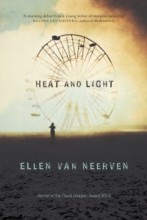
In Heat and Light Ellen Van Neerven tells us stories exploring ancestry and identity and the experiences particularly of Aboriginal women and girls in small Australian towns or dwelling on the metaphorical fringes of Brisbane and the surrounding regions, where its young Yugambeh author is based. As its title (taken from the Tracy Chapman song ‘Smoke and Ashes’) signals, Heat and Light is interested in the elemental, particularly sexual desire and familial bonds, the dangers, hopes, and sense of identity and place sought through these relationships, and the harsh natural environment on Country. Heat and Light is a book in three parts written in a simple, spare colloquial prose and has a tripartite formal and temporal structure, with ‘Heat’, ‘Water’, and ‘Light’ respectively focused mainly upon the past, the future, and the present, and the presence of the past in the present is one of the unifying themes of the collection. While ‘Heat’ and ‘Light’ contain a series of mainly realist short stories, with some mixing myth and reality, ‘Water’ is a speculative fiction novella with elements of satire and political allegory, in a collection that traverses genres. Van Neerven’s achievement with Heat and Light has been recognised by receiving the David Unaipon Award for an unpublished Aboriginal writer in 2013, and in 2015 both the Dobbie Literary Award for a first-time author and the Sydney Morning Herald’s Best Young Novelist Award.
The strongest writing in Heat and Light is mainly in ‘Heat’, which is comprised of interrelated stories about incidents in the fractured history of three generations of the Kresinger family, told from different narrative viewpoints and shifting between different times and places. The stand out story in the book is the first story, ‘Pearl’, whose eponymous protagonist is a free-spirited agent and object of desire, existing outside black and white codes of morality, and a mystical outcaste, both victim and shaman-like avenger. In ‘Pearl’ disrupted family histories and the search for identity – a major theme in heterogeneous Aboriginal Australian writing – is the consequence not of official state policies of the removal of children, but of the pack rape of an Aboriginal woman by white men. The itinerant Pearl gives the baby conceived in rape to her married sister Marie, who presents the boy as her son, while Pearl’s name disappears from the Kresinger family history. ‘Pearl’ is alternately narrated by an old woman in the local store, and the young Amy Kresinger, to whom the woman tells the true story of Amy’s ancestry, that she is the granddaughter of Pearl not Marie, disclosing family secrets and local historical silences.
Interestingly, the story and character of ‘Pearl’ seem inspired by the Chippewa novelist Louise Erdrich’s short story and character ‘Fleur’, which is also adapted as a chapter in the novel Tracks. There is no anxiety of influence here, as Van Neerven has commented that she was reading Erdrich when writing ‘Pearl’, and she employs the classical method of imitation well, adapting borrowed elements of language, plot, narrative structure, and characterisation to enrich a story that is her own. Fleur and Pearl are both native women whose mystical powers, sexuality, and daring make them pariah figures, the subjects of malicious gossip and fearful mythologies generated by the locals who try to drive them out of town, and we learn about both characters indirectly through jealous narrators. Fleur is a shaman believed to be the desired creature of the waterman monster of Chippewa myth, Misshepeshu. She seemingly drowns in the lake twice, and is said to have caused the deaths of the men who pull her from the waters the first time, and the man who approaches her ostensibly dead body the second time. Comparably, Pearl is a mystical creature of the wind, which seemingly takes her life twice when she goes out into wild storms and makes physical gestures resembling embraces. She is wind-hurled first into the waters, only to mysteriously re-emerge two days later, while the man who tried to save her was drowned. The second time Pearl dies is when the windman lifts her into electricity wires, ‘and they curled into each other like lovers as she was jolted.’ The electricity that killed her is conducted out of her body and into the brother who touches her and ‘he takes her place.’
Fleur is raped by three men who work with her in a butcher’s shop and Pearl is raped by three men who come into the café where she works, and both women seemingly conceive during the rapes. The attackers of both women die shortly afterwards in mysterious circumstances. It is wild winds that destroy the town where Fleur is attacked and distract the townspeople from noticing the absence of the three men, who are found days later frozen to death. Pearl too is associated with the wind and later Kresingers continue to associate the wind with their spiritual ancestry. The wind is also a motif in ‘Heat’ for the way the past pervades the present and history repeats itself. The rape of Pearl is followed, two generations later, and in the third story ‘Hot Stones’, by the pack rape of Mia, a young Aboriginal girl. The schoolboys’ savage attack is a more extreme expression of the hostility the schoolchildren routinely direct at the dark-skinned, recognizably Aboriginal Mia. There are of course many differences between the works including Erdrich’s lyrical prose and engagement with history. Fleur, for example, attempts to save her tribe’s land and traditions from white encroachment in the era of the Dawes Act (1887) that served to destroy the Indian land base and in turn culture. Van Neerven’s first book focuses mainly on individual odysseys and family histories that register social issues of racism, domestic violence and mental illness.
A light satirical engagement with contemporary Australian politics and history is presented in part two, ‘Water’, which imagines a fantastical future as a fresh way of talking about past and present realities, notably in its allegory of the imperial genocide of the ‘plantpeople’, who are revealed as Aboriginal ancestral spirits. The final part of Heat and Light is comprised of ten stories mainly set in contemporary Brisbane and narrated by young, gay Aboriginal women finding space for self-expression and self-definition in the relative anonymity of the city, often having left small towns to attend university. Another interesting literary influence evident in stories from ‘Light’ and recurrently in the book is the magical realist novelist Jeanette Winterson. The young loners narrating some of these stories are searching for sexual connections of different kinds with other women, and the recurring motif of oranges as a gift to a lover, and a desire that does not fit the received social expectation, alludes to Winterson’s North of England lesbian bildungsroman, Oranges are Not the Only Fruit. Coincidentally, Van Neerven mentions that it was a mandarin Melissa Lucashenko handed to her to calm her nerves at an early book reading. The support Van Neerven has received from Lucashenko and other Indigenous Australian writers, including through high public praise of her writing, is the beginning of locating her in a lineage of Aboriginal women writers. Lucashenko’s literary influence is perhaps manifest in Van Neerven’s use of a light Aboriginal English in gritty, colloquially told tales of young working-class Aboriginal women in particular. Van Neerven’s influences in Heat and Light are Indigenous and European, local and cosmopolitan, and enhance the sense of her potential and readers’ interest in future publications.
Sorry you must be logged in and a current subscriber to view this content.
Please login and/or purchase a subscription.
Sorry you must be logged in and a current subscriber to view this content.
Please login and/or purchase a subscription.
Sorry you must be logged in and a current subscriber to view this content.
Please login and/or purchase a subscription.
Sorry you must be logged in and a current subscriber to view this content.
Please login and/or purchase a subscription.
 Omar J Sakr is an Arab Australian poet whose work has appeared in Meanjin, Overland, Cordite Poetry Review, and Tincture Journal, among others. His poems have been translated and published in Arab, and he has been shortlisted for the Judith Wright Poetry Prize as well as the ACU Poetry Prize.
Dear Mama
Don’t preach to me, mama, don’t tell me stories
about some holy book or other, about angels, demons and jinn –
I’ve already learned too well the religion of your fists.
My body has drummed its song, the gospel choir of bruises
so often it knows no other, and at night I still mumble
the chorus: sharp gasps interspersed with bass, with low moans.
Your god is capricious, strikes without reason – some days
(the days you had gear, I later knew) you’d smile and order us pizza
and we’d sit in the smoky temple of the lounge while your silver screen
apostles entertained us, spat & bled & fucked & loved & died
for us. Those days were best. Others were Nails-On-Chalkboard,
a kind of screaming at the edge of hearing – your cheekbones, jaw,
elbow, everything was knife sharp and cut against the air
even though your teeth were set, lips locked prison-tight.
Like tinnitus, I knew only I could hear it but I swear
your body screeched in warning those mornings, and we learned
to read your augurs in cigarette smoke, the signs prophesying pain
if we didn’t become paragons of stillness and silence. Later, you
told me you saw my treacherous father in me even as a boy,
that you hated the sight of my face, the reminder
that his sins were burned too clearly in my skin.
I remember the day the locksmith came, his confusion, then pity,
when he asked ‘you want the lock outside his door?’ He hesitated
but took your petty cash reward to seal my cage. If only
you knew how I made that cell my world, so expansive and free –
hundreds of books, each one a key. How could you think
walls would contain me? I ought to thank you, dear mama,
for the prayers I memorized, for the blessing of hunger, the urge
for independence you sang into my bones, percussion-deep,
and the need to travel, to roam across the lands and seas and discover
all that can be seen. I ought to thank you, dear mama, for your piousness,
for showing me the cruelty and beauty of God and godlessness
all at once, for teaching me that holiness is no more
than moments shared with those you love whether bonded by blood
or not. Especially not. I ought to thank you dear mama, but I can’t.
The mosque is empty, and I’m all outta prayers.
Sorry you must be logged in and a current subscriber to view this content.
Please login and/or purchase a subscription.