 The Endling
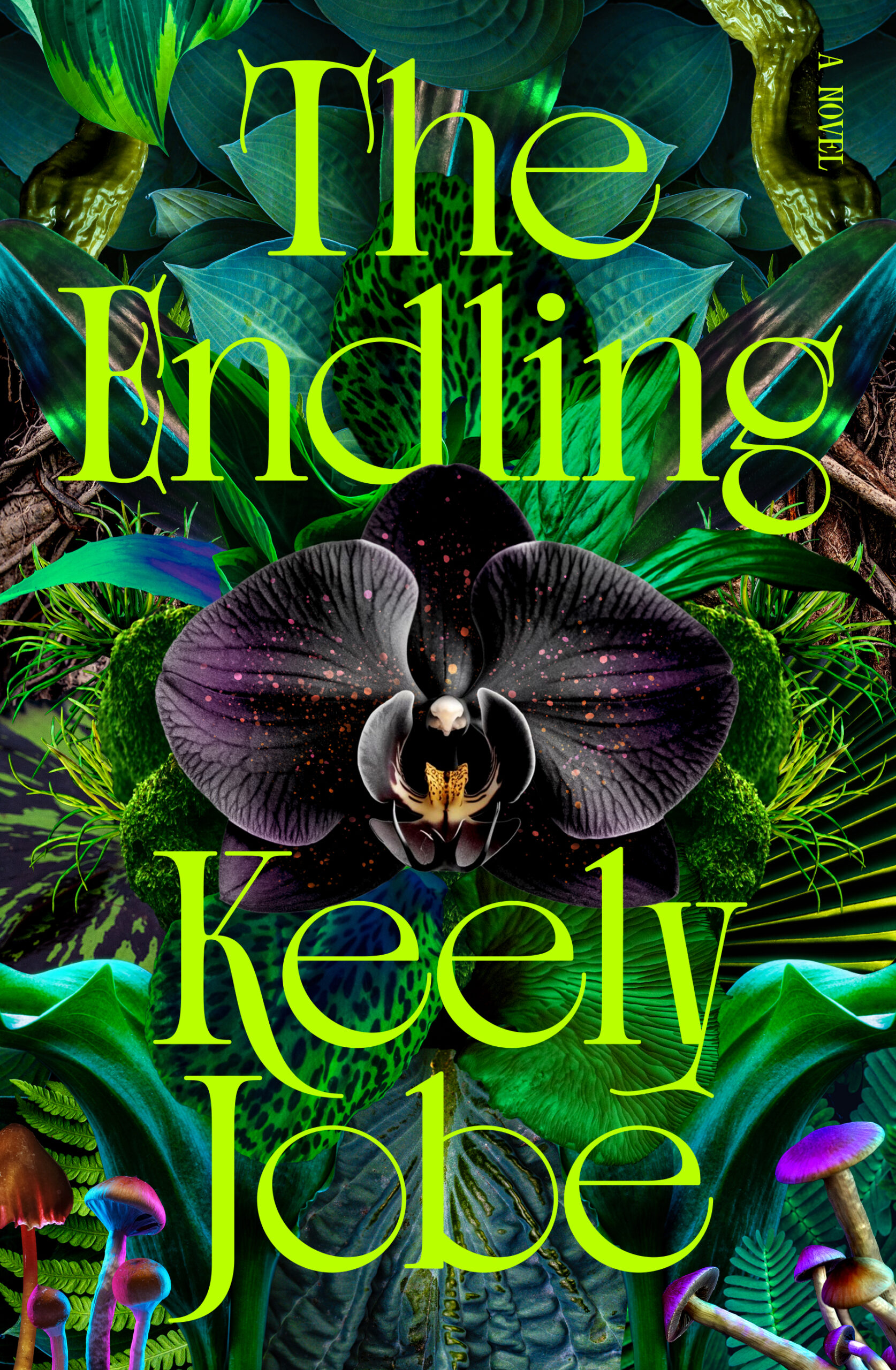
by Keely Jobe
ISBN 9781761381782
Reviewed by BEC KAVANAGH
The feminist compound at the heart of Keely Jobe’s debut novel, The Endling, is a flagging utopia that gives the novel a sense of the post-apocalyptic: resources are depleted, shelter is sparse and patience wanes. In reality, the novel takes place from the early to mid ‘90’s and is set on a remote unnamed mountainside somewhere in Australia. ‘It’s like a scene from Oliver Twist but with chickpeas and tits’ (p.33)
By the time the story begins, the compound, started some decades earlier by a group of feminist visionaries, is home to a small remaining cluster of ‘mountain dykes’ (p.55) who barely get along. The shared vision of the founders – to create a community with no men and to free themselves from all patriarchal forces – has proved challenging. Living on the mountain is hard work, and the current cohort has little energy for genuine political activism or work, preferring instead to get high and seduce the few occasional newcomers. Frank, one of the novel’s two protagonists, has turned her back on the petty grievances of the main camp in favour of isolation. She camps away from the other women at the top of the mountain in a tin-roofed shelter with drop sheets as walls. Chicken Midnight, a small rescue dog, is her forbidden companion, and the deep bond between the two is the closest Frank will ever get to true love. Mila, Frank’s adult niece, is the second protagonist and acts as the bridge between Frank and the other women. Although Mila lives in the main compound, she’s also an outsider, more pragmatic than the others and less rigid. Framing this is the endling that gives the book its title, a lone black orchid, deep in the valley, holding onto life for the sake of its kind.
‘The Endling’ is a novel obsessed with life: the emergence of it, its failures and the conditions needed for it to thrive in both the individual and the collective. The choice to set the novel in the early to mid- ‘90s provides an interesting dramatic irony for readers who will bring an awareness of the pending climate emergency to the page. While questions of ecological survival lie at the heart of the narrative – the orchid’s plight to reproduce draws awareness to the fragile ecosystems surrounding it – there’s no urgency behind the way the women protect the environment. Their ideology takes a fairly passive approach coexistence. ‘We’re more like caretakers,’ says one early one, ‘while we’re here, nothing bad can happen. No logging, no grazing, no development’ (p53). But they are never required to actually put their bodies on the line to defend these beliefs. The perceived threats to their collective survival – all framed as masculine in nature – are largely hypothetical. And while there are hints at the world beyond the mountain – a plane flying overhead, the roar of a chainsaw encroaching on the natural noises of the forest and gully – the women live with minimal intrusions.
The boundaries between living things – plant, animal, human – in the novel are diaphanous. Frank and Chicken communicate almost telepathically with one another, and while this could be read as a psychological consequence of Frank’s human isolation, Jobe writes the animal’s voice believably. Chicken is endearing without being overly anthropomorphised. But what makes the novel truly special is its posthuman turn. During a particularly fertile spring, the women find themselves unmercifully aroused. Drawn into the wilderness, the women find pleasure in themselves and a heightened awareness of the life around them. Jobe’s language here is sensual and descriptive:
‘Quietly, privately, and all at once, they begin to hoard details like coins. A fishbone fern will bend towards a moving body as if eavesdropping. The trunk of a blackberry ash is adorned with ancient eyes staring out, staring back, and the fruit it drops is the colour of the small blue vein on a wrist or behind an ear. A budding fern front is bunched like a fist but soft as a day-old chick. Brushing a hand over certain byrophytes feels like static, and brushing past a maidenhair fern is like brushing past a ghost.’ (p63)
By endowing these plant forms with such human qualities, and bringing them into direct, intimate contact with her human characters, Jobe erases the hierarchy between human and non-human bodies. Some months later, the women are all pregnant, seemingly by immaculate conception. Only Frank and Robin are excluded from this synchronised mass conception. Frank remains unaware for some time – her own body is deteriorating rapidly, and shame and stubbornness make her trips to the main camp less and less frequent. Robin, an older woman who had been away from the mountain during that fertile spring, takes on the role of carer and scientific observer of the women. Her theory for the pregnancy is that extreme isolation from men has triggered a biological evolution of sorts, allowing the women to become pregnant without male intervention. When the babies are born, all of the women give birth to girls except Mila. The babies look human but behave strangely, rejecting maternal offerings, and speaking to each other in indiscernible whispers. Here, Jobe challenges not only the physical limits of the human body, but its psycho-social limits too. For all of their idealistic ambitions to leave the patriarchy behind, the women are unhappy when they are unable to step into the role of mother/nurturer. The babies don’t need their protection, and they don’t seem to want their care – they don’t cry when they’re hurt, and they don’t crave any kind of physical contact with their mothers. It’s a fascinating provocation, if a slightly sad one. With the exception of Mila who is positioned as the outsider, none of the women really rise to the challenge of these unconventional circumstances. If anything, becoming mothers seems to make them even pettier, and they reflect quite a toxic version of motherhood.
This foray into the more experimental aspects of the novel takes the reader away from the more grounded reality of Frank’s experience. Her eyes are failing, she is increasingly incontinent and her limbs stop working sporadically. She doesn’t even have the constant companionship of her beloved dog, as Chicken Midnight has become the self-appointed guardian of the children. Though she has no desire to be remotely likeable, Frank is the most interesting of the women. By removing herself so completely from a social context, Frank is a more hopeful posthuman role model. In such isolation, and with few opportunities to see herself through the eyes of other people, Frank experiences herself in contrast to animals, and to the mountain itself. But while the tonal division between the two parts works, the jump between two such complex narratives happens abruptly, and the brevity of the text doesn’t fully allow for its ambition.
If the pacing feels rushed at times, it doesn’t matter, because The Endling is a truly exciting novel to read. Jobe is unafraid to challenge the comfort of the reader by decentring the human body. And while it doesn’t offer much hope for the feminist revolution, what it offers instead – bold, provocative transformation – is thrilling.