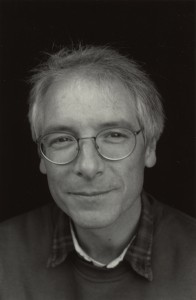
 Paul Kane has published eight collections of poems and a dozen other books, including several
collaborations with artists and musicians. He is the author of Australian Poetry: Romanticism and Negativity (Cambridge), and has served as poetry editor of Antipodes; artistic director of the Mildura Writers Festival; and general editor of The Braziller Series of Australian Poets. He has taught at Yale University, Monash University, the University of Bologna, and Vassar College, from which he recently retired. His awards include fellowships from the Guggenheim Foundation, the National Endowment for the Humanities, and the Bogliasco Foundation, as well as a Fulbright Grant to Australia, an honorary doctorate from La Trobe University, and, in 2022, The Order of Australia.
~Photograph by William Clift ~
The Fire Sermon
Here in the Drowned Lands
the black dirt is the blackest
black I know—give it
time and it’s oil, to blacken
earth, air and water with fire.
In winter, without
snow cover or a crop, winds
insinuate fine
granules under windows
and doors. That’s our peck of dirt.
Ironbark forests—
a world away—are fire tough,
their carbon footprint
black trunks, seared soil, and fresh green—
the Aboriginal park.
Last year we fled floods,
this year a grass fire near Clunes—
one wind shift away.
The Fire Sermon gets into
your blood: the black days ahead.
But let’s not leave it
at that. Winter played possum,
then ambled off—now
we’re marching towards spring—Daylight
Saving all the grace we need.
Worlds Apart
The bottom fell out
and it was a long way down.
He surfaced once,
saying he was back, but then
we lost him, and now he’s gone.
You could say he killed
himself with drinking, or drink
took him out at last,
but his ex-wife’s suicide
was murder on him, poor man.
Poor woman! And now,
poor daughters to sift the ash.
I cannot shake it.
Not a close friend, but friend still
in a world growing friendless.
The circle closes,
tightening like a rope loop,
or, rather, it breaks
open, with each loss gaping,
until it’s all detritus.
That’s the view inside,
but when I walk out midday,
nothing is natural
because it’s all what it is,
soft air, clouds, wood thrush, the grass.
I could describe it,
but to what purpose? We all
live in the same world,
though world’s apart, and never
to meet—except life to life.