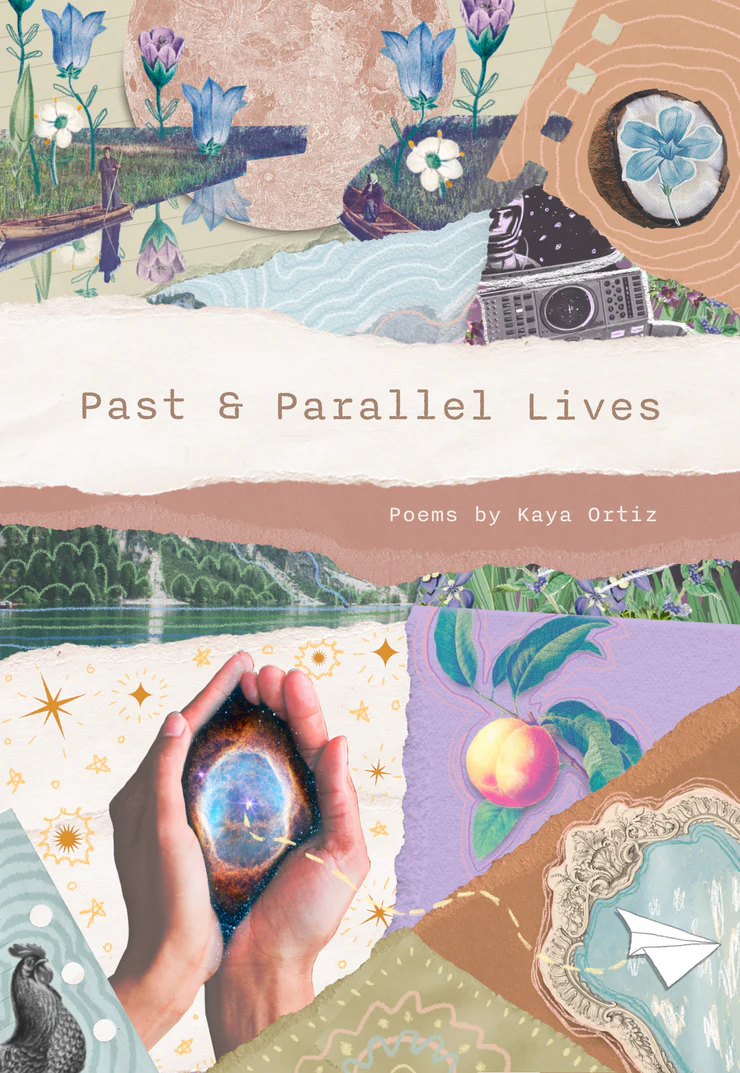
 Past & Parallel Lives
Kaya Ortiz,
ISBN: 978-1-76080-298-1
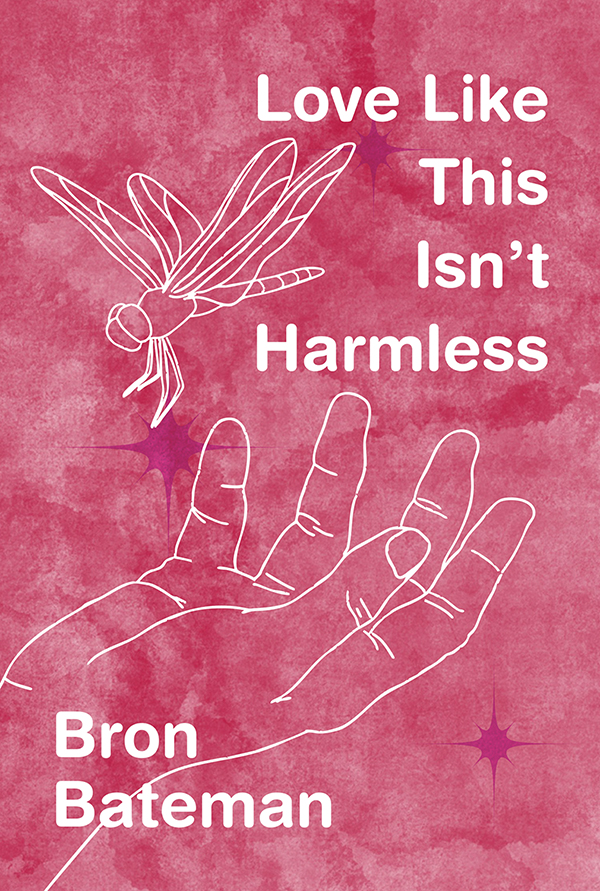 Love Like This Isn’t Harmless
Bron Bateman,
ISBN: 9781760995355
Reviewed by NATALIE DAMJANOVICH-NAPOLEON
Time travelling: Creating Triumph from Love’s Harm and Fractured Selves
In their debut poetry collection, Past & Parallel Lives Kaya Ortiz weaves the recurrent themes of time travel, and the lives we could have lived or may live, against the backdrop of their queer and Filipino identity. Examining the multiple renderings of identity and place through list poems and free verse poetic forms, they show us how coming out does not happen only once, but rather as a series of repeated revelations to live openly, “my body un / becoming // …over and over again”. Ortiz explores the early blooming of lust, love, and Trek-inspired alien and queer desire in this release. Bron Bateman’s fourth poetry collection, Love Like This Isn’t Harmless, examines a mature queer poet’s heartbreak. In this collection Bateman takes stock, looking back on her life, the cost of love and how to live authentically as a crip, gay woman. Both Ortiz’s and Bateman’s re-makings and revelations are hard fought and won, revealing to the reader the unique struggles of living as one’s true self in a world that seeks conformity.
Migration, discovering oneself and coming out are recurrent themes in Ortiz’s collection, but one of the most compelling through lines is the poet’s exploration of alien characters in Star Trek as a metaphor for queerness and migrant otherness. In “First Contact” the poet reminds us, from an outsider’s perspective, “to remember the self is / secondary to language.” They know the dangers that come with being labelled by others and conversely, how we can define ourselves with language. “Distant Origin” explores the parallels between Ortiz’s life and Star Trek’s B’Elanna Torres, who is half-human and half-Klingon, as “I, too, am split- / between // a star in every quadrant / and home / too many lightyears / away.” Examining this parallel later in “Self-insert Trek: Flashback”, B’Elanna Torres “cleaves and falls into herself, a shattered identity” and through this mirroring process the poet’s “ruptured” self is “reborn. Rebuilding”. Other poems take deep dives into Trek characters like Seven of Nine, Michael Burnham and Jadzia Dax. Each of these characters struggles with their hybrid identity and outsider status, shows us that “the closet is a matter of time and space”, and contends with epic battles of the self to eventually triumph or be reborn – literally in Jadzia Dax’s case, who is a Trill that has lived seven lives. The Star Trek characters and the additional metaphors of time and space employed by Ortiz bring the reader along with them on a journey that playfully examines what it is to be queer, alien and other while also showing us the possibilities time and space allow us to re-write our past and future selves.
In Bateman’s collection life is complicated and fraught with the trappings of what we lose of ourselves to love another. The twelve poems in the second section “love that crouches, raging” each contain the word “love” with the lengthy titles reading like whimsical poems themselves, such as “To love is a singular act: to look at something is to fill your whole life with it, if only briefly”. From the ache of infant loss to the vagaries of straight and queer love, Bateman sees love in the aforementioned poem as:
A kiss, a sucker punch, a glance,
all delivered forms of intimacy,
ascending through the bruise-
blue darkness as an idea born
of repetition
The collection’s theme of love’s harm is delivered in the implied violence in the “sucker punch” and “bruise-blue darkness” of the latter lines. As the adage tells us, love is a verb, and in this collection love is measured by these repeated actions, it is not a static state of safety. The loss of a child at three months of age results in grief’s “raging,” and a “Love with nowhere left to hide.” Here grief and love are tethered together, yet love, as always, contains hope. This hope arises in the baby the poet and her partner are expecting, “her parts knitting together / like spring, / like a longing for plum blossoms.” Bateman’s collection examines love through the lens of a mature woman who in “Weightless” she explains, has “come this far, survived this much”. She knows who she is and she knows her wounds, yet this doesn’t stop her moving forward past loss.
Both poets explore the impact of religion and God in their reckoning with love and their queer identity. In two list poems Ortiz speaks to the Catholic doctrine that does not accept queer people. “Hell” is structured around the “Hail Mary” prayer, with the fourth item on their list suggesting other, radical ways of seeing, hinting at a female god, “4. Learn love the way you learn god – unable to look her in the eye”. “The Etymology of Palaam” (goodbye) recounts the tension between religion and being queer where Ortiz creates a mash up of the Filipino language, “Our Father” and the poet’s own prayers, including the exquisite line —their body a metaphor for inedible communion bread — “3. for all that is holy. my body is / 4. a loaf made of stone”. For the strengths of Ortiz’s utilisation of list poems in this collection, at times the form appears forced, just as form can inspire a poet it can also stifle their expression. Some poems may have benefitted from being written in pure free verse, enabling the poet to stretch their wings when required. In “There was love, like a great, glass eye” Bateman reviews her childhood beliefs in an omnipotent God and her mis-spent faith, “But where was God? She prayed and prayed…// But he closed his eyes to her suffering, // splashing abundance where it didn’t matter / onto endless golden paddocks with myriad insects”. It is an indictment of modern Christianity that neither poet found space for themselves or their sexuality in the church. Yet, as poets, they continue to see awe and beauty in the world without the restrictions of organised religion.
In the opening poem of Bateman’s collection, “Betrayal”, co-written by Andy Jackson, they explore crip-embodiment and how disabled people are viewed as “invisible [by]…infirmity” writing “I extend my cane towards the ground / like a diviner – this path, / this body, not the only crooked things.” It is a compelling metaphor for a collection that stretches the reader out past the crooked path that most lives take to “crip promise,” embracing pain, along with the welcome and unwelcome gifts that it offers. Bateman’s skill as a poet lies in her ability to translate pain in its terror and beauty to the transformation of the self. Whereas, like a magician, Ortiz transmutes their growing pains as an immigrant and coming out as queer into poems that defy time and space. The precision of their words, their blending of Filipino and English, and the architecture of their list poems reveal a poet who has arrived to us with a vision that appears almost fully-formed, for this reason it is no wonder this collection won the 2024 Dorothy Hewett Award. Both poets show us that even through fracture, pain and a world that seeks to erase queer, crip and migrant identity they can emerge triumphant, if not unharmed.