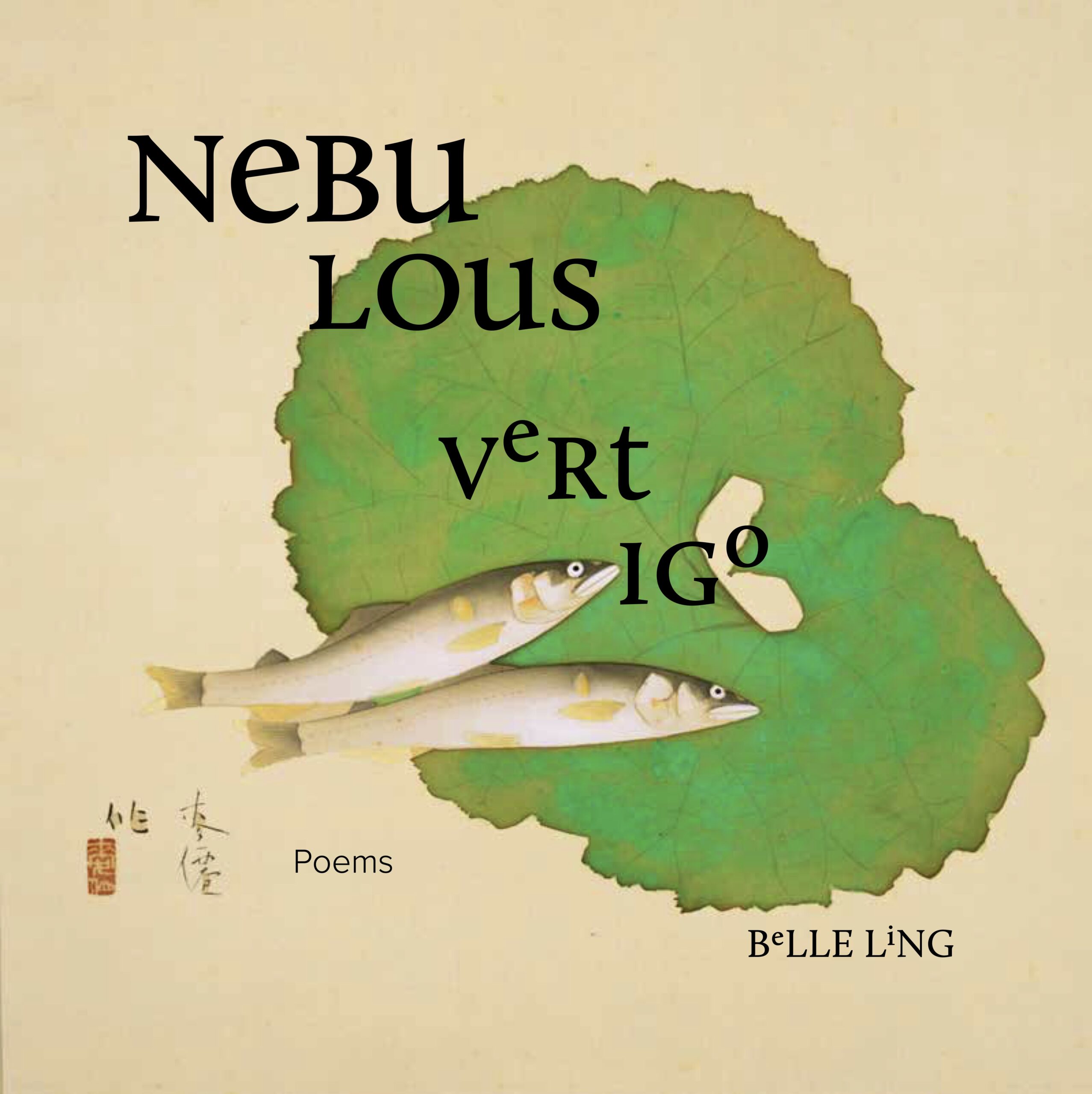
 Belle Ling is an Australian poet who lives in Hong Kong where she teaches Creative Writing and Literature. She holds a PhD in Creative Writing from the University of Queensland. Her poems have appeared in Cordite, Mascara, World Literature Today. In 2018, her poem ’63 Temple Street, Mong Kok’ was a co-winner of the ABR Peter Porter Poetry Prize. Nebulous Vertigo (Tupelo Press, 2025) is her debut collection.
During her Australia book tour, poet Belle Ling gave a vibrant reading of poems from her debut collection, Nebulous Vertigo (Tupelo Press, 2025) at the Wollongong City Library on Aug 14, 2025. The reading was followed by a conversation with Professor Paul Sharrad, Fellow of the University of Wollongong.
Paul: Tell us something about yourself: origins, schooling, how you come to be on this reading tour in Australia.
Belle: Well, I was born in Hong Kong, raised in Hong Kong. I came to Australia to study a Master of Creative Writing at the University of Sydney; and following that, I embarked on a PhD in Creative Writing at the University of Queensland. I wrote much of the draft of Nebulous Vertigo during my PhD at UQ, so I thought I’d love to return to the land of sowing and share my poetry with the Australian community and my writing journey.
Paul: The question about schooling arises because some of your most appealing and widely accessible poems deal with learning to write in school with a teacher called Miss Wong. One of the features of your book is the grid that students use when learning to write Chinese. This reminded me of my own schooling when we had to deal with “slope cards”: pages of ruled lines and angled slashes that were designed to regulate our attempts at “running writing” or cursive script. However, there are real differences with your poetic situation in that the slope card only affects the visual tidiness of words: in the Chinese case, the form of the writing actually changes the meaning. You have spoken of creating a different poetic connected to this difference, can you elaborate?
Belle: Here is the Chinese grid image with the Chinese character of “bean” in the grid.
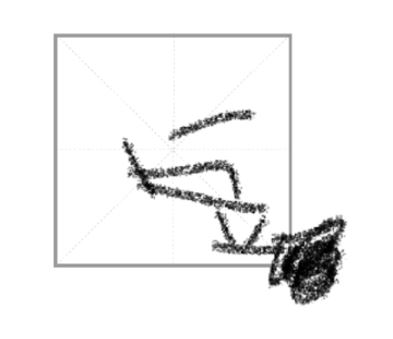
I morphed the Chinese word into a person, like a character in a novel and this person is a bean, which is pronounced as “dau” in Cantonese.
Paul: The poem describes the grid as both a limitation and a window, and this idea of the multi-levelled nature of language, whatever the language may be, is interesting. As you can see, the book has visual and verbal content and I am interested in the trend to poetry slams and performance poetry and how poems work on the page but not necessarily on the stage and vice versa. How do you see your work—written for sight or for sound?
Belle: I think it’s a little bit tricky—because some of the poem elements are brush strokes but poetry also works in time, so when you read poetry you experience it in time and space and respond with cognitive faculty; but when it is on the stage you respond with auditory faculty and experience in a different way according the poet’s projection and mood and have a very different kind of feeling. In Nebulous Vertigo, I try to make the Chinese character “bean” on page into a storytelling character on the stage.
In “Let’s Go Back to Grass Flower Head” and “Miss Wong Says,” which record lessons in writing and saying the word “dau,” I demonstrate how some of the characters and the reading bring out different vocal inflections of the word not discernible from the page— sounds that change meanings from “grass flower head” to “bean” to “tofu.”
The second poem, “Miss Wong Says,” brings in physical formations of lips and tongue in learning to say words, it associates reiterated saying/writing with repeated eating and ends “A self with a multitude of selves:/ I’m the one-hundred-written [dau]—/ a silenced mantra.”
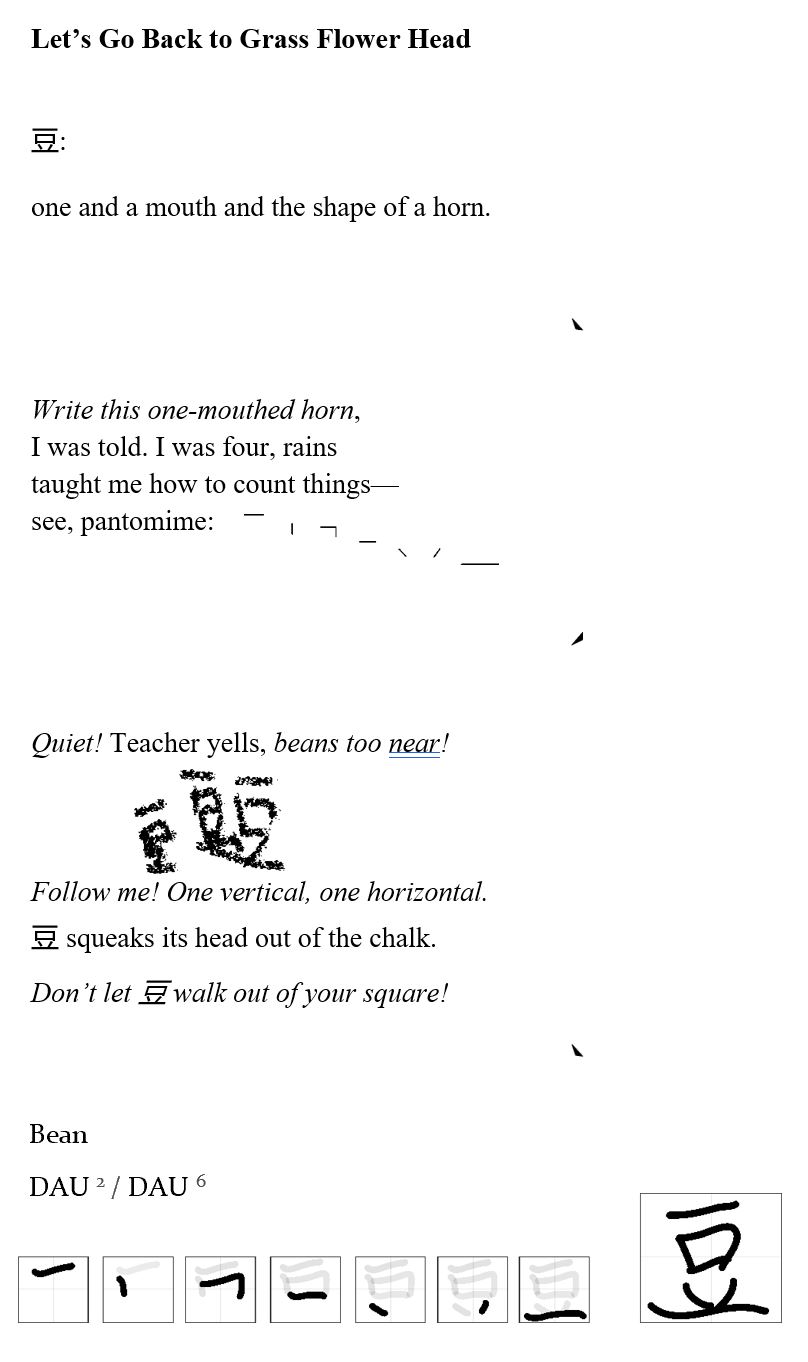
Paul: That’s a very sophisticated but also light-hearted poem with a nice balance. The question that stems from this is how audiences—especially ones in different countries— hear poems. We see that character on the page but do not hear all the spoken inflections of the word. David Malouf, writing about Proust, describes prose as a “sequence of cadences,” which we can also apply to poetry. Who are your ideal readers who can see and hear your cadences/rhythms?
Belle: It’s an interesting question, but as a poet if I think about who I am writing for, I have already confined myself. I learnt English at high school in Hong Kong as a multicultural person, so I don’t really have an ideal reader. I have so many different parts of me and I propose the English language to be a multicultural vehicle. English language readers nowadays are subject to multicultural flows and hear how another language can be blended into English.
Paul: Readers will inevitably come to a text in frameworks from their own discursive spaces. I notice, for example, that “63 Temple Street, Mong Kok,” the poem winning the Peter Porter prize, in an Australian context is one that fits into local discussions of diasporic or migrant or multicultural writing, in that it works with memory, nostalgia etcetera. Most of your work, however, does not come from that particular situation, and you also publish in America, where hyphenated Asian-American identity politics operate in a different way with differing intensities. To what extent do you factor in/ resist such reader positioning? Perhaps it is too early to ask in relation to Nebulous Vertigo, but it would be interesting to know how American readers respond to the work differently from Australian or Hong Kong readers, and how Chinese Australians might receive it differently from Anglo-Australians. To illustrate this thought, cold you read the “Mong Kok” poem?
Belle: Before I read the poem, I want to explain that it is not about a street, but about a restaurant, a Hong Kong restaurant that we call “cha chaan teng.” It’s a unique form of restaurant in that it serves cuisine from many places: Japanese ramen, Chinese noodles, Thai, pineapple pastries, special tea sets.
Paul: It’s a lovely poem and one of the interesting aspects of it is how it shows how food is managed in this collection differently from diasporic anxieties about identity and food as tradition, reaching beyond that to incorporate food as family, food as social connections, etcetera. One of the ways that it does this is that the poems emerge from creative writing courses. Many such courses and writers” workshops include exercises in the form or style of other poets, and this is a very learned collection, though it wears its learning lightly. If you look through the collection there are references to Borges, through the Bible, Lao Tzu, pop songs, Wallace Stevens, Sharon Olds, Basho, Wang Wei, and John Ashbery. There’s a lot going on, and among all this intertextual work, Belle says, “I can’t find my mouth in all my writing.” I’m wondering where you finish up with this; do you see yourself finding your mouth in the collection? Do you locate this in any particular poem perhaps?
Belle: Actually, I have thought about this. As a person who grew up between cultures— Mandarin, Cantonese, English — I am liminal. When I write in Chinese (Cantonese), I feel I am not good enough in terms of mainland Chinese, a formal language that is not what I speak every day. When I write in English, my second language, it’s not the language of my family or television. So when I write in English I feel, “Oh, I am not white enough.” I can’t find a home when it comes to language. The line about not finding my mouth comes from the poem, “So, Is That How Light Travels?,” featuring the character “噩,” which means something horrible, a nightmare. In it there are many mouths all talking together. When I’m writing, without a home in language, I like to play across English and Chinese, like children’s play, like the way I grew up, so this is my home.
In “So, Is That How Light Travels?,” the lines play with two Chinese characters “噩” and “惡” which are both associated with nightmare:
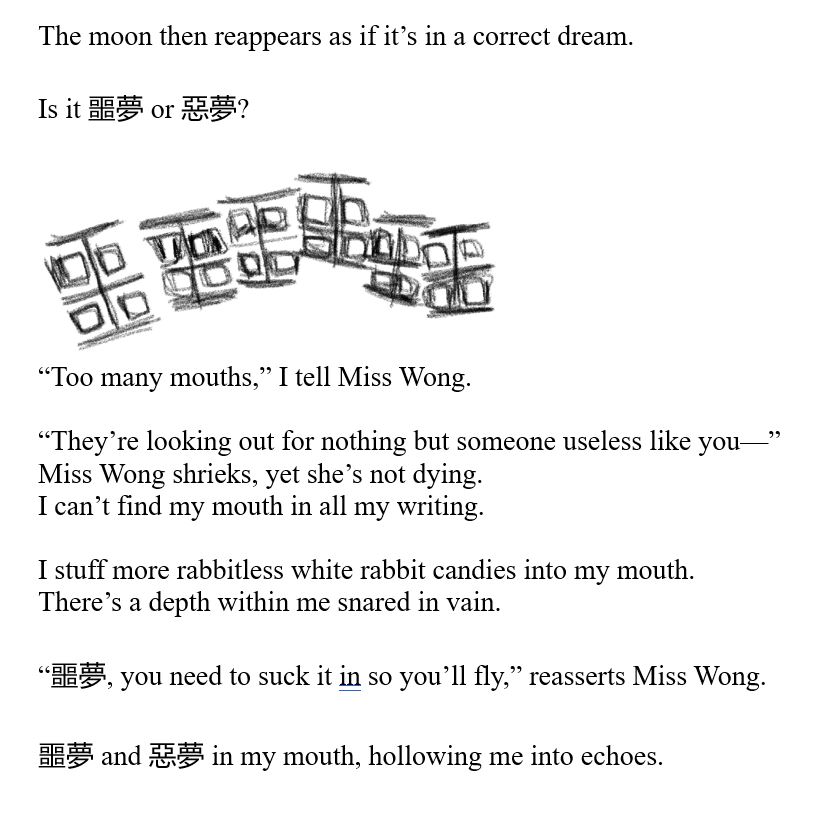
Belle: I found I was using my mouth as much as my voice. Poetry rests on orality, and that lies in the body. We tend to use our minds too much, but poetry expresses feelings and bodily knowing. Sometime the body knows before the mind does. When I talk about the “mouth,” I am finding my way to reach out, and it’s very much related to the very organic, sensuous way to establish relationships.
Paul: We might return to the question of language, thinking of Derrida’s essay on how the mother tongue is always a doubling of the natural and the estranged. Then there is Edouard Glissant’s defence of creole in Caribbean writing, where people forge their own tongue and selfhood in a new poetics that French and Spanish and English do not control. You refer to Borges, whose Spanish was said to carry the structure of his reading in English. So it is possible you are discovering your mouth through making your own version, this particular poetic that you talk about, between and across languages, and that’s what makes the collection so interesting. One might make comparisons so someone like Sujata Bhatt, born in Gujerat, lives in Germany, publishes in England and writes across all three languages. So there is a kind of cosmopolitan literary identity in which literature is actually the home.
We should hear a few more poems, but there is one other thing that’s worth talking about. Particularly as you get to the end of the collection, there seems to be a strong meditative push into quietude. One line says, “let me go back to the centre of it all, and sit, and forget.” The title reads, “Be Quiet in the Miso Soup.” Maybe you could read the final poem, “One Intimate Morning,” as an example of this quiet lyricism?
Belle: This final poem, “One Intimate Morning,” is about fish and rain; and you can almost (but not quite) hear the rain at the end of the poem.
One Intimate Morning
The first goldfish breeds lights.
The second one sleeps like a tuft
of lights for being a thoughtful gift.
The third, mindful over the water—
carries itself as a sanctuary.
I comb out the first ray: this morning,
very tenuous in the water;
and the fish trimming every second—
Coiled near their cheeks, the seaweed
reticent in a tussock—
I can’t stop admiring its tapering
green, where a million mysteries are curling
long at my fingertips.
I’m the enigma at the centre of now.
The fish look at me
as if I were their dream. I scatter
more pellets, can’t give
more than a little inaudible rain—
Paul: It’s a poem that resonates with the elegant illustration on the cover of the book. It’s by a Japanese artist, so we are again meeting with an international-minded collection.
Another point of interest is that the book is published in America. How do you see that as positioning you, your readership. You have successfully won through a huge field of applicants to find publication in the US. What challenges/positives attach to this?
Belle: America, kind of, has a tradition of calling for submissions around the northern summer, and it’s competitive. I thought it would be around 500 entries, but in the end it was 1400. I applied one year and was not accepted, but the second time they took my manuscript with about four others. When I was doing my PhD, I thought I would avoid any Hong Kong reference and try to be very Western, but my supervisor said “Belle, you’re from Hong Kong. Why don’t you write something about there?” I did not want to be pigeonholed into an exotic corner, but then I remembered someone like Seamus Heaney and how poetry is very tied to the land. Family and place inform your writing even unconsciously, so I moved out of my comfort zone and tried to bring readers into my “in between” language and experience. And as we discussed earlier, the American scene is more attuned to a Chinese-American cultural presence and open to such experiment.
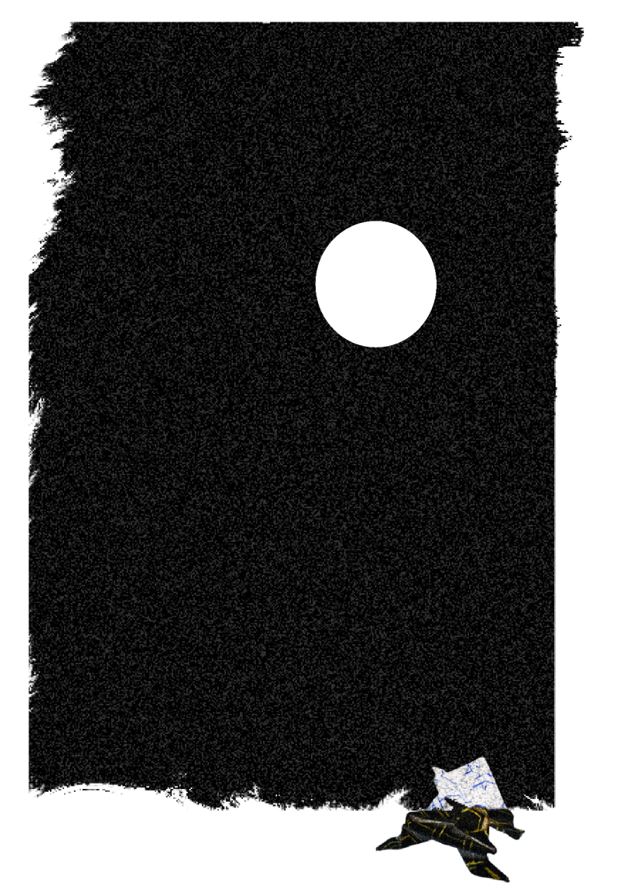
Paul: Tell us about the frog …
Belle: The frog in the final visual illustration appears at the end of the book. It was an origami folded with Chinese grid paper. When it came to the finale, the Chinese grids were turned into a creature.
Audience member: Is there an exact translation between the Chinese language and English?
Belle: Actually, there are multiple entry points in my writing. Sometimes I write directly in English, sometimes when something more intimate is in play I might go to Mandarin or Cantonese colloquial forms. It is the amorphous shuffle between Cantonese and English that opens a vibrant narrative space for my poems.
[The audience, with some of whom from Vietnam and Cambodia, responded by saying how as Asian-Australians they would love to celebrate “the power of the mouth.” Some of them, having emigrated to Australia more than two decades ago, mentioned their Anglo-assimilation experience in Australian schools; how teachers kept asking them to speak in English and write in English only. And now, after years, they yearned for manoeuvring again their mother tongues and cultures in the young to articulate their life experiences.]